
Head of a WomanVerso: Bust of a Man (ca. 1910-1912) — History & Facts
The first thing that catches the eye in Head of a WomanVerso: Bust of a Man by Alexej von Jawlensky is the sheer force of color, as if the face has been carved out of a storm of paint rather than delicately modeled. The woman’s eyes, enormous and dark, seem to press forward from the canvas, their gaze both direct and unreadable. The blocks of red, orange, and yellow in her hair and cheeks are not just decorative—they are the architecture of her presence, holding the viewer’s attention in a grip as firm as any classical bust.
The background, a swirling blue halo, pushes her head into the foreground, making the face feel monumental, almost icon-like in its intensity. Created in 1912, this painting belongs to a world in upheaval, when artists across Europe were searching for new ways to express the inner life of their subjects. Jawlensky was a leading figure in German Expressionism, a movement that prized emotional truth over naturalistic detail. Works like this were rarely painted for private patrons; instead, they were statements, almost manifestos, meant for the walls of progressive exhibitions and the collections of those eager to break with tradition.
Today, this painting is held by the Staatliche Museen zu Berlin, a reminder of a time when color and form were called upon to do the work of words—and when a face could become a battlefield for the spirit of an age.
More Artworks by Alexej von Jawlensky

Murnau
Alexej von Jawlensky
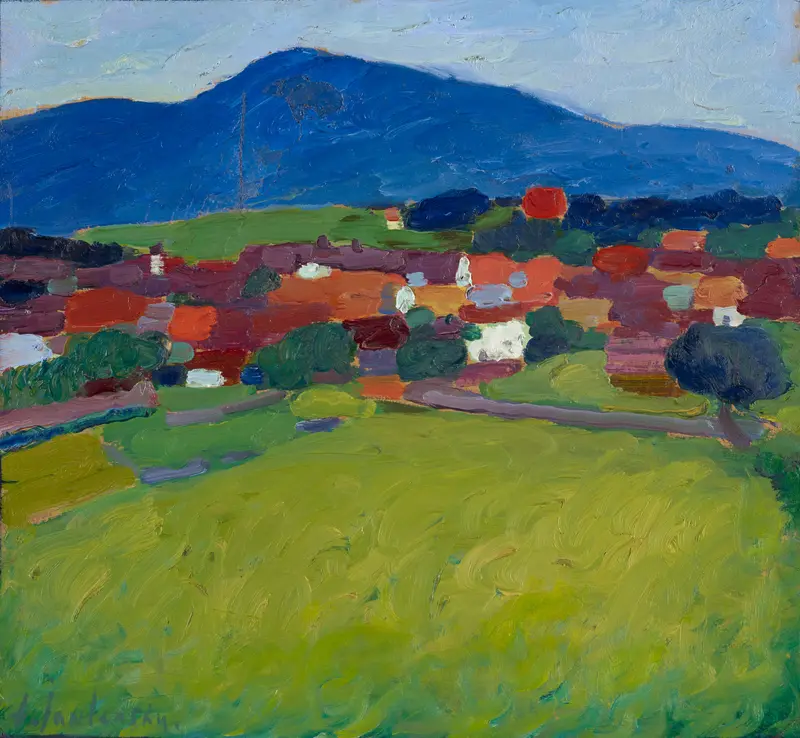
The Village Of Murnau
Alexej von Jawlensky
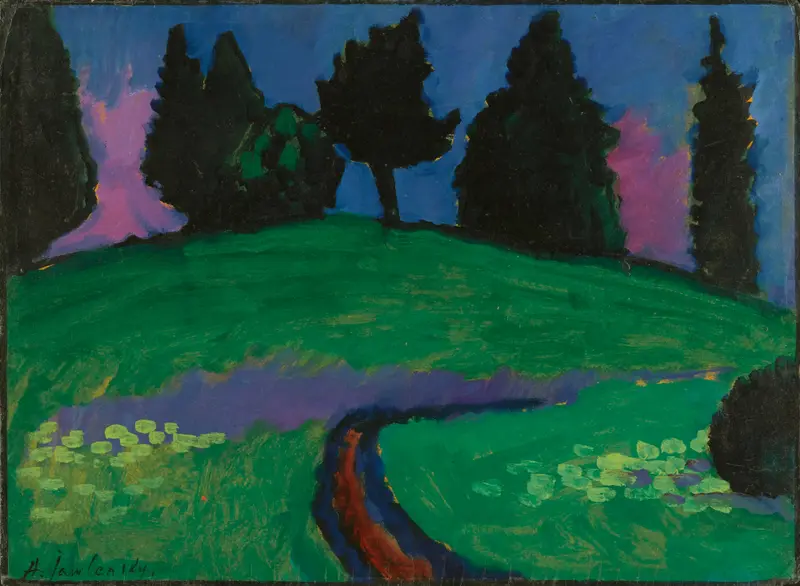
Dunkle Bäume über Grünem Hang (Dark Trees Over Green Slope)
Alexej von Jawlensky
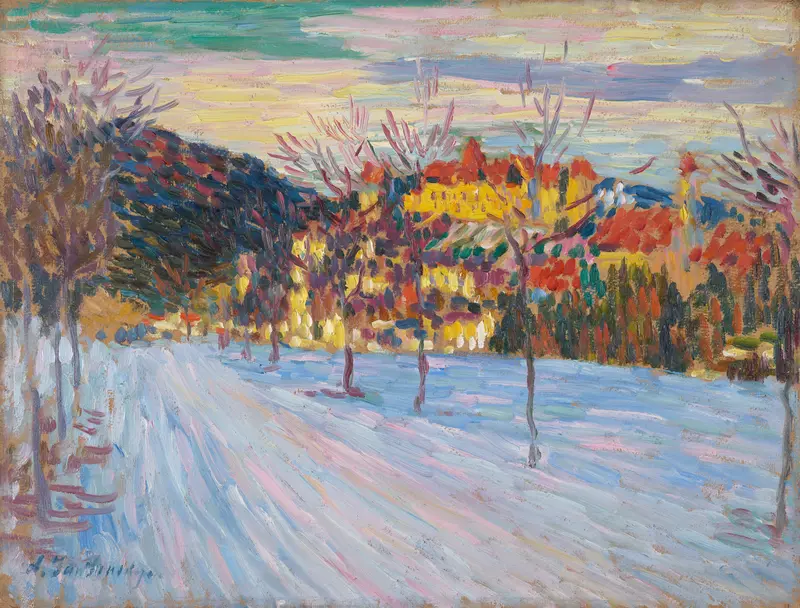
Füssen
Alexej von Jawlensky
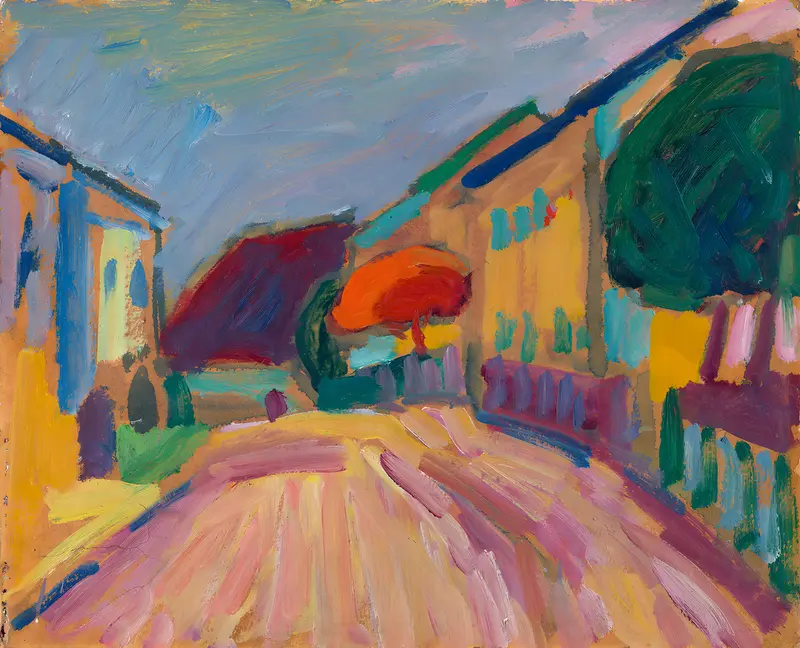
Sketch from Murnau
Alexej von Jawlensky
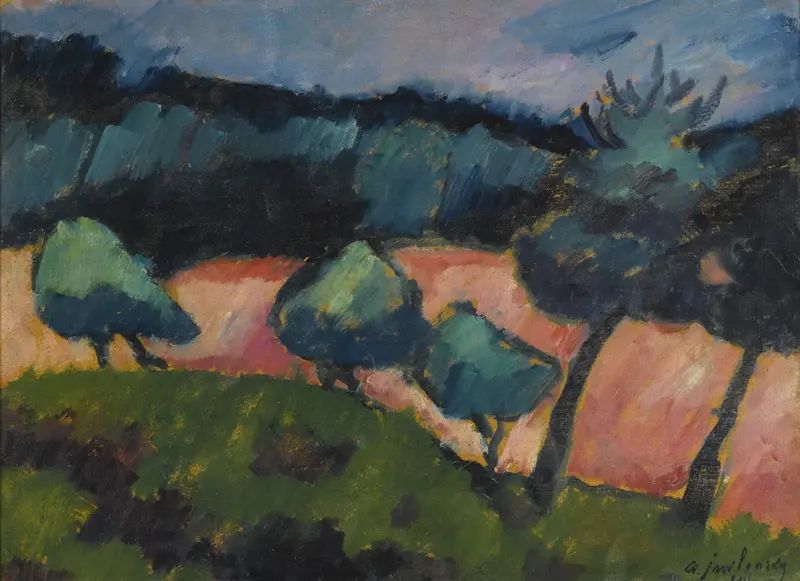
Bäume und Dünen in Prerow (Trees and dunes in Prerow)
Alexej von Jawlensky
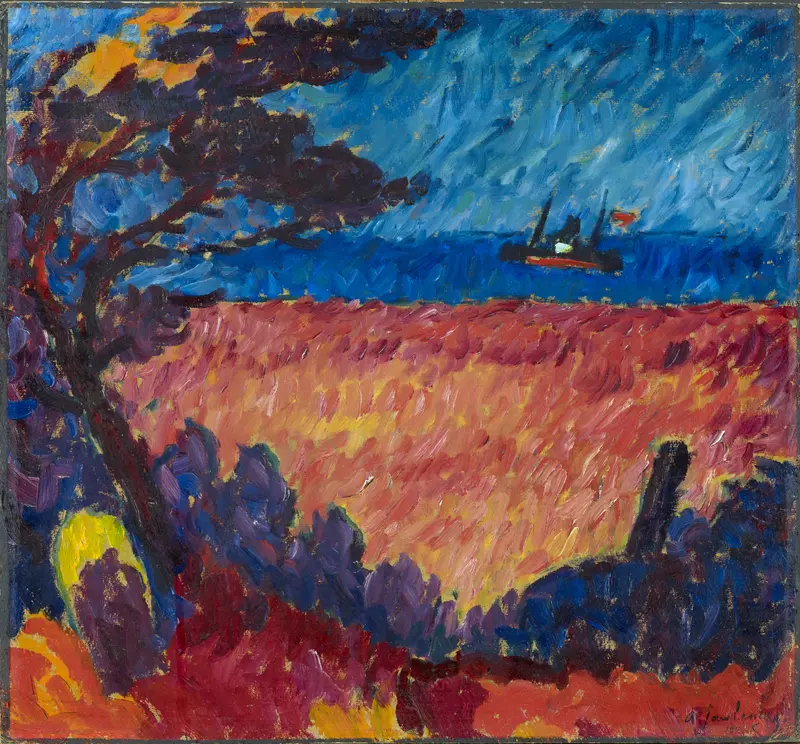
At The Baltic Sea
Alexej von Jawlensky
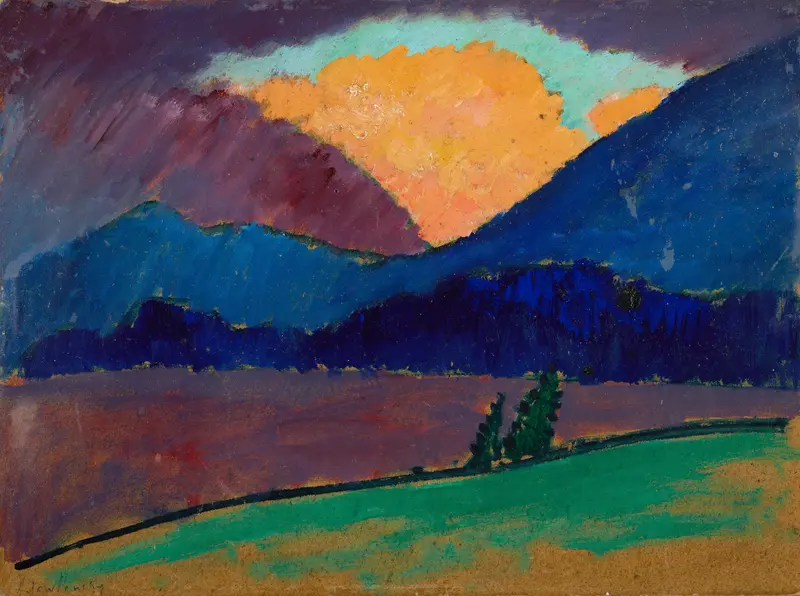
Summer evening in Murnau
Alexej von Jawlensky
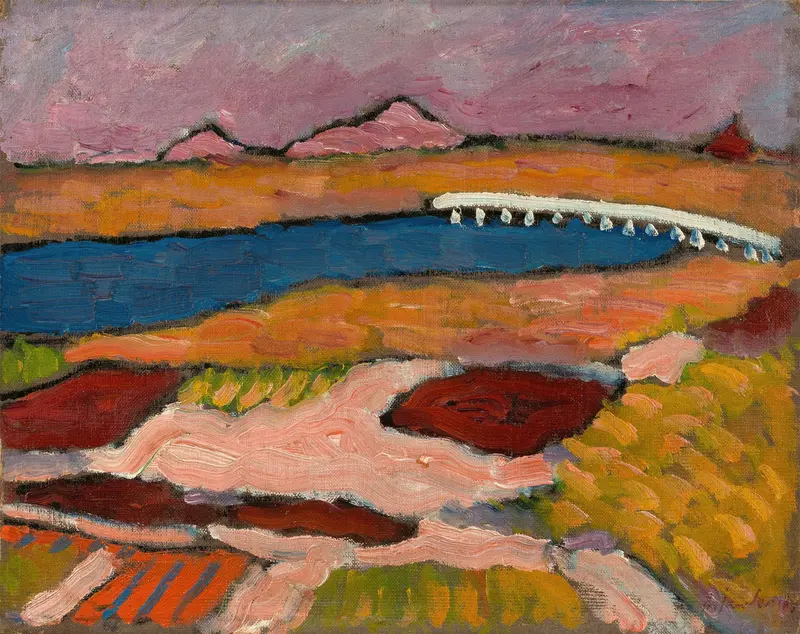
Prerow (Darß), Pommern
Alexej von Jawlensky
Landschaft mit Bäumen
Alexej von Jawlensky





