
Heidens offer van koning Achaz — History & Facts
Can paint confess what words never could? In Heidens offer van koning Achaz, a poignant narrative unfolds, steeped in longing and historical weight, that transcends mere description. It invites us to explore the depths of its layers, where the heartbeats of the past resonate with our present. Look to the center of the composition, where the figures are arranged with a deliberate symmetry that captures both reverence and tension. The king stands in a commanding posture, draped in lavish robes that glimmer under an unseen light, while the surrounding figures cast their eyes downward, embodying submission and fear.
The warm, earthy tones contrast with the stark, cool colors of the background, emphasizing the gravity of the moment. Notice how the intricate details—like the ornate offerings and the expressions on the faces—draw you into the emotional landscape of the scene. Beneath the surface lies a profound commentary on power and sacrifice. The tension between the regal figure and those kneeling before him speaks to an age-old struggle—faith versus desire, authority versus the oppressed.
The offerings, rich with texture and meaning, symbolize not just tribute, but the sacrifices made in the name of loyalty and fear. This dichotomy is palpable, reflecting both the weight of obligation and the yearning for freedom inherent in human nature. Hans Holbein (II) created this work in 1538, during a time when the Reformation was shaking the foundations of Europe. Living in Basel, the artist was immersed in a milieu of political and religious upheaval that influenced his deeply narrative style.
This painting, rich with historical references, illustrates not only the artist’s skill but also his acute awareness of the complexities of human relationships amid a changing world.
More Artworks by Hans Holbein (II)
Browse all →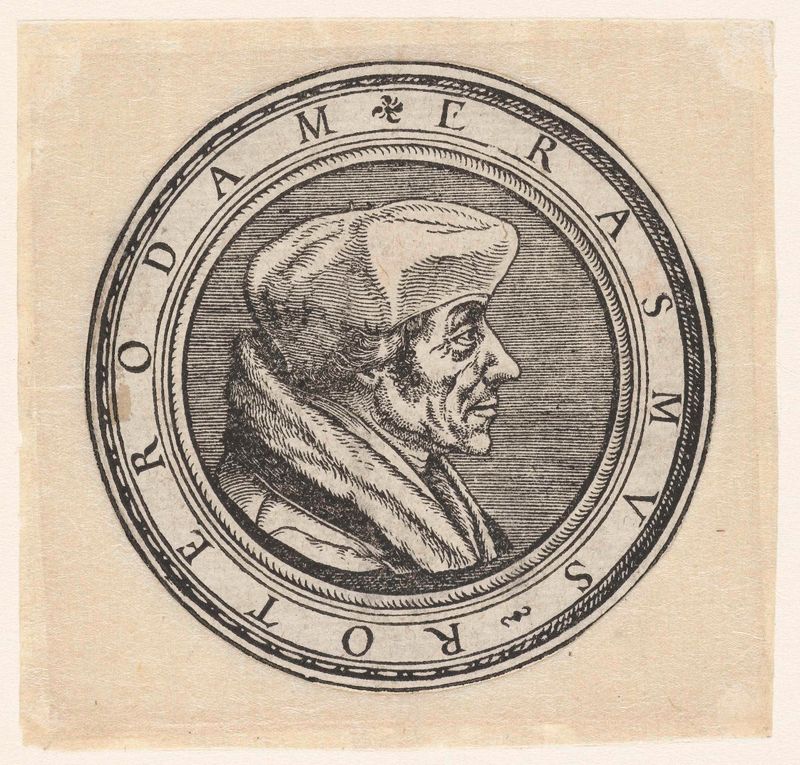
Portret van Erasmus
Hans Holbein (II)
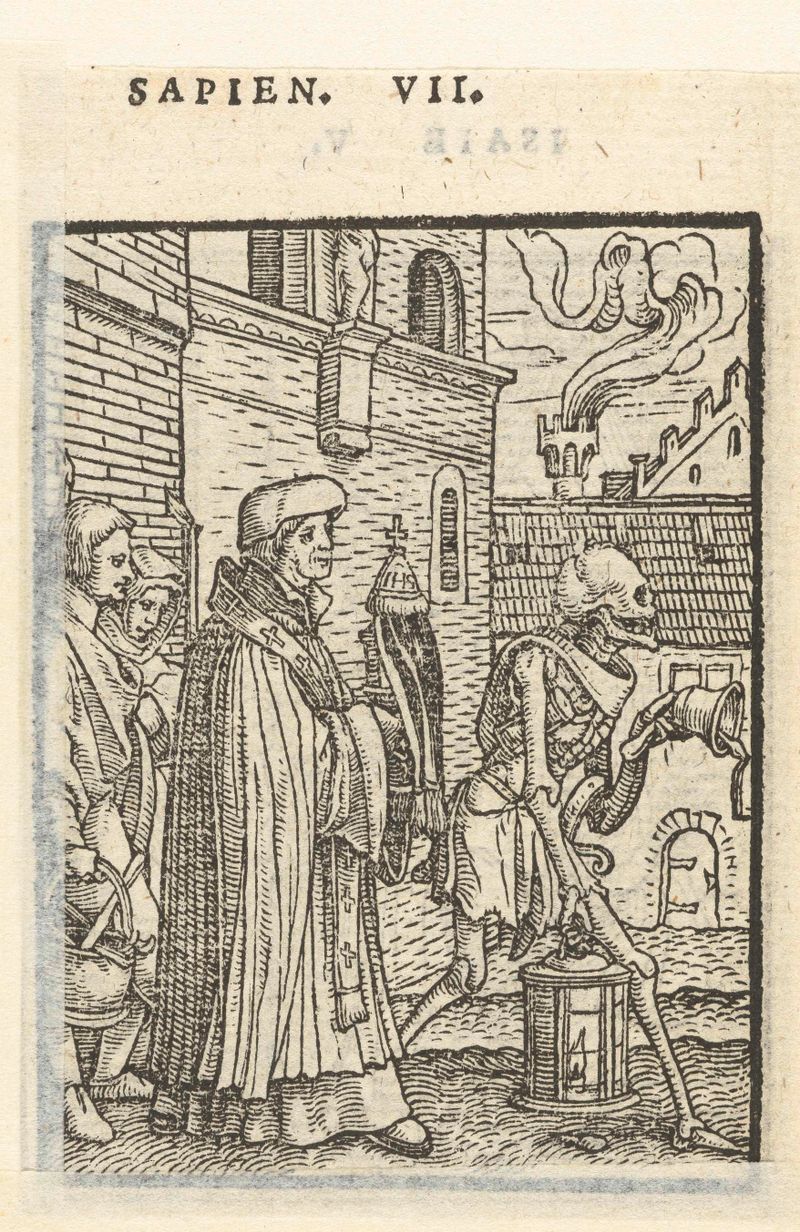
Priester en de Dood
Hans Holbein (II)
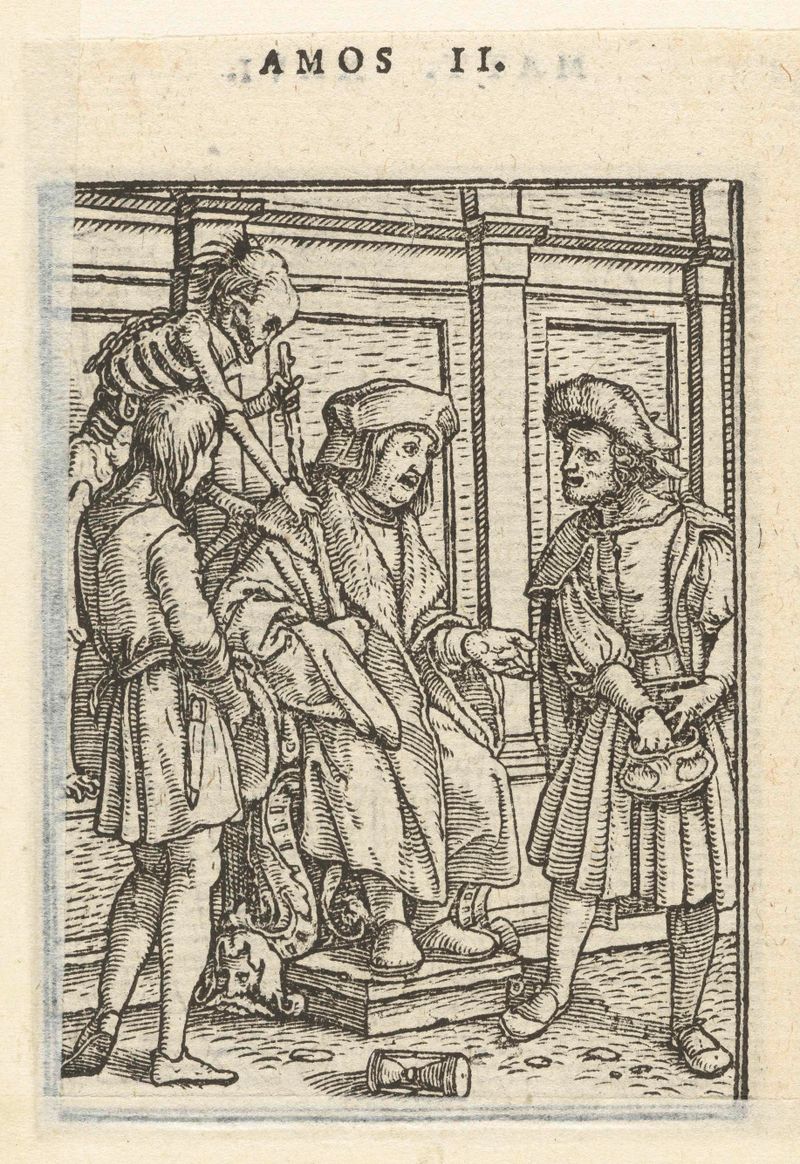
Rechter en de Dood
Hans Holbein (II)
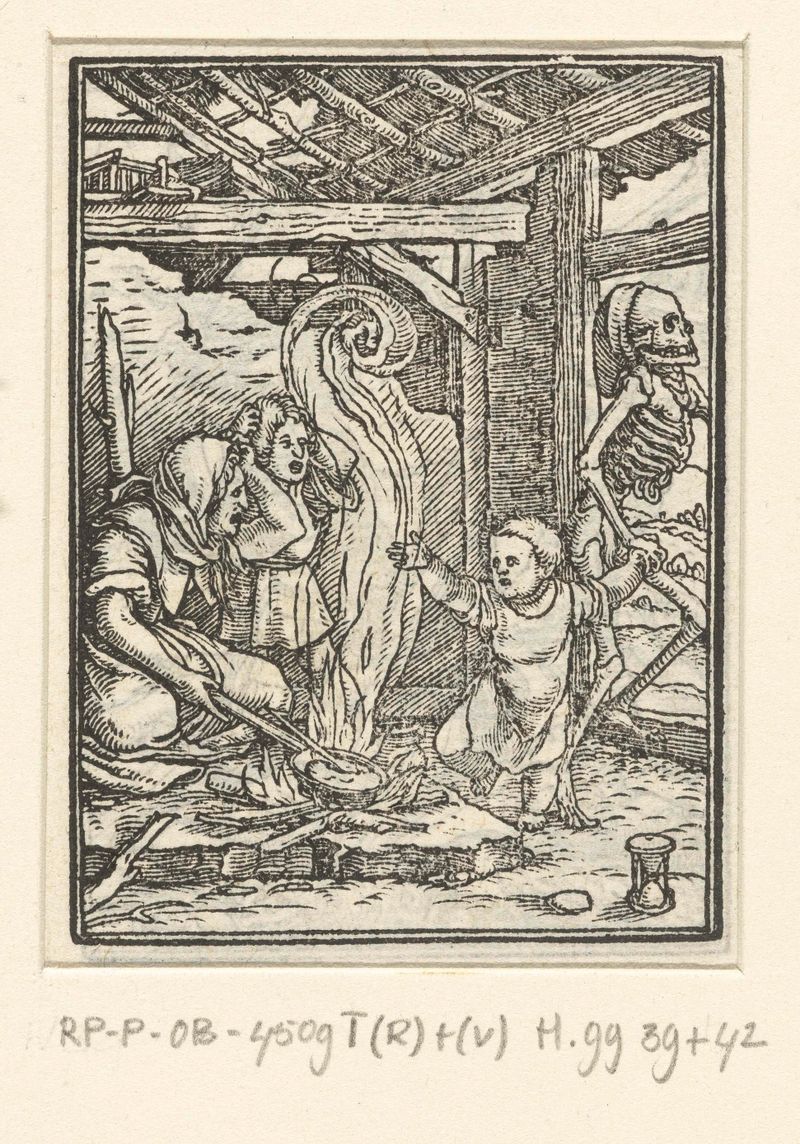
Kind en de Dood
Hans Holbein (II)
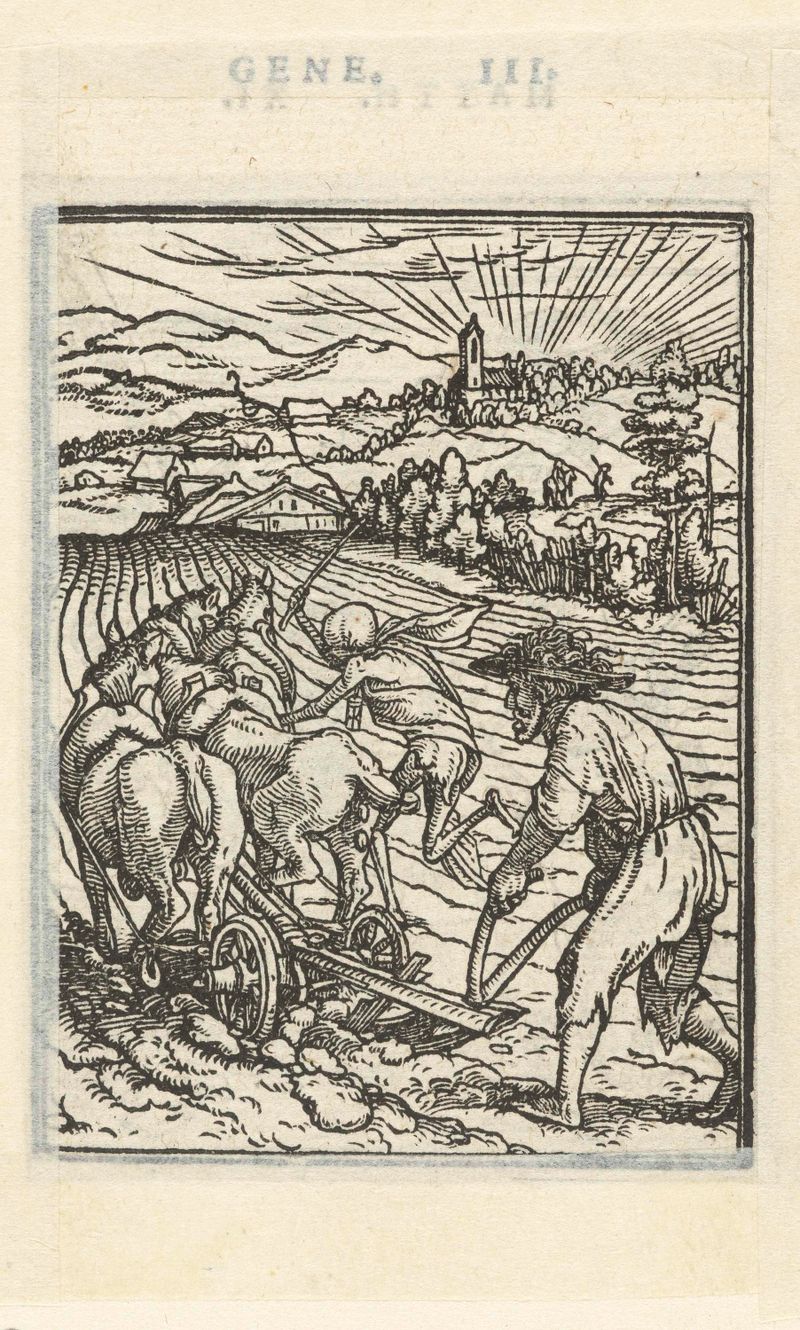
Boer en de Dood
Hans Holbein (II)
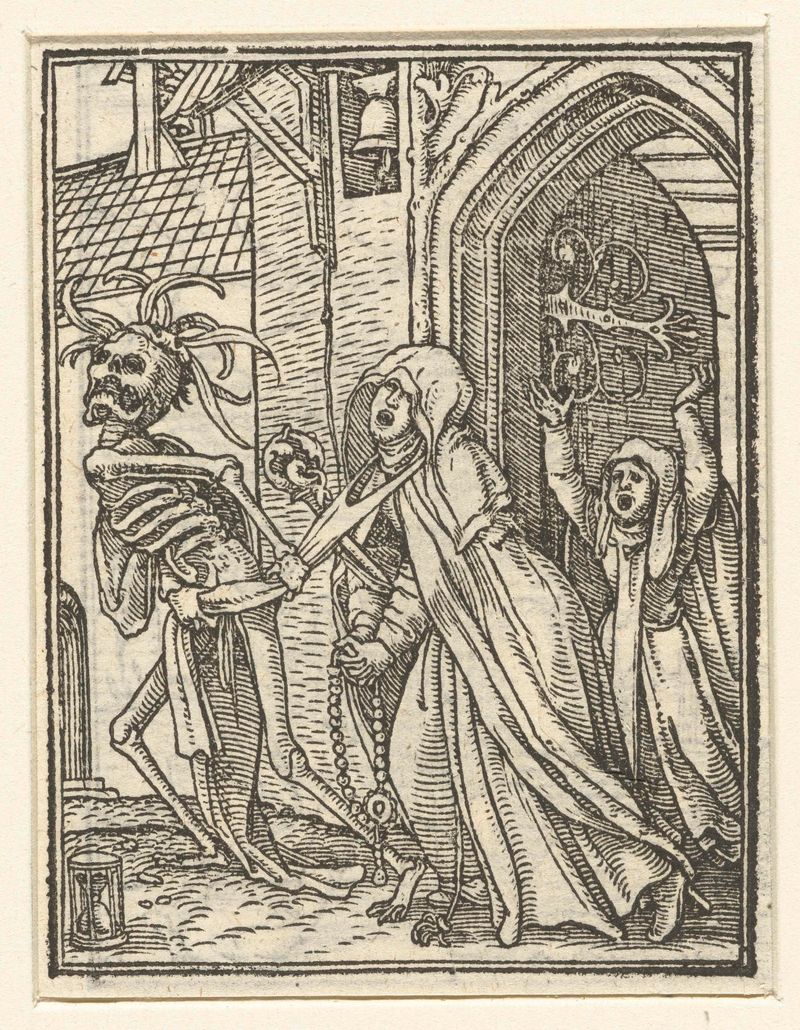
Abdis en de Dood
Hans Holbein (II)
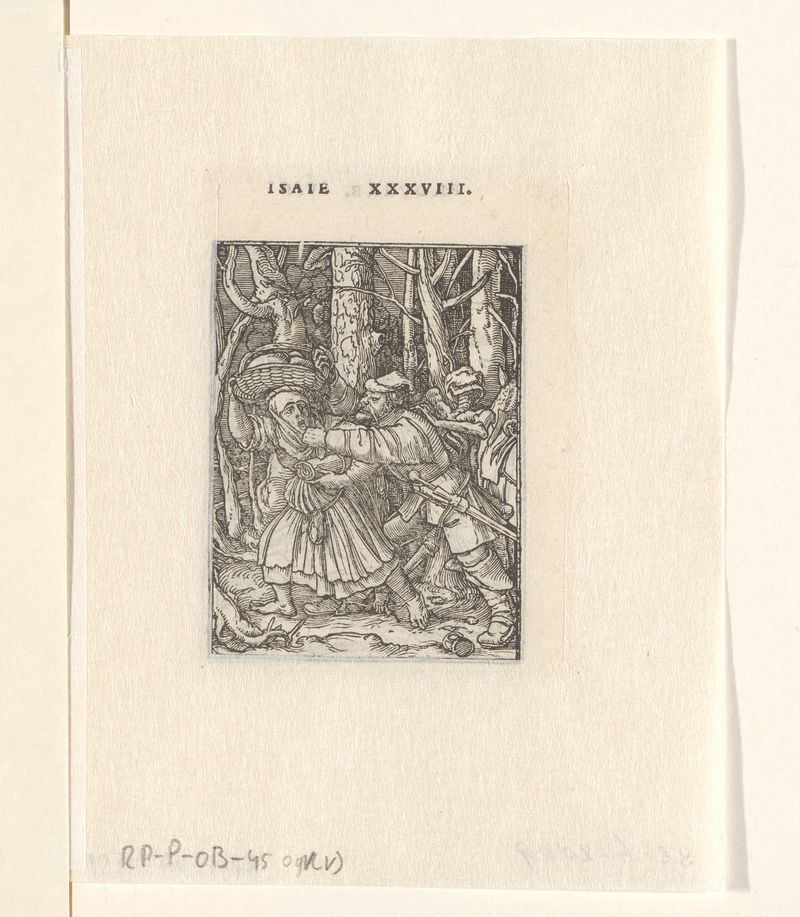
Dief en de Dood
Hans Holbein (II)
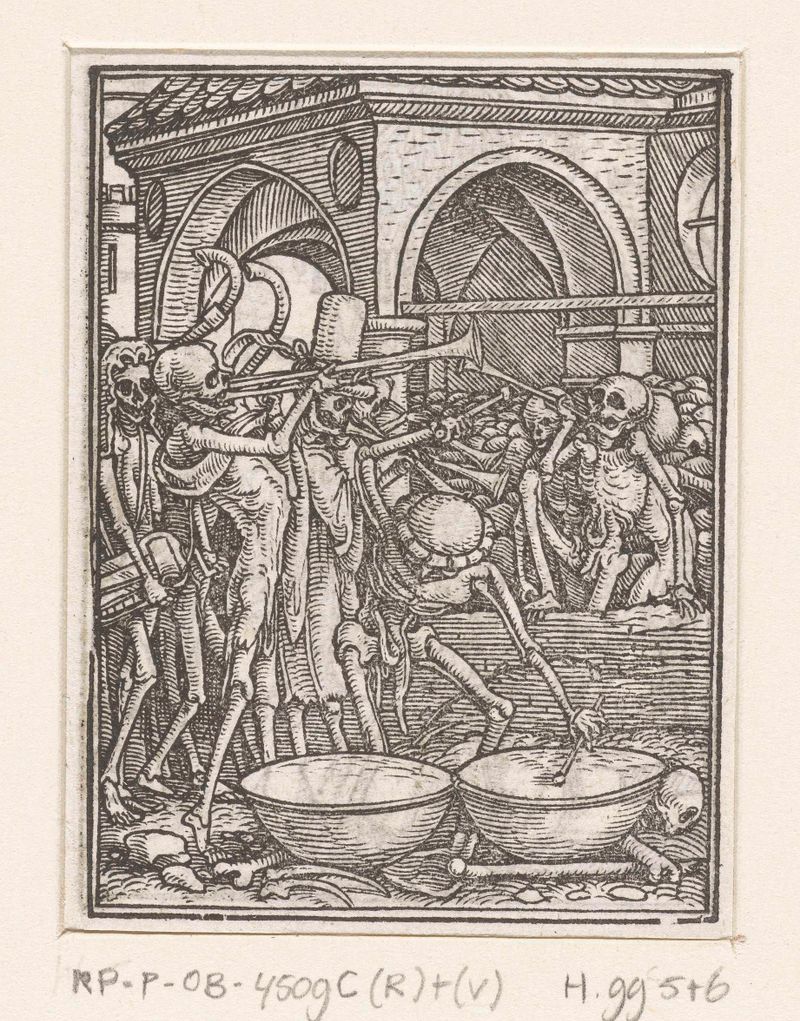
Skeletons Making Music from Dance of the Dead
Hans Holbein (II)
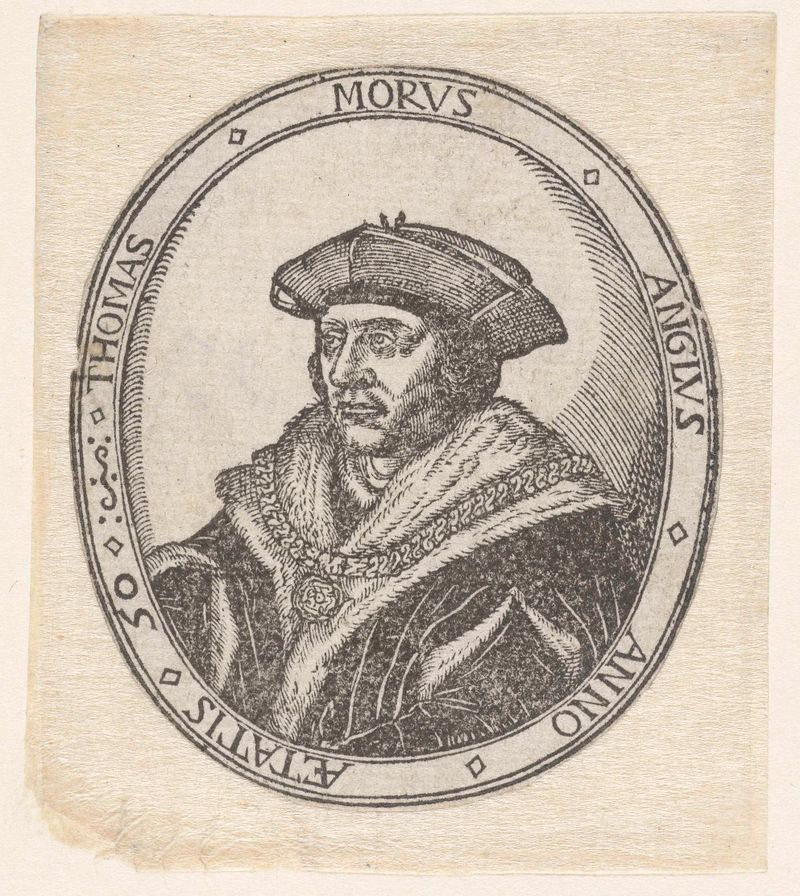
Portret van Thomas More
Hans Holbein (II)
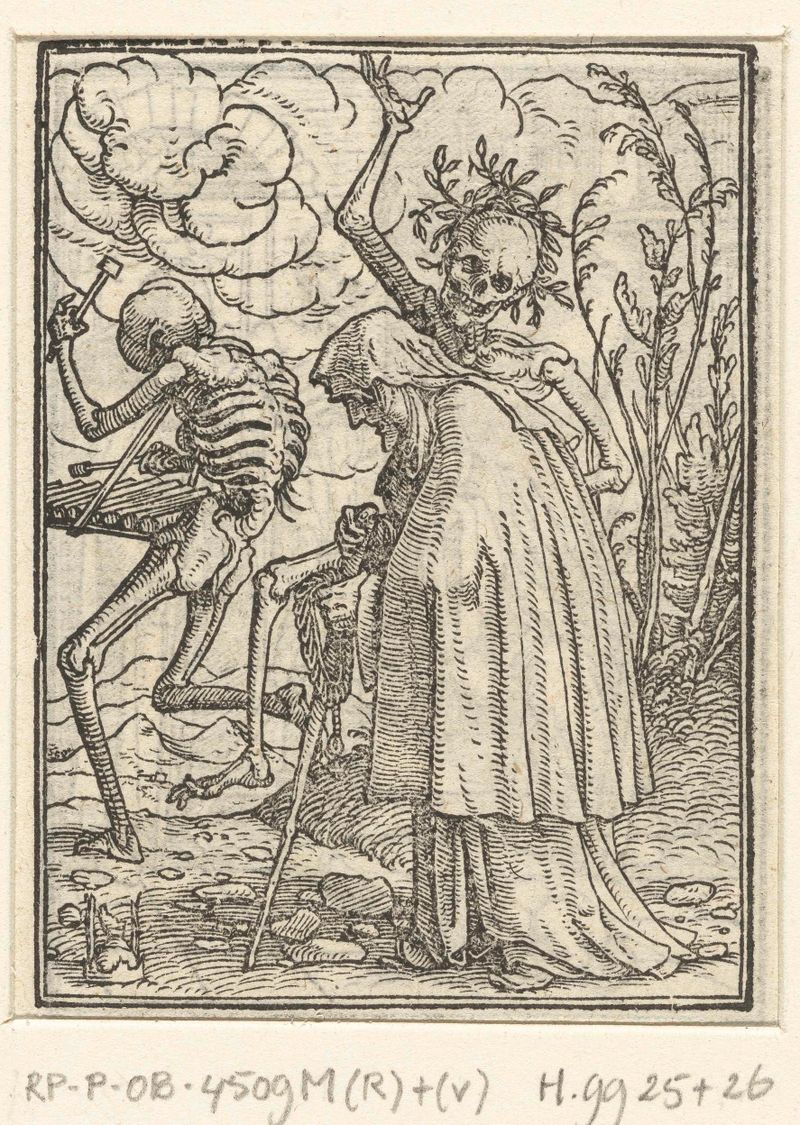
Oude vrouw en de Dood
Hans Holbein (II)
More Religious Art
Browse all →
The Return of the Prodigal Son
Rembrandt van Rijn

The Garden of Earthly Delights
El Bosco

Count Orgaz’ funeral
El Greco

The Hundred Guilder Print: the central piece with Christ preaching, the plate arched
Rembrandt van Rijn

The Descent from the Cross
Rogier van der Weyden

The return of the prodigal son
Rembrandt van Rijn