Hercules verslaat de Molioniden — History & Facts
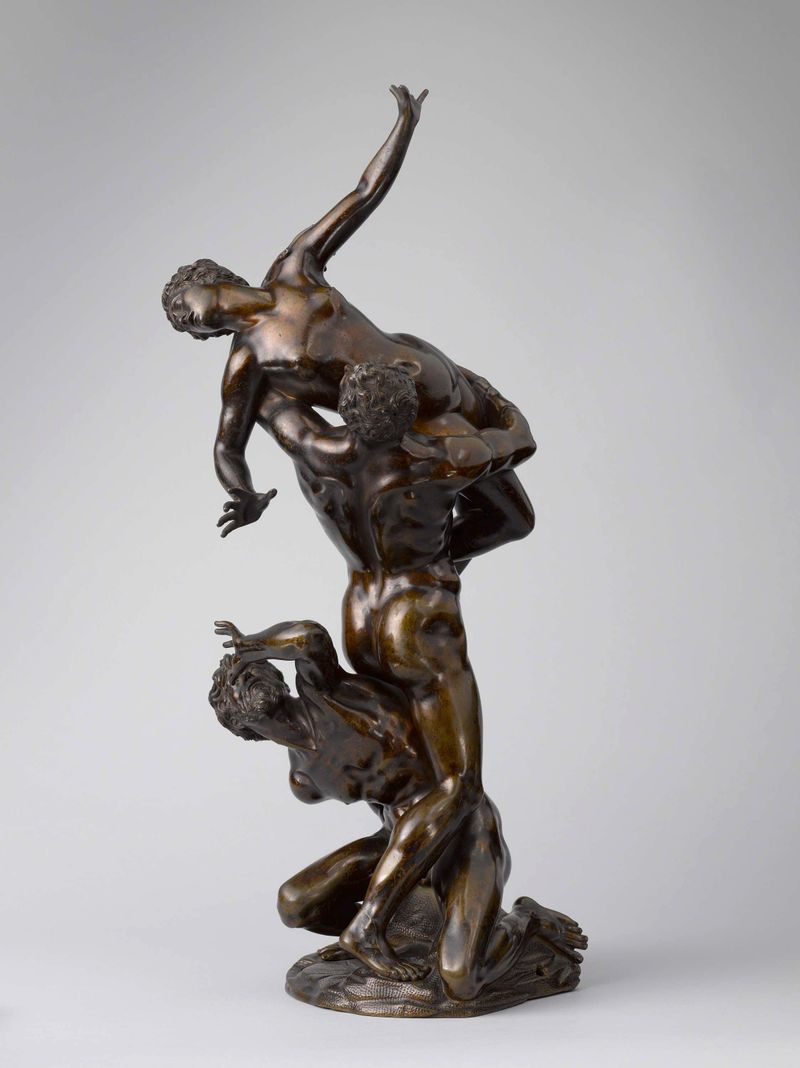
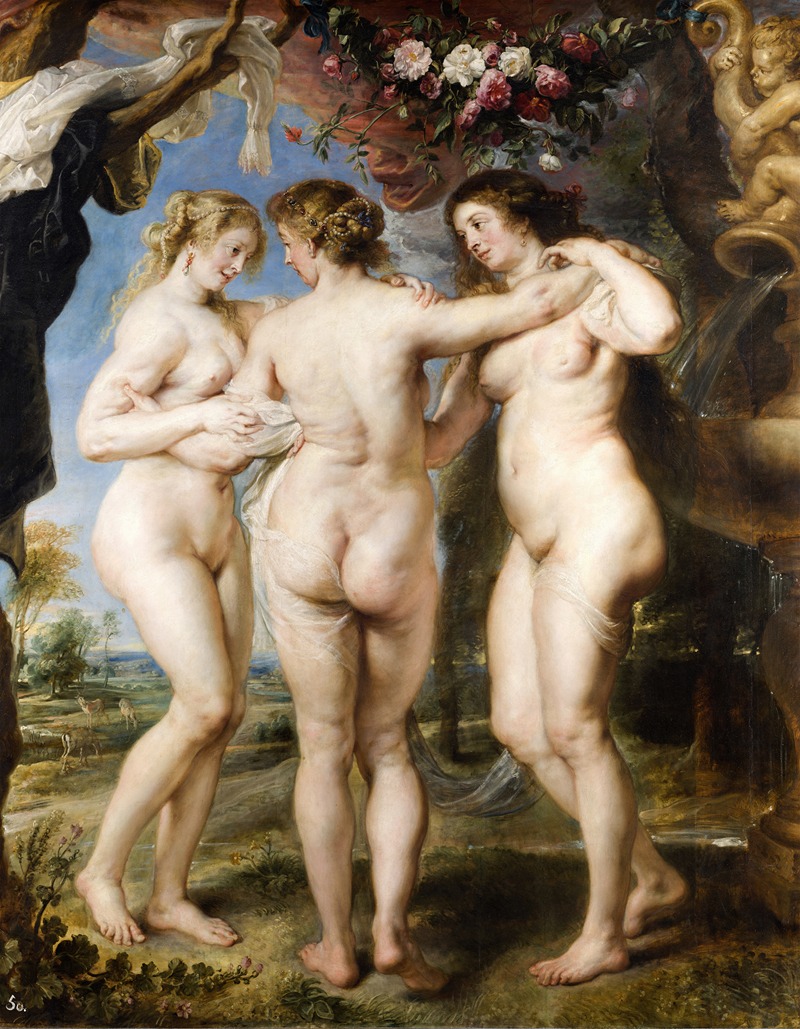
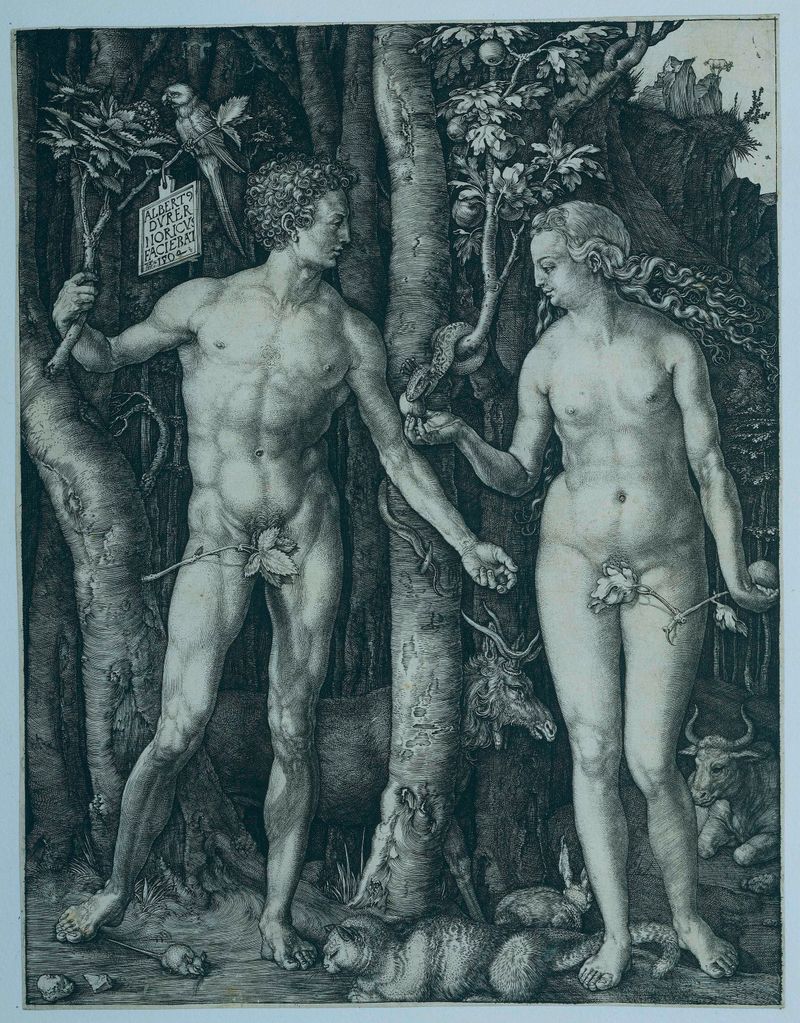
In the midst of struggle, it is the yearning for triumph and redemption that resonates with our deepest selves. Albrecht Dürer’s Hercules verslaat de Molioniden encapsulates this internal battle, reflecting the fight not only against external foes but also against our own limitations and fears. First, let your gaze settle upon the figure of Hercules, his muscular frame commanding the scene with an undeniable presence. Notice how the tension in his taut muscles contrasts with the chaotic movements of his opponents, the Molioniden.
The rich, earthy tones of the background blend seamlessly with vibrant highlights on Hercules, emphasizing both his valor and the weight of the challenge ahead. Dürer’s meticulous attention to detail draws you in, especially the intricate rendering of the creatures and the foliage, each stroke pulsating with life. As you explore further, consider the symbolism within the composition. The Molioniden, representing overwhelming obstacles, seem to embody the chaos of fate itself, while Hercules symbolizes the relentless pursuit of strength and virtue amid adversity.
The interplay between light and shadow illustrates the duality of victory and defeat, suggesting a deeper narrative of resilience and resolve. Every element in the painting serves as a reminder of the inherent struggle in the quest for greatness, infused with a profound emotional depth. Dürer painted Hercules verslaat de Molioniden between 1494 and 1498 in Nuremberg, during a time of significant artistic innovation and personal exploration. The artist was immersed in the Renaissance, engaging with humanist ideals while grappling with his own identity as a creator.
This period marked a pivotal moment in his career, as he sought to convey not just the physicality of his subjects but the emotional truths that lay beneath their heroic exteriors.
More Artworks by Albrecht Dürer
Browse all →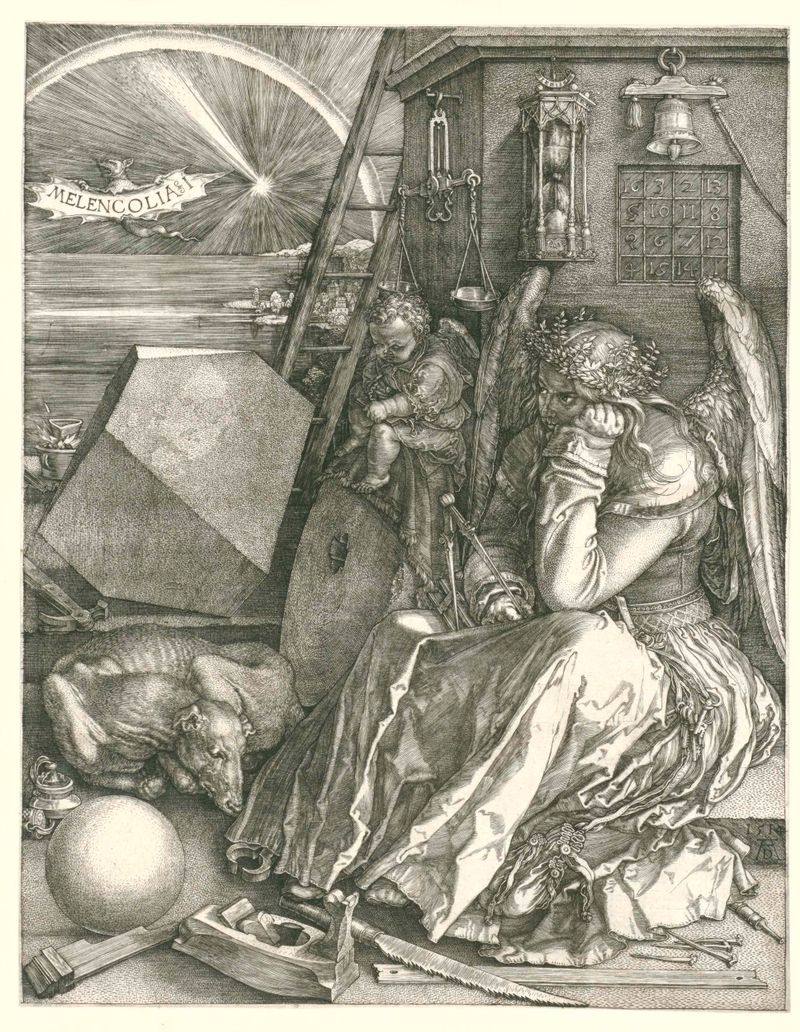
Melancholia
Albrecht Dürer
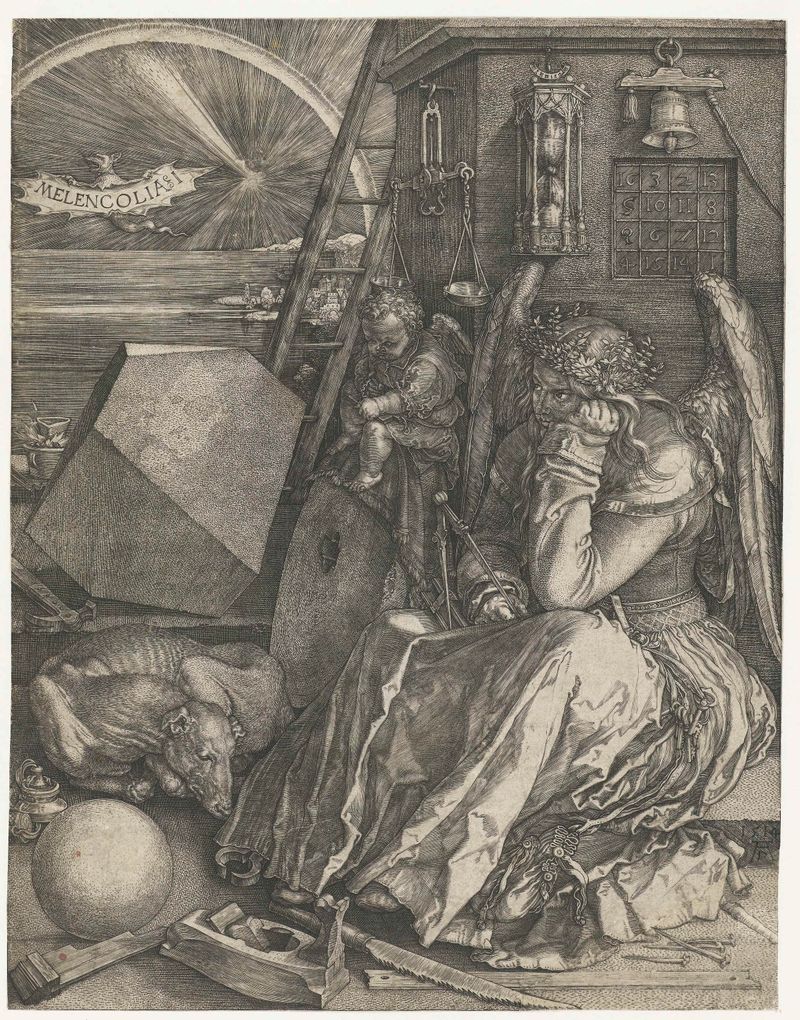
Melancholie
Albrecht Dürer

Neushoorn
Albrecht Dürer
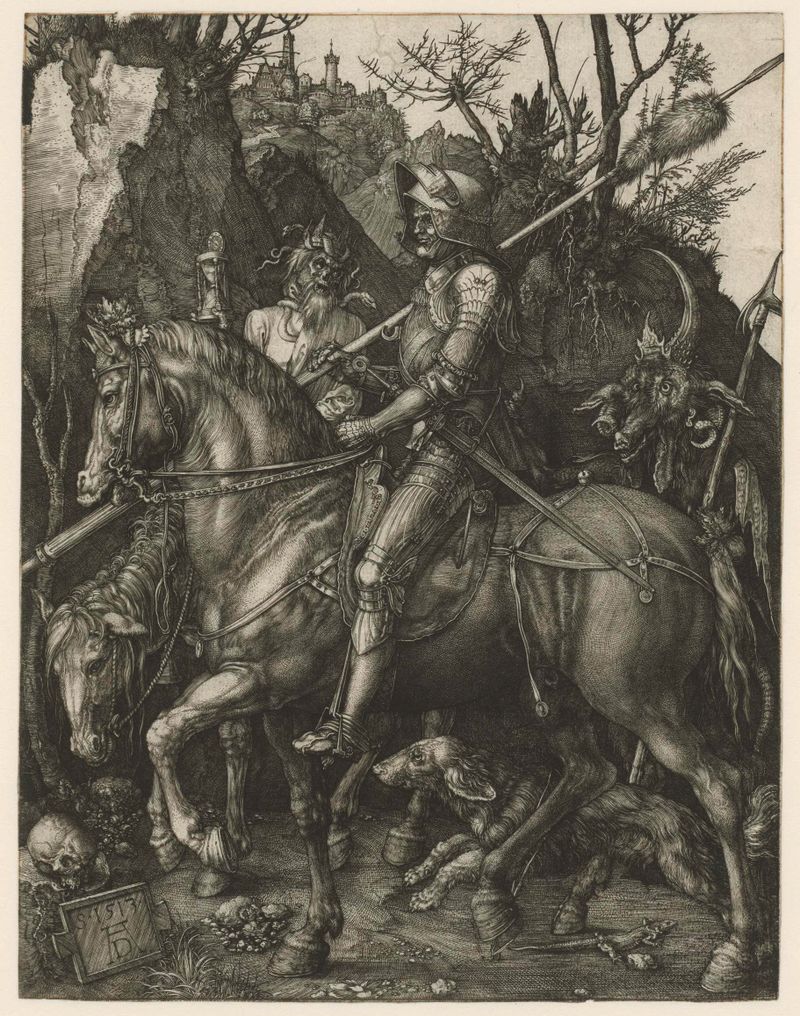
Knight, Death, and the Devil
Albrecht Dürer

De vier ruiters van de apocalyps
Albrecht Dürer

De vier ruiters van de apocalyps
Albrecht Dürer
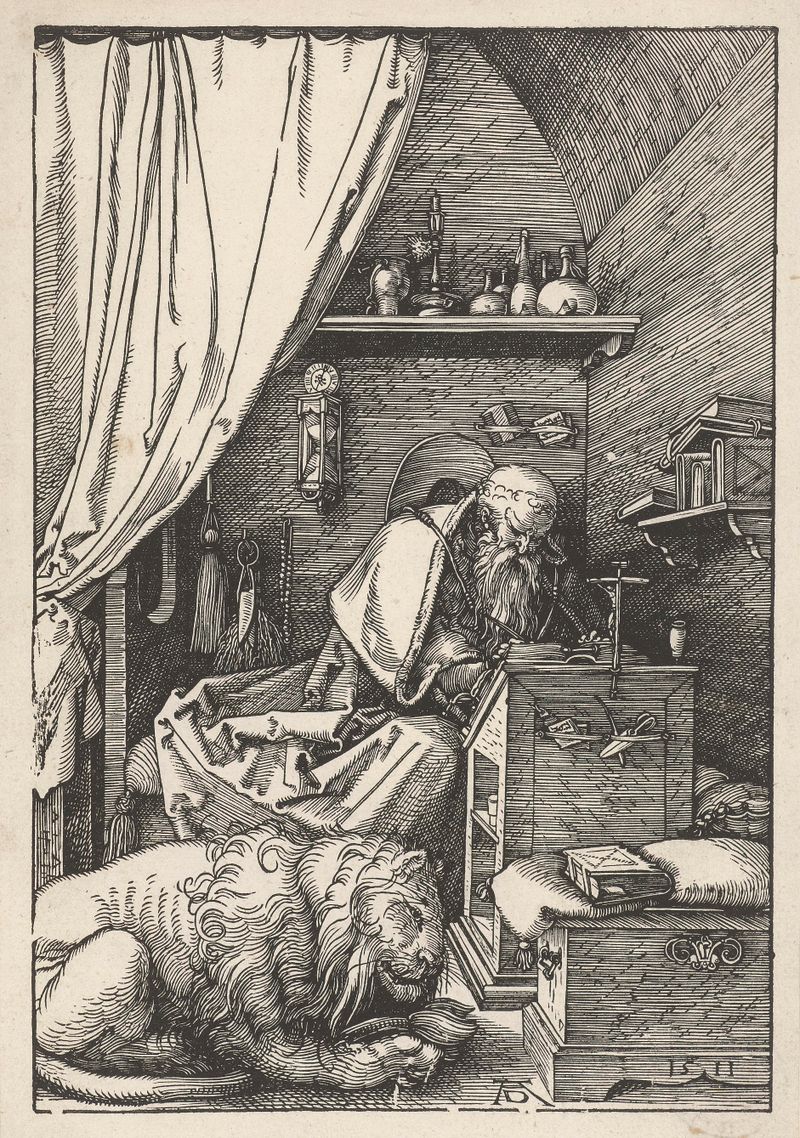
De Heilige Hiëronymus in zijn studeervertrek
Albrecht Dürer
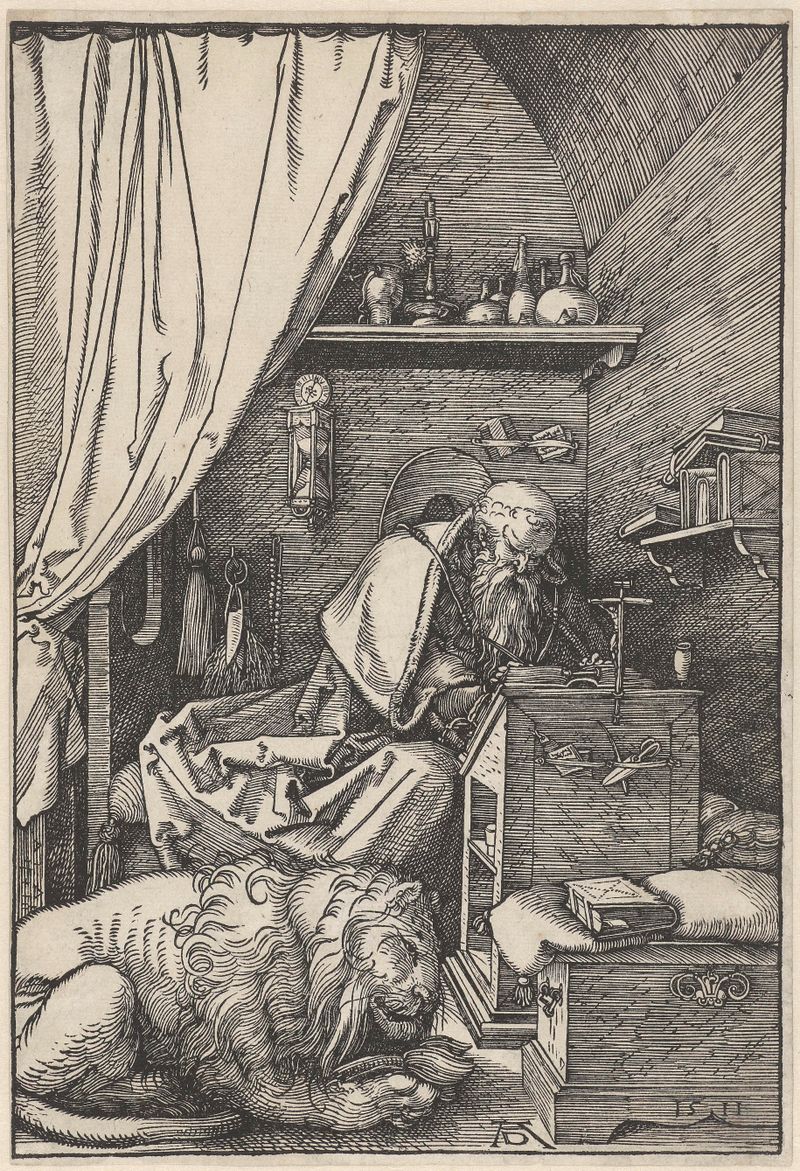
De Heilige Hiëronymus in zijn studeervertrek
Albrecht Dürer
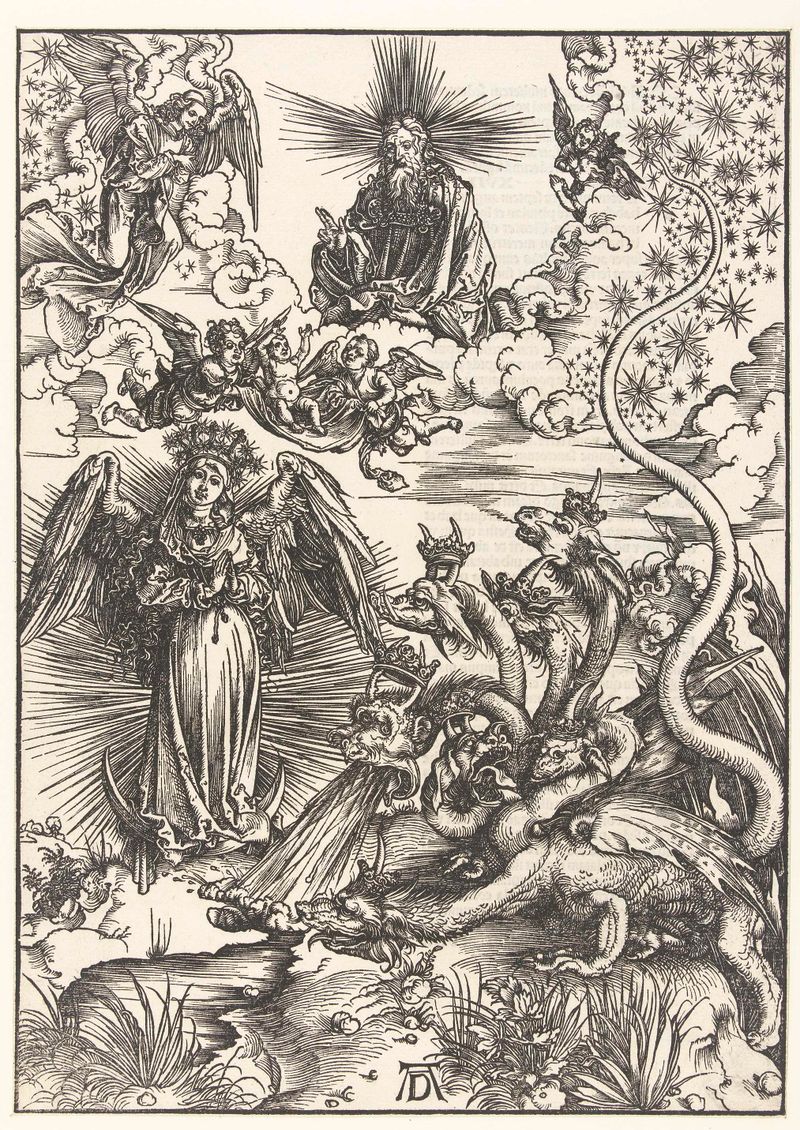
De apocalyptische vrouw en de zevenkoppige draak
Albrecht Dürer
Adam en Eva
Albrecht Dürer