
Herderin op ezel en herder op paard steken beek over — History & Facts
Is this a mirror — or a memory? In Herderin op ezel en herder op paard steken beek over, the boundary between reality and recollection blurs, inviting viewers to reflect on their own pasts as they journey through Berchem’s pastoral landscape. Look to the left where the sun-drenched figures of a herder on horseback and a woman riding an ass traverse a gentle stream. The soft, earthy colors of the landscape envelop the scene, while the shimmering water captures glimmers of light, guiding the eye to the delicate interplay between the figures and their environment. Notice the lush vegetation framing the composition, enhancing the sense of serenity and harmony within this rural tableau. Yet beneath this tranquil surface lies a profound tension.
The contrasting heights of the herder and the woman evoke a dialogue of gender roles and societal expectations during the 17th century. The flowing water symbolizes movement, perhaps representing the passage of time or the flow of memories, while the figures, poised mid-crossing, suggest a moment of introspection, as if contemplating the weight of their journeys and choices. In 1655, Berchem was immersed in the Dutch Golden Age, a time of artistic flourishing and exploration of landscapes. Painting from his studio in Haarlem, he drew inspiration from the natural beauty surrounding him and the prevailing themes of pastoral life, capturing the simplicity and complexity of human experience in a world that felt both familiar and fleeting.
More Artworks by Nicolaes Pietersz Berchem
Browse all →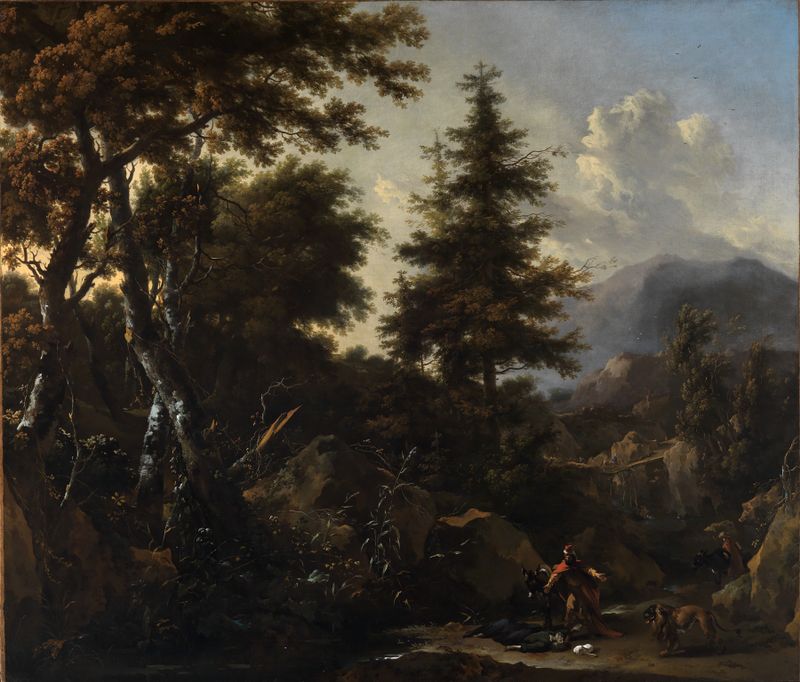
Schlucht im Bergwald mit alttestamentlicher Staffage
Nicolaes Pietersz Berchem
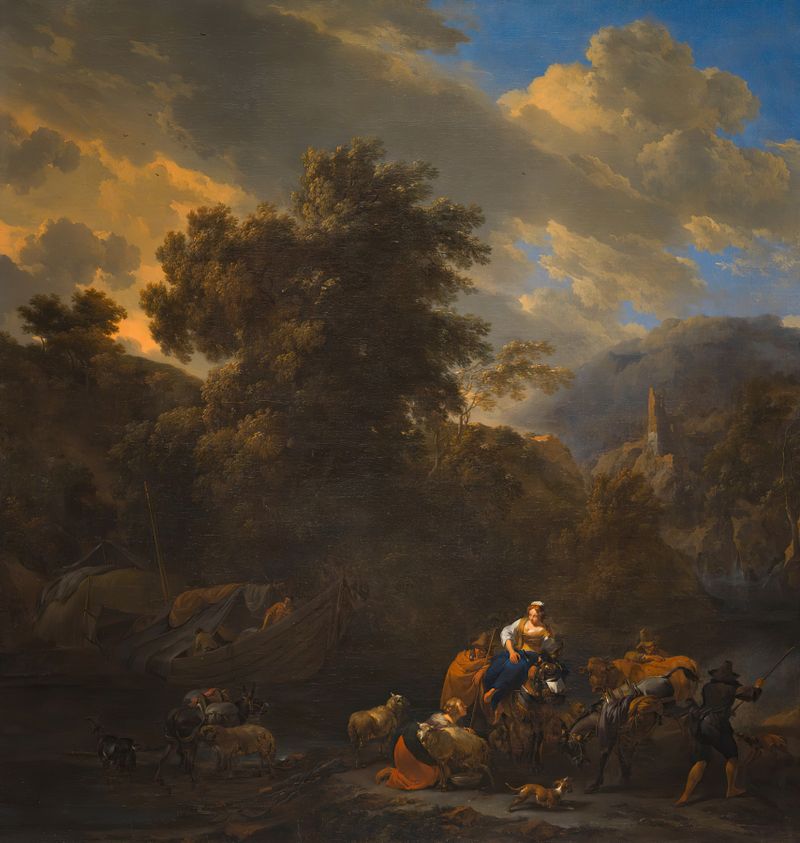
Italianate Landscape with Figures and Pack Animals on the Banks of a River
Nicolaes Pietersz Berchem
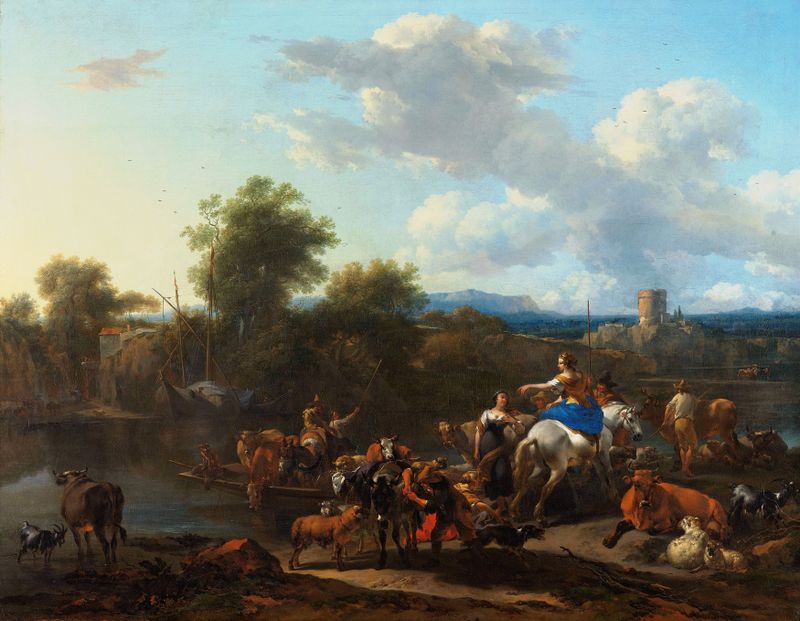
The Cattle Ferry
Nicolaes Pietersz Berchem
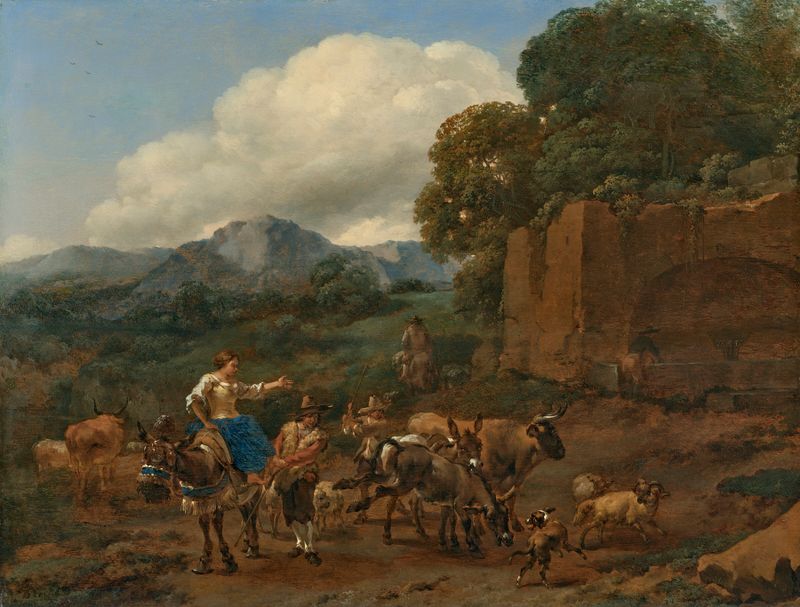
An Italianate landscape with a shepherdess on a mule and a shepherd, herding cattle, sheep, donkeys and dogs on a mountain track next to ruins
Nicolaes Pietersz Berchem
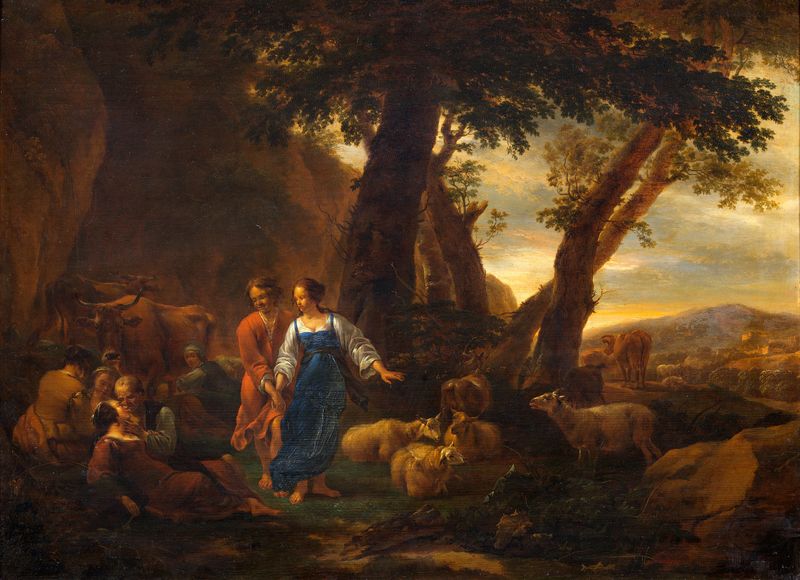
Landscape with Peasants and Cattle
Nicolaes Pietersz Berchem
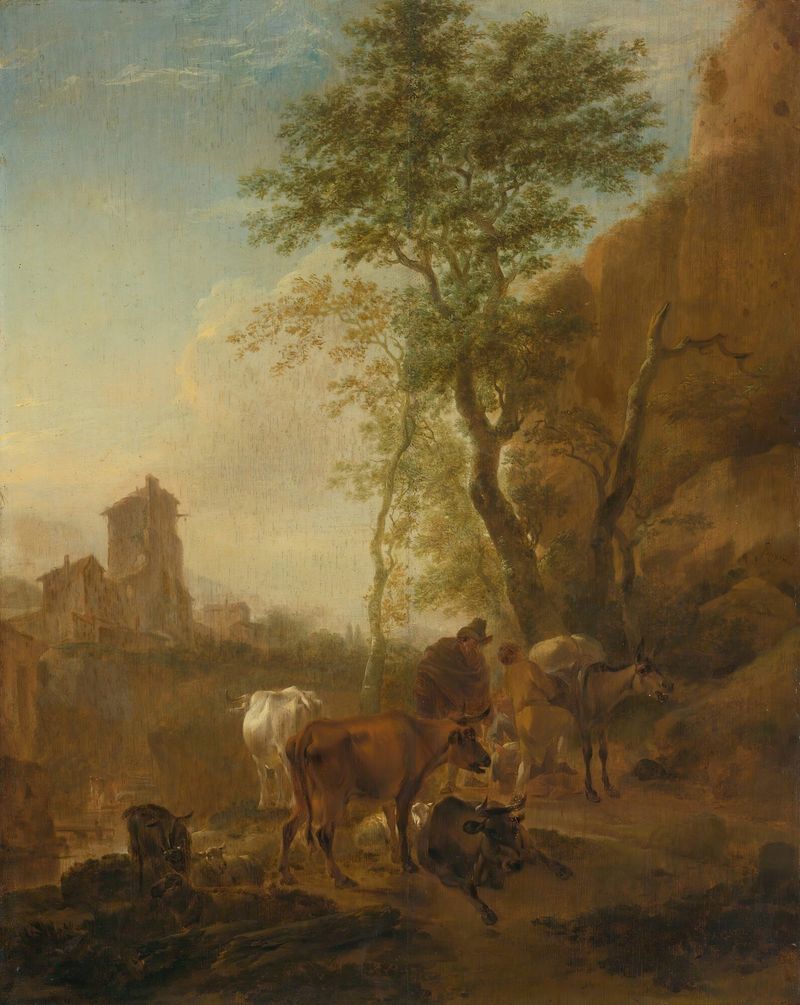
Italianate Landscape With Cows
Nicolaes Pietersz Berchem
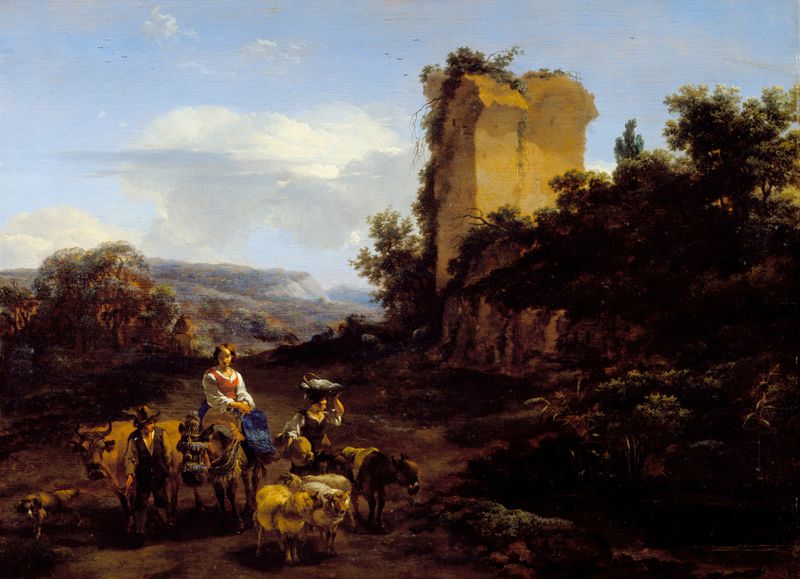
Landscape with Ruins and Travelers
Nicolaes Pietersz Berchem
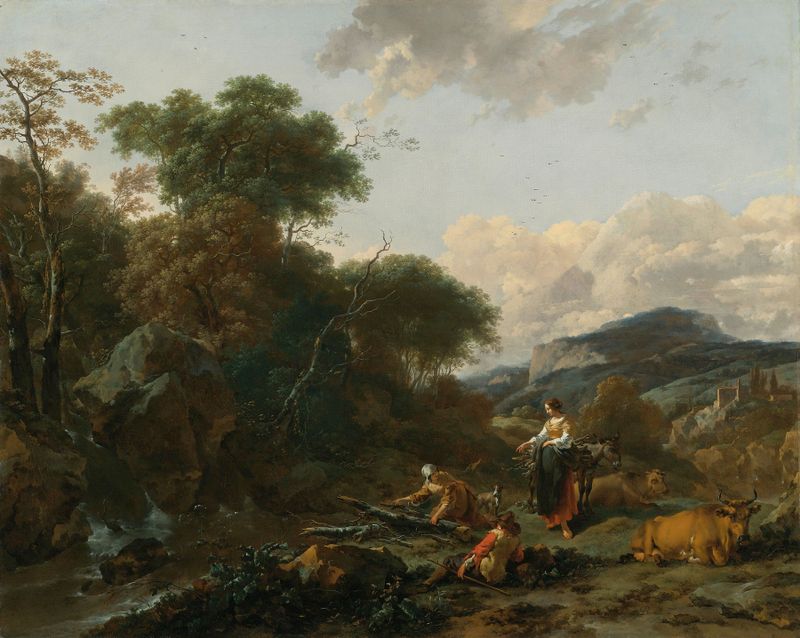
A Landscape With Figures
Nicolaes Pietersz Berchem
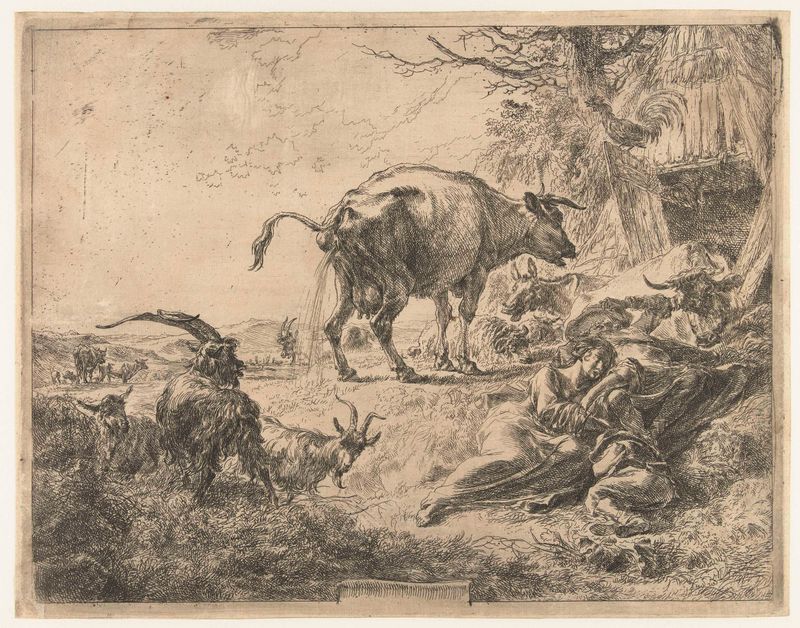
Slapende herdersfamilie en rustend vee
Nicolaes Pietersz Berchem
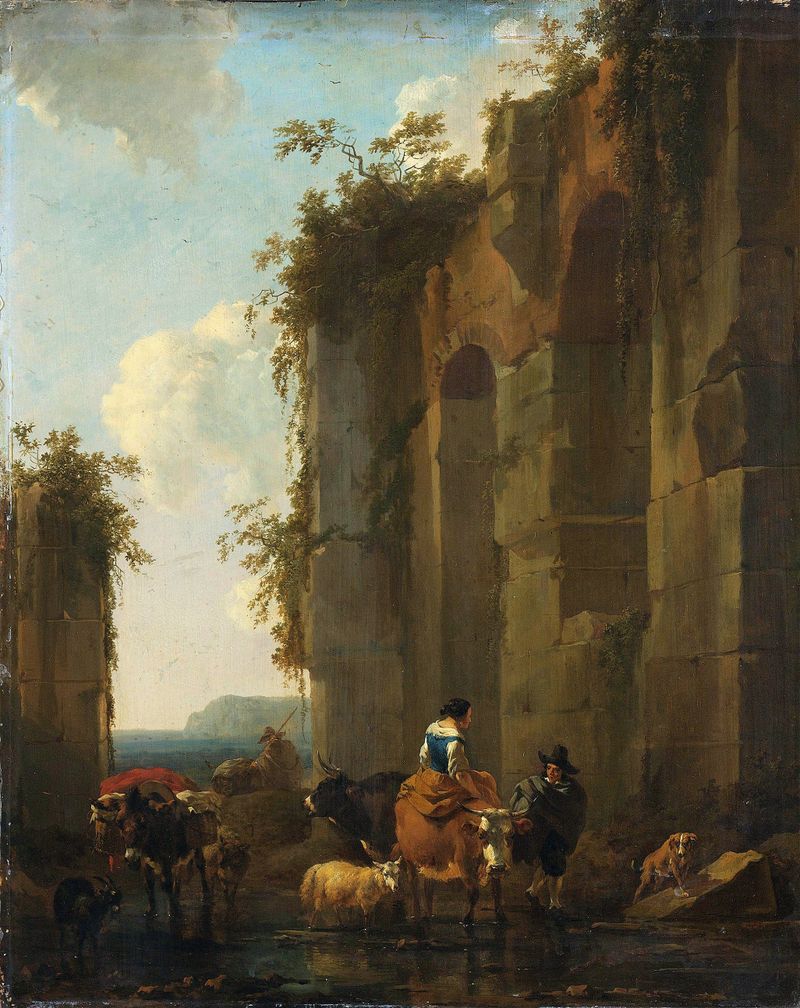
Ruins in Italy
Nicolaes Pietersz Berchem





