
Het land van Hoboken — History & Facts
Can beauty exist without sorrow? In Het land van Hoboken, the struggle between the ephemeral and the eternal plays out in a landscape that beckons with lush greenery yet whispers of life's transience. To truly appreciate this work, first turn your gaze to the sweeping horizon, where vibrant greens intermingle with soft earth tones, forming a cradle of life. Notice how the delicate brushstrokes create a textured atmosphere, imbuing the landscape with a tactile quality that is both inviting and unsettling. The light dances across the scene, illuminating the subtle features of the foreground while casting long, haunting shadows that hint at the passage of time.
At first glance, the composition appears idyllic, yet it invites the viewer to explore deeper nuances. Embedded within the tranquil beauty lies an undercurrent of melancholy. The juxtaposition of lush, blooming flora against the creeping shadows captures the duality of existence—where every moment of joy is tempered by the inevitability of loss. The distant figures in the landscape, seemingly at peace, are mere silhouettes, representing the fleeting nature of life and the universal journey toward mortality.
Each stroke of the brush becomes a meditation on the fragility of existence, urging a reflection on what lies beneath the surface of beauty. In 1923, Simon Moulijn painted this piece during a time marked by post-war recovery and societal change in Europe. Living in the Netherlands, he was influenced by the art movements of his era, particularly the shift toward modernism that embraced both abstraction and a return to nature. This artwork emerges from a period of introspection and exploration, where the artist sought to reconcile the beauty of the world with the shadows of human experience, creating a lasting dialogue between life and mortality.
More Artworks by Simon Moulijn
Browse all →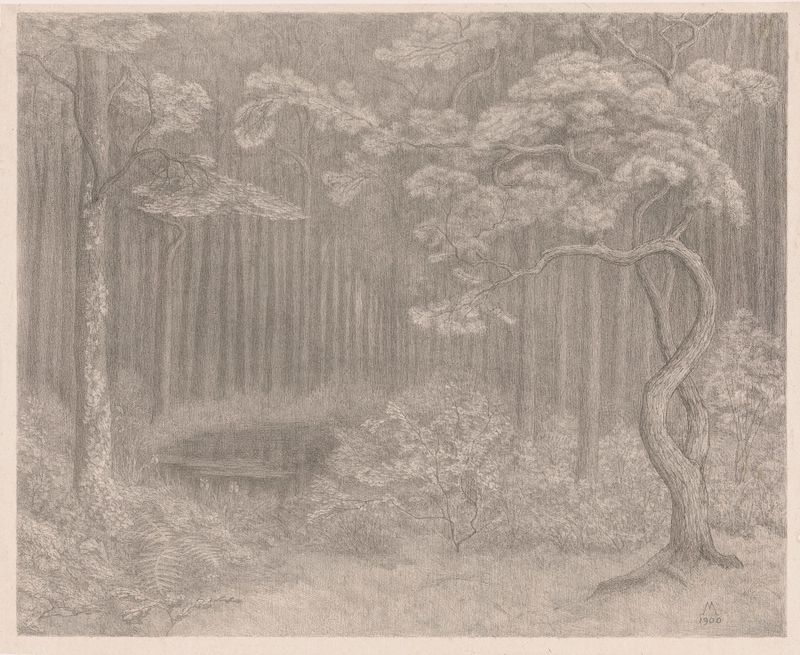
Bosgezicht
Simon Moulijn
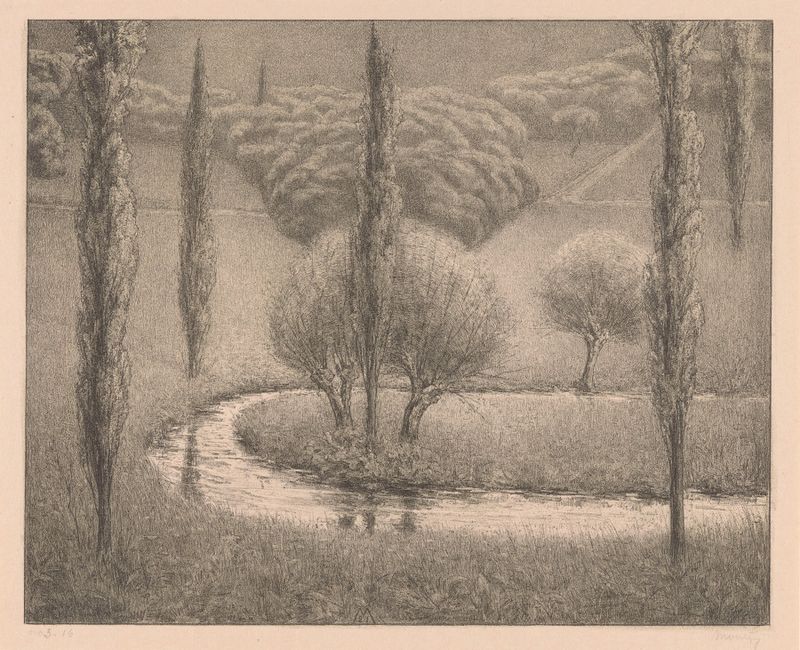
Landschap met wilgen en populieren
Simon Moulijn
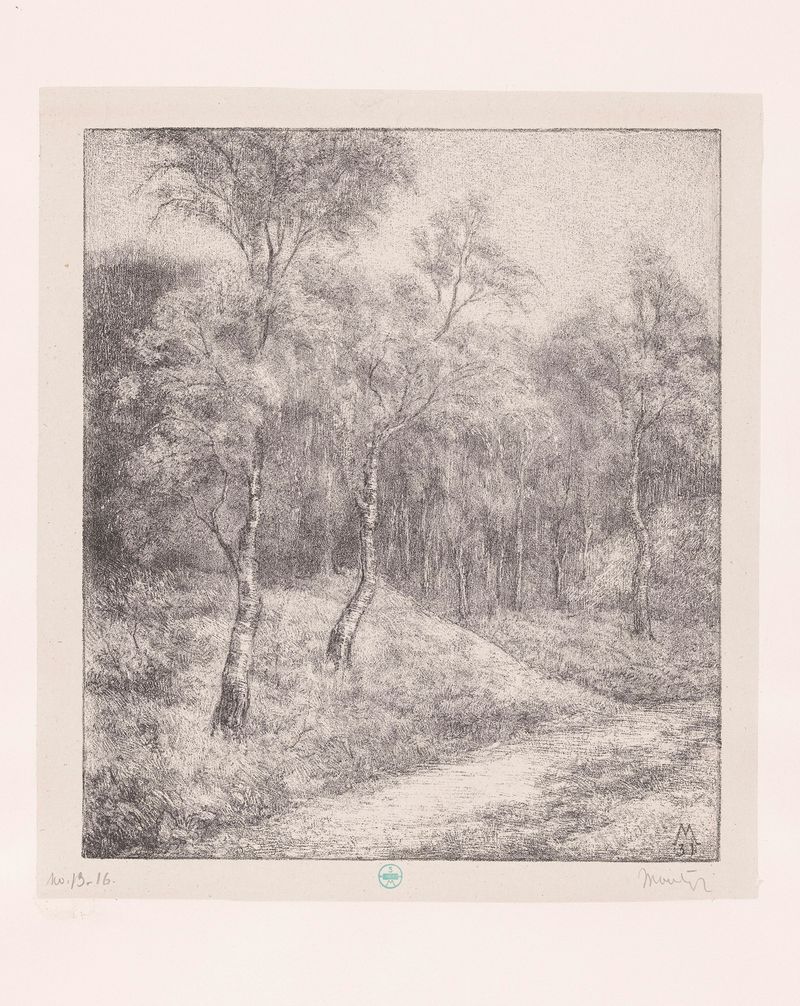
Bospad met berken
Simon Moulijn
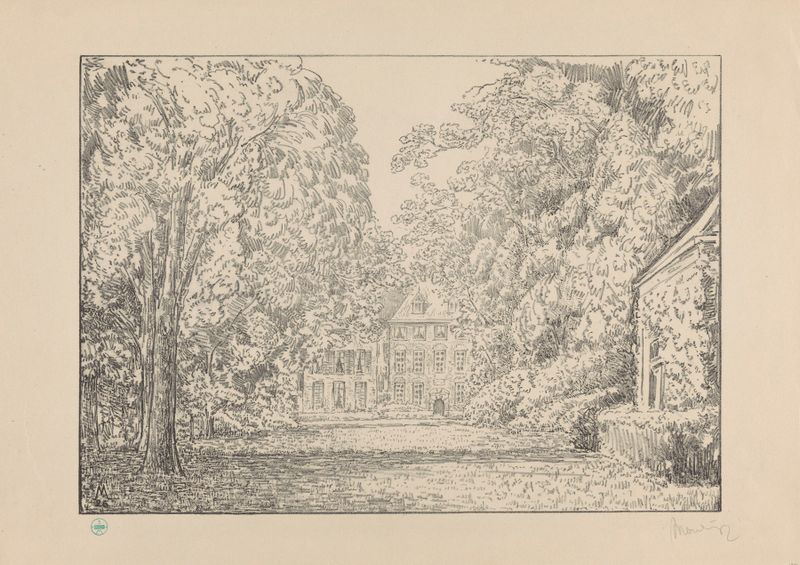
Gezicht op kasteel Duivenvoorde vanuit de tuin Duivenvoorde I
Simon Moulijn
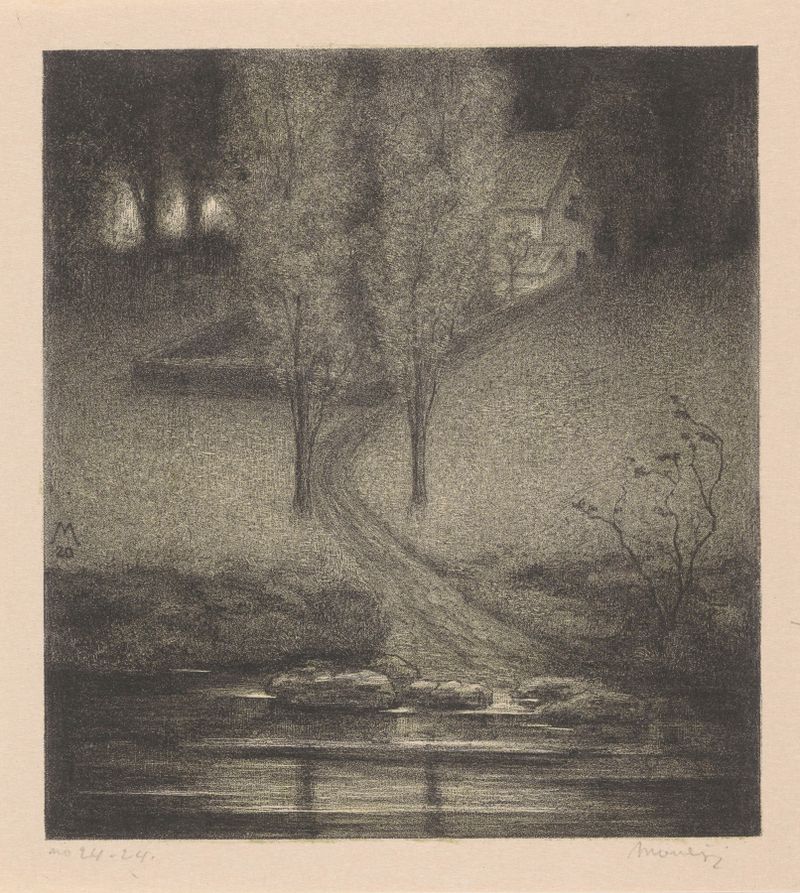
Populieren aan een beek
Simon Moulijn
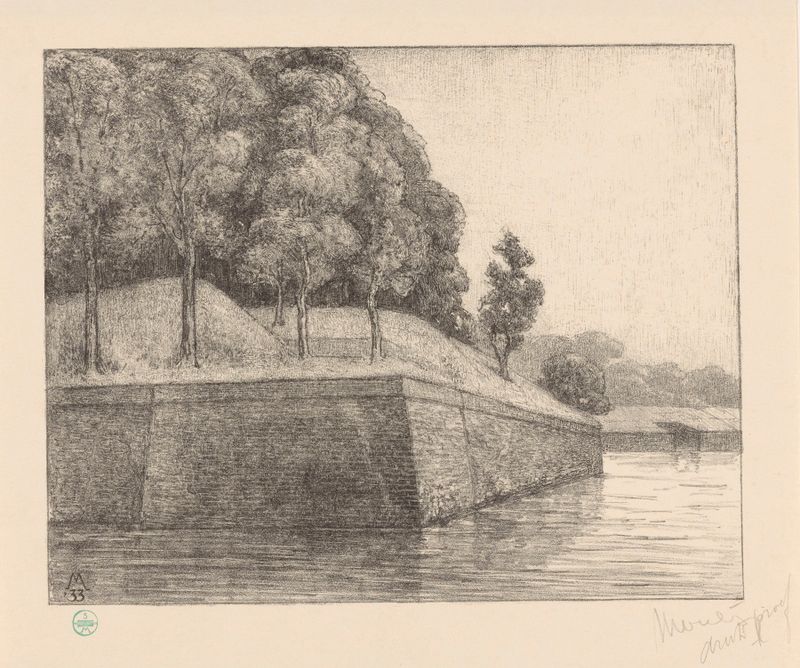
Gezicht op bastion Oud-Molen (westzijde)
Simon Moulijn
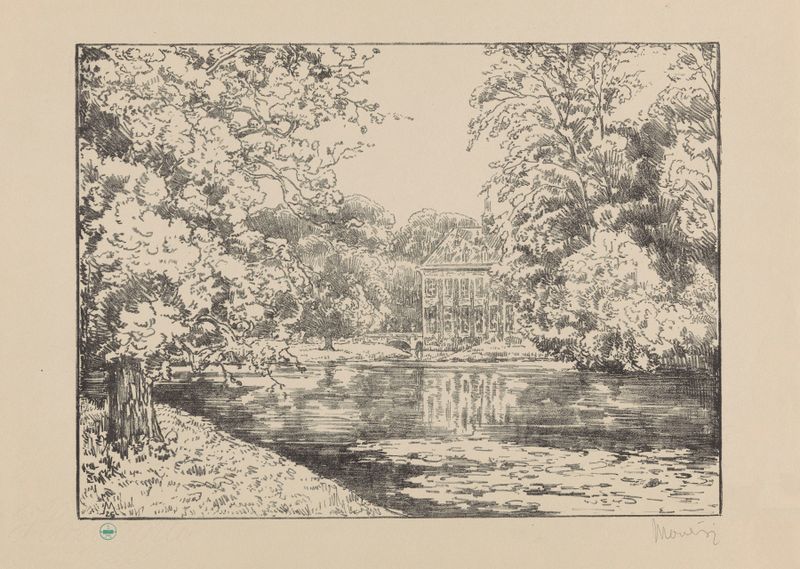
Kasteel Duivenvoorde aan vijver Duivenvoorde II
Simon Moulijn
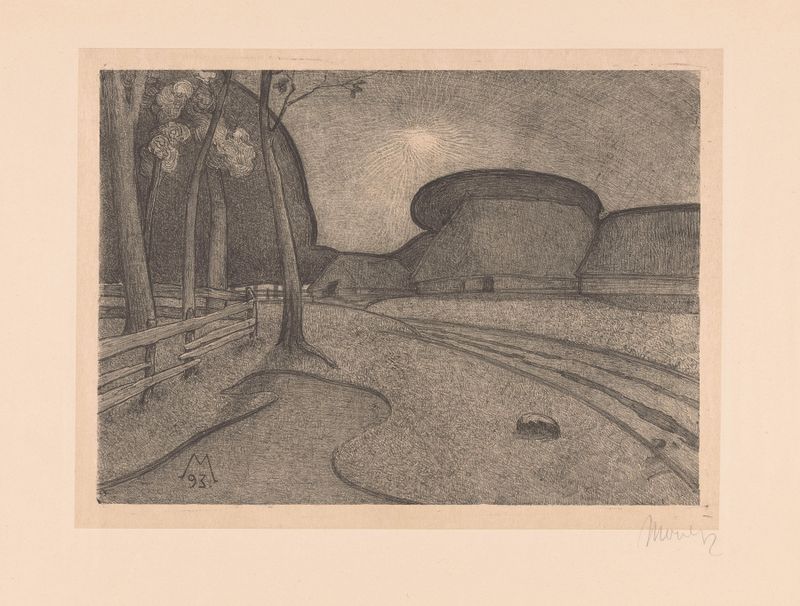
Landschap met boerderij Avond
Simon Moulijn
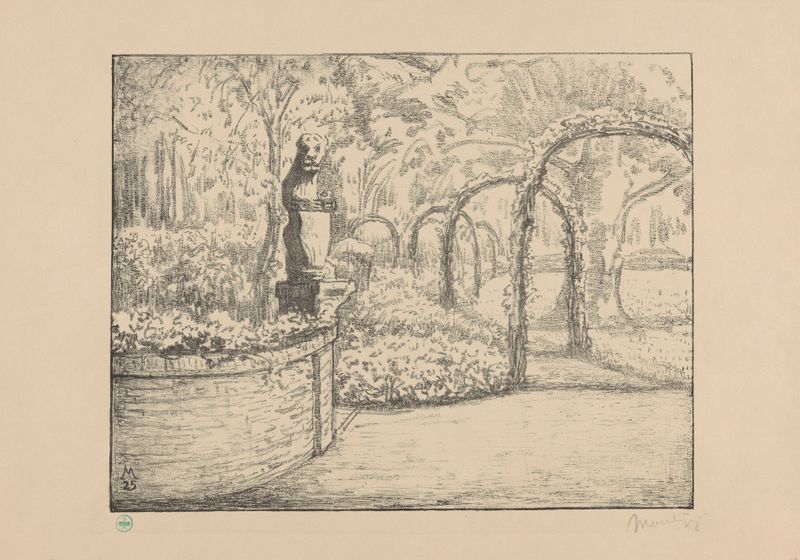
Tuin met rozenbogen op landgoed Zorgvliet Zorgvliet I
Simon Moulijn
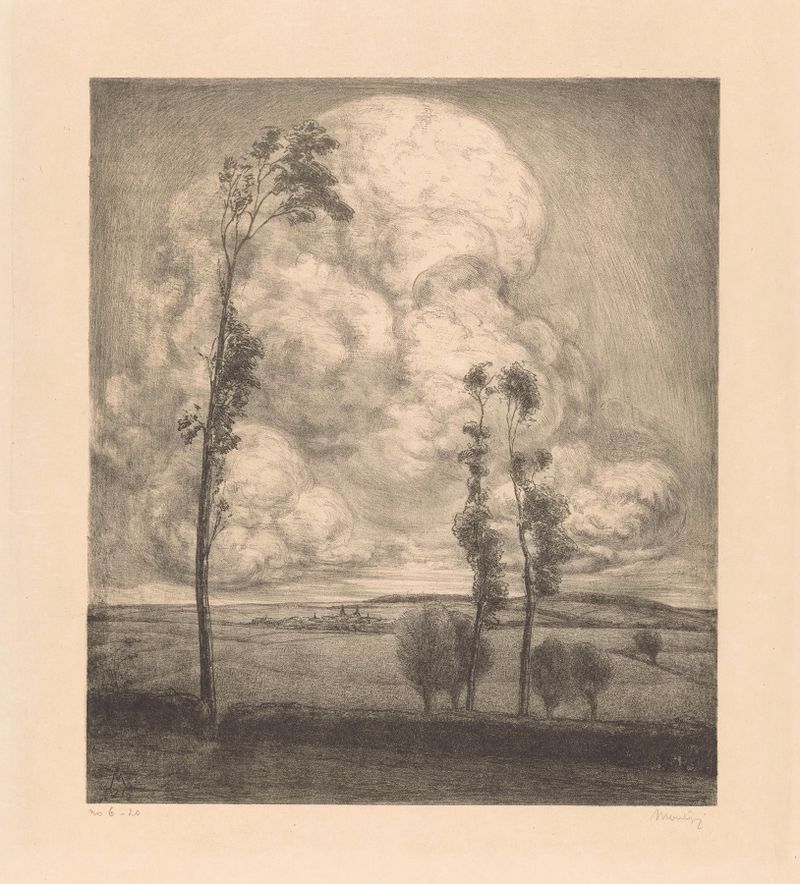
Wolken boven glooiend landschap
Simon Moulijn





