
Heterocampa Biundata, Walker, study for book Concealing Coloration in the Animal Kingdom — History & Facts
The first thing to catch the eye here is the illusion itself: two small studies, each a patchwork of green, brown, and shadow, seem at first glance to be nothing more than leaves. Look closer, and the careful hand of Abbott Handerson Thayer reveals its true subject—a moth so perfectly blended into its resting place that it nearly disappears. The left panel is dense with overlapping greens, the subtle play of light and shadow mimicking the ragged edge of foliage; the right, more stark, frames the moth with a dark, almost ink-like border that heightens the sense of concealment.
The artist’s brushwork is brisk but deliberate, the colors layered to invite the viewer into a game of hide-and-seek with nature. Created sometime between 1849 and 1921, this study belongs to a world newly fascinated by the science of camouflage and the mysteries of animal survival. Thayer, known as the “father of camouflage,” produced such works as part of his research for the influential book Concealing Coloration in the Animal Kingdom. These studies were not made for gallery walls, but for the pages of scientific argument and public wonder—visual evidence in a debate about how and why animals vanish into their backgrounds.
The mounting on a scrap of printed packaging, advertising “The Shredded Wheat Company,” roots the work in the everyday materials of its era, a reminder that even the most extraordinary secrets of nature can be found in the most ordinary places. Let your eye linger: what seems like mere leaf and shadow may, at any moment, take flight.
More Artworks by Abbott Handerson Thayer
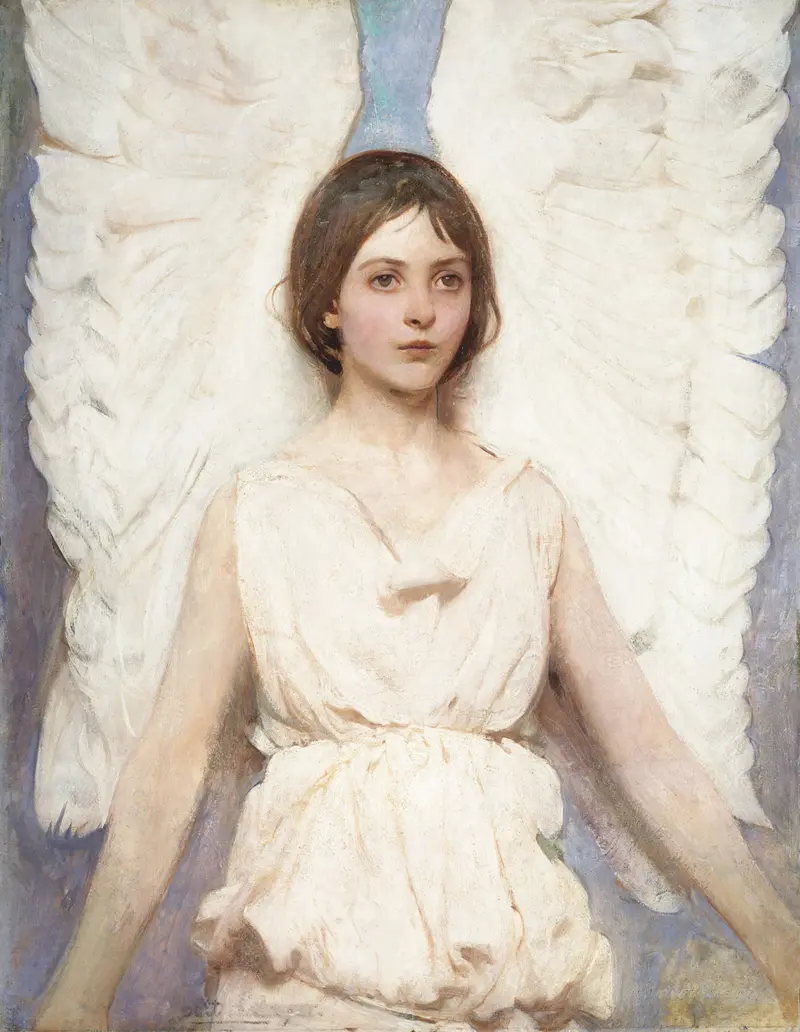
Angel
Abbott Handerson Thayer

Mount Monadnock
Abbott Handerson Thayer
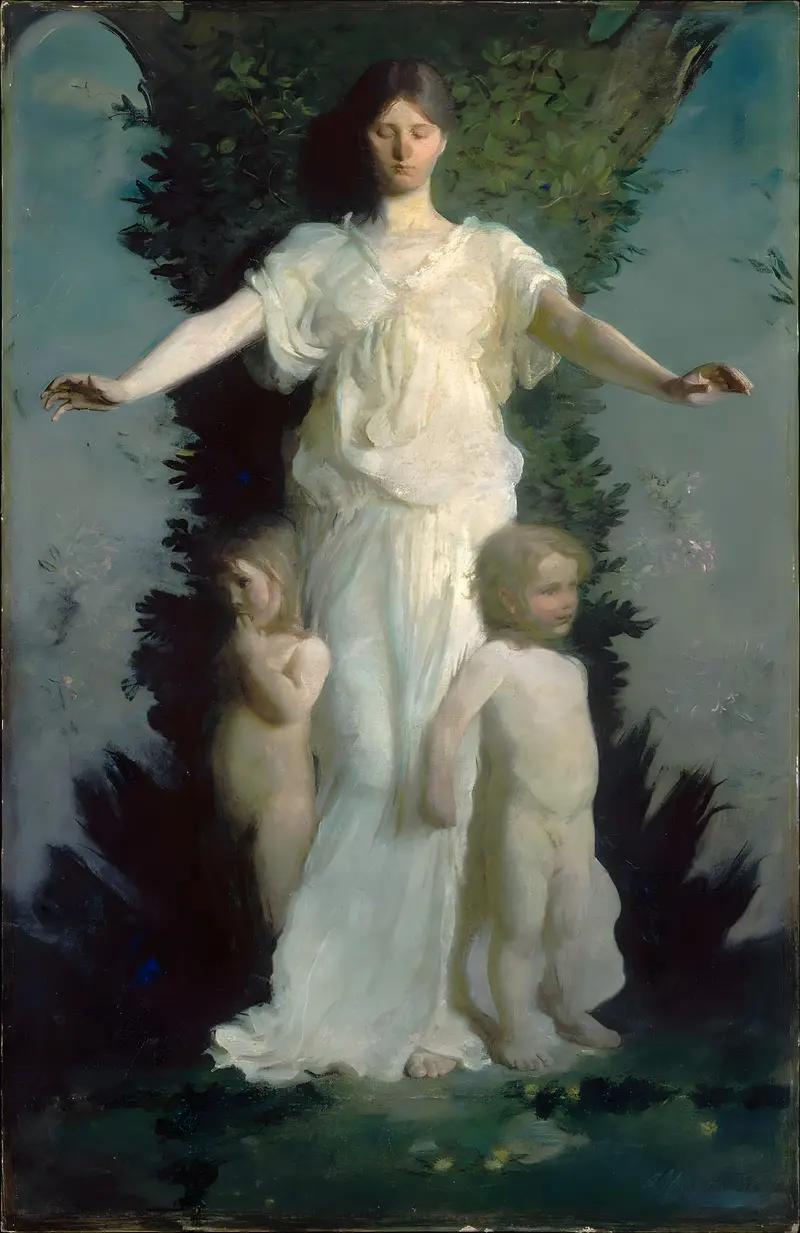
Caritas
Abbott Handerson Thayer

Winter, Monadnock
Abbott Handerson Thayer
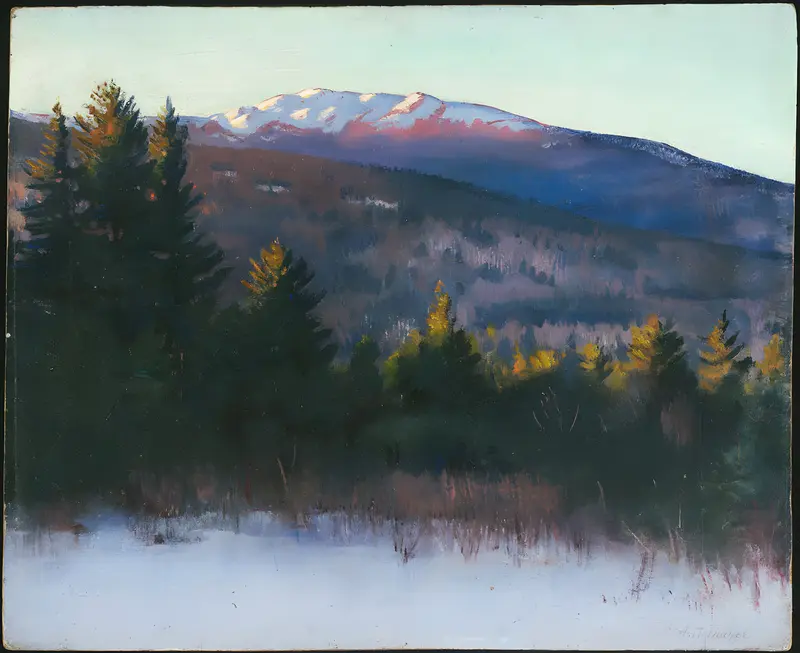
Mount Monadnock
Abbott Handerson Thayer
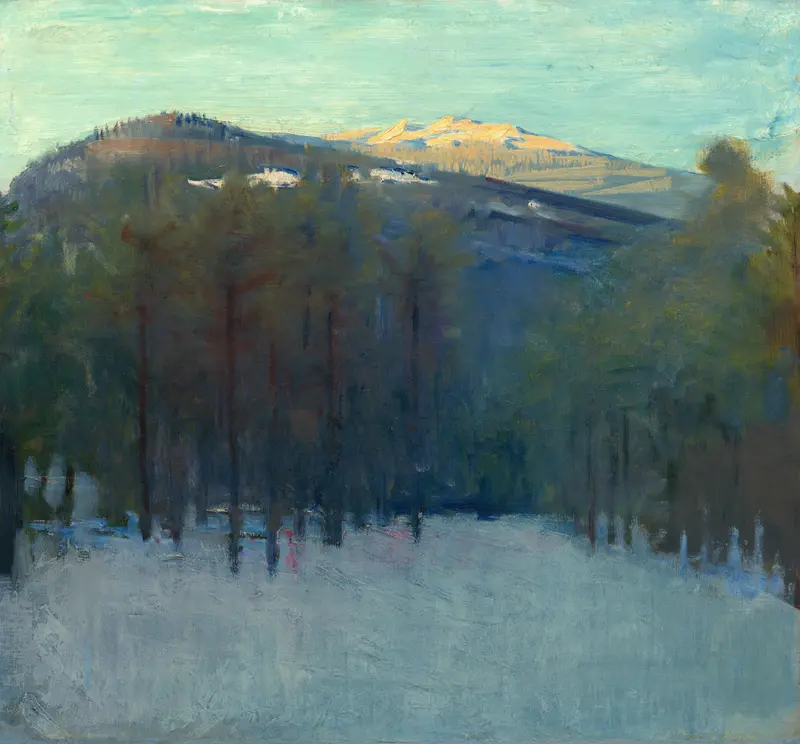
Mount Monadnock
Abbott Handerson Thayer
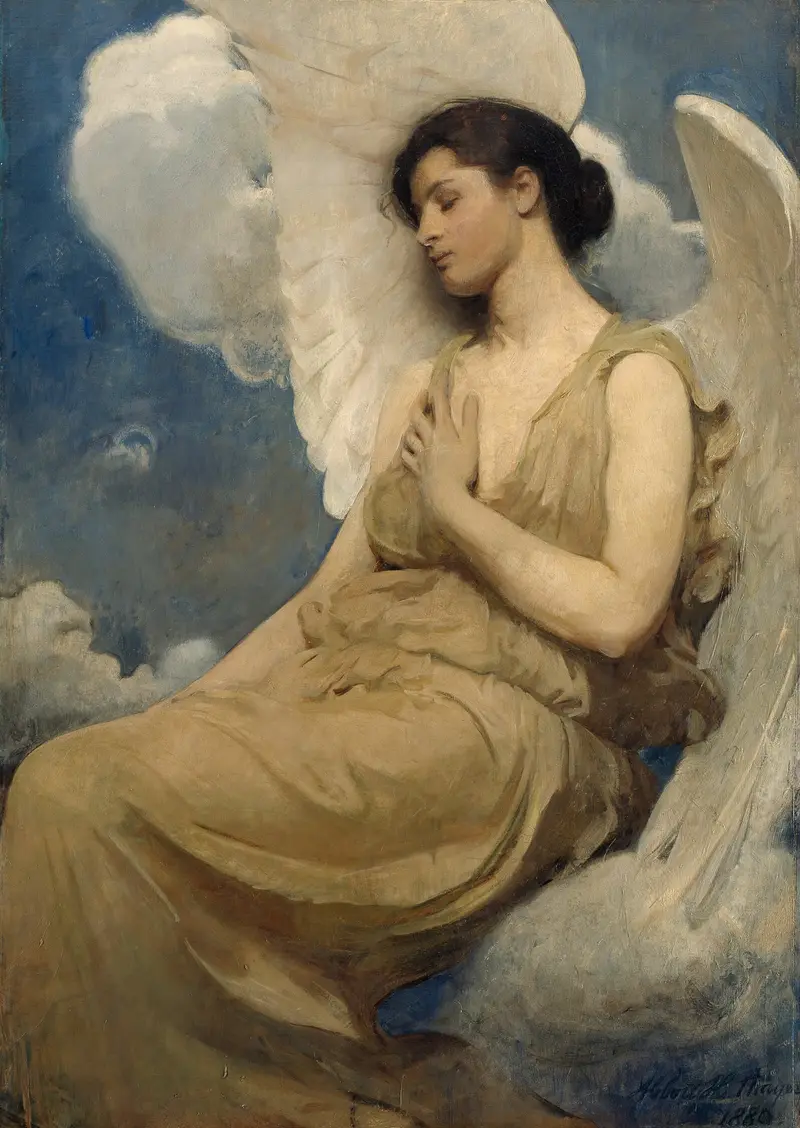
Winged Figure
Abbott Handerson Thayer
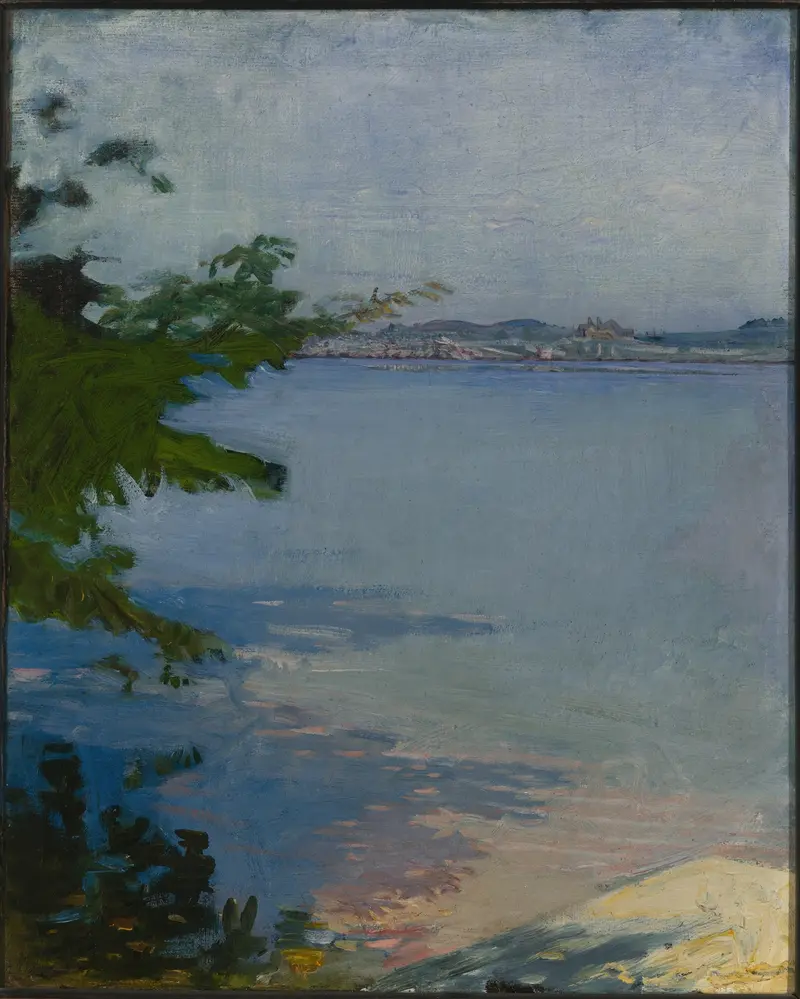
Dublin Pond, New Hampshire
Abbott Handerson Thayer
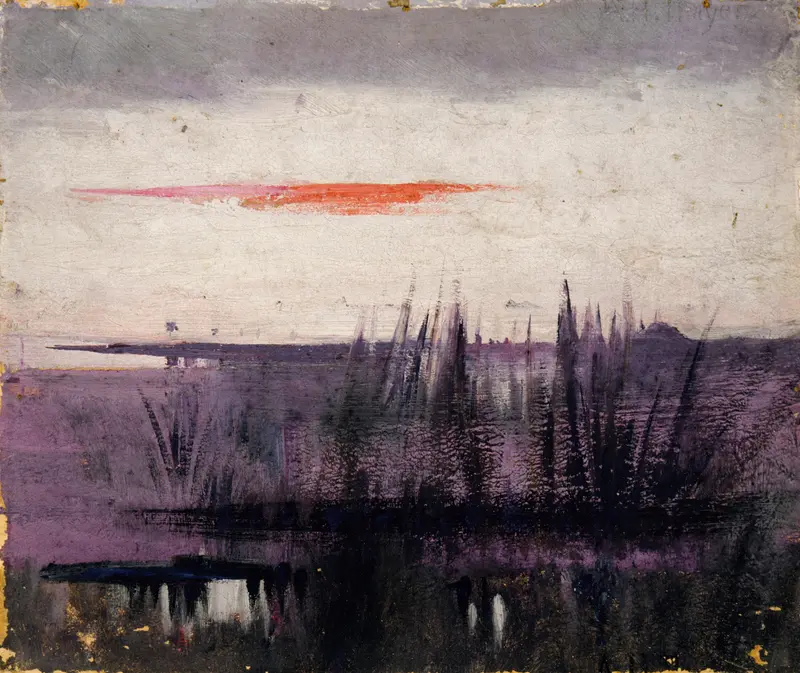
The Sky Simulated By White Flamingoes Study For Book, Concealing Coloration In The Animal Kingdom
Abbott Handerson Thayer
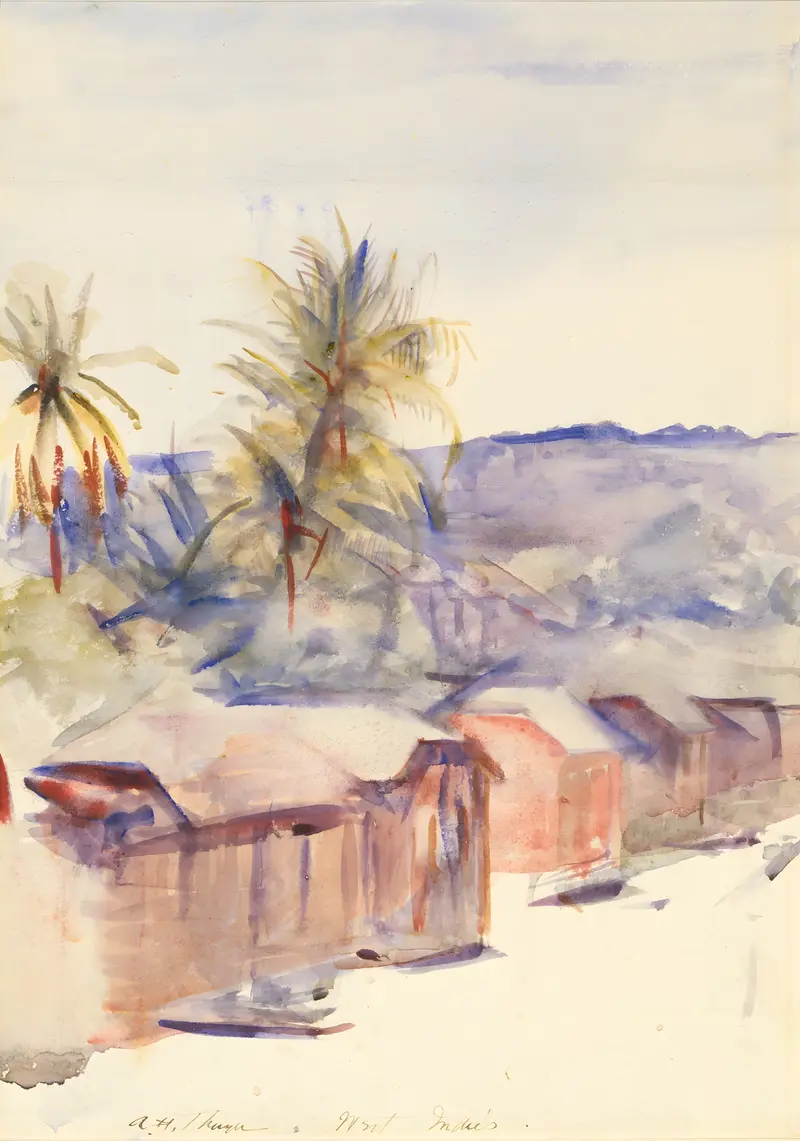
Village Street, Dominica
Abbott Handerson Thayer





