
Hillside — History & Facts
What secret hides in the quiet of the canvas? In Hillside, a serene landscape juxtaposes tranquility with an underlying chaos that lurks just beneath the surface. Look to the center where gentle slopes curve into a vibrant tapestry of greens and golds, inviting your eye to wander through the lush foliage. Notice how the dappled light filters through the leaves, casting playful shadows that dance across the serene land. The meticulous brushwork creates a lively texture, imbuing the painting with a palpable warmth while the rolling hills evoke a sense of gentle motion, as if the scenery breathes with life. Yet, within this idyllic setting lies a hidden tension.
The vibrant colors could symbolize the euphoric beauty of nature, but they also hint at the unpredictability of life itself, suggesting an imminent change. The carefully rendered details suggest a delicate balance—each leaf and blade of grass a reminder of the chaos that nature can harbor beneath its calm exterior. It’s a fragile peace, a moment poised on the edge of transformation. Frederic Edwin Church painted Hillside between 1870 and 1880 during a period marked by heightened interest in nature as a subject of artistic exploration.
Living in the midst of a rapidly changing America, Church was a prominent figure in the Hudson River School, embracing the ideal of capturing sublime landscapes. This work reflects both his dedication to detail and an awareness of the complexities of the natural world as the nation grappled with the consequences of industrialization and expansion.
More Artworks by Frederic Edwin Church
Browse all →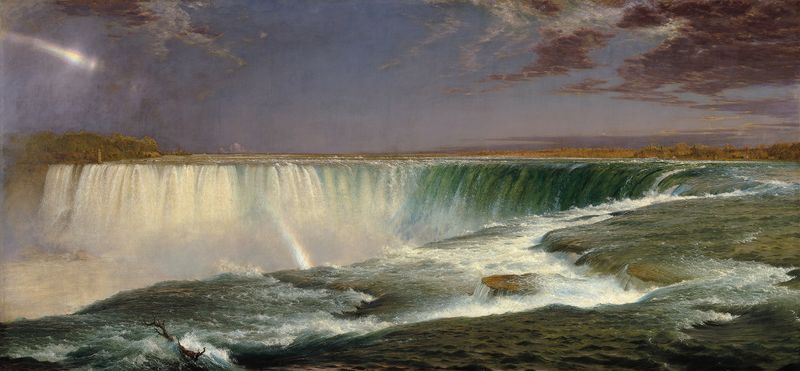
Niagara
Frederic Edwin Church
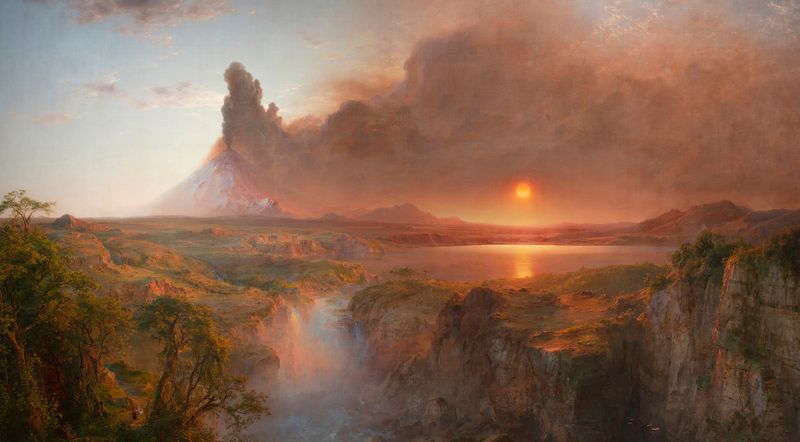
Cotopaxi
Frederic Edwin Church
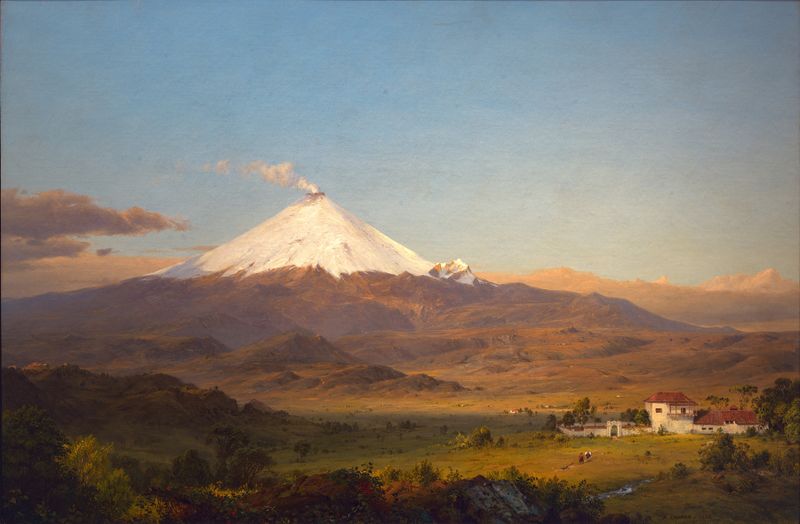
Cotopaxi
Frederic Edwin Church
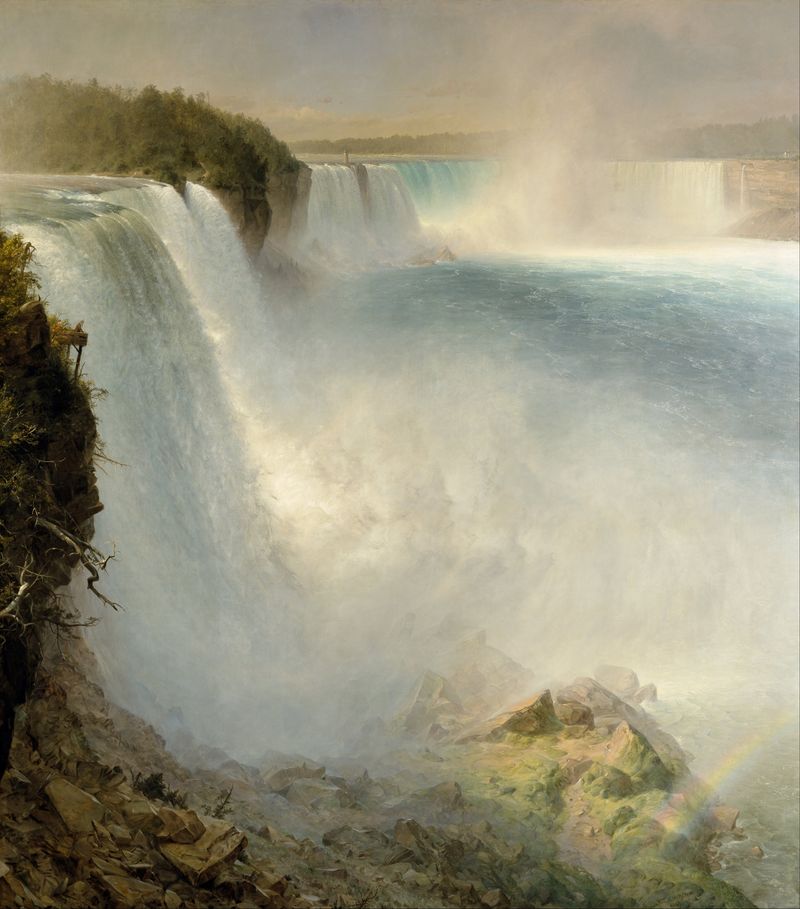
Niagara Falls, from the American Side
Frederic Edwin Church
Twilight in the Wilderness
Frederic Edwin Church
Hudson Valley at Sunset
Frederic Edwin Church
The Hintersee, near Berchtesgaden, Bavaria
Frederic Edwin Church
Mountains near Baalbec
Frederic Edwin Church
Aurora Borealis
Frederic Edwin Church
Cotopaxi
Frederic Edwin Church





