
Hilly Pastures — History & Facts
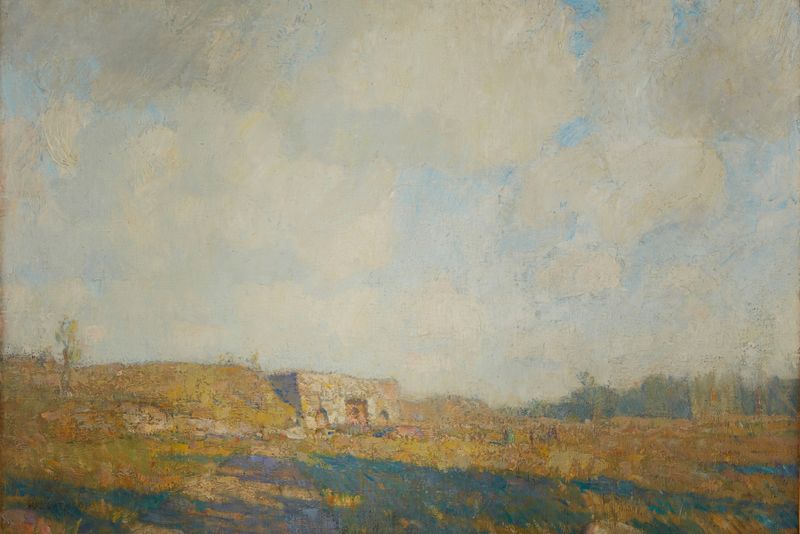
In the hands of a skilled artist, the fragile beauty of nature emerges as a powerful, vibrant tableau. Focus first on the soft undulations of the rolling hills that stretch across the canvas, each stroke of paint capturing a gentle sway, as if the land itself breathes. Notice how the artist's palette balances earthy greens and warm golds, creating a harmonious rhythm that invites your gaze to wander. The light, dappled and warm, casts delicate shadows, breathing life into the landscape, while hints of white clouds float lazily in a crystalline sky, bridging earth and heaven. Amid the grandeur of this scene lies a deeper tension; the juxtaposition of strength and delicacy.
The sturdy trees, rooted in the foreground, stand as guardians over the fragile grasses that sway in the breeze, symbolizing resilience amidst vulnerability. Each brushstroke tells a story of transition, as the lush foliage hints at the cyclical nature of life—how beauty is often found in the most delicate moments of existence. In Hilly Pastures, created in 1901, the artist worked during a period of significant change within the American art scene, as Impressionism began to take hold. Lathrop painted in his studio in Pennsylvania, capturing the essence of the countryside with a keen eye for detail and atmosphere.
This piece reflects a deep connection with nature amidst the evolving art world, where traditional depictions were giving way to more expressive interpretations.
More Artworks by William Langson Lathrop
Browse all →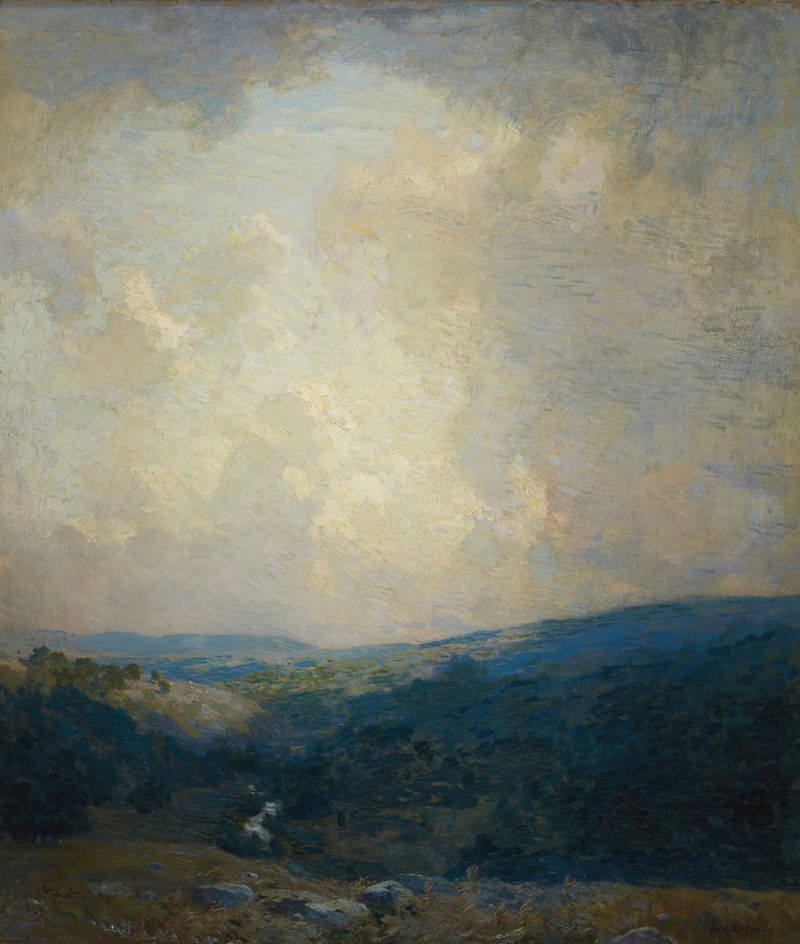
Breaking Clouds, Delaware Valley
William Langson Lathrop
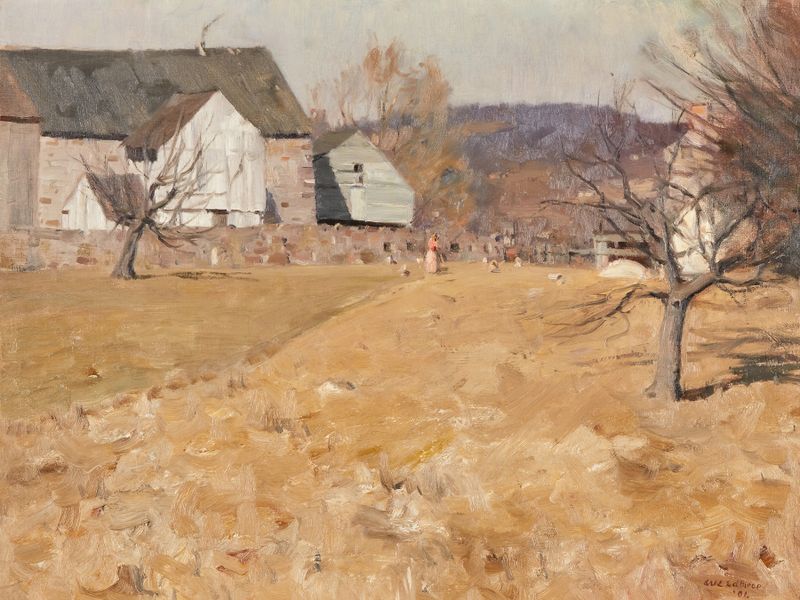
Feeding the Chickens
William Langson Lathrop
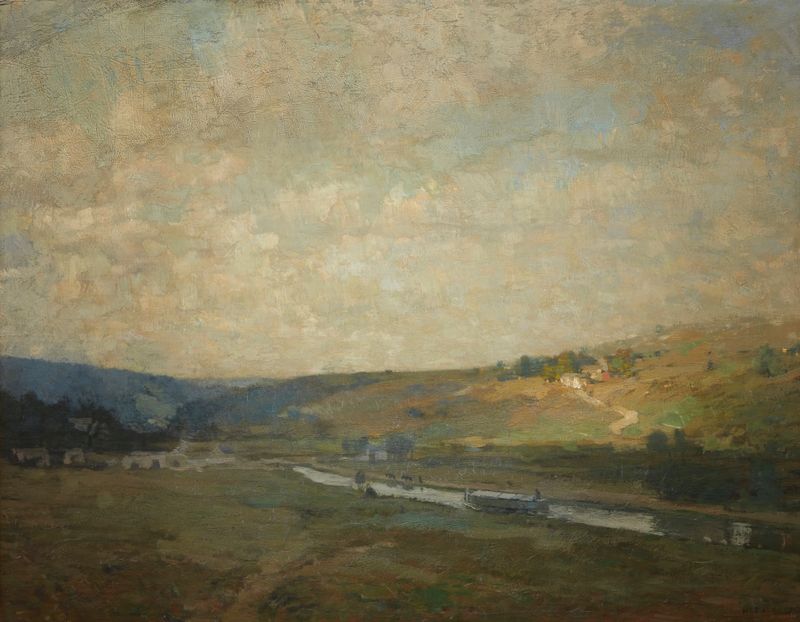
Delaware Canal
William Langson Lathrop
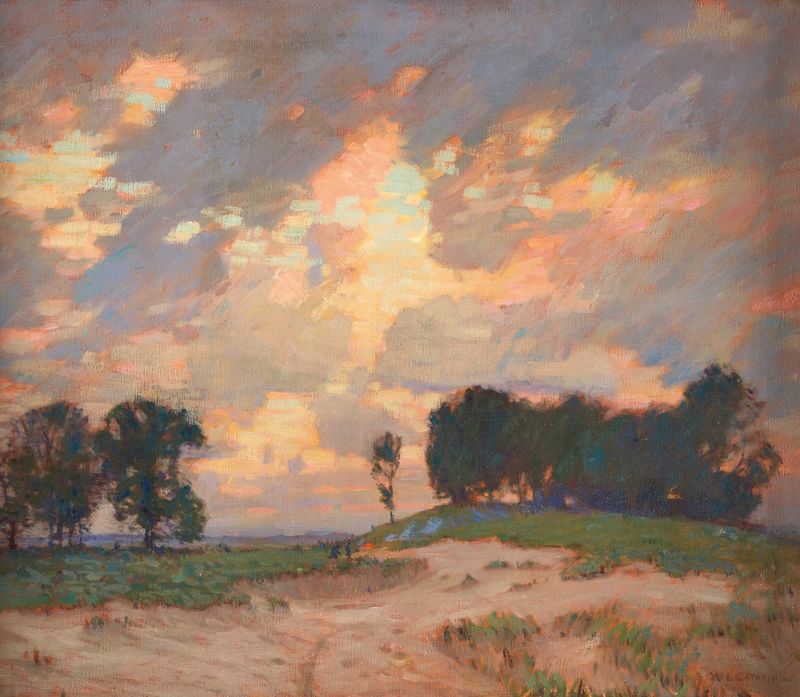
The Bonfire
William Langson Lathrop
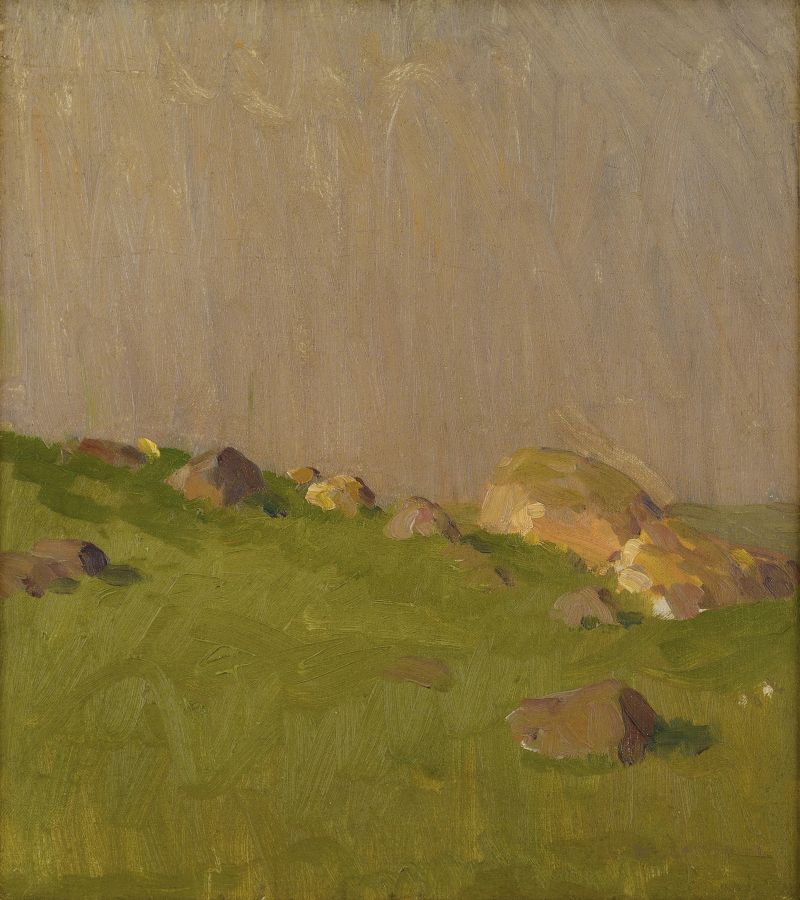
Pasture Boulders
William Langson Lathrop
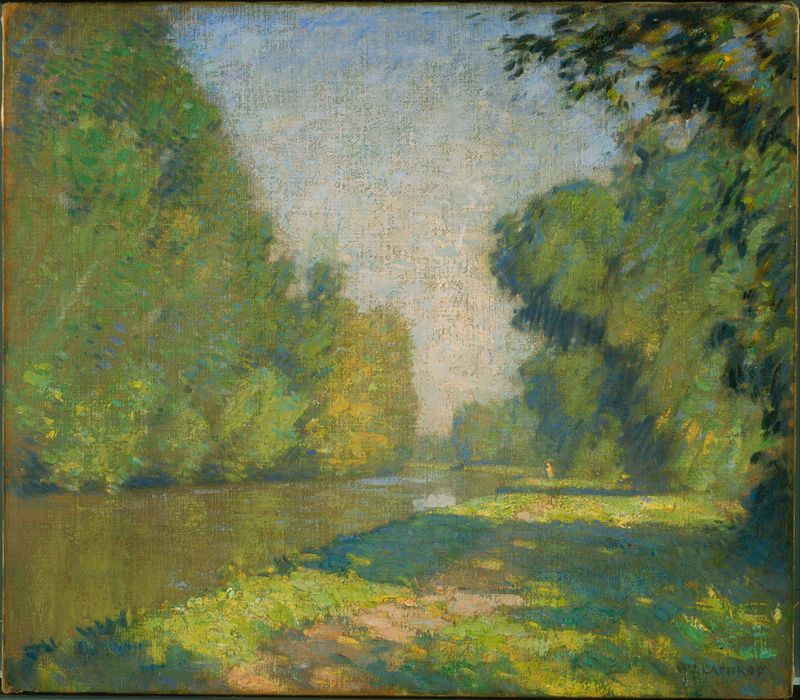
The Tow Path
William Langson Lathrop
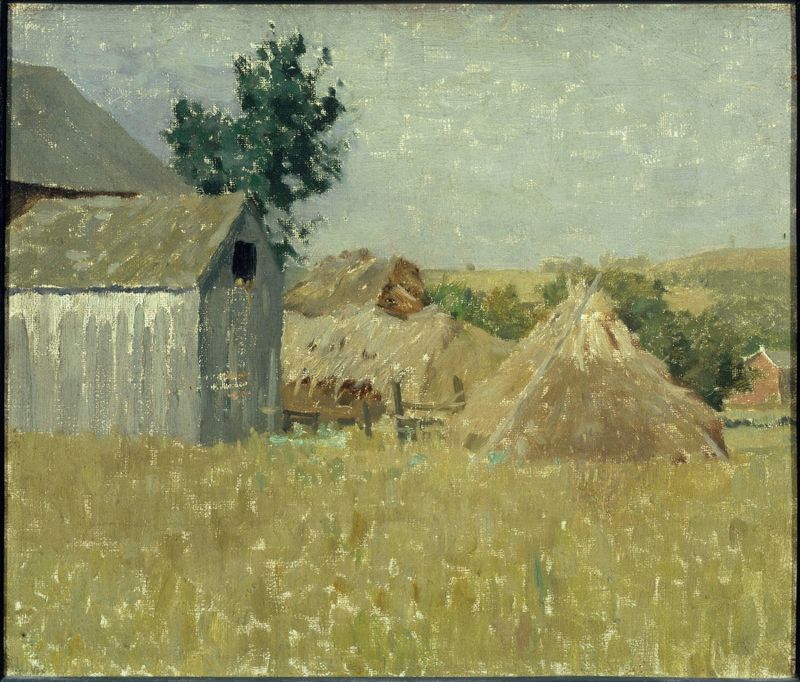
Gray Barn
William Langson Lathrop
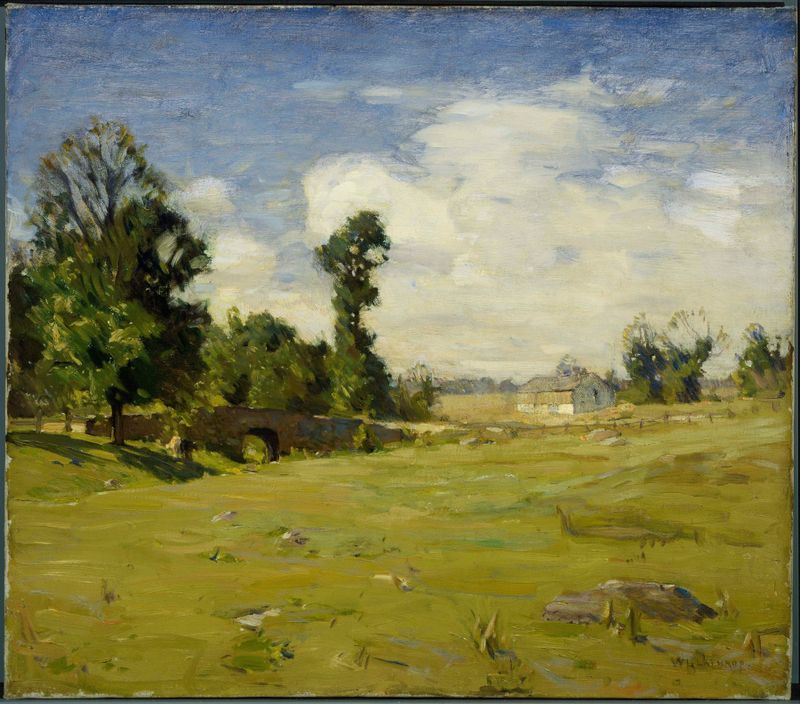
Ely’s Bridge
William Langson Lathrop
Old Limekiln
William Langson Lathrop
Landscape with Pond
William Langson Lathrop





