Hippolyte lardé par Cupidon — History & Facts
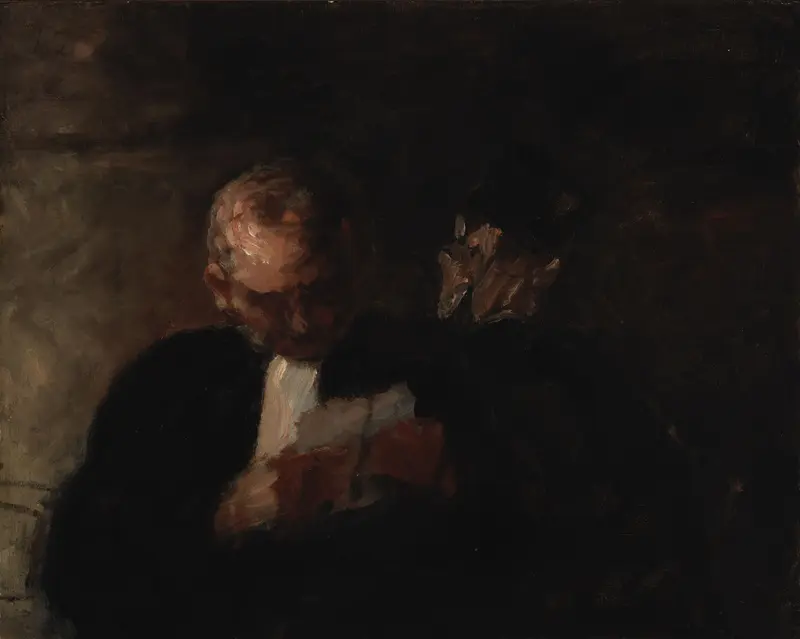
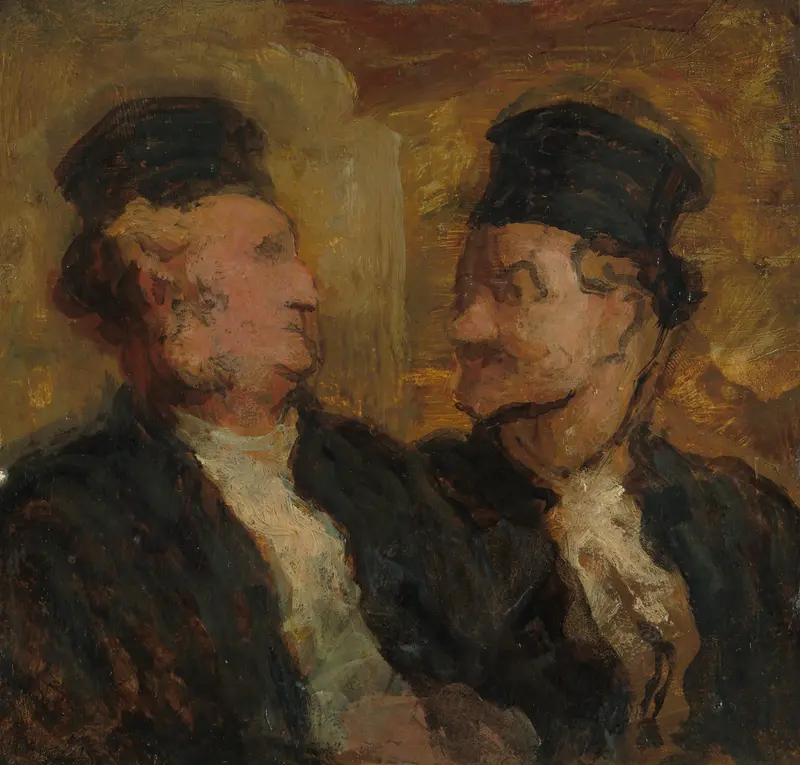
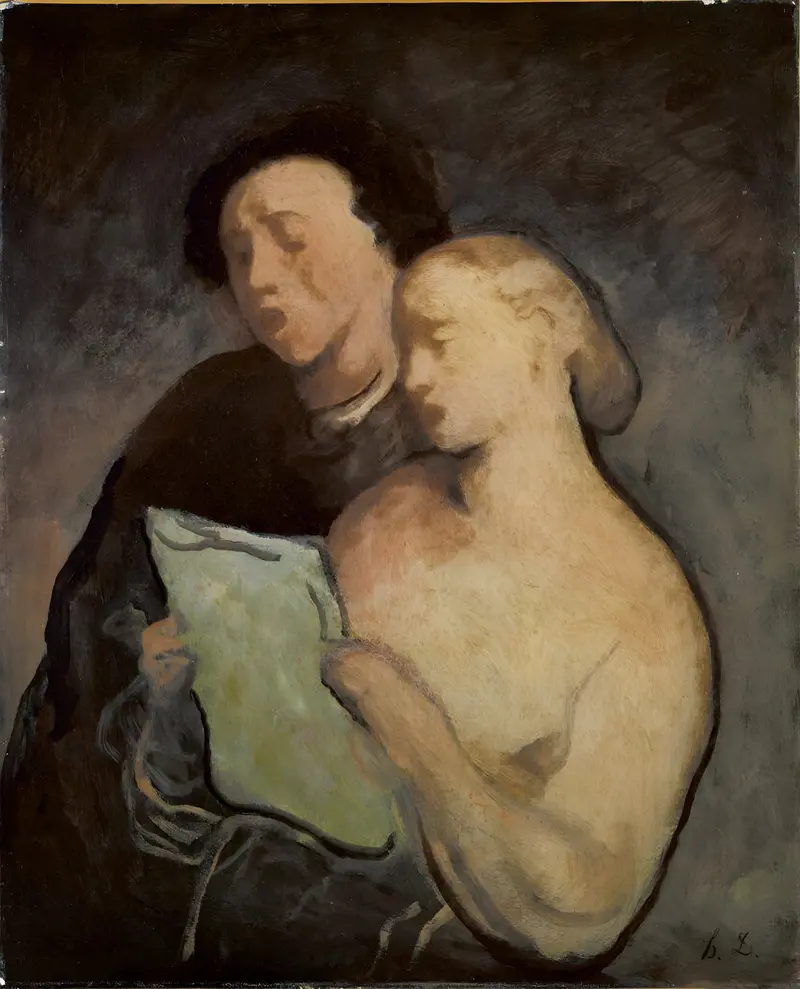
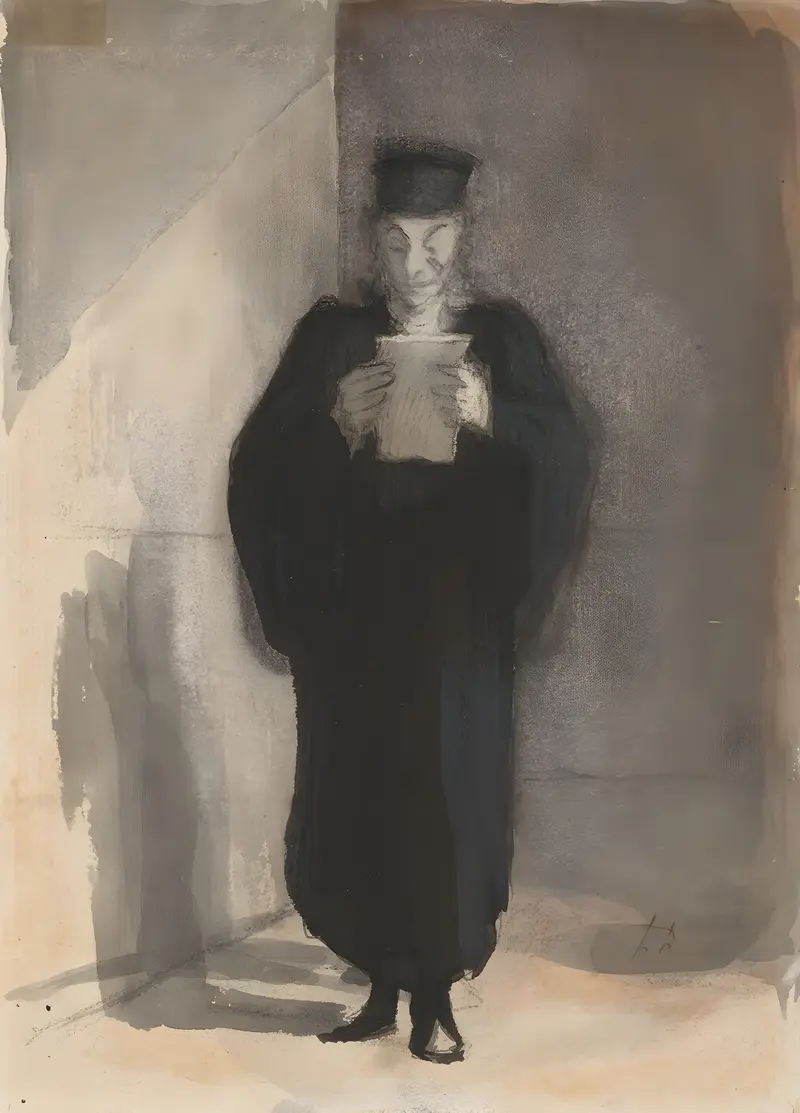
In Hippolyte lardé par Cupidon, the scene is filled with rich colors and dynamic figures. Cupid is depicted in the act of larding Hippolyte, who appears both surprised and bemused. The background features a lush, mythological landscape that enhances the narrative.
The use of light and shadow adds depth to the characters and setting. The painting is executed in oil on canvas, a common medium for the time, allowing for vibrant colors and detailed textures. Daumier's brushwork is evident in the flowing lines and expressive forms of the figures. The dimensions are approximately 70 x 100 cm, making it a sizable work that draws the viewer in.
The composition is balanced, with Cupid's figure prominently placed to capture attention. Honoré Daumier was known for his satirical works and social commentary, but in this piece, he explores classical mythology. Hippolyte lardé par Cupidon reflects Daumier's ability to blend humor with a serious subject. An interesting fact about this work is that it showcases his skill in depicting human emotion, which is often overlooked in his more political pieces.
This painting is housed in the Musée d'Orsay, a fitting location for its historical context.