
Hochbrücke im Gebirge — History & Facts
In the realm of nature, light becomes the silent storyteller, revealing the hidden contours of the world around us. Look closely at the foreground, where the intricate details of the bridge seem to beckon you to its embrace. The arches rise gracefully above the rushing waters below, rendered in earthy tones that contrast beautifully with the vibrant greens of the surrounding landscape. Notice how Compton employs delicate brushstrokes to capture the shimmering reflections dancing upon the river, a testament to his mastery of light and shadow.
The palette breathes life into the scene, inviting the viewer to step into a serene moment suspended in time. Beneath the surface, the painting conveys themes of solitude and connection. The bridge, a man-made structure, stands resilient against the vast, untamed wilderness. It symbolizes the delicate balance between human ambition and nature's grandeur.
The interplay of light and shadow not only emphasizes the architectural elegance of the bridge but also whispers of transience, urging us to consider our place within the natural world. Compton painted this work in the late 1800s, during a period when he was deeply influenced by the sublime beauty of the Alpine landscape. Living in England, he made numerous trips to the mountains, capturing their essence through his brush. This painting reflects his fascination with the interplay of light in nature, a hallmark of the Romantic movement, which sought to express emotions and the beauty of the world around.
More Artworks by Edward Theodore Compton
Browse all →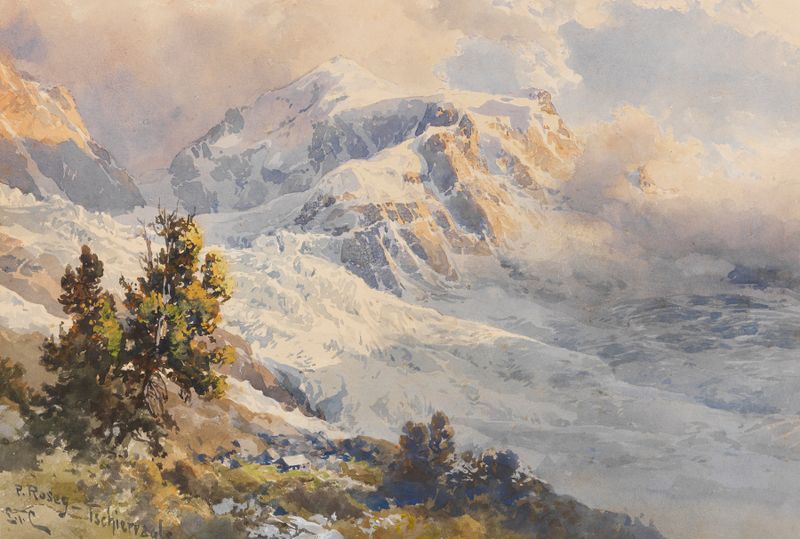
Piz Roseg – Tschiervagletscher
Edward Theodore Compton
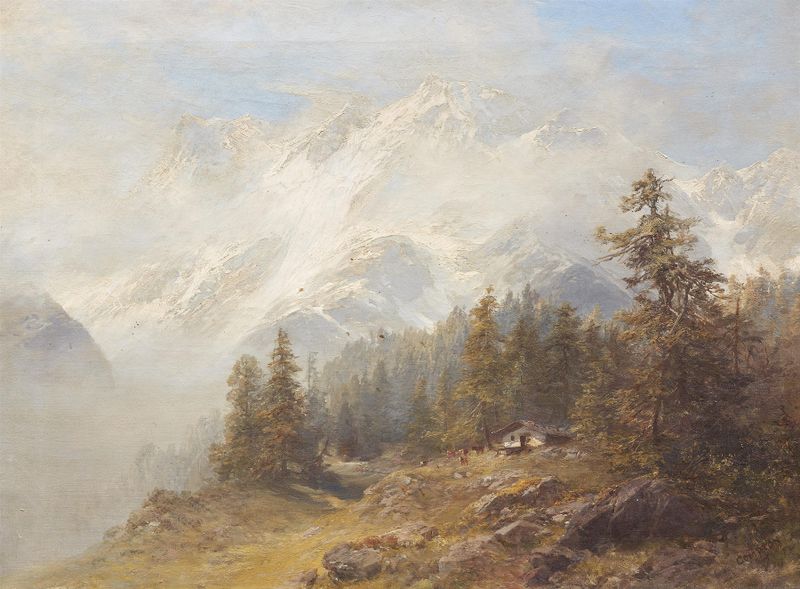
Alpenlandschaft vor schneebedecktem Massiv
Edward Theodore Compton
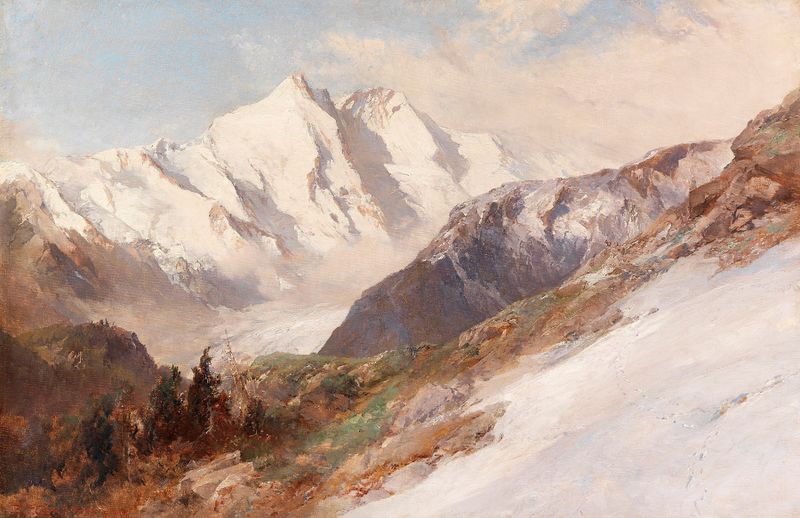
Blick auf die Nordseite des Großglockners
Edward Theodore Compton
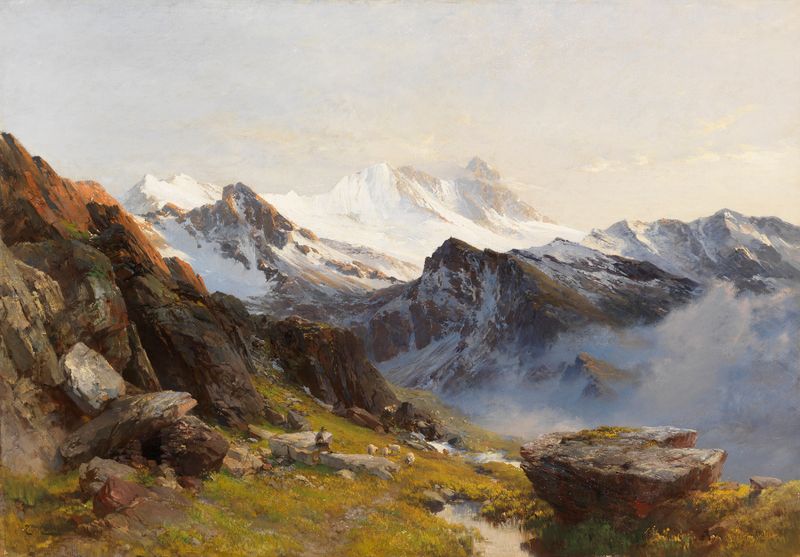
Großglockner von der Prager Hütte aus, früh
Edward Theodore Compton
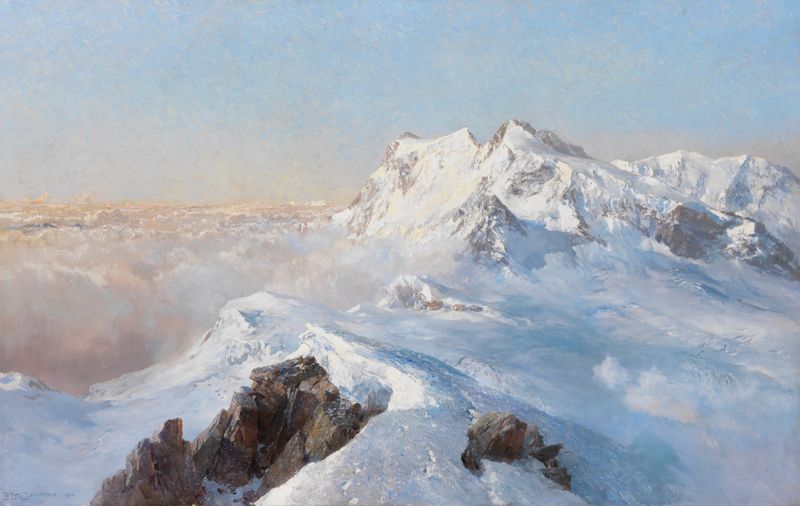
Über dem Nebelmeer (Monte Rosa vom Rimpfischhorn)
Edward Theodore Compton
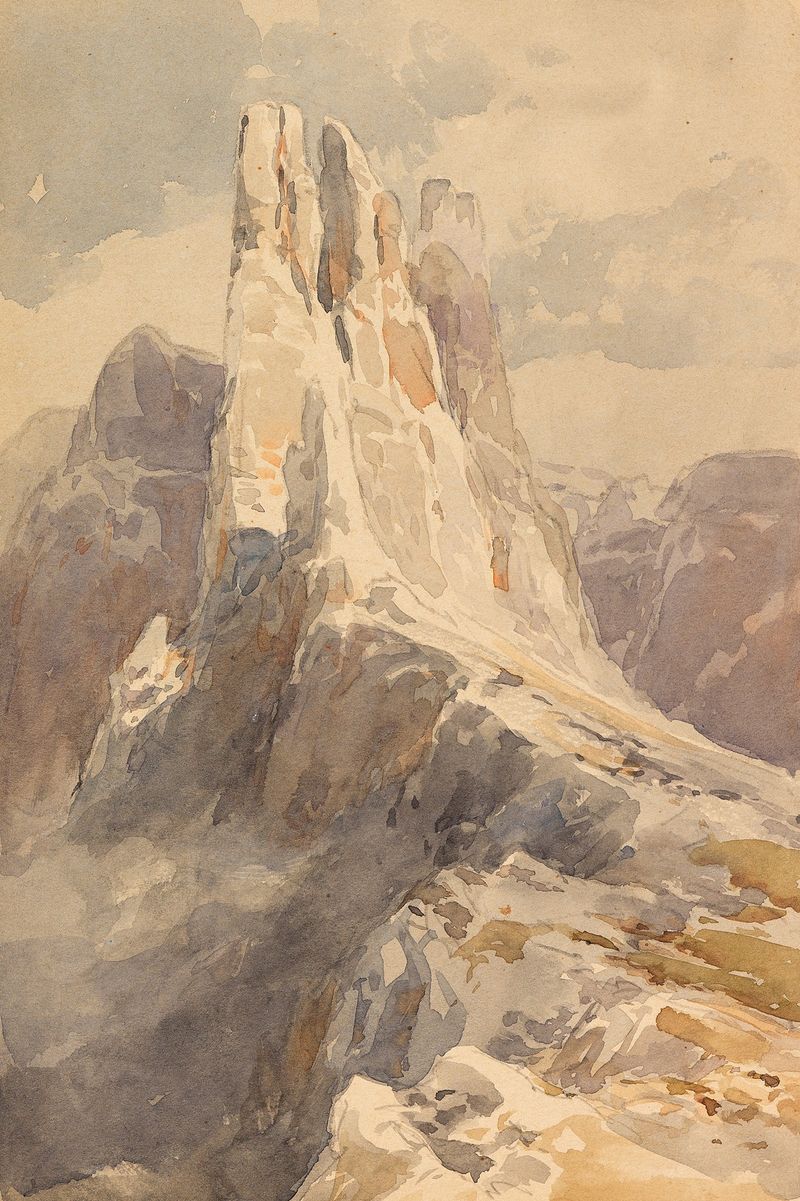
Blick auf die Vajolet-Türme in den Dolomiten
Edward Theodore Compton
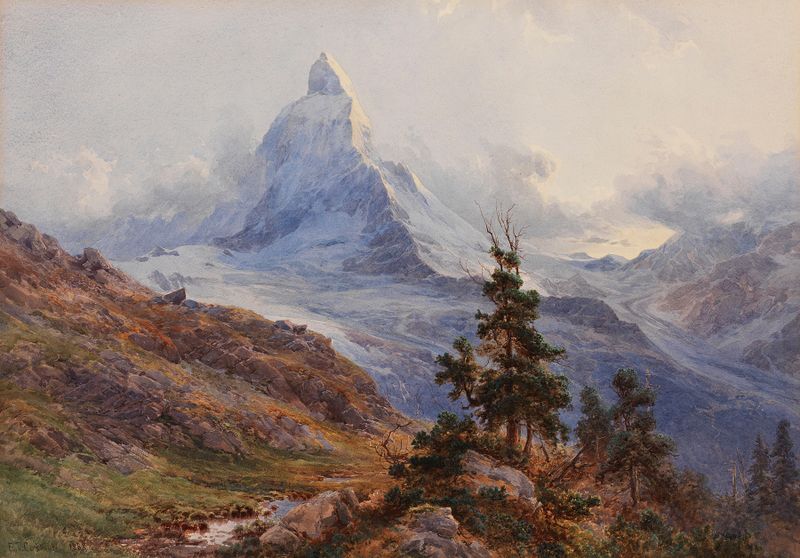
View of the Matterhorn
Edward Theodore Compton
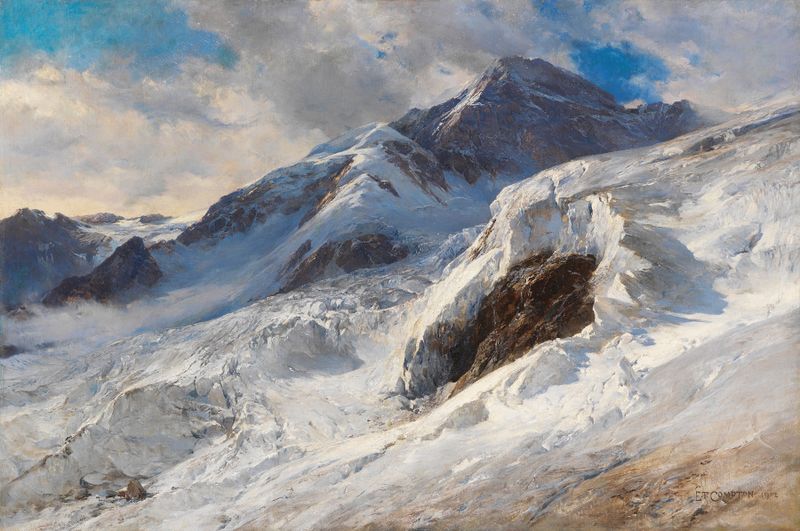
Lyskamm (Monte-Rosa)
Edward Theodore Compton
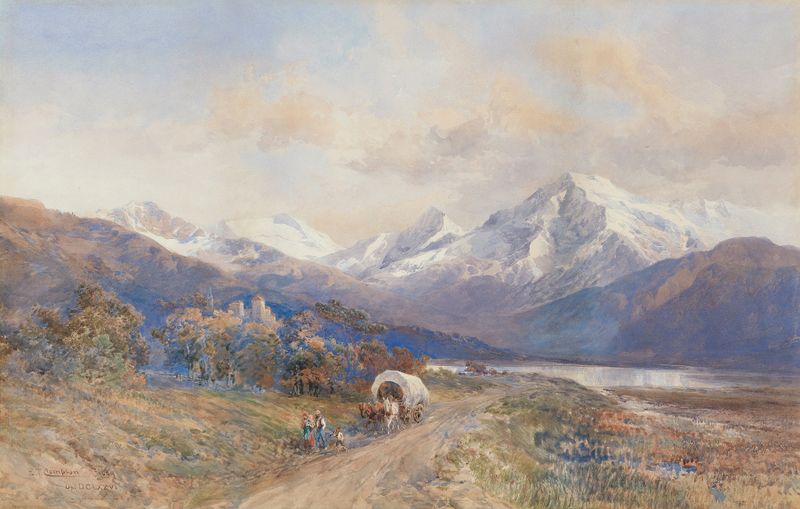
Blick auf den Ortler von St. Valentin
Edward Theodore Compton
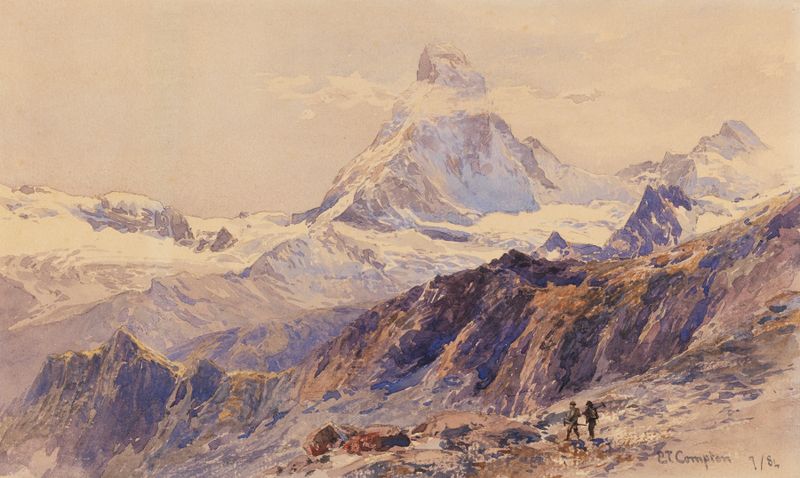
Das Matterhorn von der Triftkumme
Edward Theodore Compton





