
Hof im Stift Neuburg mit Springbrunnen II — History & Facts
In the intricate interplay of nature and architecture, a sense of loss lingers palpably in the air. Look to the left at the ornate fountain, its water cascading gently, catching the soft light of the day. Notice how the greenery surrounding it envelops the scene, a lush contrast to the somber tones of the buildings. The brushwork is loose yet deliberate, offering a sense of immediacy that invites contemplation.
The pale hues reflect a bygone era, evoking nostalgia and a longing for moments that have slipped away. In the foreground, the juxtaposition of the vibrant greenery against the fading structures tells a story of transience and decay. The fountain, alive with movement, contrasts sharply with the stillness of the architecture, symbolizing both the vitality of life and the inevitability of time's passage. Tiny details—a wilting flower or the soft shadow of a departing figure—serve as poignant reminders of what has been lost, yet they also cradle the beauty of this landscape. Wilhelm Trübner painted this scene in 1913, during a transformative period in the art world marked by the rise of modernism and the decline of traditional forms.
Living in Germany, he was deeply influenced by the changing cultural landscape, as artists began to explore new ways of seeing and interpreting the world. This piece reflects his mastery in capturing the delicate balance between memory and loss, art and time, in a moment suspended forever in paint.
More Artworks by Wilhelm Trübner
Browse all →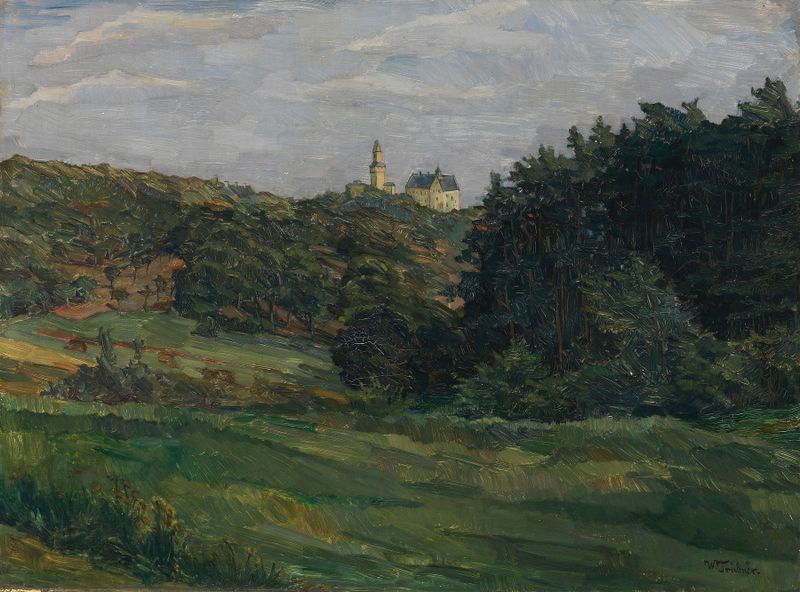
Burg Kronberg im Taunus
Wilhelm Trübner
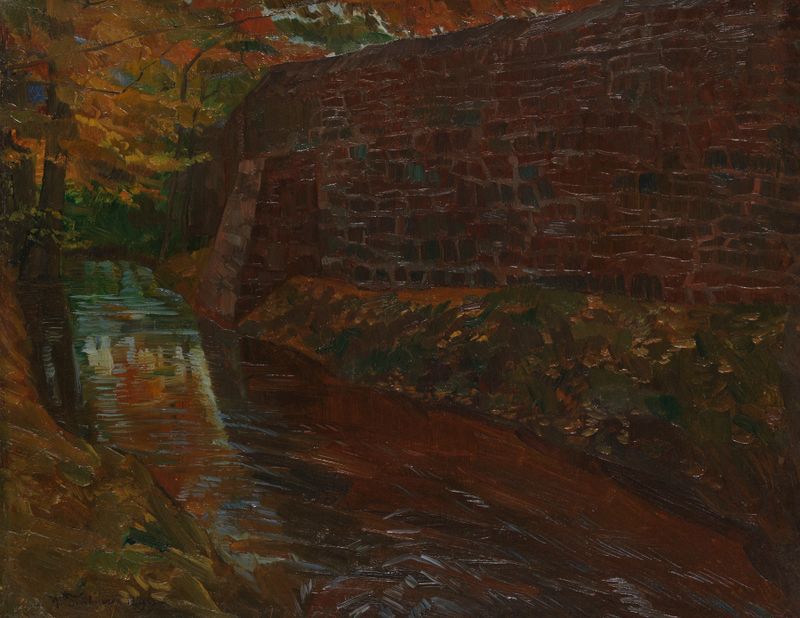
Parkmauer in Amorbach
Wilhelm Trübner

Garten einer Villa am Starnberger See
Wilhelm Trübner

A View of Frauenchiemsee
Wilhelm Trübner
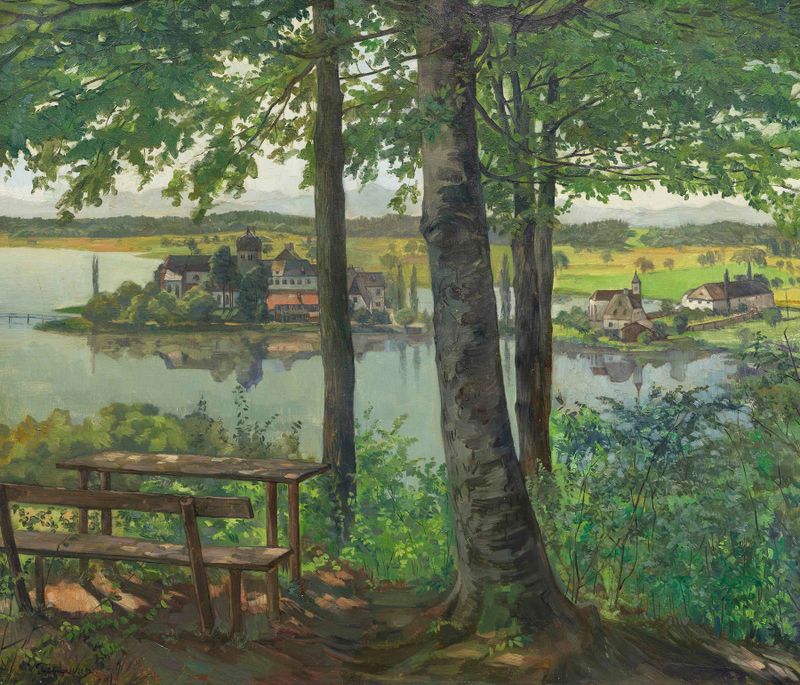
Aussicht auf Kloster Seeon
Wilhelm Trübner
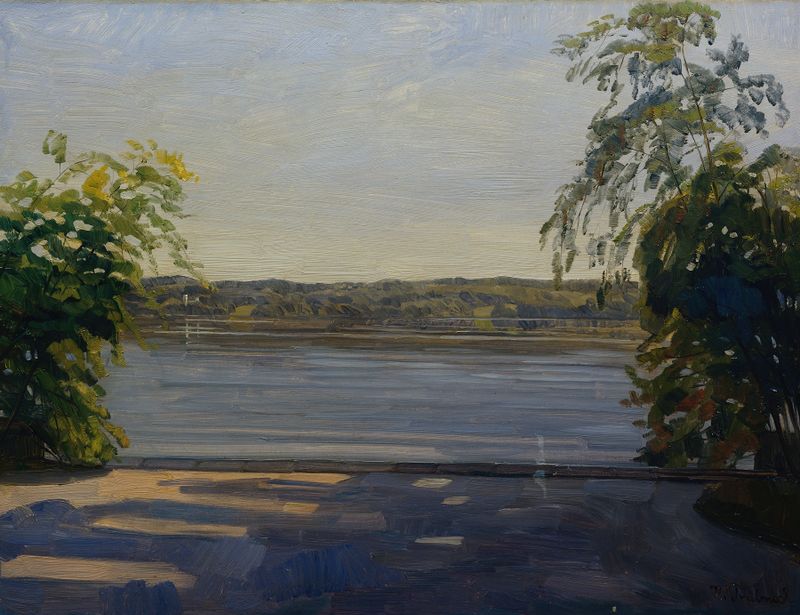
Starnberger See
Wilhelm Trübner
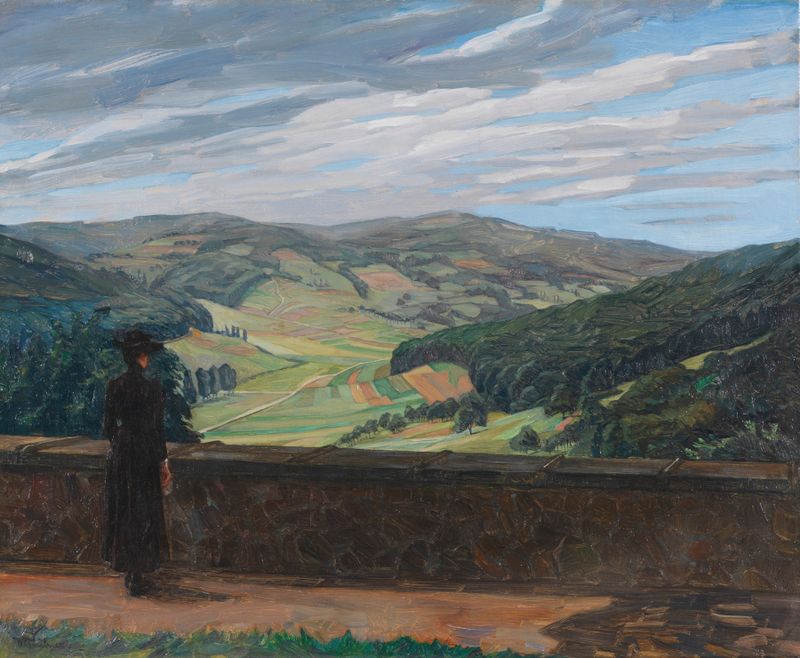
Blick in den Odenwald
Wilhelm Trübner
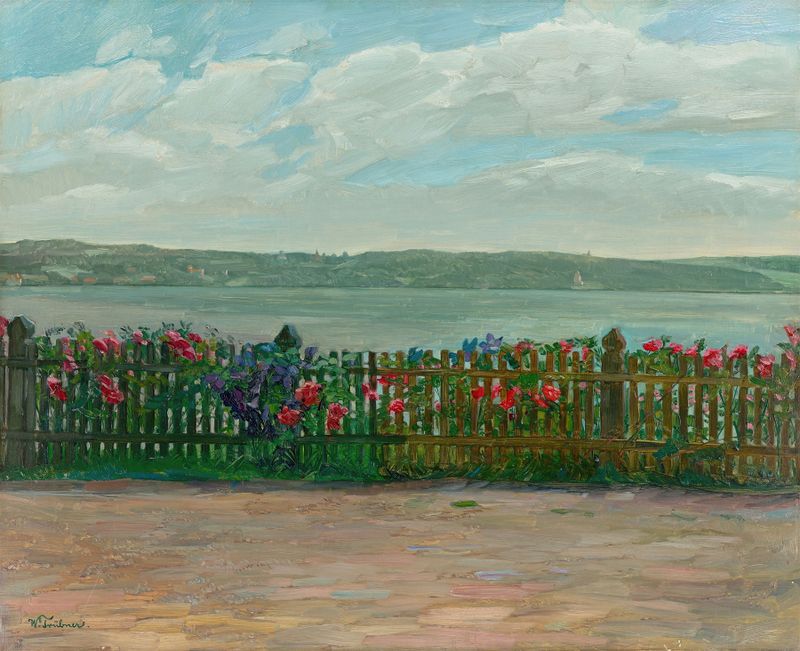
Rose fence with view of the Berg Castle at Lake Starnberg
Wilhelm Trübner
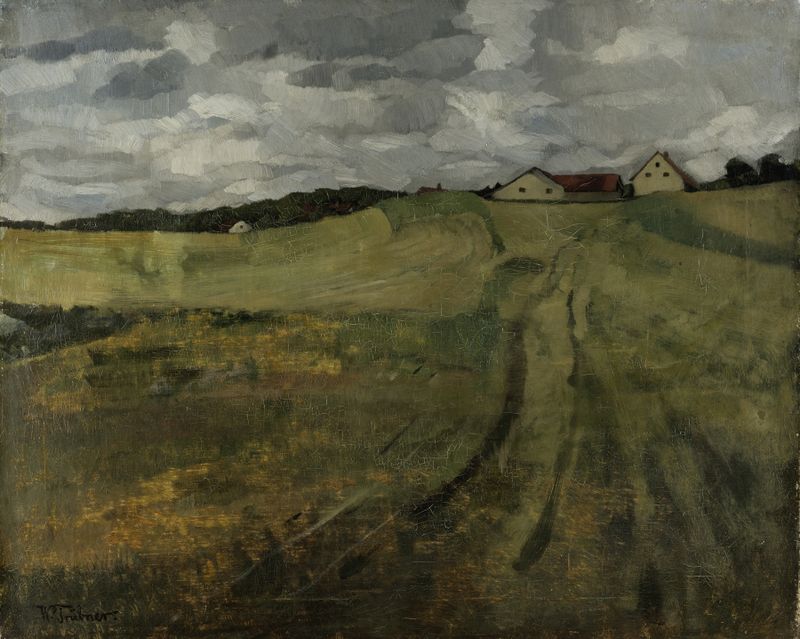
Stubble Field with Ascending Path near Wessling
Wilhelm Trübner
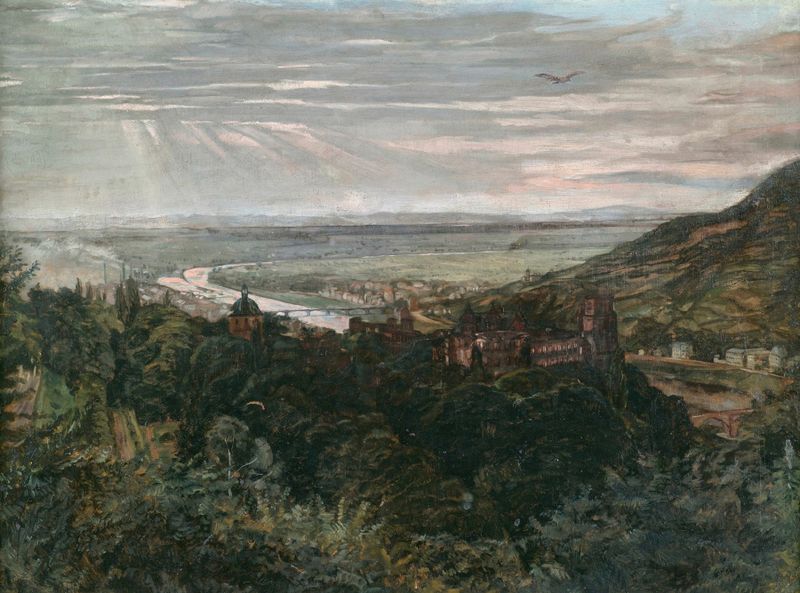
View of Heidelberg
Wilhelm Trübner





