
Horse and Boats (Study for Bathers at Asnières ) — History & Facts
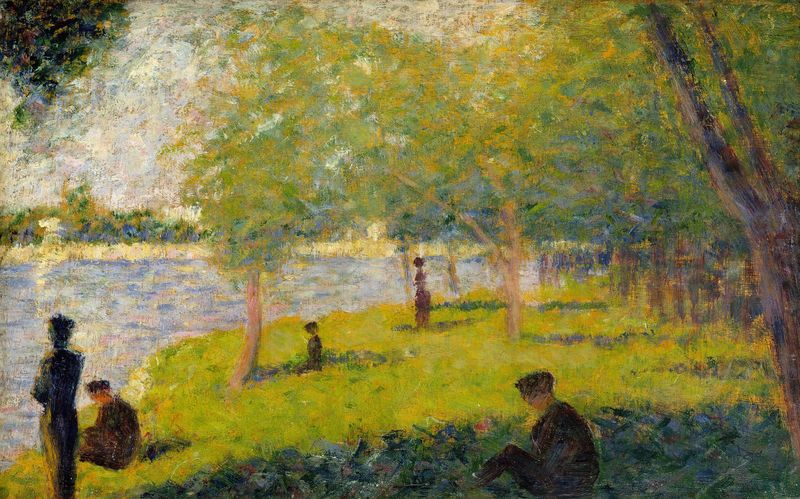
What secret hides in the quiet of the canvas? In the serene expanse of Horse and Boats, a world of isolation unfolds, inviting viewers to contemplate the profound depths of solitude. Look to the left at the gentle curve of the river, where horses stand tethered, their stillness a stark contrast to the active boats further down. Notice how Seurat’s pointillist technique employs tiny dots of color, each meticulously placed, creating a sense of vibrancy that belies the underlying loneliness of the scene. The interplay of light and shadow enhances the warm hues of the sun-drenched landscape, pulling the eye around the composition while simultaneously anchoring it in the quietude of the horses. Amidst the raw beauty, hidden tensions emerge—the horses, bound yet regal, symbolize a yearning for freedom, echoing the larger theme of isolation.
The boats in the distance seem to drift away, suggesting a world just beyond reach, wherein the figures remain disconnected from nature’s embrace. This delicate balance of presence and absence resonates deeply, whispering to the viewer about the human experience of loneliness, even amidst a seemingly idyllic setting. In the early years of the 1880s, Georges Seurat was deeply engaged in developing his unique artistic voice. Working primarily in Paris, he sought to push the boundaries of color and form.
During this period, the burgeoning Impressionist movement was redefining artistic expression, yet Seurat took a divergent path with his meticulous pointillism, aiming to evoke emotion and narrative through technique. Horse and Boats serves as a poignant reflection of his evolving style, hinting at the themes he would later explore in the more celebrated Bathers at Asnières.
More Artworks by Georges Seurat
Browse all →
A Sunday on La Grande Jatte — 1884
Georges Seurat
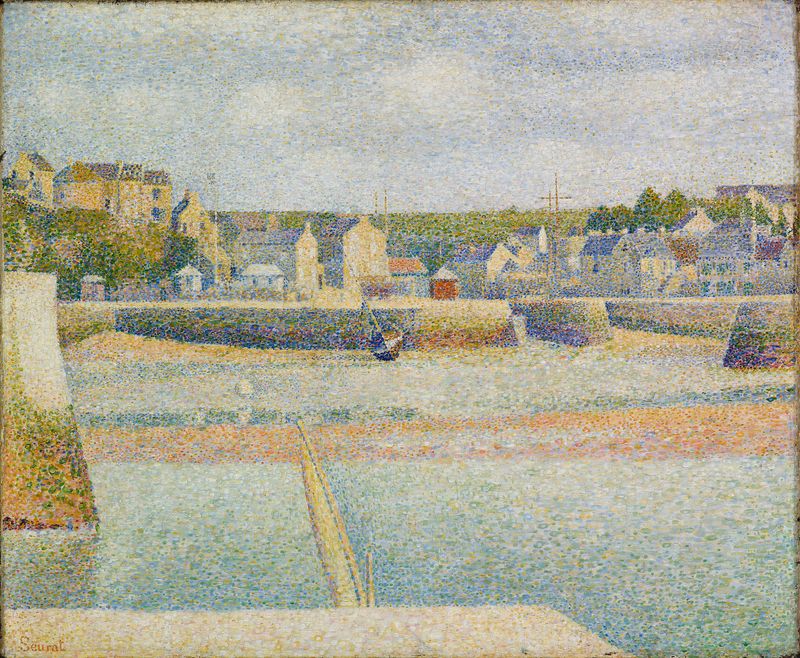
Port-en-Bessin, The Outer Harbor (Low Tide)
Georges Seurat
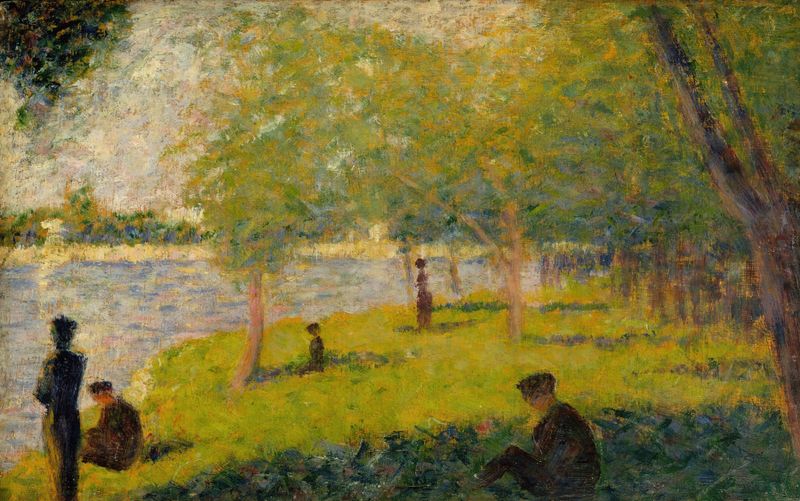
Study for ‘A Sunday on La Grande Jatte’
Georges Seurat

Oil Sketch for "A Sunday on La Grande Jatte — 1884"
Georges Seurat
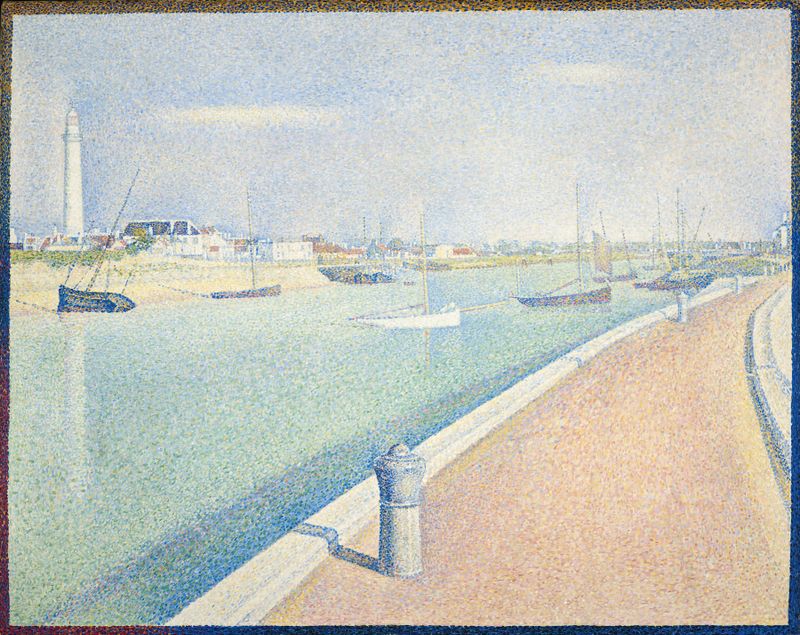
The Channel of Gravelines, Petit Fort Philippe
Georges Seurat

Étude pour ‘La Grande Jatte’ (Study for ‘La Grande Jatte’)
Georges Seurat
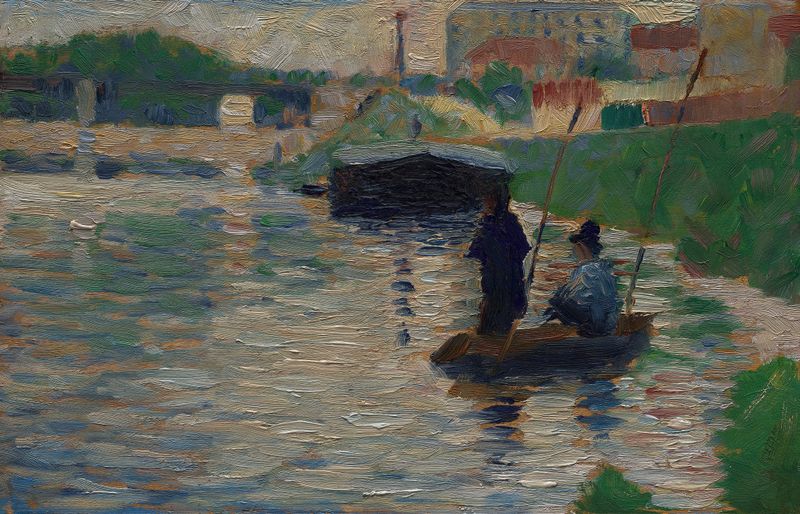
View of the Seine
Georges Seurat

Seascape at Port-en-Bessin,Normandy
Georges Seurat

The Channel at Gravelines, Evening
Georges Seurat
Study for A Sunday on La Grande Jatte
Georges Seurat





