
Houses lately standing on the North Side of Long Land, Smithfield — History & Facts
Did the painter know this moment would outlive them? In an era where the world around him was shifting, the act of capturing fleeting scenes was a profound awakening to permanence. Focus on the intricate details of the houses that dominate the canvas, a testament to architectural pride and community identity. The careful, linear arrangement of the buildings guides your eyes across the image, while the muted palette evokes a sense of quiet dignity. Notice how the soft light casts shadows that dance playfully across the façades, hinting at the life and stories within, each window a potential narrative waiting to be unveiled. Yet, beneath the surface lies a subtle tension.
The stark contrasts between light and shadow symbolize the ongoing struggle between progress and tradition in a rapidly changing society. The structures stand resolute against the encroaching uncertainties of the Industrial Revolution, embodying a moment where history meets modernity. This juxtaposition invites viewers to reflect on what has been lost and what remains, a delicate balance of nostalgia and hope. John Thomas Smith created this work in 1813, during a time when England was grappling with significant social and political change.
The artist, known for his topographical sketches and as a leading figure in the historical preservation movement, sought to document scenes that could easily fade away. This piece not only reflects his artistic vision but also serves as a historical record of a moment in time, preserving the essence of a community on the brink of transformation.
More Artworks by John Thomas Smith
Browse all →
Dr. Johnson’s House in 8 Bolt Court, Fleet Street
John Thomas Smith
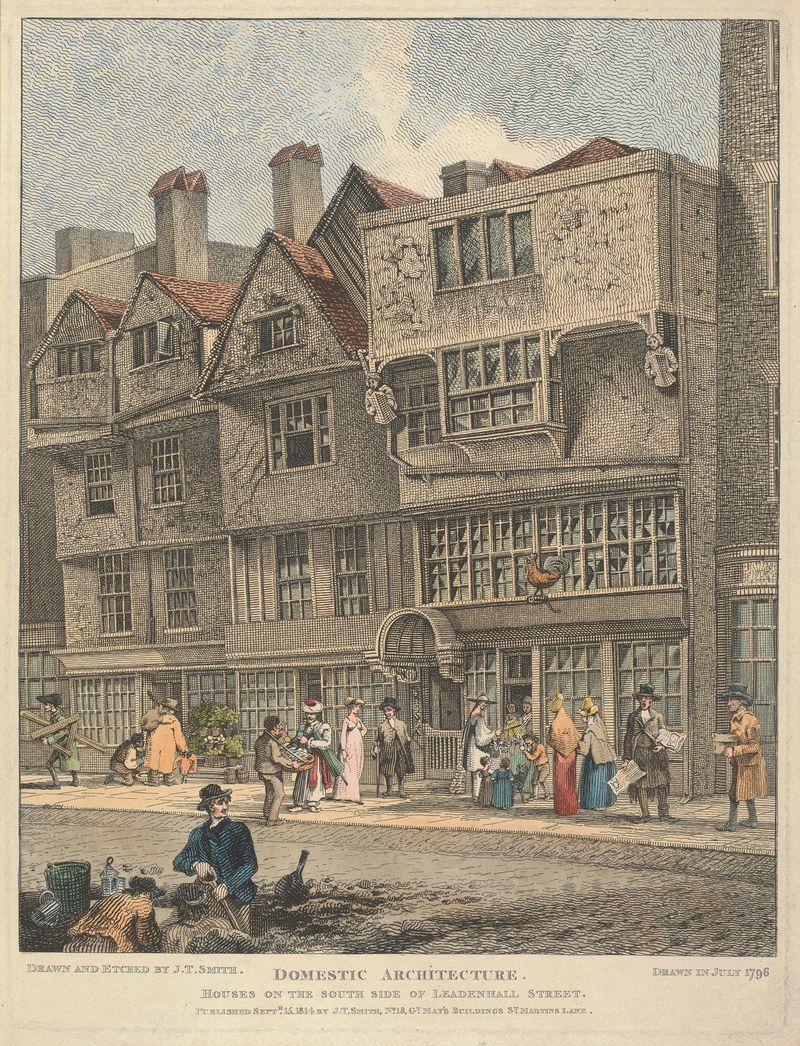
Houses on the South Side of Leadenhall Street
John Thomas Smith
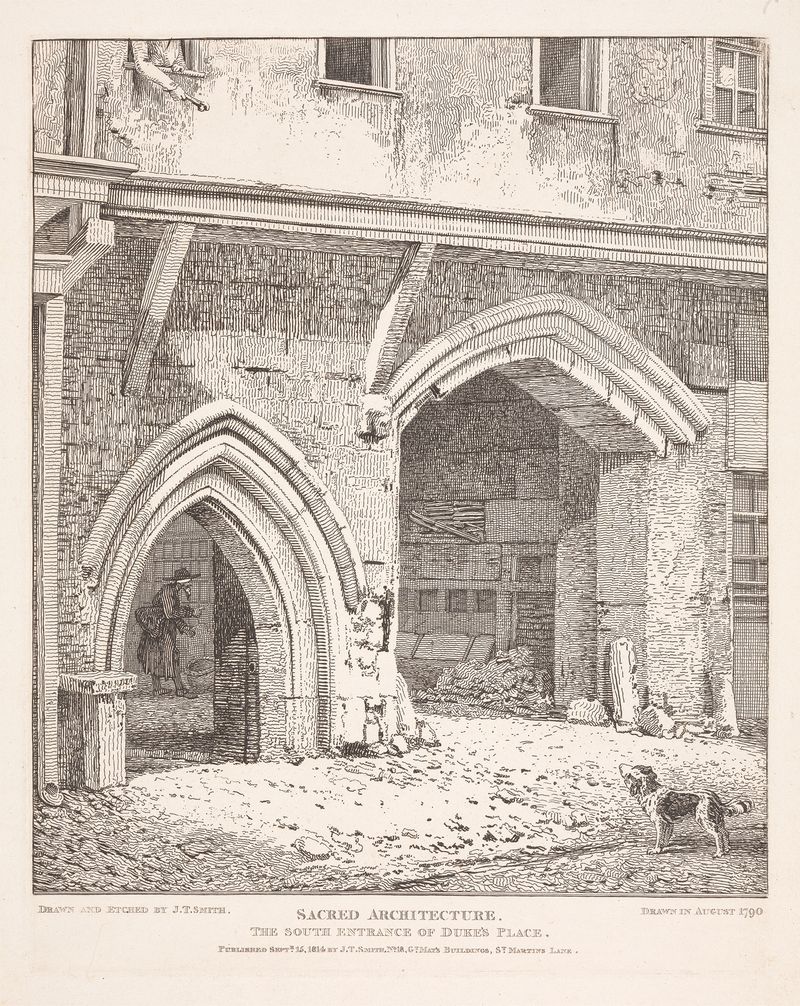
Sacred Architecture; the South Entrance of Dukes Place
John Thomas Smith
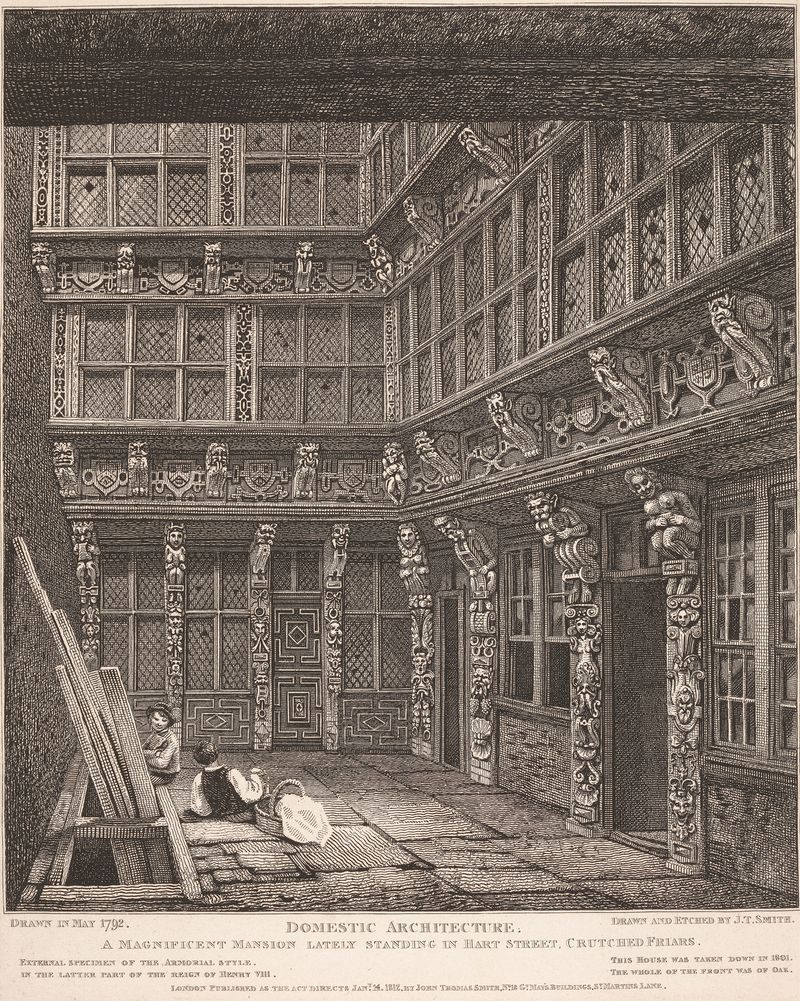
Domestic Architecture, A Magnificent Mansion Lately Standing in Hart Street, Crutched Friars
John Thomas Smith
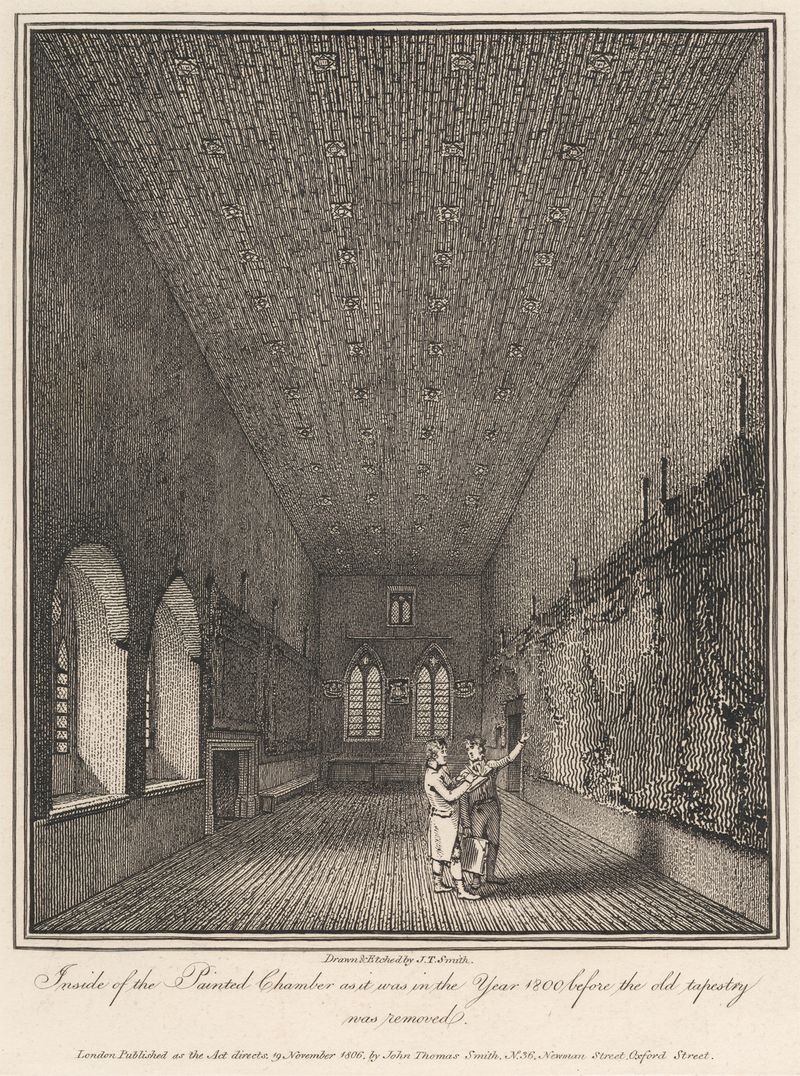
Inside the Painted Chamber as it was in the year 1800 before the old tapestry was removed
John Thomas Smith
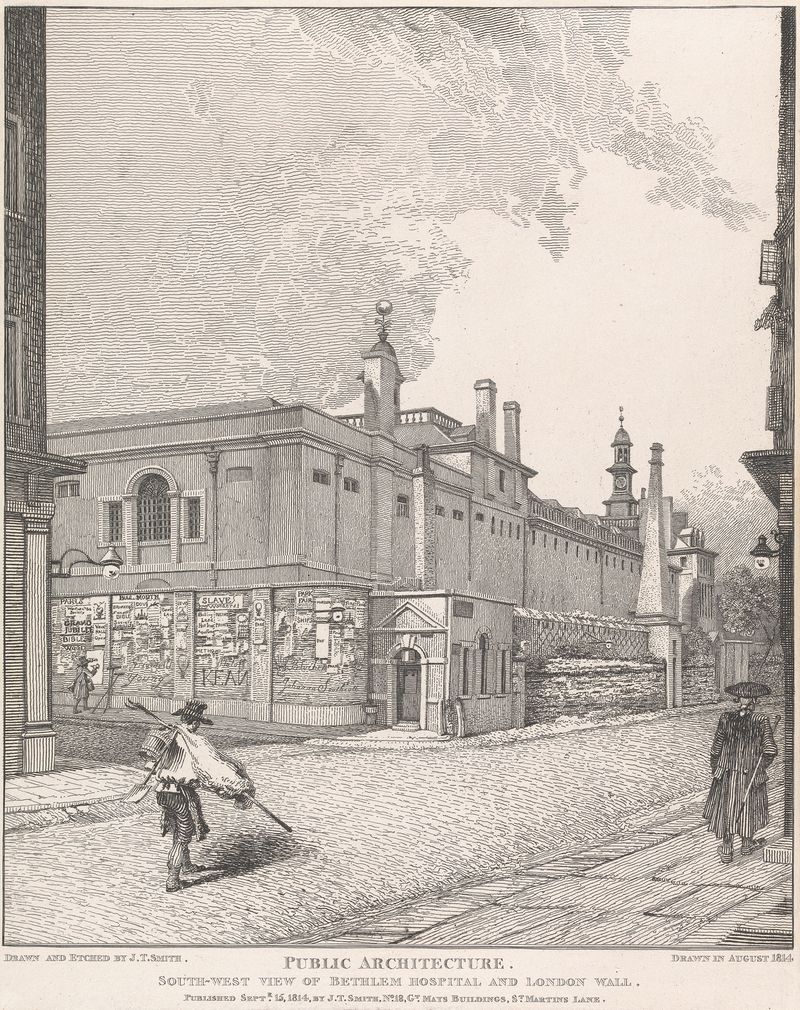
South West View of Bethlem Hospital and London Wall
John Thomas Smith

Winchester Street, London Wall
John Thomas Smith
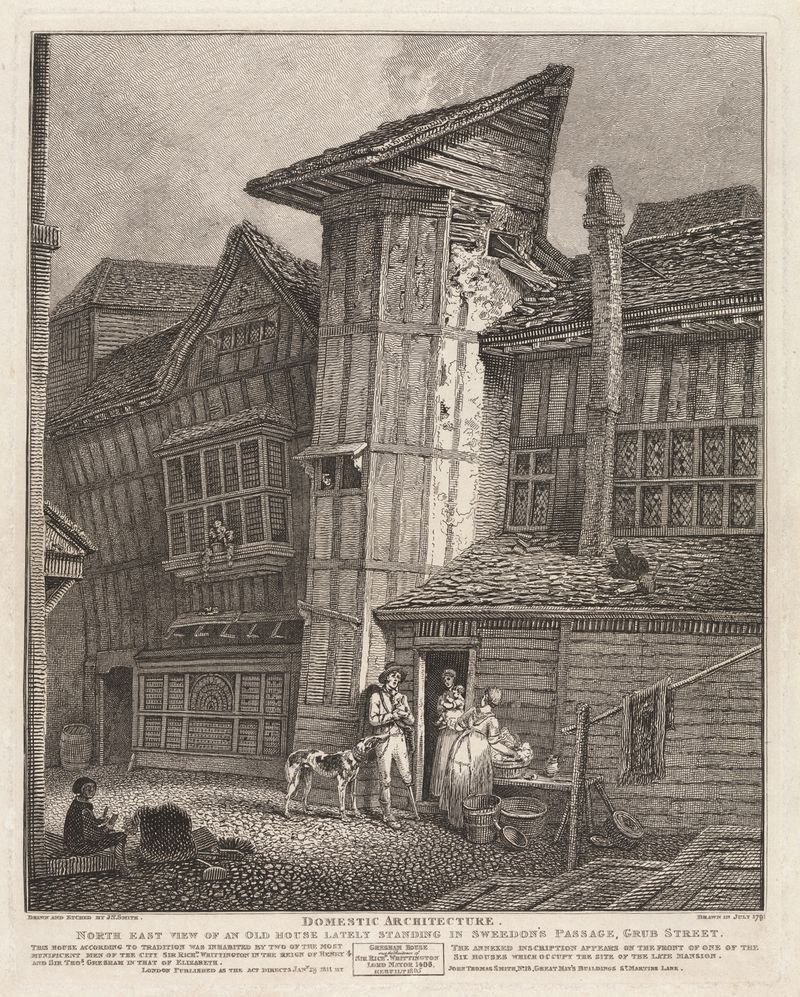
Domestic Architecture – N. E. View of an Old House lately Standing in Sweedon’s Passage, Grub Street
John Thomas Smith

Houses on the South SIde of a Street called London Wall
John Thomas Smith
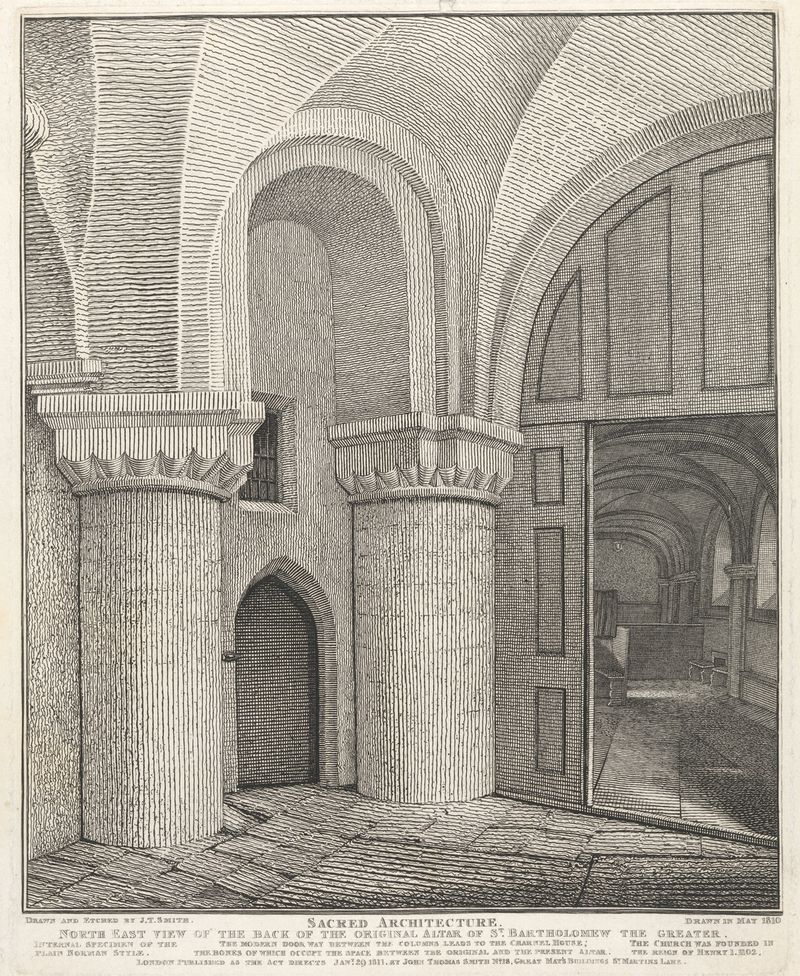
Northeast View of the Back of the Original Altar of St. Barts the Great
John Thomas Smith
More Architecture Art
Browse all →
The statue of Liberty
Frédéric Auguste Bartholdi

View of Houses in Delft, Known as ‘The Little Street’
Johannes Vermeer

View of Houses in Delft, Known as ‘The Little Street’
Johannes Vermeer

The Cathedral in Rouen. The portal, Grey Weather
Claude Monet

The yellow house
Vincent van Gogh

The Church in Auvers-sur-Oise, View from the Chevet
Vincent van Gogh