
Hôtel de Schomberg, rue Jean Tison. — History & Facts
What secret hides in the quiet of the canvas? Within its layers of paint, a hushed story unfolds, beckoning us to explore the depths of light and shadow. Focus on the brilliant illumination that casts a warm glow across the façade of the Hôtel de Schomberg. The interplay of light and dark draws our gaze towards the arching entrance, where soft highlights define the intricate details of the architecture. Notice how the artist has used a delicate palette of creams and muted earth tones, creating a sense of tranquil elegance that envelops the scene.
Each brushstroke whispers the subtleties of a moment suspended in time. Bénard captures not just a building, but the atmosphere surrounding it—the stillness speaks volumes of a bygone era. The calmness of the scene contrasts with the bustling life likely occurring beyond its walls. Look closely at the shadows cast by the towering structure; they evoke a sense of protection and serenity, suggesting the duality between the public and the private realms of existence.
The play of light on the textured surfaces serves as a reminder of the ever-changing nature of time and memory. In 1810, while residing in Paris, Auguste-Sébastien Bénard painted this piece during a time when the city was emerging from the Napoleonic Wars, experiencing both tension and hope. The burgeoning Romantic movement was inspiring artists to explore emotion and nature, and Bénard contributed to this discourse. His work reflects a period of introspection in art, where architecture became a vessel to convey the complexities of human experience and the quiet narratives inherent in everyday life.
More Artworks by Auguste-Sébastien Bénard
Browse all →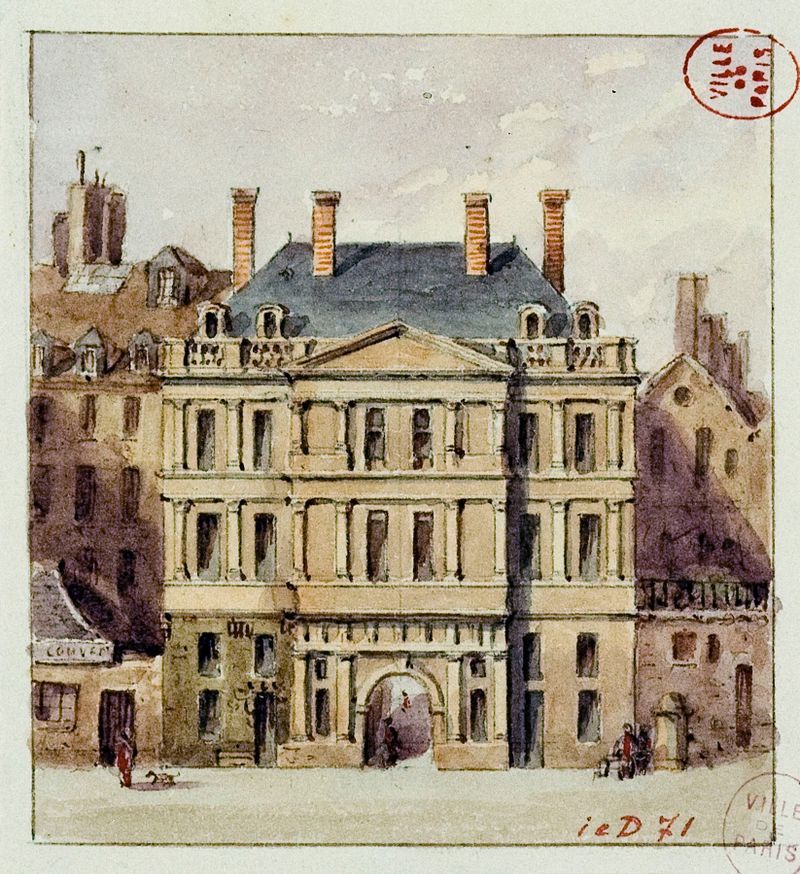
Cour de la Sainte Chapelle.
Auguste-Sébastien Bénard
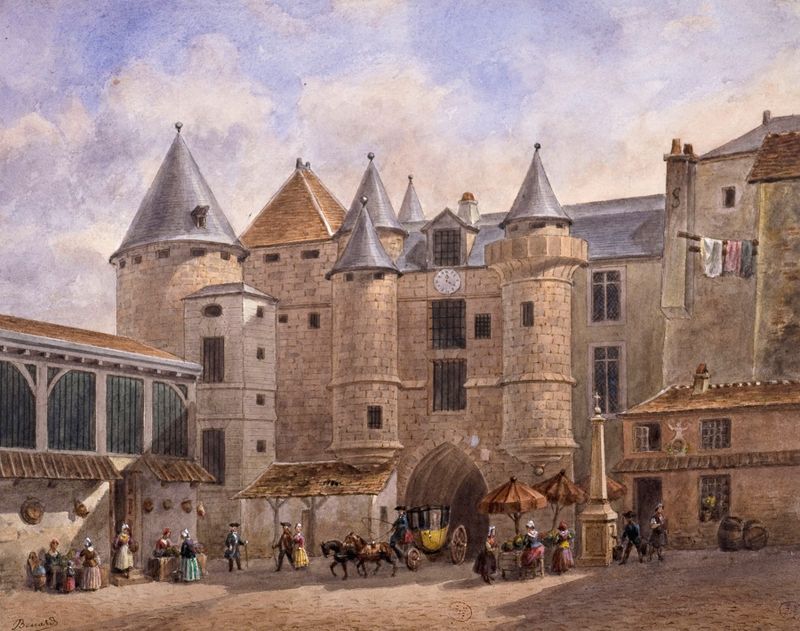
Le Grand Châtelet du XVIIIème siècle.
Auguste-Sébastien Bénard

Place de l’Hôtel de Ville.
Auguste-Sébastien Bénard

Salle souterraine du Palais de Justice.
Auguste-Sébastien Bénard

Voûtes du quai de Gesvres
Auguste-Sébastien Bénard

Monument expiatoire élevé à la mémoire du duc de Berry, à l’emplacement de l’ancien Opéra
Auguste-Sébastien Bénard
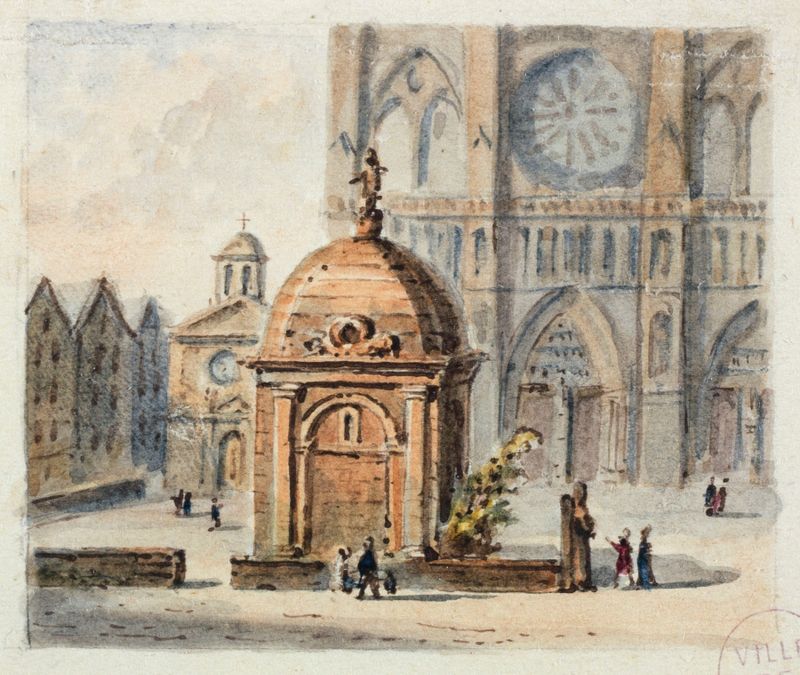
Le parvis de Notre-Dame de Paris
Auguste-Sébastien Bénard

Rue des chantres (entre le quai aux fleurs et la rue Chanoinesse).
Auguste-Sébastien Bénard

L’entrée de l’ancienne forteresse du Grand Châtelet, un jour de Carnaval
Auguste-Sébastien Bénard
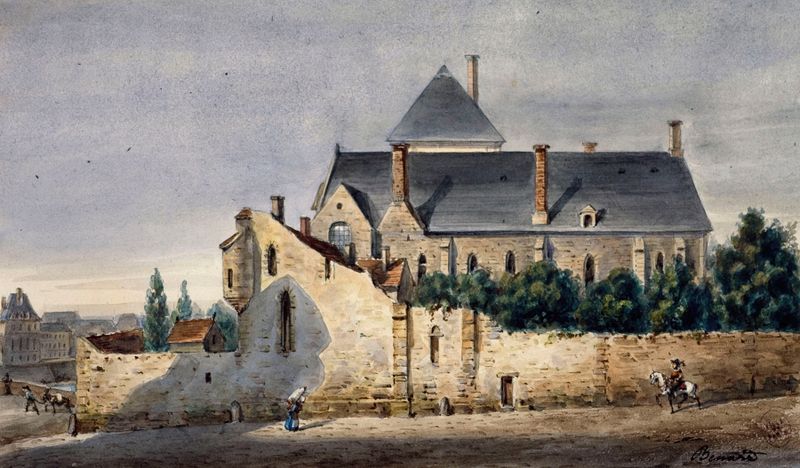
Les restes des bâtiments de l’hôtel du Petit Bourbon.
Auguste-Sébastien Bénard
More Architecture Art
Browse all →
The statue of Liberty
Frédéric Auguste Bartholdi

View of Houses in Delft, Known as ‘The Little Street’
Johannes Vermeer

View of Houses in Delft, Known as ‘The Little Street’
Johannes Vermeer

The Cathedral in Rouen. The portal, Grey Weather
Claude Monet

The yellow house
Vincent van Gogh

The Church in Auvers-sur-Oise, View from the Chevet
Vincent van Gogh