
Hungerford Bridge, London — History & Facts
Can paint confess what words never could? The longing captured in the strokes invites us to reflect on the depths of human experience. Look to the left at the elegant arches of Hungerford Bridge, their curves echoing the gentle sway of the river beneath. The interplay of light and shadow creates a dynamic rhythm across the canvas, inviting the eye to dance along the lines. Eby's muted palette, rich in greys and blues, evokes a sense of nostalgia, while the subtle highlights suggest the warmth of a setting sun, hinting at both closure and the promise of new beginnings. Amidst the structural beauty, hidden tensions emerge; the bridge stands both as a connection and a barrier.
The fleeting silhouettes of figures crossing its span suggest hurried lives, tinged with an unspoken yearning for something just out of reach. This ethereal quality resonates through the brushwork, blurring the boundaries between serene landscapes and the chaos of urban existence, revealing our collective desire for connection in a world of distance. Kerr Eby painted Hungerford Bridge, London during a period marked by personal struggles and a shifting art landscape. Living in the early 20th century, he often found solace in capturing scenes that reflected both beauty and the complexities of modern life.
With the aftermath of World War I looming, his works often conveyed a deep sense of longing for peace and understanding, making this piece a poignant reflection of his time.
More Artworks by Kerr Eby
Browse all →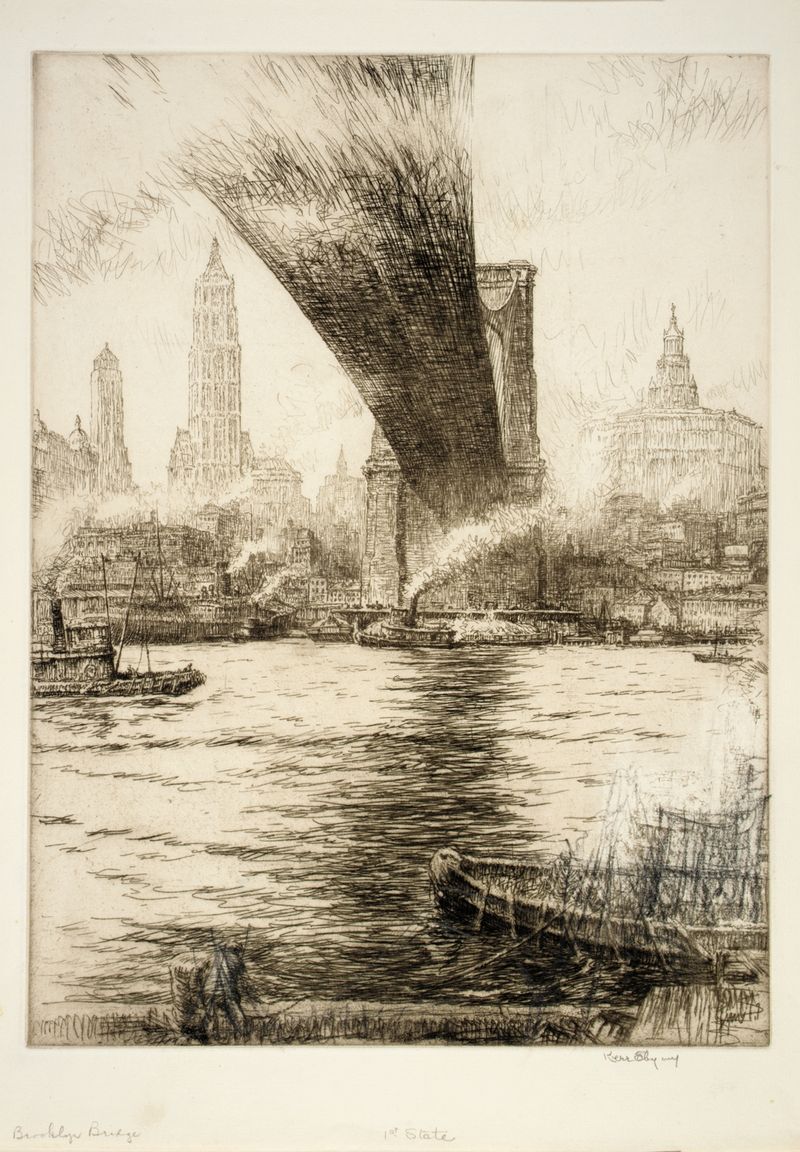
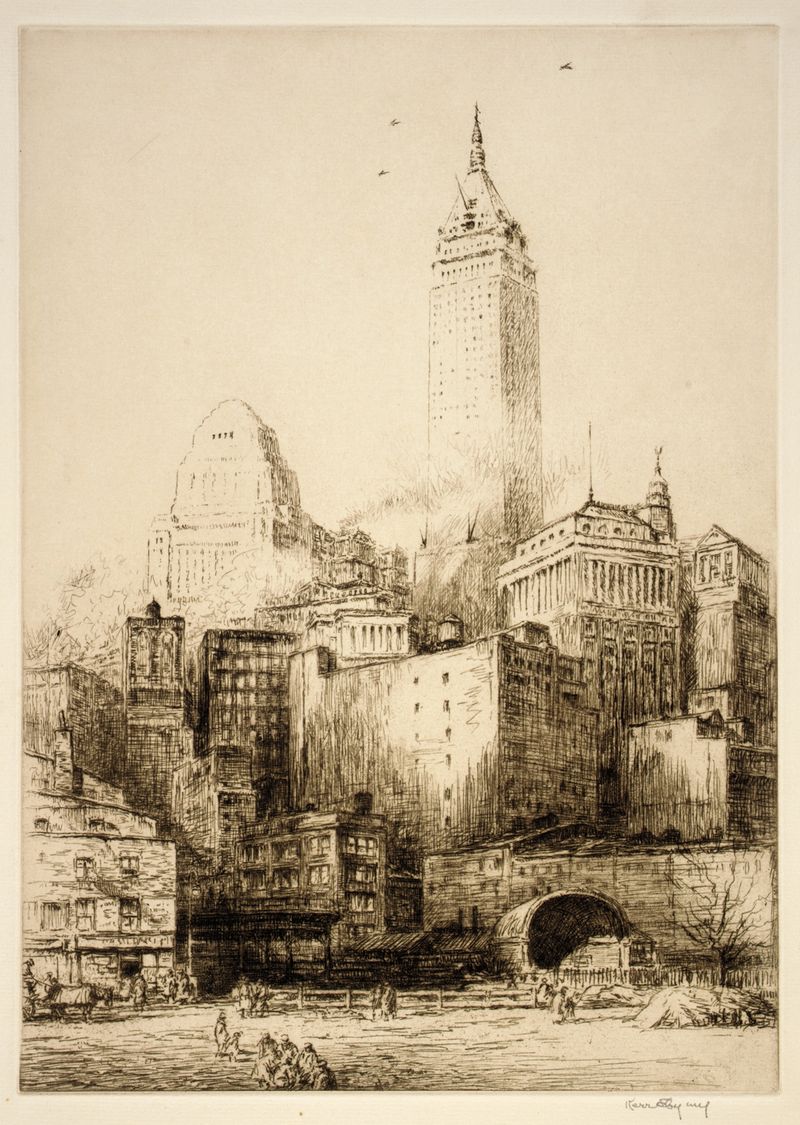
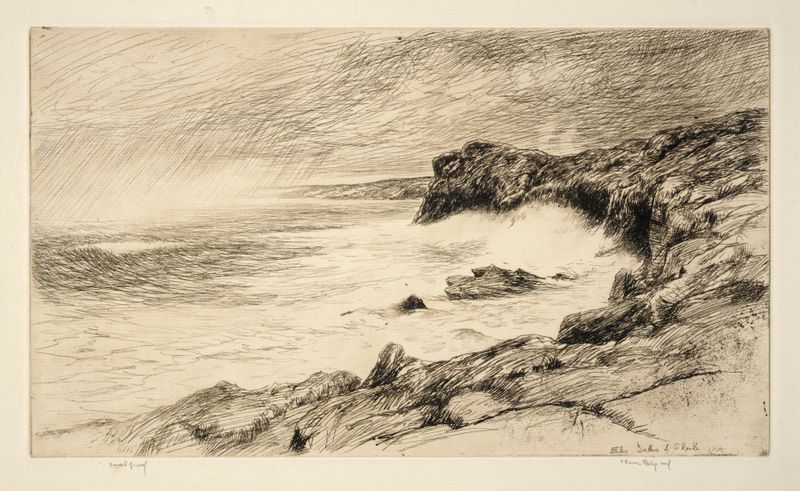
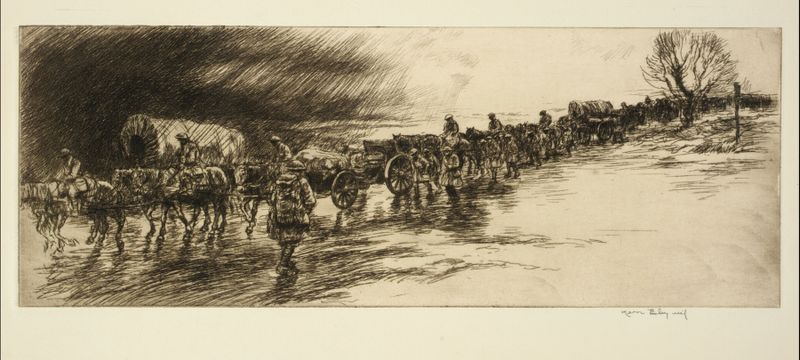
More Architecture Art
Browse all →
The statue of Liberty
Frédéric Auguste Bartholdi

View of Houses in Delft, Known as ‘The Little Street’
Johannes Vermeer

View of Houses in Delft, Known as ‘The Little Street’
Johannes Vermeer

The Cathedral in Rouen. The portal, Grey Weather
Claude Monet

The yellow house
Vincent van Gogh

The Church in Auvers-sur-Oise, View from the Chevet
Vincent van Gogh