
Häuser in Le Pouldu — History & Facts
What if beauty was never meant to be finished? In the quietude of a coastal village, the raw essence of existence spills onto the canvas, inviting us to linger in its unfinished narrative. Focus on the vibrant hues that draw you in, especially the earthy oranges and deep blues that converge to form the idyllic houses nestled against a serene backdrop. Notice how Gauguin employs simple shapes and bold outlines, each brushstroke seemingly deliberate yet spontaneous, creating a sense of both familiarity and mystery. The balance of color and form captures the tranquility of the scene while hinting at the deeper void of understanding that lies beneath. As you explore, consider the juxtaposition of human habitation against the wildness of the landscape.
The houses, while signs of life, seem almost to retreat into the surroundings, suggesting a tension between civilization and nature. The void is further emphasized by the stark absence of human figures, provoking contemplation on isolation and connection. Each element whispers of the beauty of simplicity and the enigmatic nature of existence, urging us to confront the spaces in between. In 1890, while residing in Pont-Aven, the artist was deeply engaged with his exploration of form and color, distancing himself from the conventions of Impressionism.
The world was witnessing a shift in artistic expression, and Gauguin found himself invigorated by the potential of bold abstraction. This work emerges from that transformative period, reflecting both his innovative spirit and his quest to capture the essence of life, untouched by the complexities of the modern world.
More Artworks by Paul Gauguin
Browse all →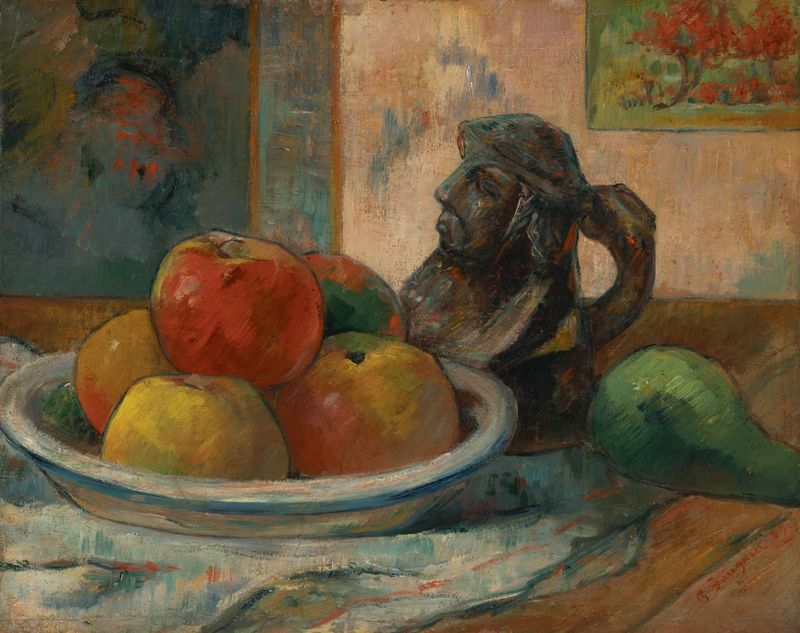
Still Life with Apples, a Pear, and a Ceramic Portrait Jug
Paul Gauguin
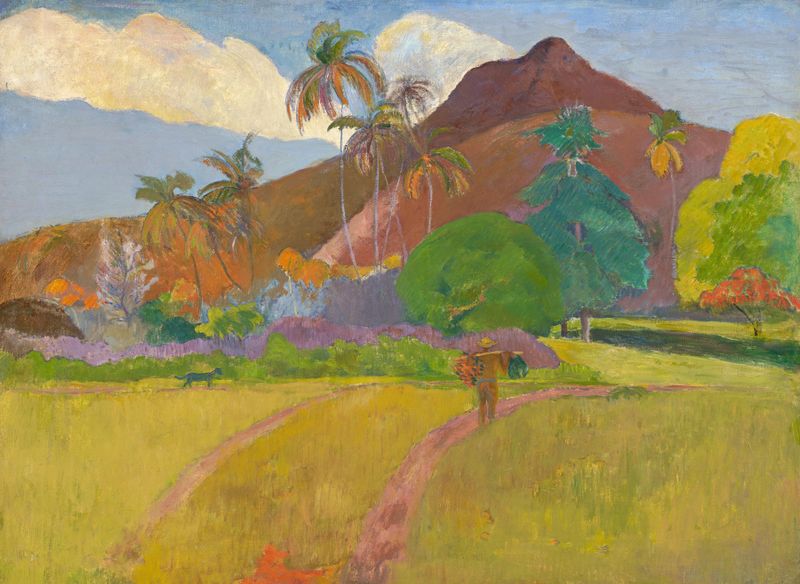
Tahitian Landscape
Paul Gauguin

Landscape near Pont-Aven
Paul Gauguin

No te aha oe riri (Why Are You Angry?)
Paul Gauguin
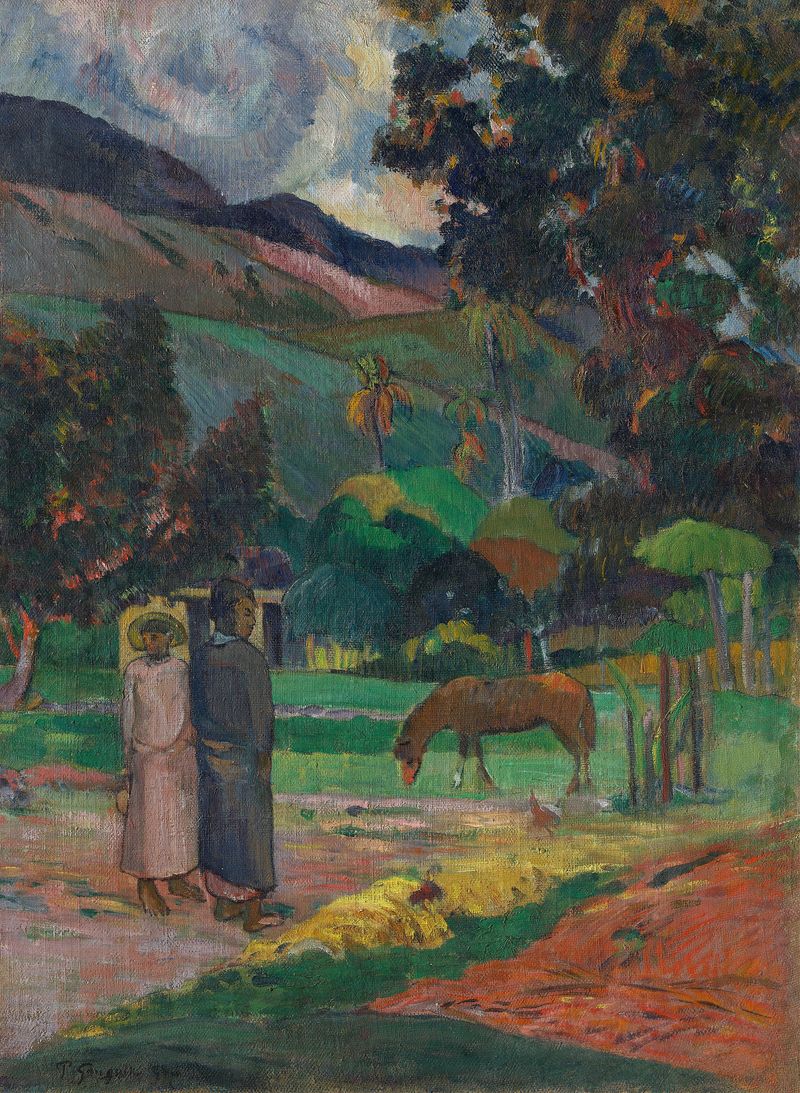
Tahitian Landscape
Paul Gauguin
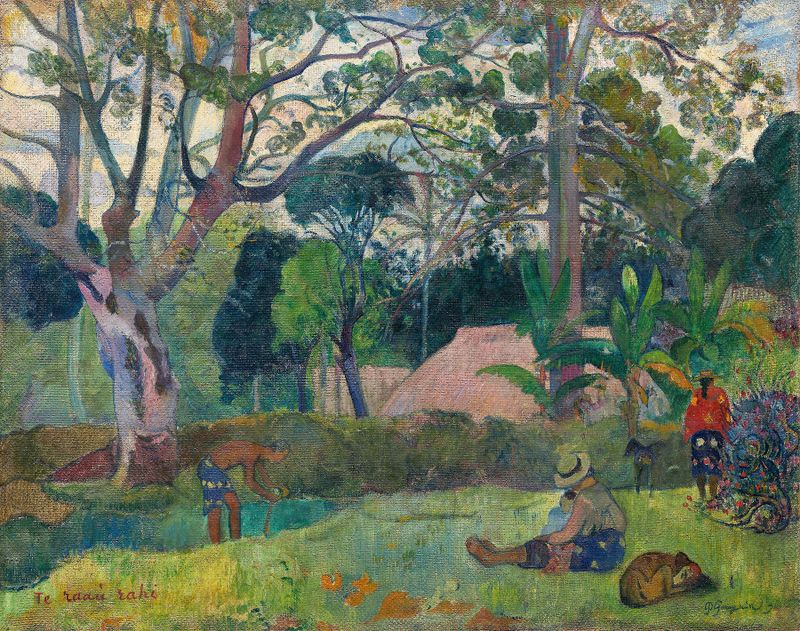
Te raau rahi (The Big Tree)
Paul Gauguin

Landscape at Le Pouldu
Paul Gauguin

Landscape of Brittany
Paul Gauguin

Poèmes Barbares
Paul Gauguin
Mahana no atua (Day of the God)
Paul Gauguin





