
Huts and warm clothing for the army — History & Facts
Who listens when art speaks of silence? In Huts and warm clothing for the army, William Simpson captures the weight of destiny resting on weary shoulders, a poignant reminder of the human experience during times of conflict. Focus your gaze on the lower half of the composition, where soldiers laboriously construct their makeshift huts amidst the stark terrain. The muted palette of browns and grays evokes a sense of somber reality, while the faint rays of light piercing through the clouds hint at a fragile hope. Notice the juxtaposition of body and earth; the soldiers' toil against the backdrop of expansive, desolate land emphasizes their vulnerability, drawing you into the quiet struggle of survival. Delve deeper into the painting, where small details reveal profound emotional tensions.
The solidity of the huts stands in stark contrast to the fleeting warmth of the soldiers’ clothing; one feels the juxtaposition between physical shelter and the emotional barrenness of war. These elements embody both resilience and despair—capturing the duality of human spirit in the face of adversity. The silence of the scene speaks volumes, suggesting the unseen burdens of duty and sacrifice, while the muted colors escape the vibrancy of life that once was. Created in 1855 during the Crimean War, Simpson painted this work while documenting the plight of soldiers fighting in harsh conditions.
At that time, he was deeply engaged in capturing both the immediate realities and broader implications of war, striving to bring awareness to the struggles faced by the army. His works challenged the prevailing romantic notions of warfare by presenting an unfiltered look at the harsh truth, making a significant contribution to war art.
More Artworks by William Simpson
Browse all →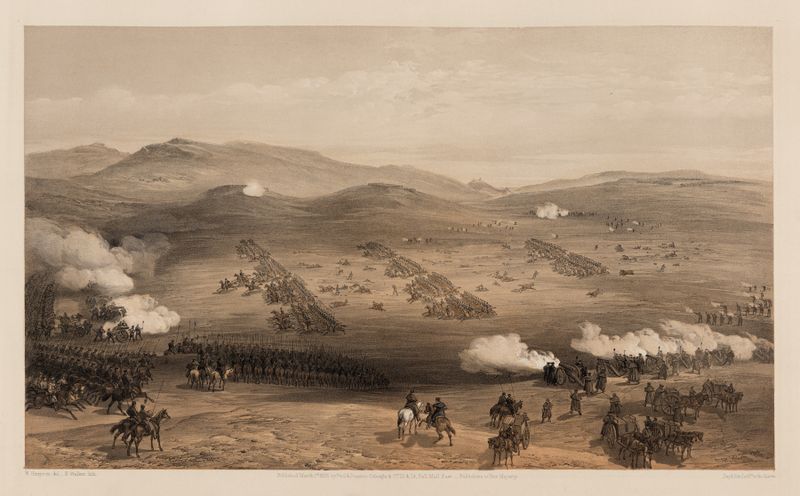
Charge of the light cavalry brigade, 25th Oct. 1854, under Major General the Earl of Cardigan
William Simpson

Charge of the heavy cavalry brigade, 25th Octr. 1854
William Simpson
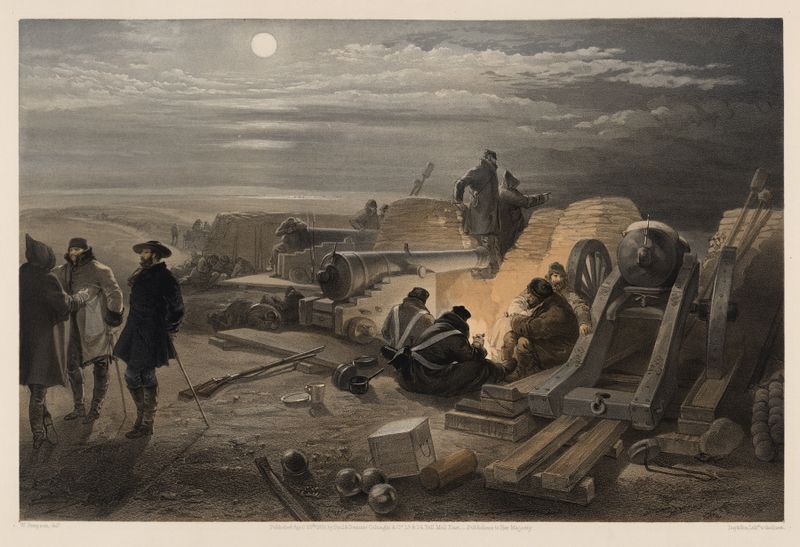
A quiet night in the batteries – a sketch in the Greenhill battery (Major Chapman’s), 29th Jany. 1855
William Simpson

The Great Wall of China
William Simpson
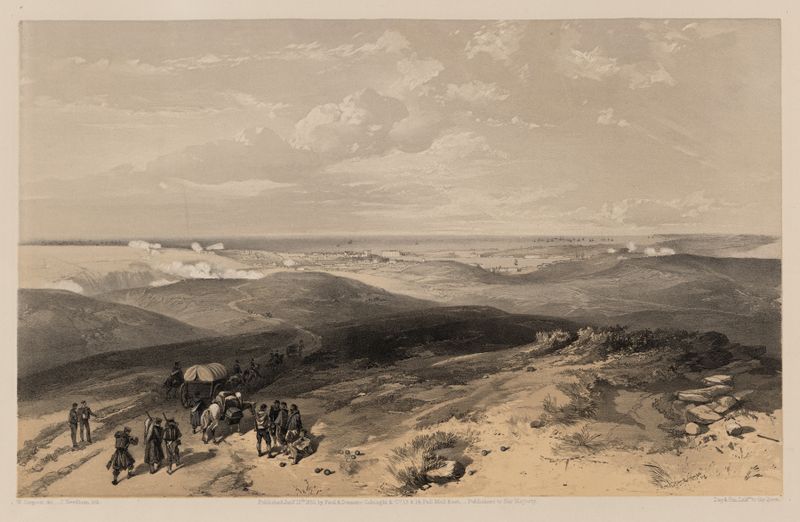
Sebastopol from the rear of the English batteries
William Simpson
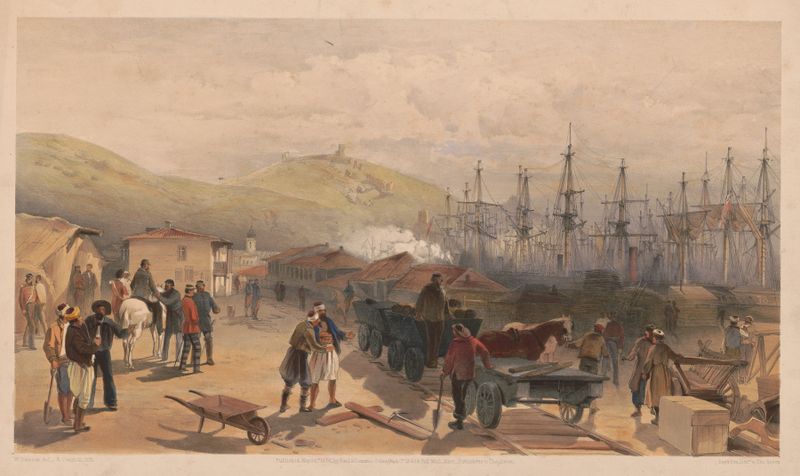
The railway at Balaklava, looking south
William Simpson

The Governor-General’s and Commander-in-Chief’s Camp at Jalandhar, 1 Febuary 1860
William Simpson
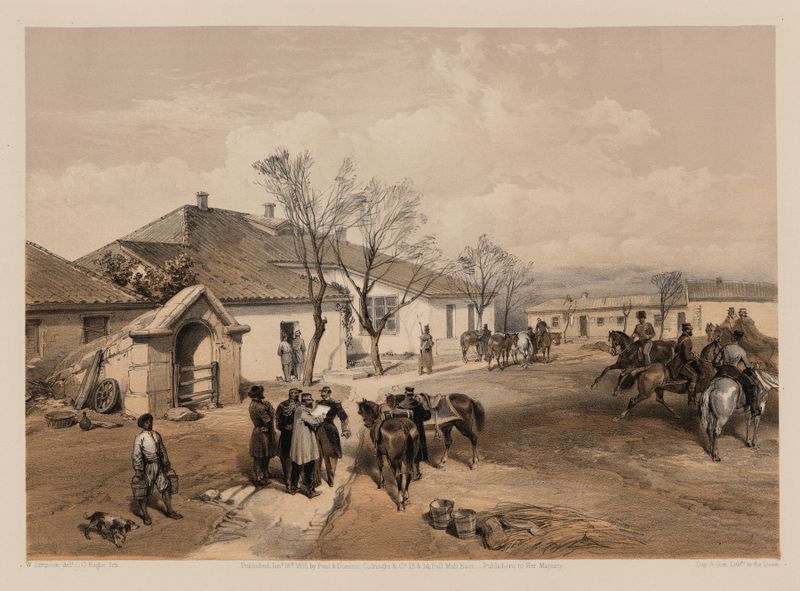
Lord Raglan’s head quarters at Khutor-Karagatch
William Simpson
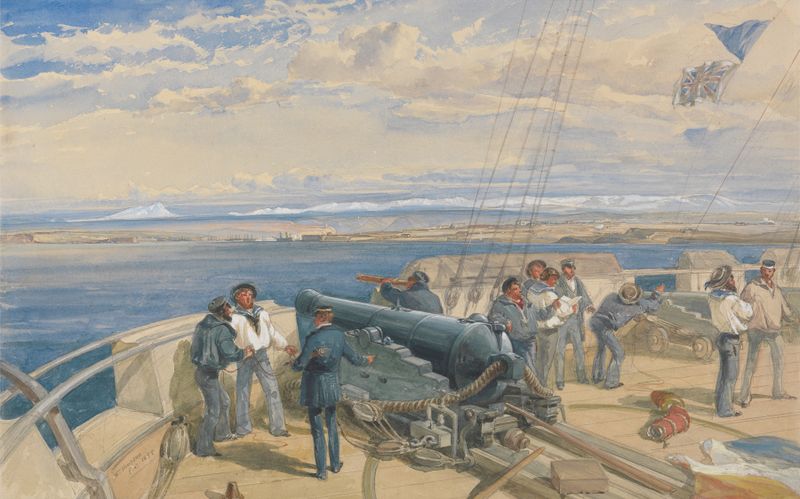
Sebastopol from the Sea, Sketched from the Deck of H. M. S. Sidon, Feb. 1855
William Simpson
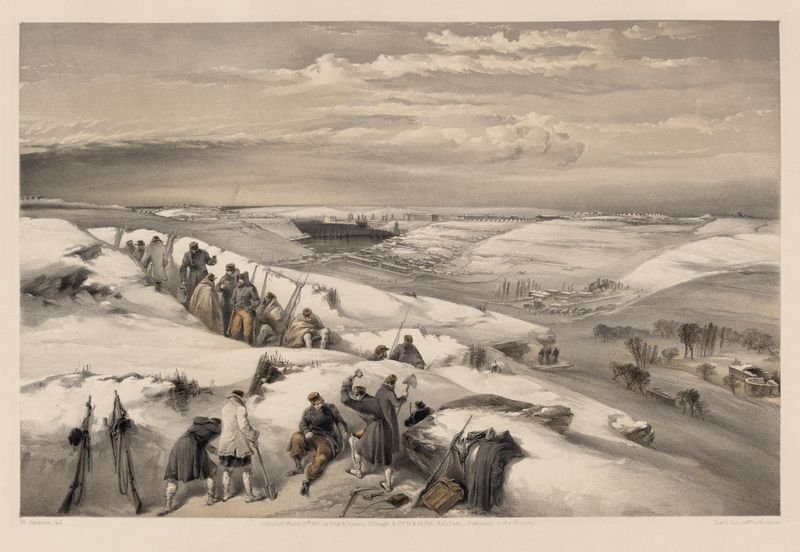
Sebastobol from the 26 gun battery on the extreme right of French attack
William Simpson
More Historical Art
Browse all →
The Night Watch Militia Company of District II under the Command of Captain Frans Banninck Cocq
Rembrandt van Rijn

Lincoln Memorial
Henry Bacon

The Third of May 1808
Francisco de Goya

Isaac and Rebecca, Known as ‘The Jewish Bride’
Rembrandt van Rijn

The Charge of the Mamelukes (1814)
Francisco de Goya

De vier ruiters van de apocalyps
Albrecht Dürer