Ice Floes — History & Facts
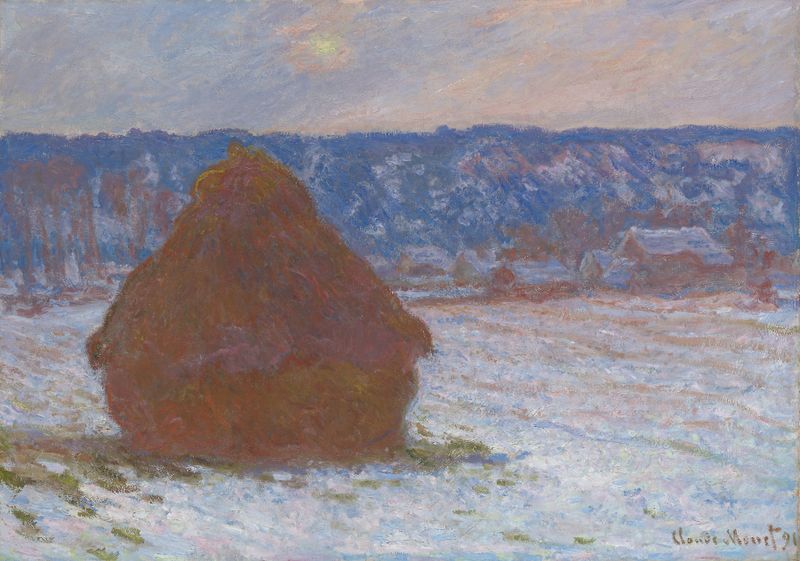
Can beauty exist without sorrow? In Ice Floes, the delicate balance between tranquility and the harshness of nature unfolds before us. Look to the left at the gentle hues of blue and white, where soft brushstrokes intertwine to form glistening ice floating serenely on the water. Notice how the light dances upon these surfaces, casting reflections that ripple with subtle variations. The composition draws your gaze towards the horizon, where muted colors blend together, creating a dreamlike atmosphere, while the delicate interplay of light and shadow creates depth and movement, inviting contemplation. Yet, beneath this serene surface lies a tension that speaks to the fragility of life.
The ice, though beautiful, hints at impermanence — a reminder of the inevitable decay that accompanies nature's cycles. The distant figures navigating the icy waters evoke feelings of isolation and vulnerability, contrasting with the calmness of the scene. Here, Monet captures the duality of existence, where serenity coexists with the ever-present threat of sorrow. In the spring of 1893, Claude Monet painted this piece during a period marked by personal loss and artistic exploration.
He was navigating the challenges of declining health as well as the shifting tides of the Impressionist movement. This work reflects his evolving style, as he sought to encapsulate the beauty of nature while also grappling with deeper emotional currents, creating a poignant narrative that resonates still today.