
In Bury Street, Edmonton, Outer Suburb – North — History & Facts
When did color learn to lie? In a world where hues evoke memories long forgotten, the essence of nostalgia seeps into every brushstroke, intertwining truth and illusion. Look to the left at the soft, sunlit facades of the houses, their warm ochres and deep reds inviting the viewer into a serene suburban scene. The artist employs delicate brushwork to capture the interplay of light and shadow, with the dappled sunlight spilling onto cobblestone streets. The composition mirrors a sense of tranquility, drawing the eye toward the gentle curves of the road that winds through this quiet haven, as if inviting one to stroll amongst its inhabitants. Beneath the surface of this idyllic representation lies an exploration of the passage of time.
The contrast between the vibrant hues of life and the muted tones of the shadows hints at the inevitable decay that follows every fleeting moment. A solitary figure, dwarfed by the robust architecture, evokes feelings of solitude and introspection, prompting the viewer to question their own place within the narrative. Each element, from the trees swaying lightly in the breeze to the distant horizon, serves as a reminder of the transient nature of happiness. Created in 1797, this piece emerged during a period of significant social change and urban expansion in England.
The artist, known for his topographical works, sought to encapsulate the charm of suburban life just as the Industrial Revolution began to reshape the landscape. This painting reflects a moment of nostalgia, capturing a time that is both simpler and yet more complex, as communities braced for the transformations of modernity.
More Artworks by John Thomas Smith
Browse all →
Dr. Johnson’s House in 8 Bolt Court, Fleet Street
John Thomas Smith
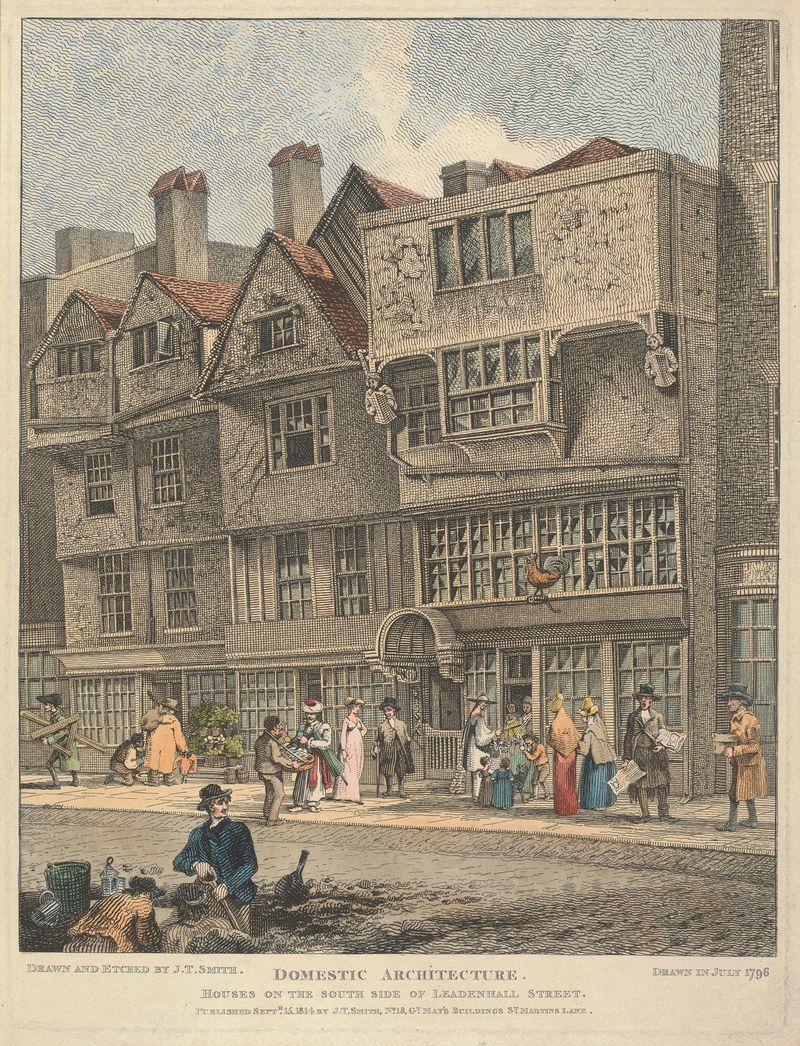
Houses on the South Side of Leadenhall Street
John Thomas Smith
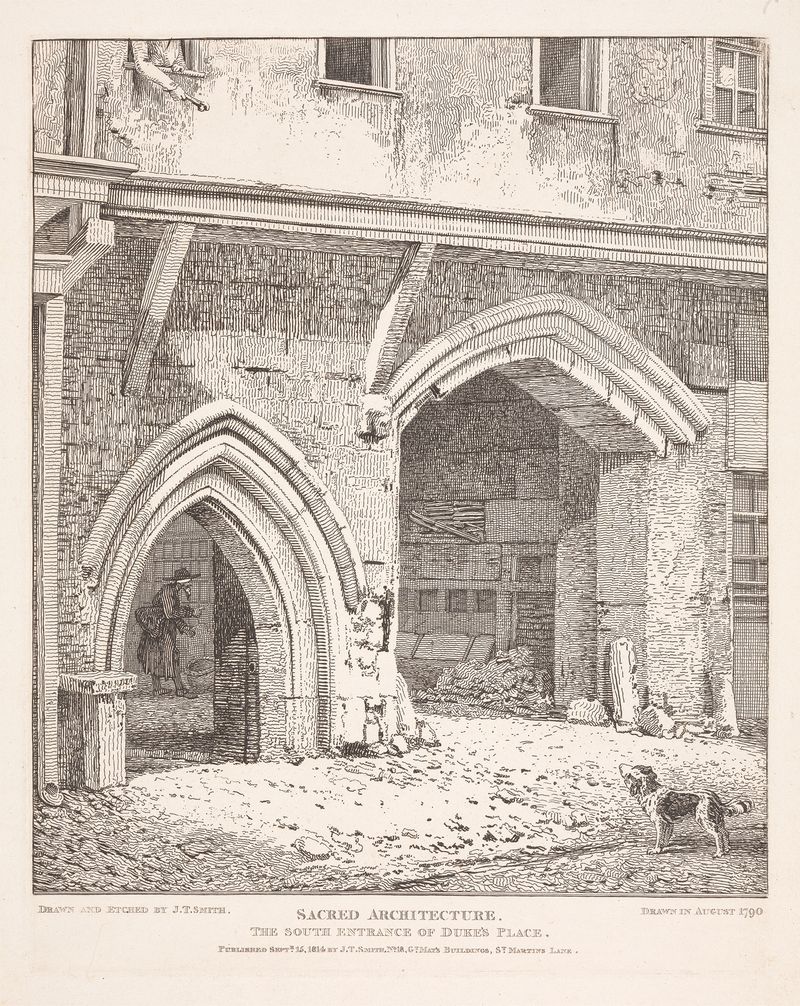
Sacred Architecture; the South Entrance of Dukes Place
John Thomas Smith
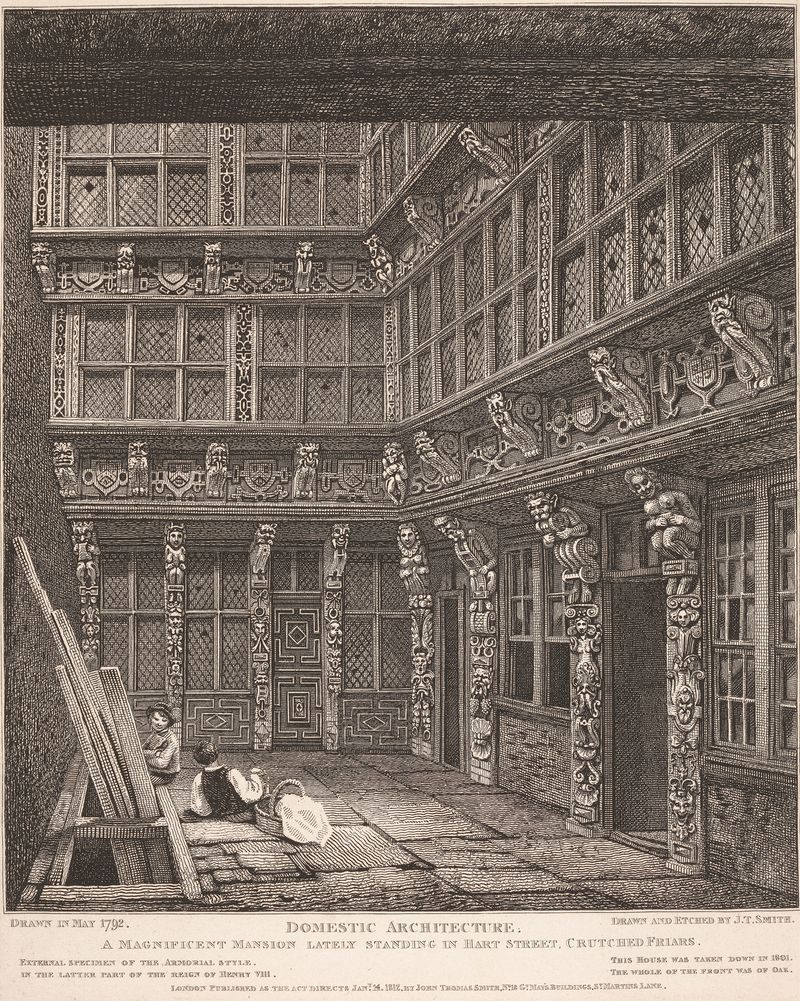
Domestic Architecture, A Magnificent Mansion Lately Standing in Hart Street, Crutched Friars
John Thomas Smith
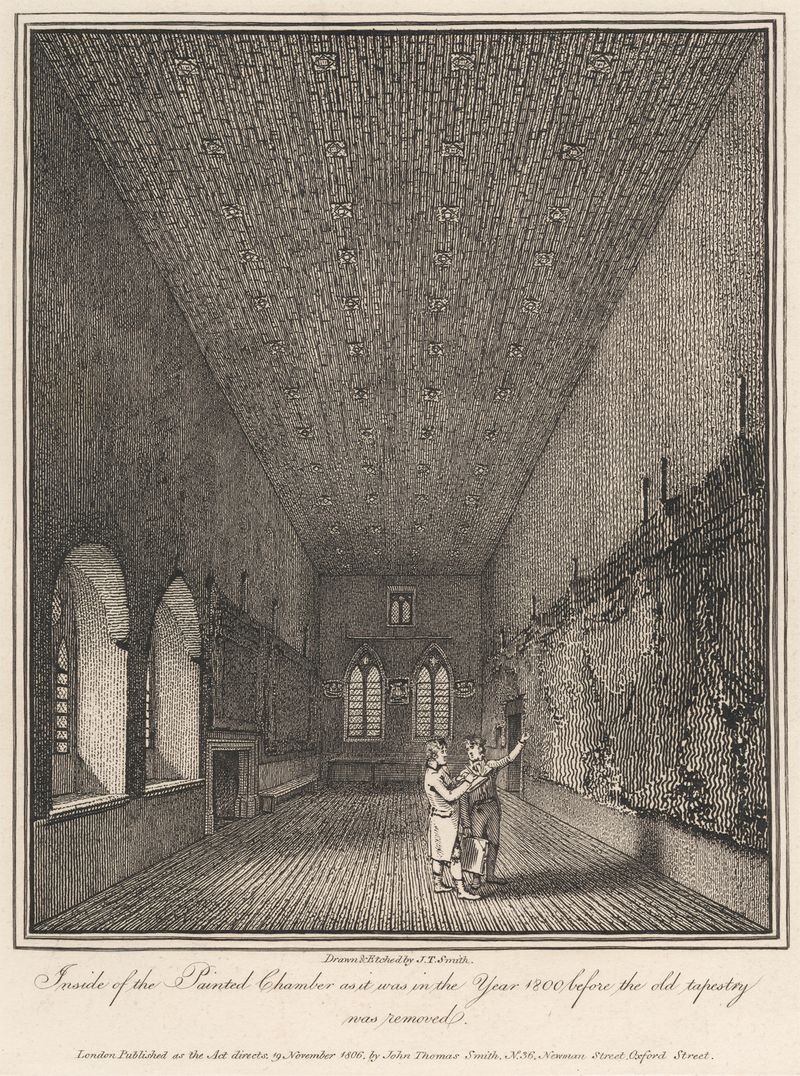
Inside the Painted Chamber as it was in the year 1800 before the old tapestry was removed
John Thomas Smith
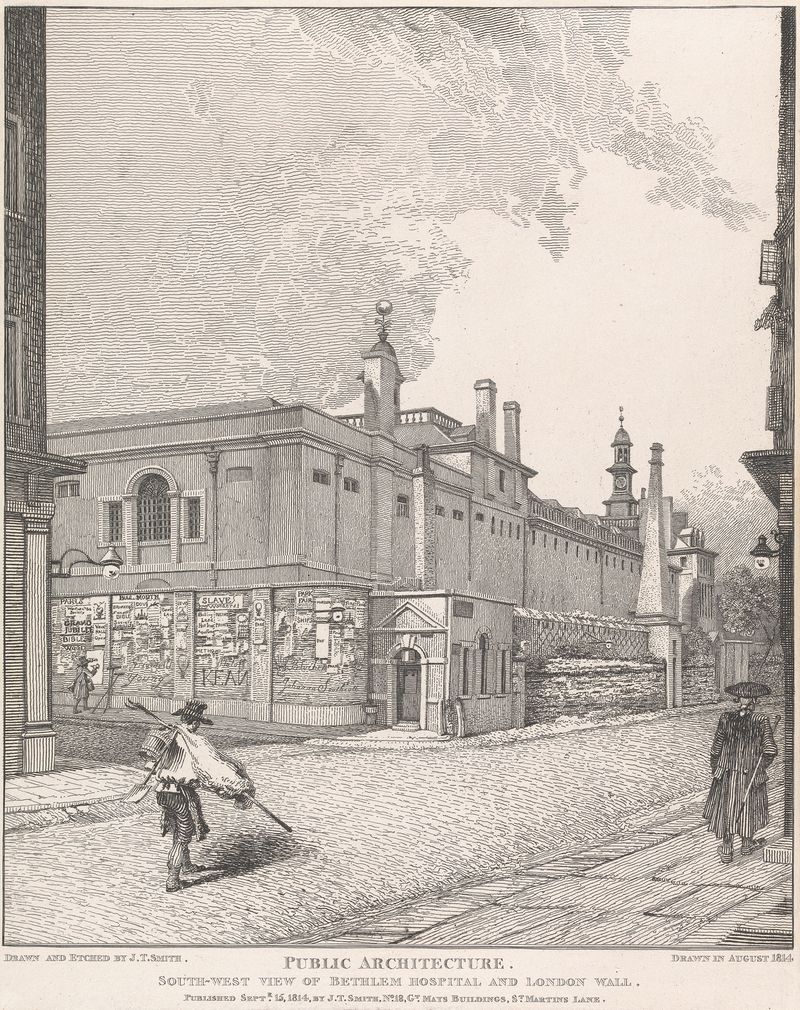
South West View of Bethlem Hospital and London Wall
John Thomas Smith

Winchester Street, London Wall
John Thomas Smith
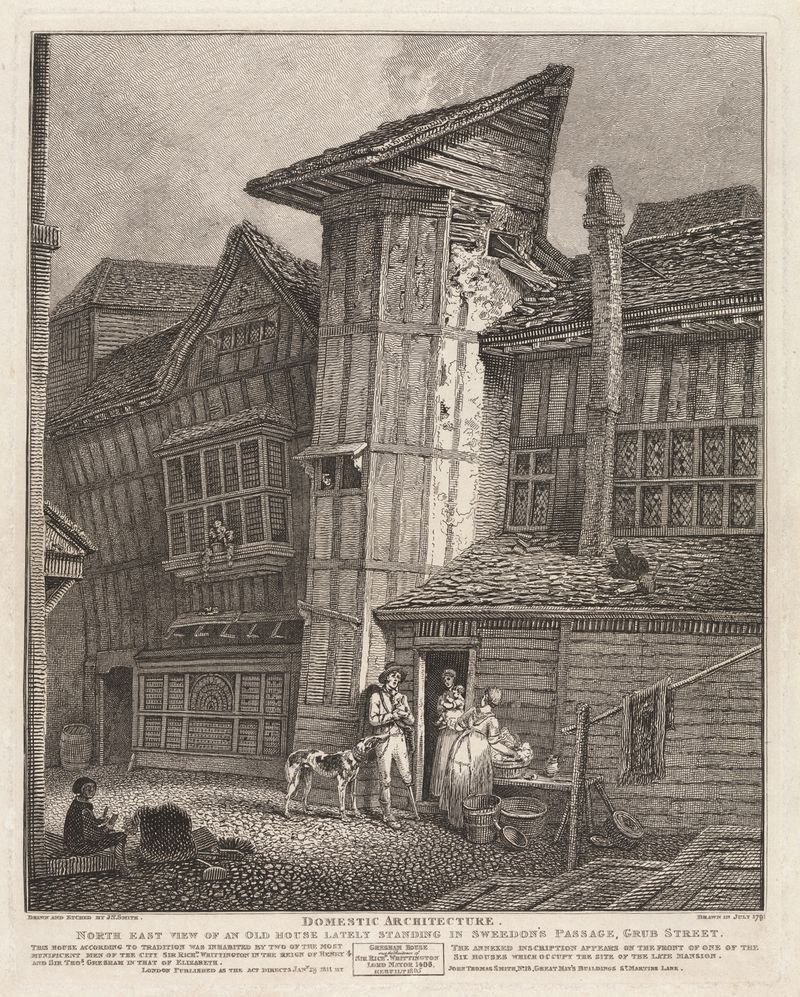
Domestic Architecture – N. E. View of an Old House lately Standing in Sweedon’s Passage, Grub Street
John Thomas Smith

Houses on the South SIde of a Street called London Wall
John Thomas Smith
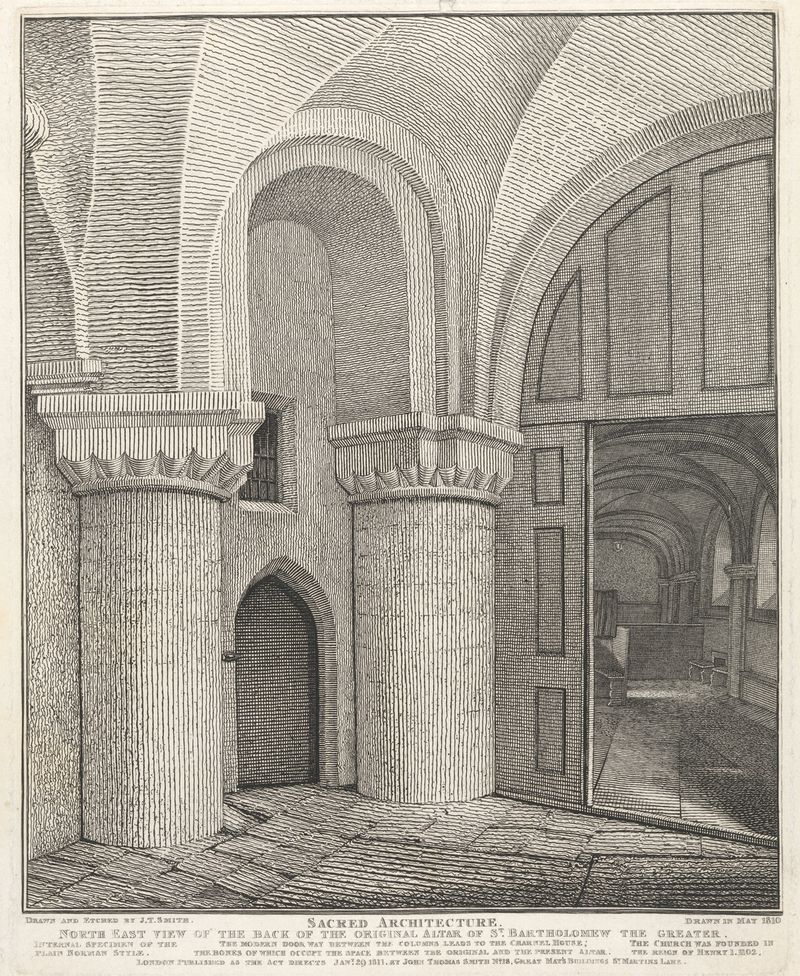
Northeast View of the Back of the Original Altar of St. Barts the Great
John Thomas Smith





