In the Madrasa — History & Facts
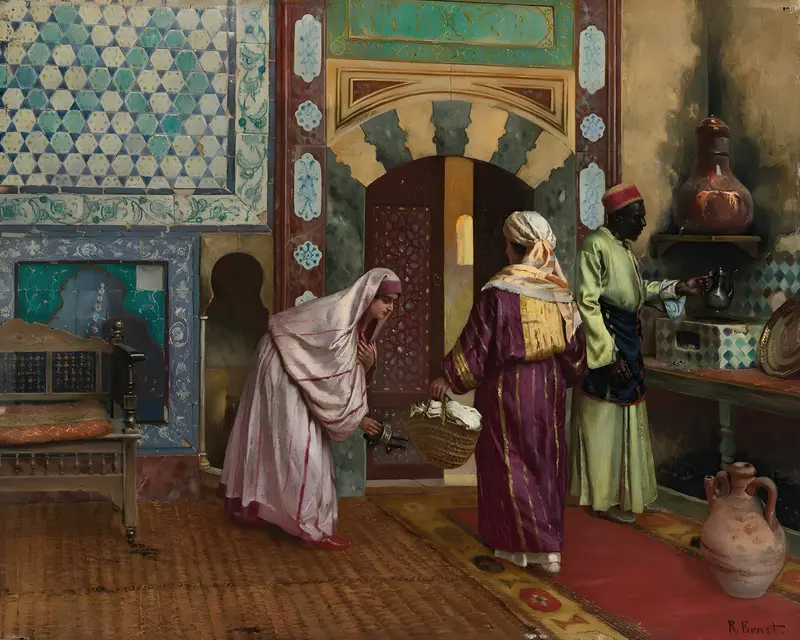
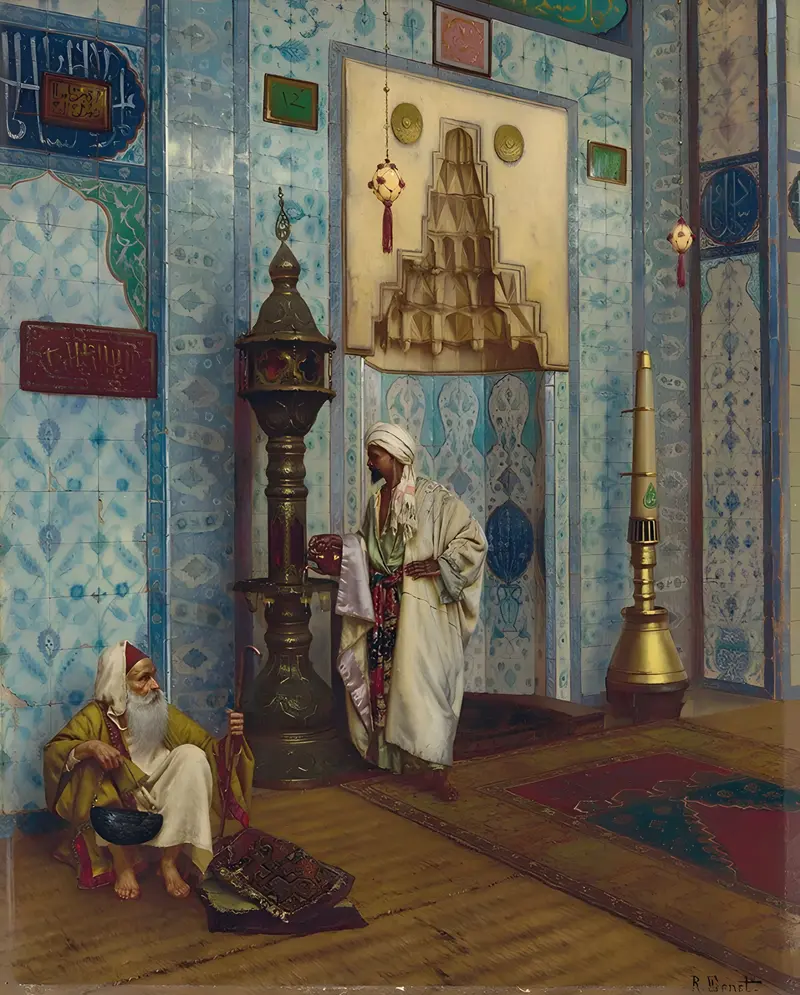
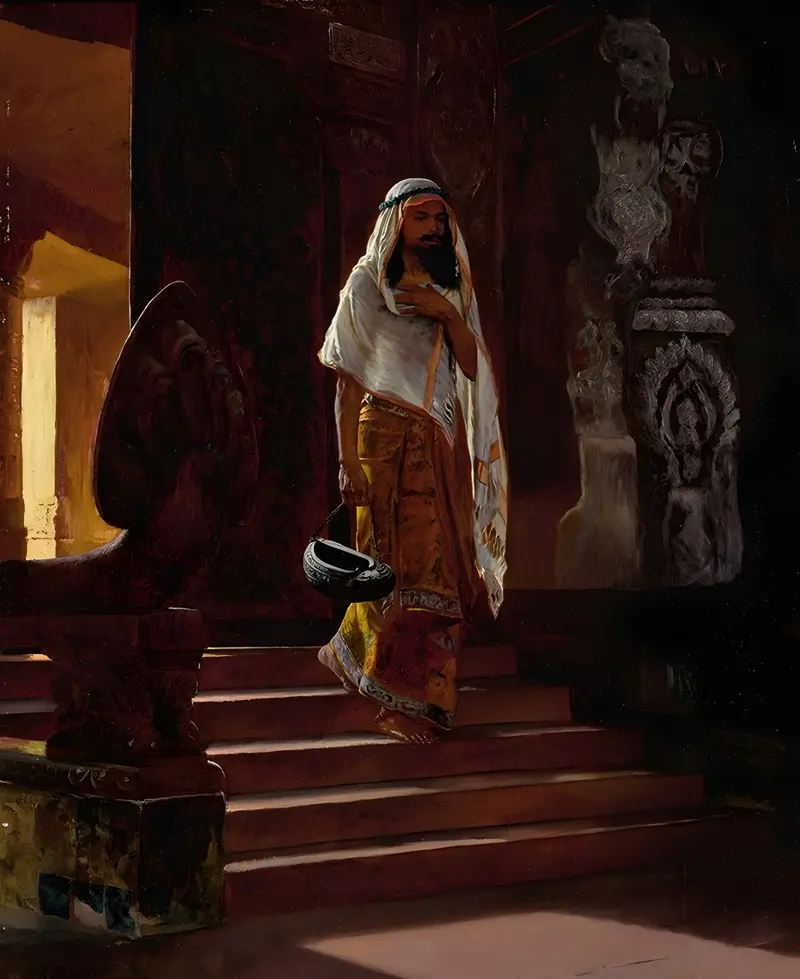
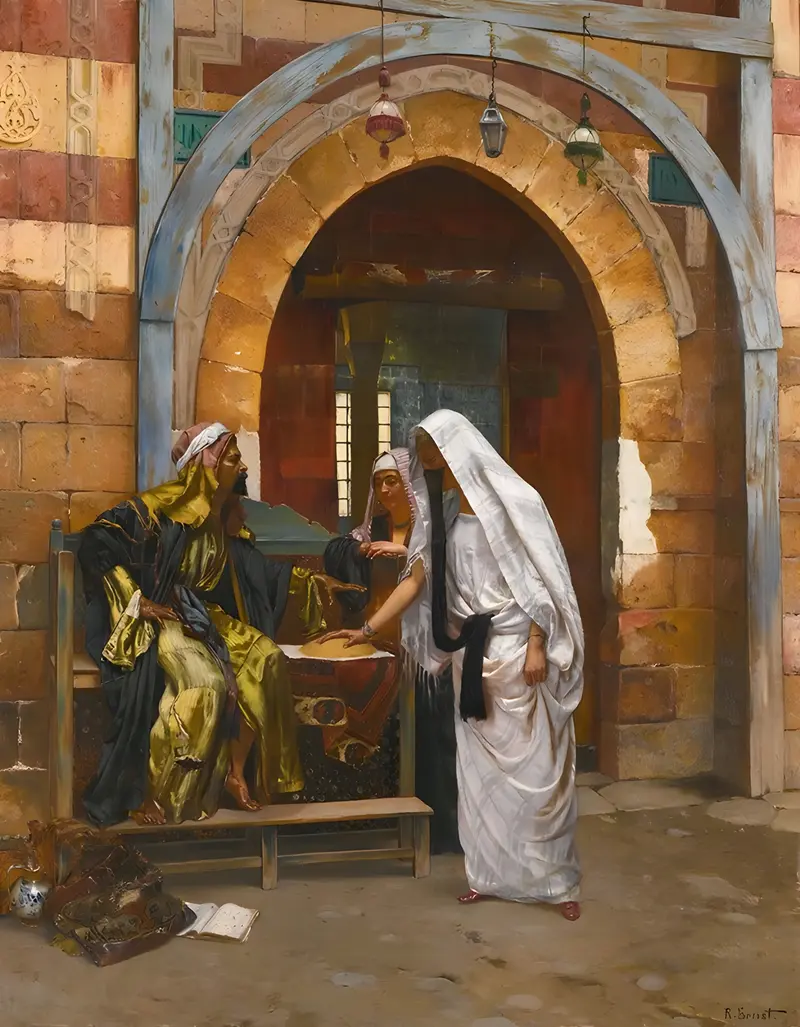
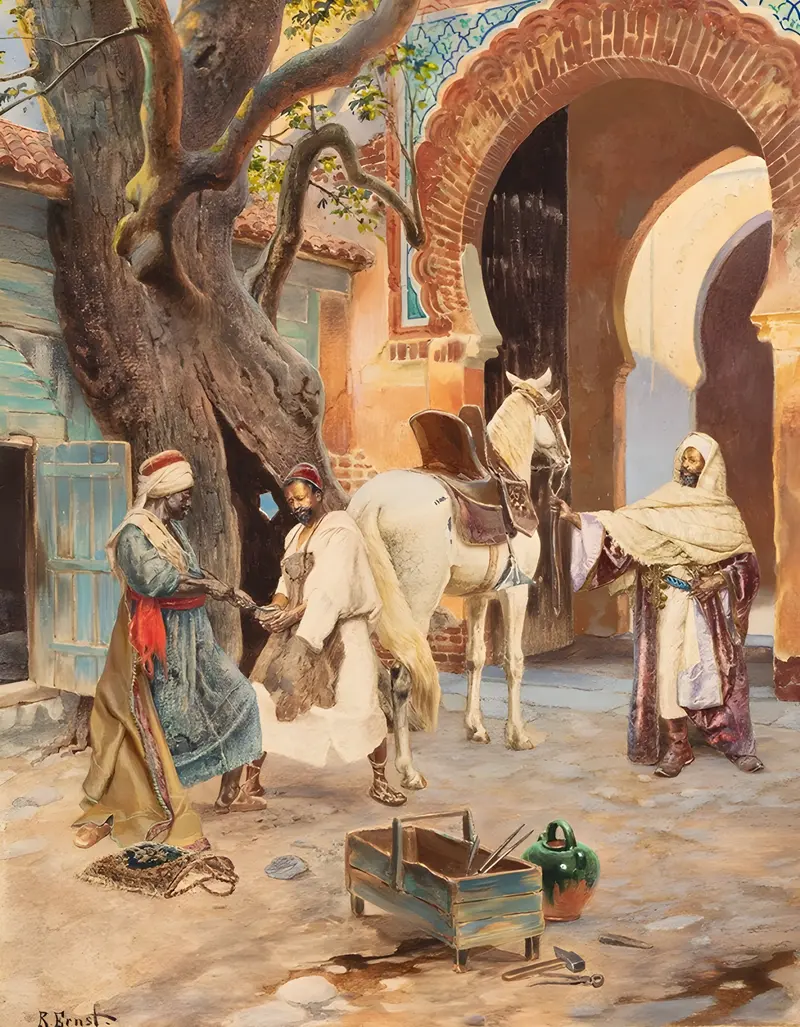
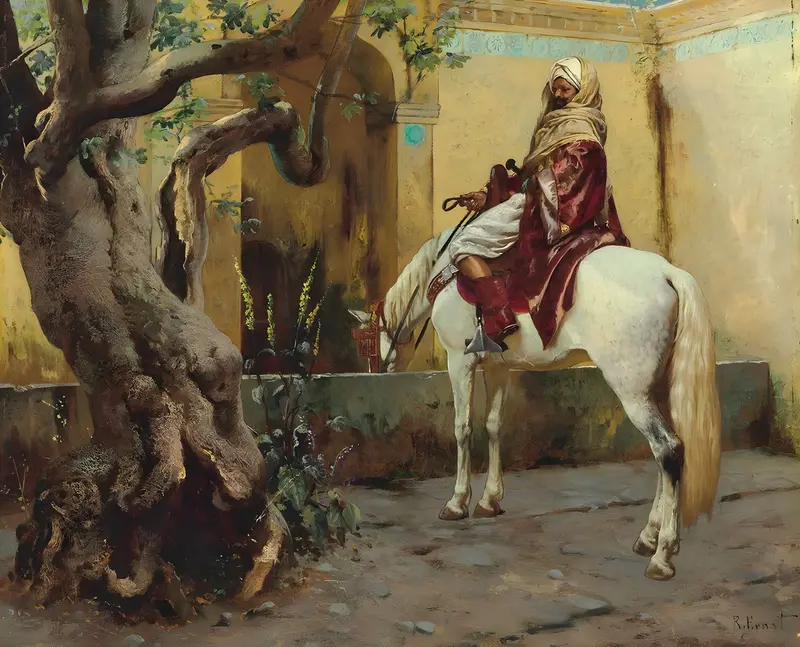
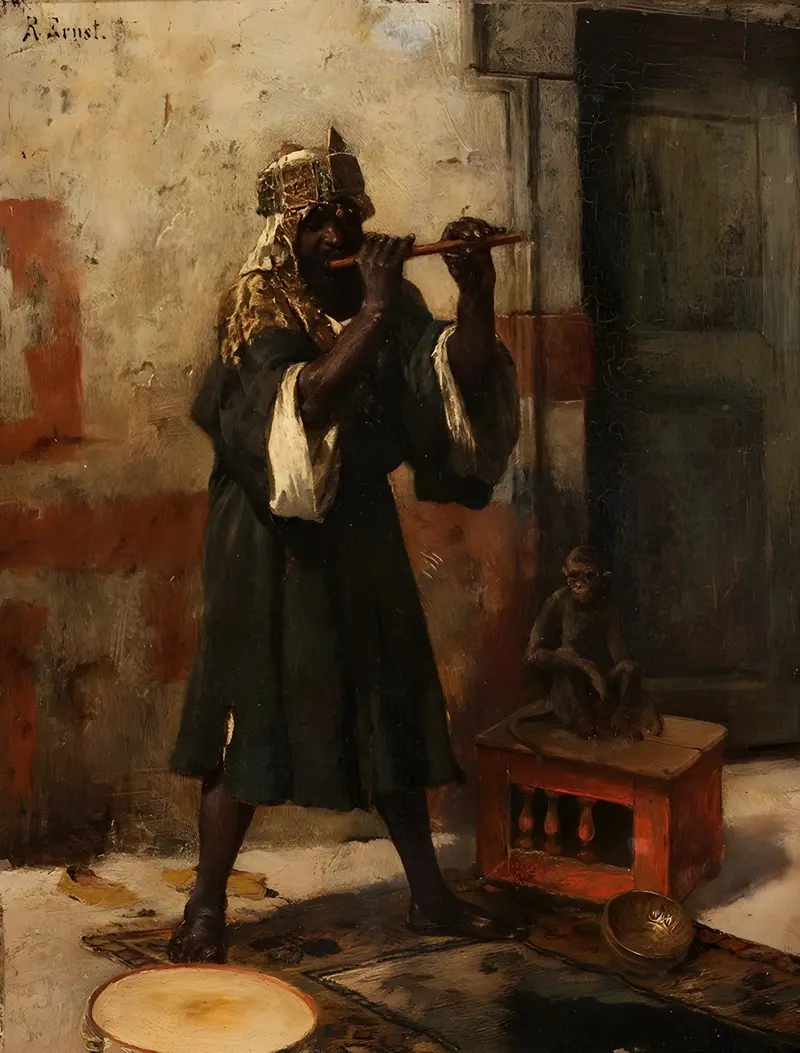
In In the Madrasa, we see a richly detailed interior scene filled with warm colors. The painting features figures engaged in study and reflection, surrounded by intricate architectural elements. The use of light creates a serene atmosphere, highlighting the beauty of the space.
The warm browns and golds evoke a sense of tranquility and focus. The painting is executed in oil on panel, showcasing Ernst's skill in capturing textures and details. The intricate patterns on the walls and the clothing of the figures are rendered with precision. The composition draws the viewer’s eye towards the central figures, emphasizing their engagement with the environment.
This attention to detail reflects the artist's deep appreciation for Islamic culture. Rudolf Ernst was known for his depictions of Orientalist themes, often focusing on Islamic architecture and culture. In the Madrasa is a notable example of his work, showcasing his fascination with the serene and scholarly atmosphere of Islamic schools. Interestingly, Ernst traveled extensively in the Middle East, which greatly influenced his artistic vision.
His works often serve as a bridge between Western and Eastern artistic traditions.