
Incoronation of the Virgin — History & Facts
When Fra Angelico painted Incoronation of the Virgin around 1430, he was already renowned for his ability to merge spiritual vision with the new language of the early Renaissance. What sets this work apart is that it is one of several versions by Fra Angelico on the same theme, each created for a different Florentine patron, reflecting the era’s deep devotion to the Virgin Mary. The painting’s original home was likely the high altar of the monastery of San Domenico in Fiesole, where Fra Angelico himself lived as a Dominican friar.
This setting would have made the scene not just an object of admiration, but a focus for daily prayer and meditation for the monastic community. The moment captured is the crowning of Mary as Queen of Heaven, a vision drawn from apocryphal texts and medieval tradition rather than a specific biblical episode. Christ, radiant and gentle, places a crown upon the bowed head of his mother, surrounded by a celestial assembly of saints and angels. The golden background, alive with delicate punchwork, suggests the unearthly realm, while the careful arrangement of figures in a semi-circular space draws the viewer’s eye toward the central act.
Each saint can be identified by their attributes—Peter with his keys, Dominic in his black-and-white habit—inviting the viewer into a community of witnesses. Compared to Lippi’s later Coronation of the Virgin, Fra Angelico’s vision is more intimate, emphasizing humility and grace over grandeur. Little is known about the precise commission or the painting’s early journey, but it stands as a testament to Fra Angelico’s role in bridging Gothic tradition and Renaissance innovation. Over the centuries, the painting has remained remarkably well preserved, though its original frame and context have been lost.
Today, it is housed in the Museo del Prado, where it continues to inspire with its serene beauty and spiritual clarity. For Fra Angelico, this work marked a period of intense creativity, as he developed the luminous colors and gentle figures that would define his legacy in Florentine art.
More Artworks by Fra Angelico

Condemnation of St Lawrence by the Emperor Valerian
Fra Angelico
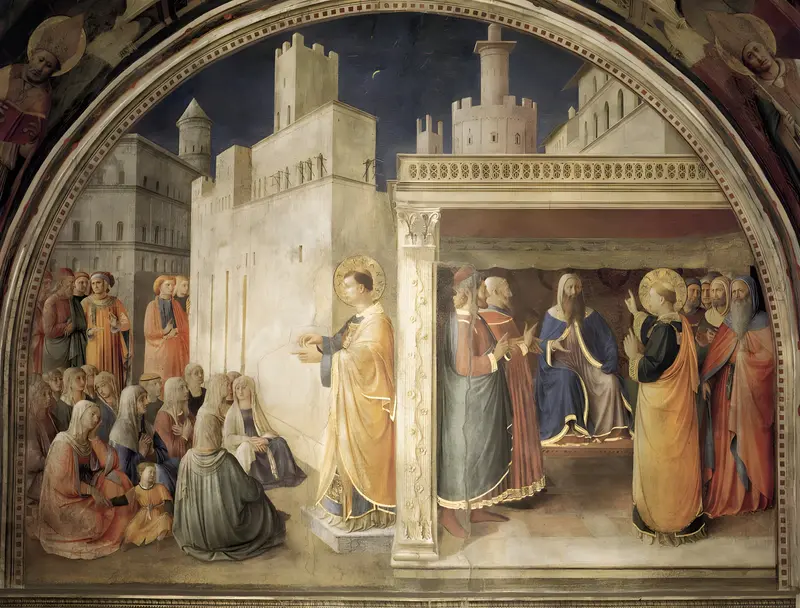
Lunette of the north wall
Fra Angelico
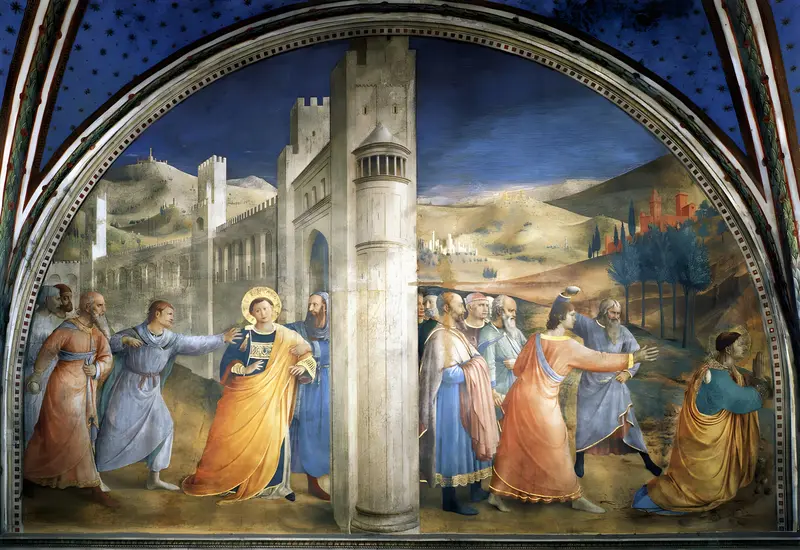
Lunette of the east wall in Niccoline Chapel
Fra Angelico
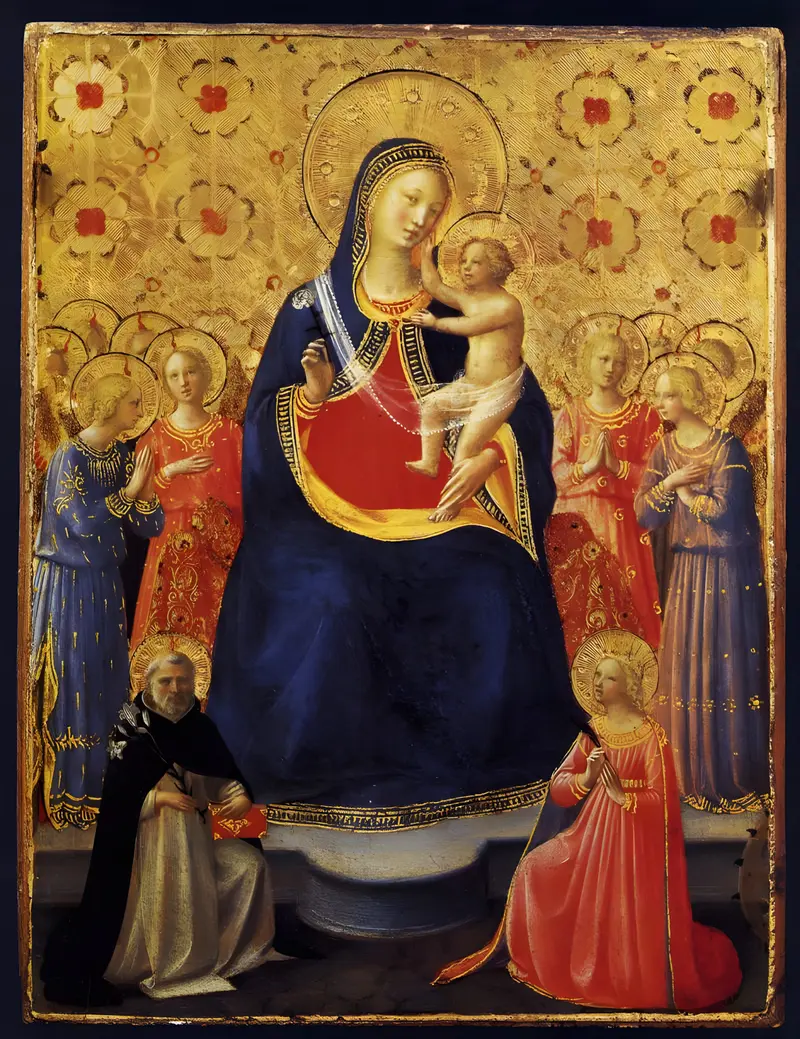
Madonna and Child Enthroned with Nine Angels and Saints Dominic and Catherine of Alexandria
Fra Angelico
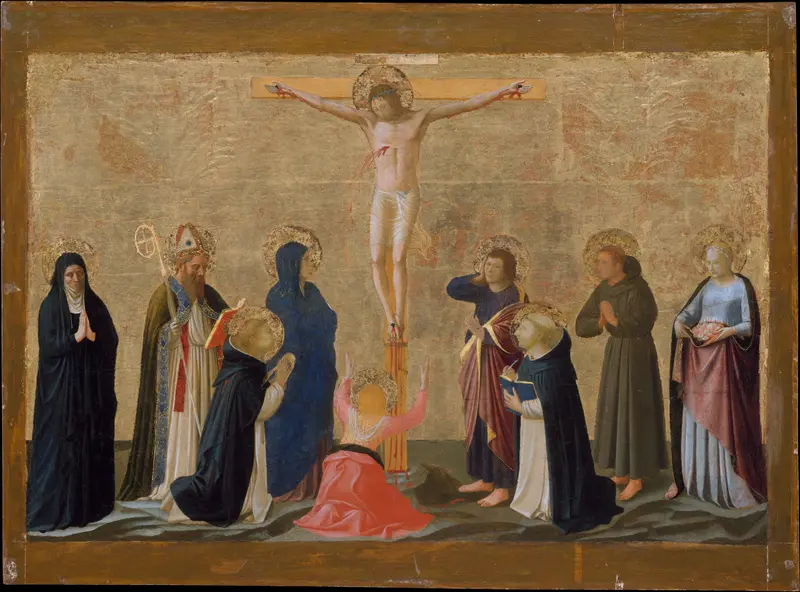
The Crucifixion
Fra Angelico
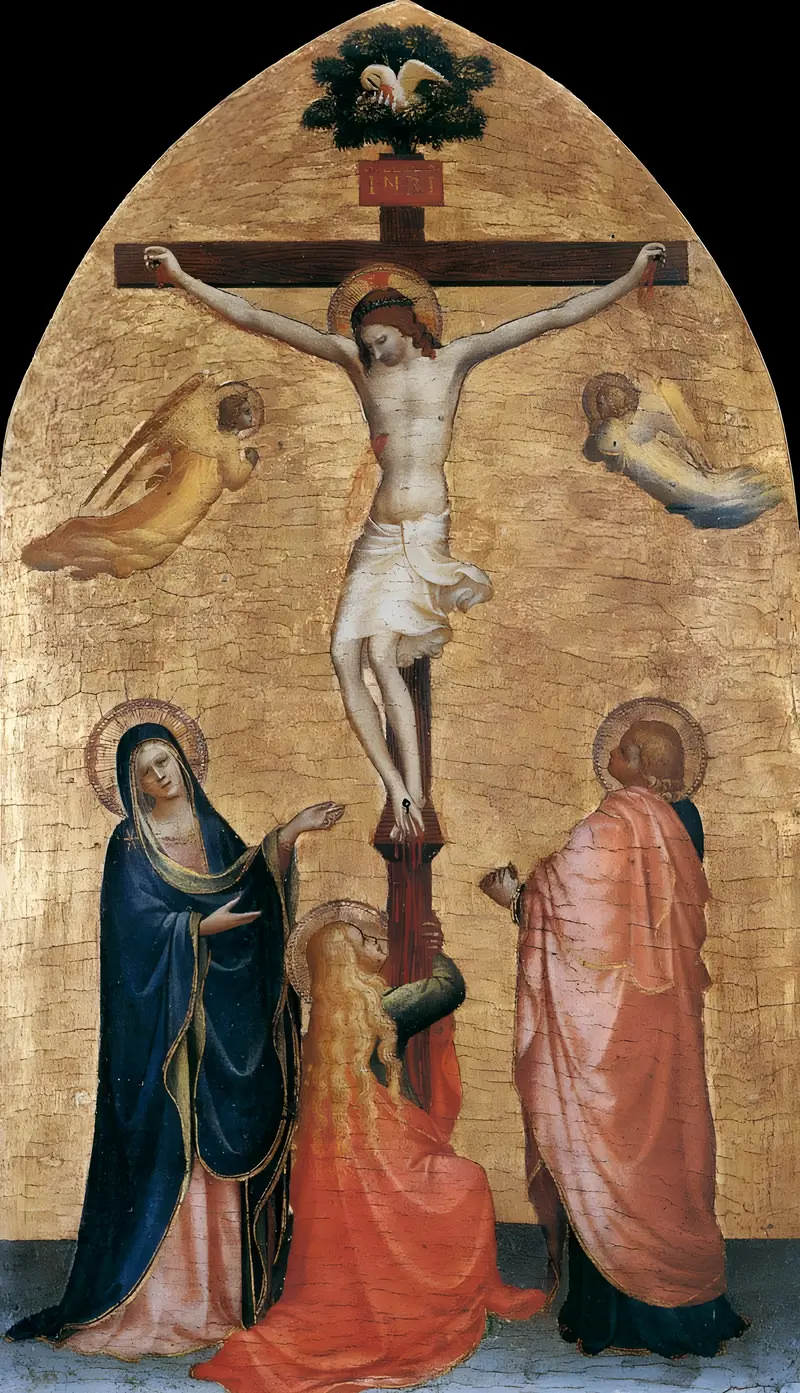
Crucifixion with the Virgin, John the Evangelist, and Mary Magdelene
Fra Angelico
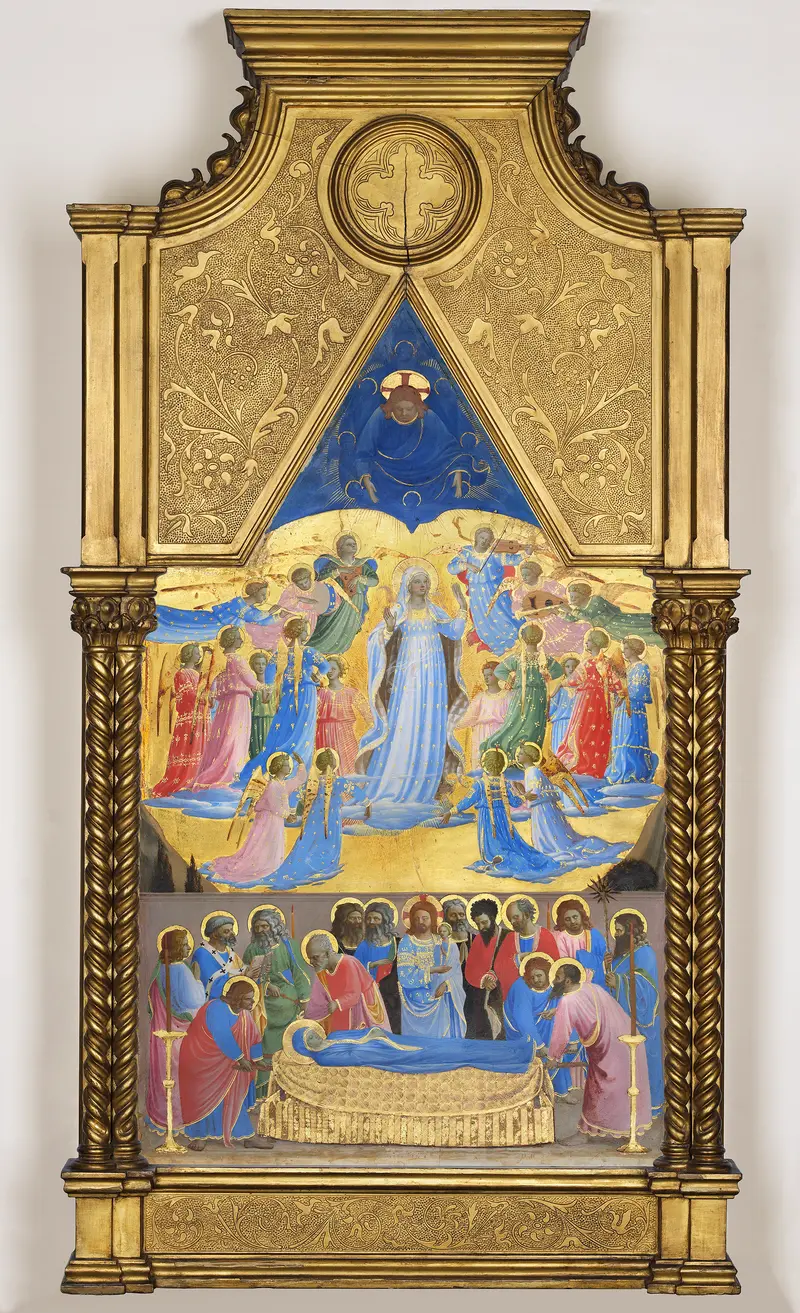
Dormition and Assumption of the Virgin
Fra Angelico
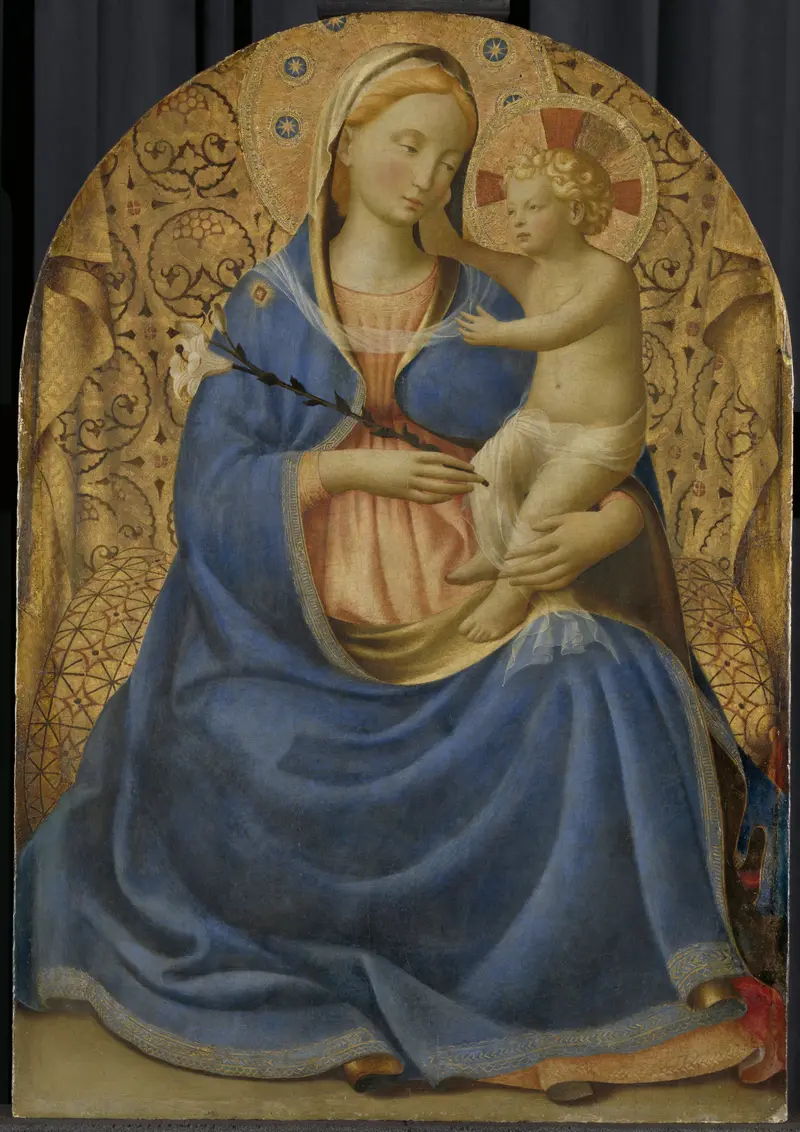
Madonna of Humility
Fra Angelico
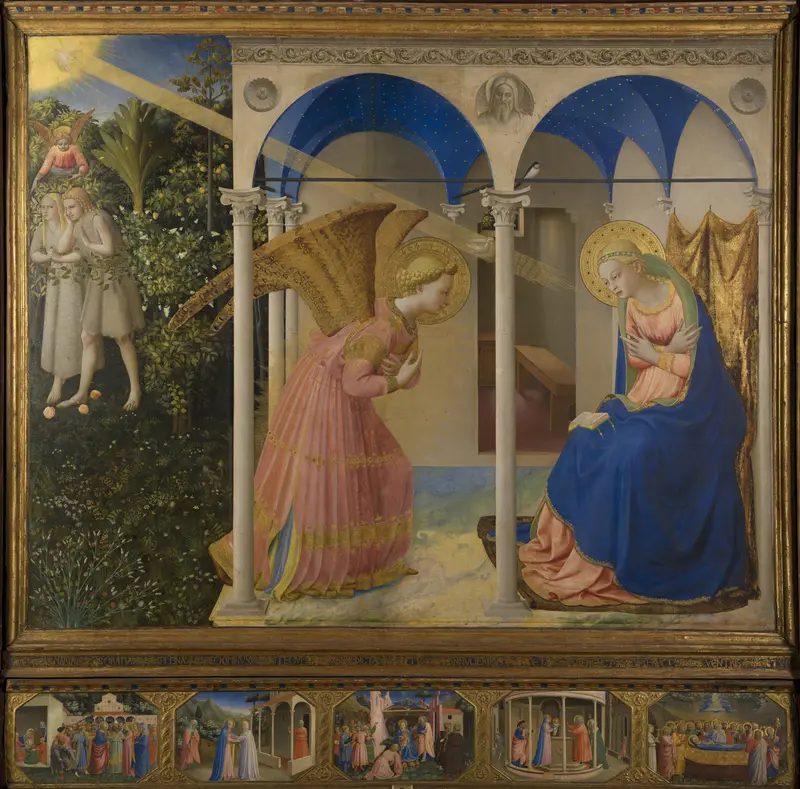
The Annunciation
Fra Angelico

Saint Anthony Abbot
Fra Angelico





