Inner Courtyard — History & Facts
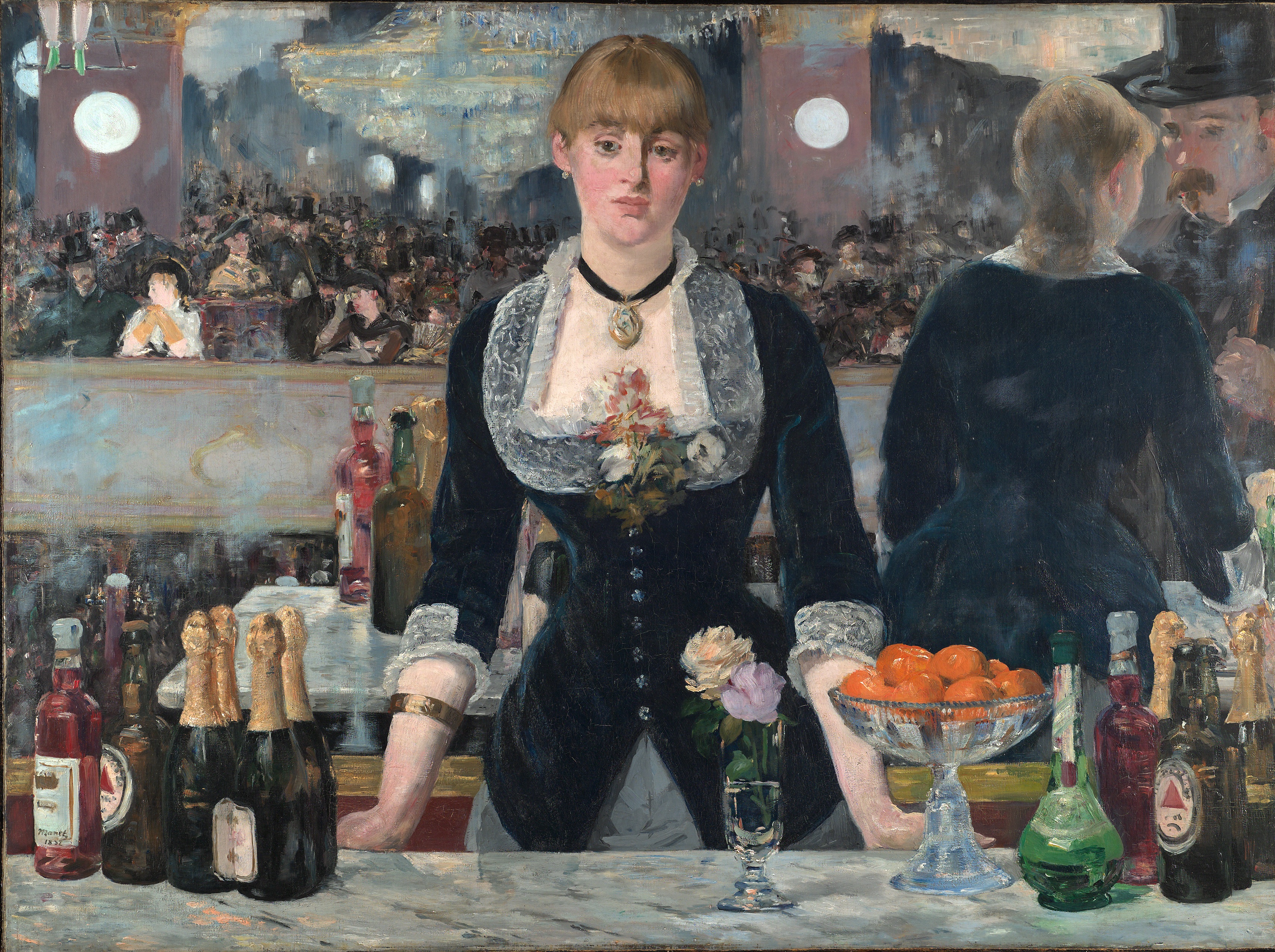
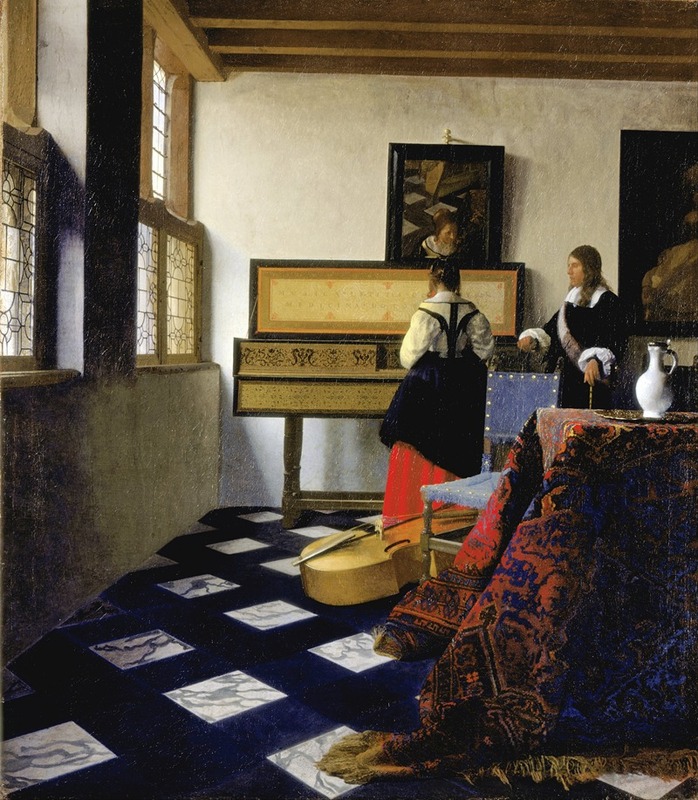
What if beauty was never meant to be finished? In Inner Courtyard, the scene captures a moment of serene chaos, where nature's wildness intertwines with human craftsmanship, suggesting a tension beneath the surface. Look to the left at the archway, the intricate designs beckoning your gaze into the tranquil space beyond. The muted palette of earthy tones contrasts sharply with the soft greens of creeping vines, creating a harmonious yet dissonant interplay. Notice how the dappled sunlight filters through the foliage, casting an ever-shifting pattern on the cobblestones, each shape telling a story of time's relentless passage.
This careful composition invites you into an intimate embrace, while simultaneously hinting at what lies beneath the serenity. This courtyard is not merely a backdrop; it encapsulates a deeper struggle. The juxtaposition of the meticulously cultivated plants against the rough stonework suggests both the beauty of growth and the threat of decay. The hidden violence lies in the tension between nature's relentless encroachment and man's attempts at control.
The slight disruption in the plants' symmetry hints at a past unruly and chaotic, whispering of storms weathered and battles fought in silence. In the early 1820s, when this piece was crafted, Schelfhout was immersed in the Romantic movement, reflecting a growing fascination with nature and its raw power. Living in the Netherlands, he witnessed a reawakening of artistic expression, as artists sought to reconcile beauty with the often brutal realities of life. This work embodies that spirit, merging tranquility with an undercurrent of unrest, emblematic of the era's artistic evolution.
More Artworks by Andreas Schelfhout
Browse all →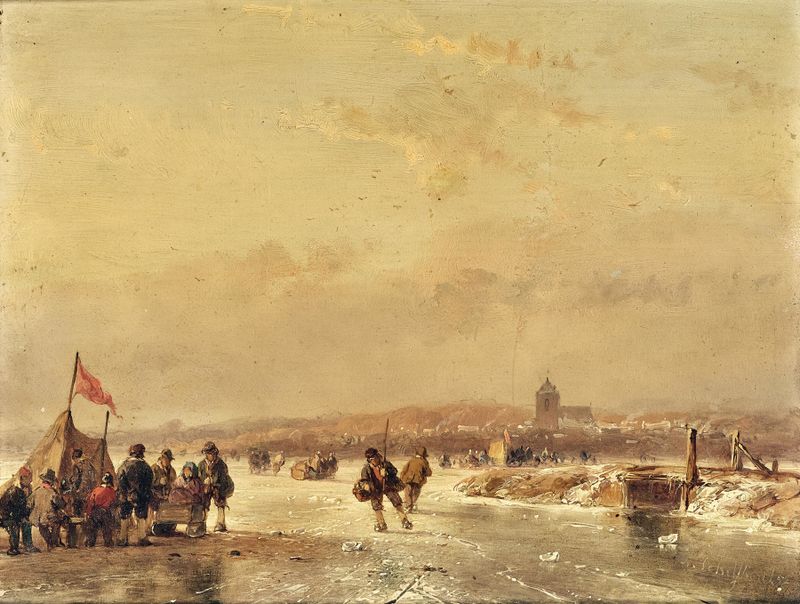
Winter Pleasures
Andreas Schelfhout
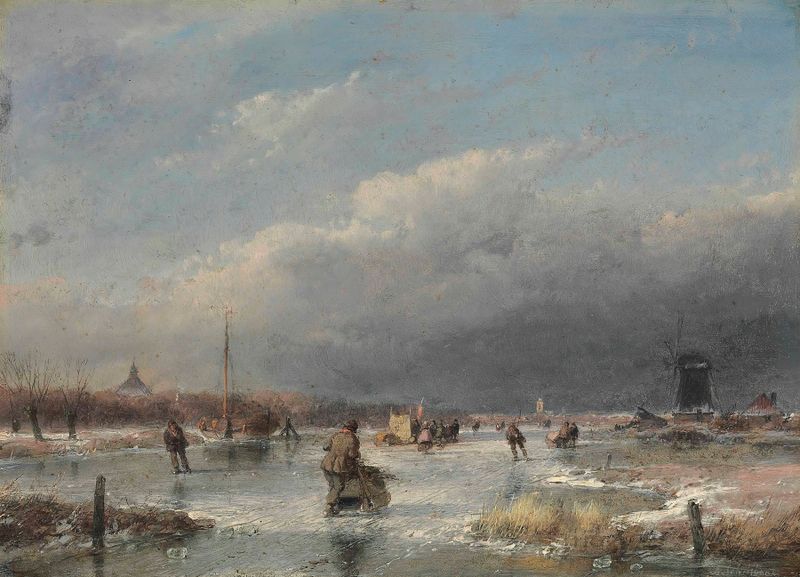
Skaters On A Frozen River
Andreas Schelfhout
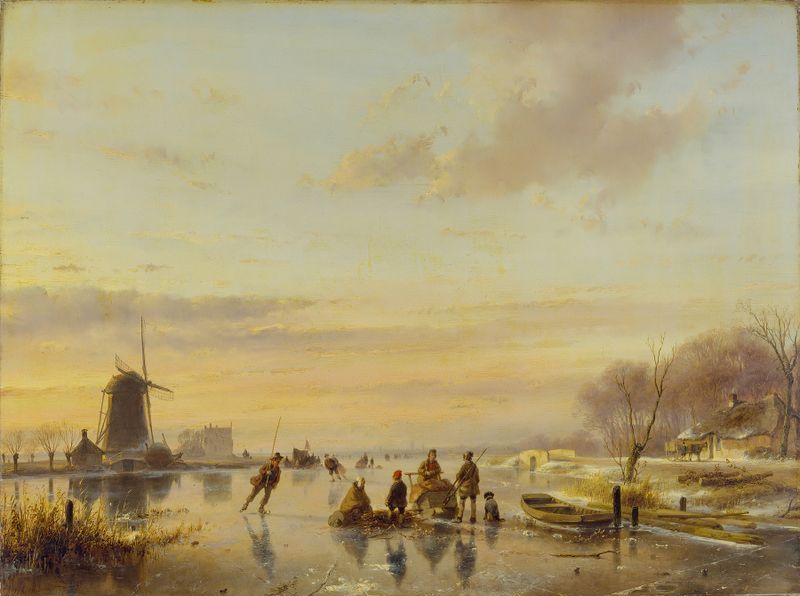
Winter in Holland
Andreas Schelfhout
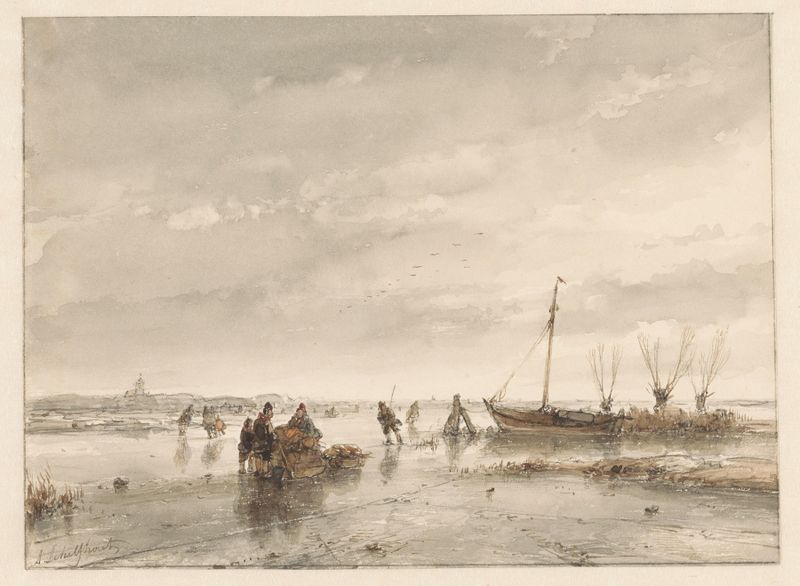
Winterlandschap met bevroren meer
Andreas Schelfhout

Landschap met schaatsenrijders
Andreas Schelfhout

A Frozen Waterway With Skaters By A Refreshment Stall
Andreas Schelfhout

Holländische Winterlandschaft
Andreas Schelfhout

Windmill beside a frozen river
Andreas Schelfhout

A Frozen Canal near the River Maas
Andreas Schelfhout

Winter landscape with skaters and a koek-en-zopie
Andreas Schelfhout