
Interior from the Church at Voss — History & Facts
A hush seems to linger in the air of this church interior, where the painter’s gaze settles not on a congregation or a ceremony, but on the quiet architecture itself. The light slips in from the left, catching on polished wood and gilded ornament, then pooling on the pale stone floor. Every surface is alive with detail: the carved pews, the painted panels, the delicate chandelier that hangs like a question mark in the center.
The crucifix draws the eye deeper, anchoring the composition and hinting at the spiritual gravity that fills this empty space. The palette is warm but restrained, with the whitewashed walls amplifying the glow of the wood and gold. Works like this, made in the mid-nineteenth century, often reflect a growing fascination with national heritage and the everyday poetry of local life. In Norway, artists such as Adolph Tidemand turned their attention to the interiors of rural churches, capturing the spaces that shaped communal identity and memory.
Painted in 1855 and now held by the National Museum of Art, Architecture and Design, this piece belongs to that moment when artists recorded the material culture of their homeland with almost documentary care. History has kept few traces of the specific story behind this painting, but its careful observation invites us to imagine the generations who have passed through these doors. Look again at the play of light and shadow—here, the ordinary becomes quietly monumental.
More Artworks by Adolph Tidemand

Bridal Procession on the Hardangerfjord
Adolph Tidemand
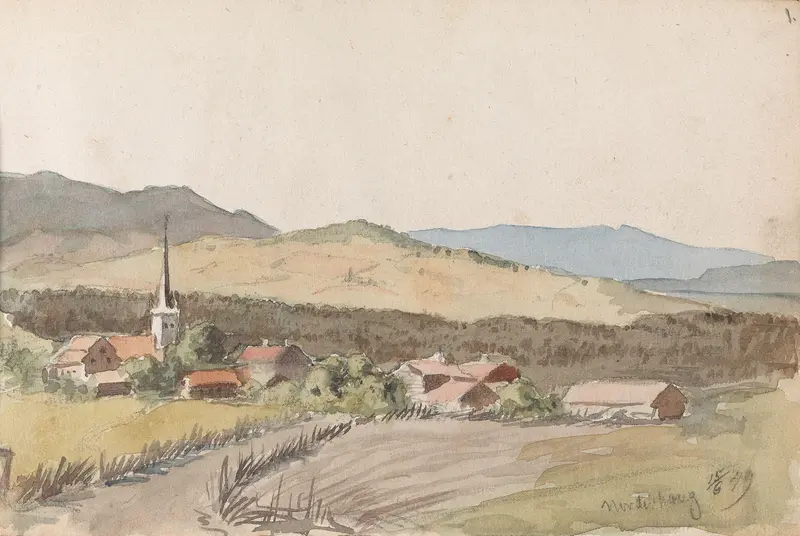
Fra Haugsbygd
Adolph Tidemand
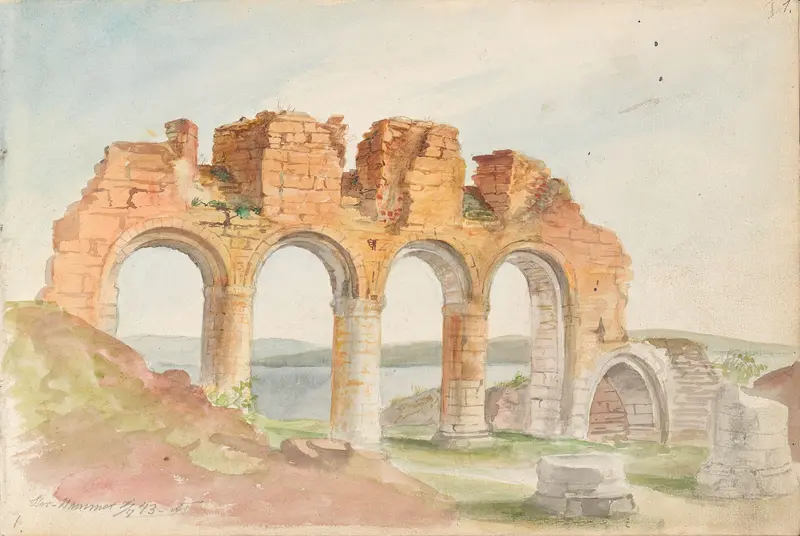
Domkirkeruinen, Hamar
Adolph Tidemand
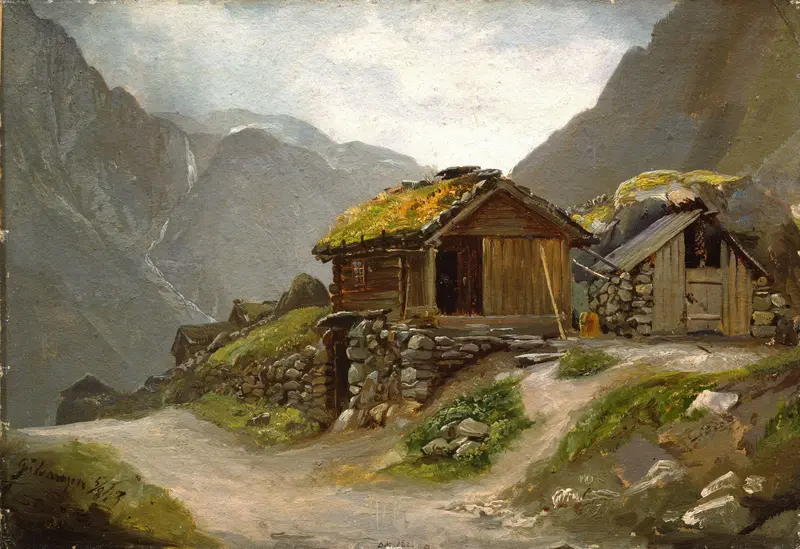
View from Gudvangen
Adolph Tidemand
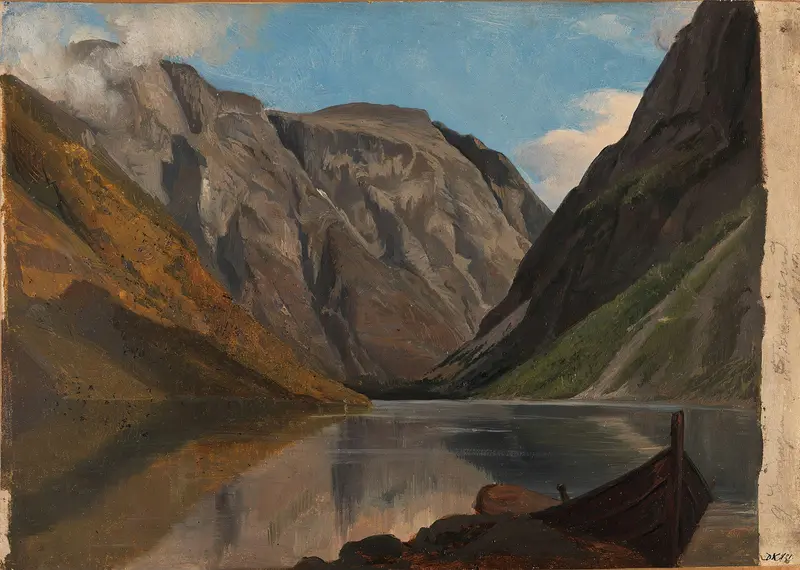
View of Gudvangen
Adolph Tidemand
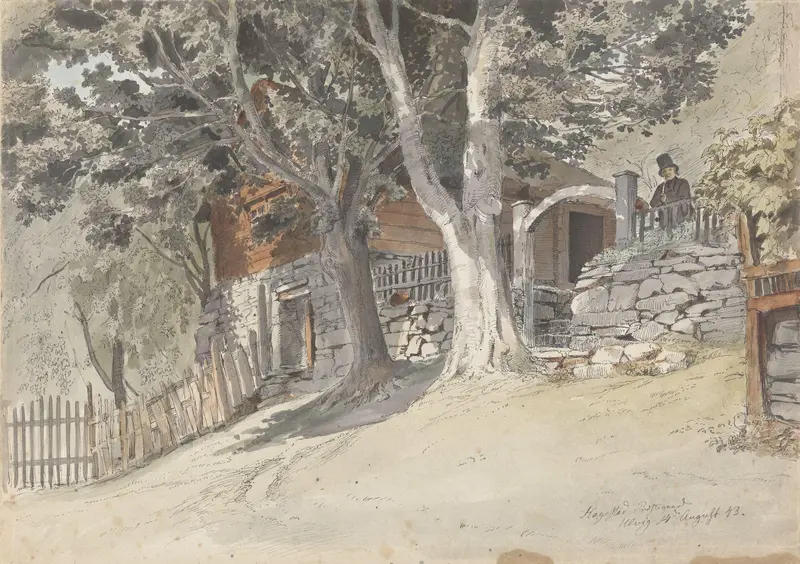
Hagestad prestegård, Ulvik i Hardanger
Adolph Tidemand
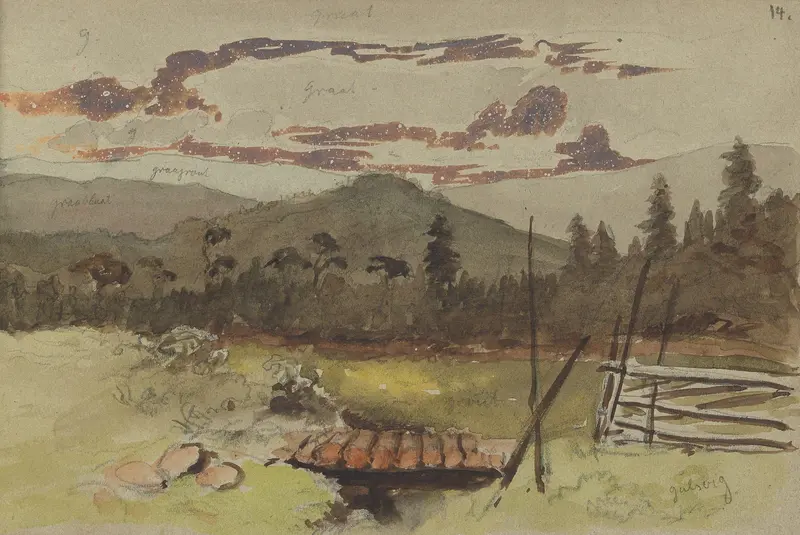
Fra Gulsvik
Adolph Tidemand
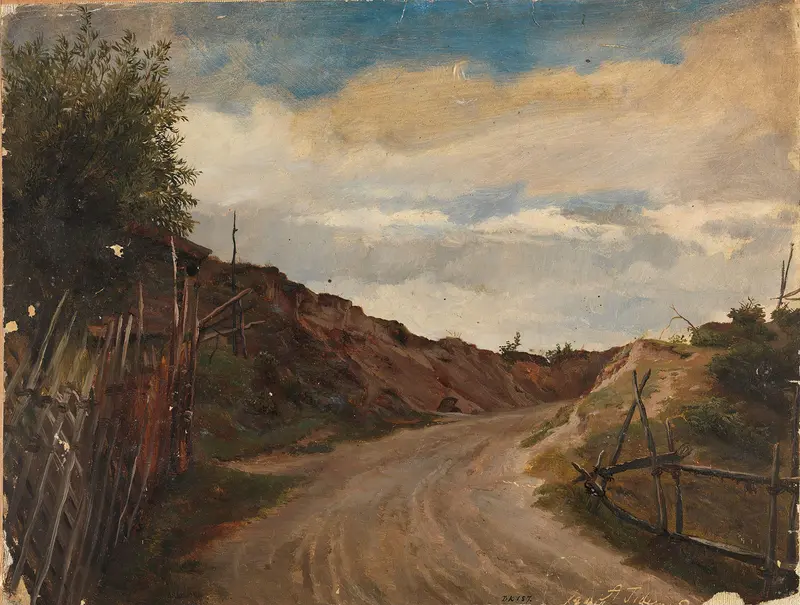
Country Road
Adolph Tidemand
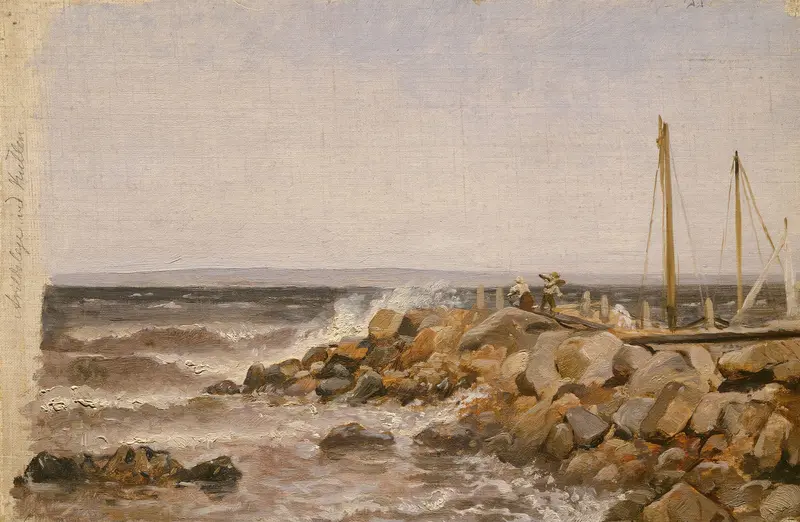
From Kullen in Sweden
Adolph Tidemand
Untitled
Adolph Tidemand





