
Interior of the Temple of Jupiter Ammon — History & Facts
In a world that often rushes past, this evocative scene invites us to pause and awaken to the whispers of history embedded within its walls. Look to the left, where the ancient columns rise majestically, their intricate carvings telling stories of times long gone. The warm, muted tones of ochre and beige evoke a soothing sense of age, while patches of light, filtering through unseen openings, create a gentle play of shadow and illumination. Notice how these contrasts breathe life into the room, transforming stone into a sanctuary of contemplation.
The soft lines of the architecture guide the viewer’s gaze upward, imbuing the space with an ethereal quality that invites exploration. Yet there’s an underlying tension within the stillness. The quietude of the temple suggests a sacred moment of introspection, but it also speaks of forgotten worship and the weight of history. Each shadow hints at the divine presence that once filled the space, and the remnants of offerings echo the deep connection between humanity and the divine.
This delicate balance between reverence and absence transforms the interior into a liminal space, where past and present converge in an invitation to awaken one’s own insights. In 1810, Luigi Mayer painted this work during his travels in Egypt, a time when Western artists were increasingly drawn to the allure of ancient civilizations. Inspired by the Romantic movement, he sought to capture the grandeur and mystique of these monumental sites, reflecting the broader European fascination with antiquity. As he navigated through the ruins, the artist translated his experiences into an artwork that resonates with both historical depth and a call for personal awakening.
More Artworks by Luigi Mayer
Browse all →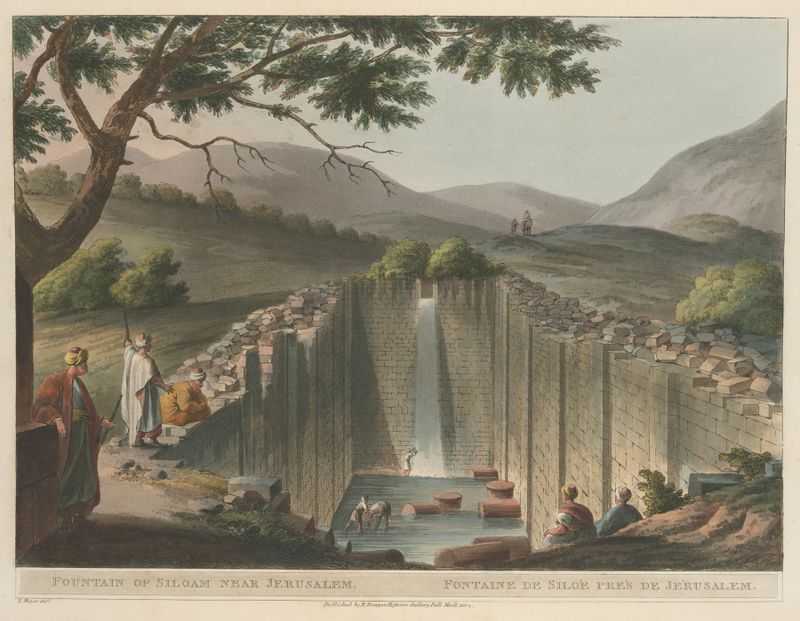
Fountain of Siloam Near Jerusalem
Luigi Mayer

View of the Dardanelles
Luigi Mayer
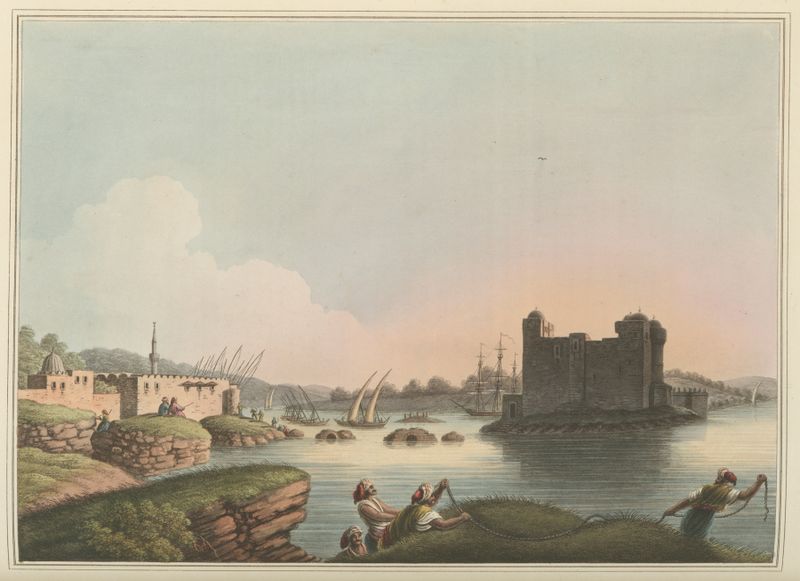
Port of Latachia
Luigi Mayer

Stadium at Ephesus
Luigi Mayer

Ancient Temples at Agrigentum
Luigi Mayer
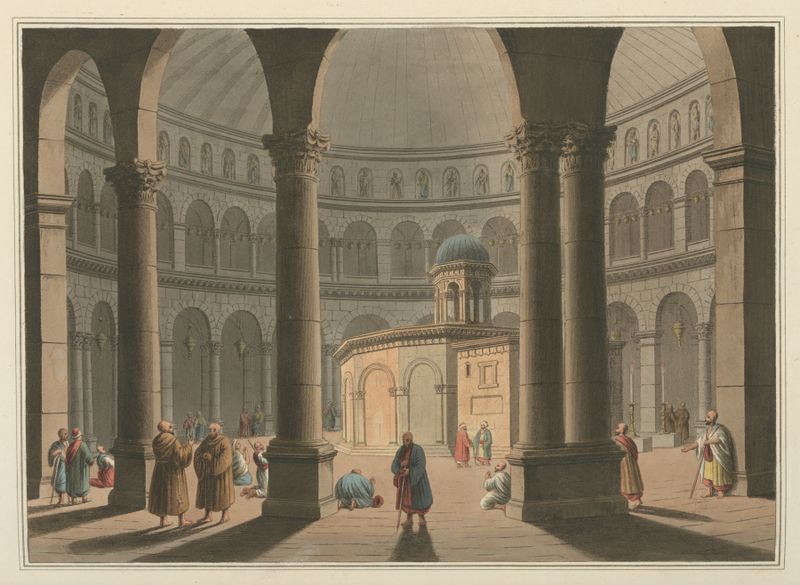
Church of the Holy Sepulchre
Luigi Mayer
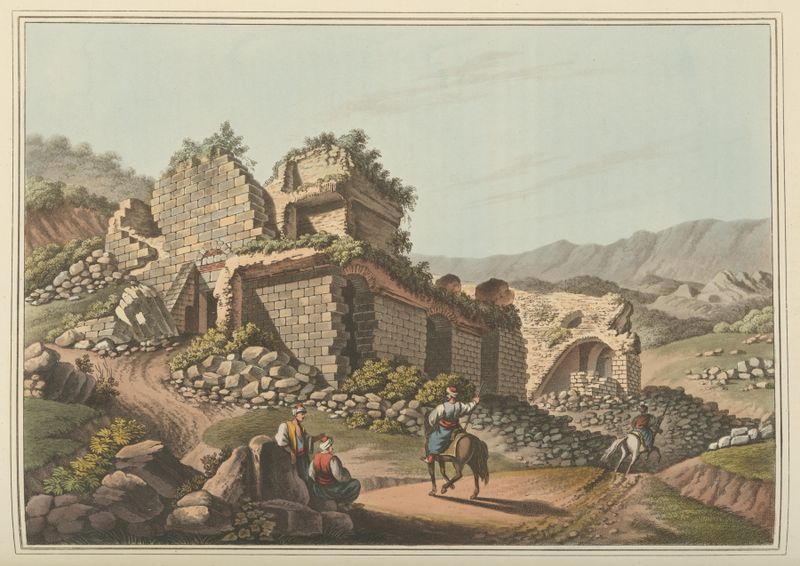
Theatre at Ephesus
Luigi Mayer
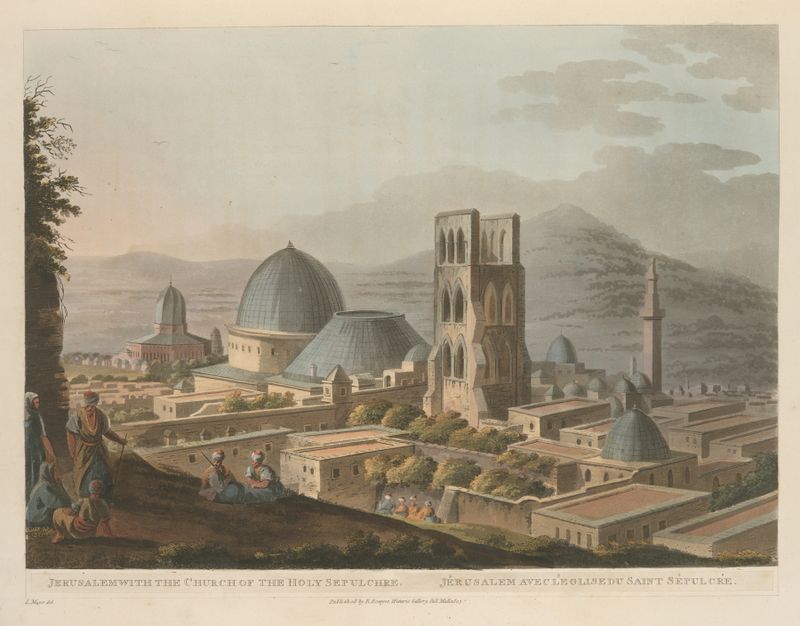
Jerusalem with the Church of the Holy Sepulchre
Luigi Mayer
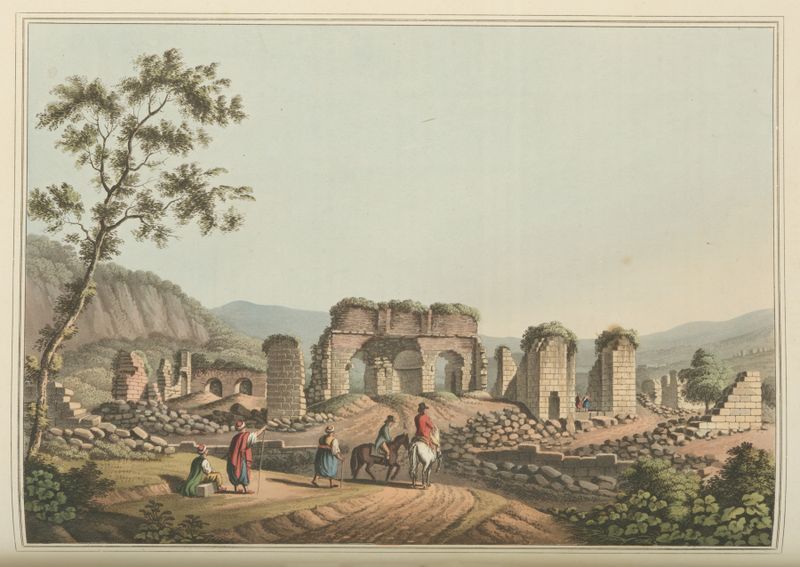
Ruins of the Temple of Diana at Ephesus
Luigi Mayer

Crater in the Island of Volcano
Luigi Mayer
More Architecture Art
Browse all →
The statue of Liberty
Frédéric Auguste Bartholdi

View of Houses in Delft, Known as ‘The Little Street’
Johannes Vermeer

View of Houses in Delft, Known as ‘The Little Street’
Johannes Vermeer

The Cathedral in Rouen. The portal, Grey Weather
Claude Monet

The yellow house
Vincent van Gogh

The Church in Auvers-sur-Oise, View from the Chevet
Vincent van Gogh