
Interior of the Wawel Cathedral — History & Facts
What first grips the eye in Aleksander Gryglewski’s Interior of the Wawel Cathedral is the hush that seems to settle over the golden shrine at the heart of the painting. Shafts of light, filtered through high Gothic windows, draw the gaze upward and inward, illuminating the domed canopy and its gilded figures. The architecture soars in silent arches, but the real drama is at ground level: a solitary figure kneels in prayer before the shrine, while another, clad in white, sits quietly at a side altar.
Every surface—marble, metal, stone—catches the light differently, guiding the viewer through a labyrinth of devotion and memory. Painted between 1870 and 1879, this work belongs to a tradition of 19th-century interior views that sought to capture not just the grandeur of sacred spaces, but their living, breathing presence. In this era, artists like Gryglewski were often drawn to historic cathedrals, responding to a wave of national revival and a fascination with the medieval past. Such paintings were prized both as records and as invitations to contemplation, often commissioned by collectors or institutions eager to preserve the image of cultural monuments.
Now held by the National Museum in Warsaw, this canvas stands as a testament to a time when Polish identity and history were inseparable from the stones and shadows of places like Wawel. Look again at the interplay of darkness and gold, and the quiet figures lost in prayer—the cathedral’s story is told as much by its light as by its silence.
More Artworks by Aleksander Gryglewski

Cloisters of the Jagiellonian Library in Kraków
Aleksander Gryglewski
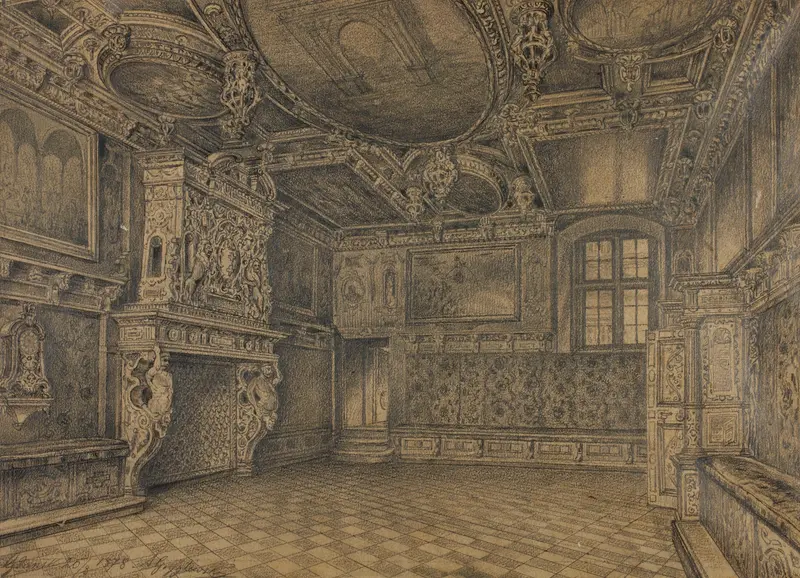
Red Hall at the Town Hall in Gdansk
Aleksander Gryglewski
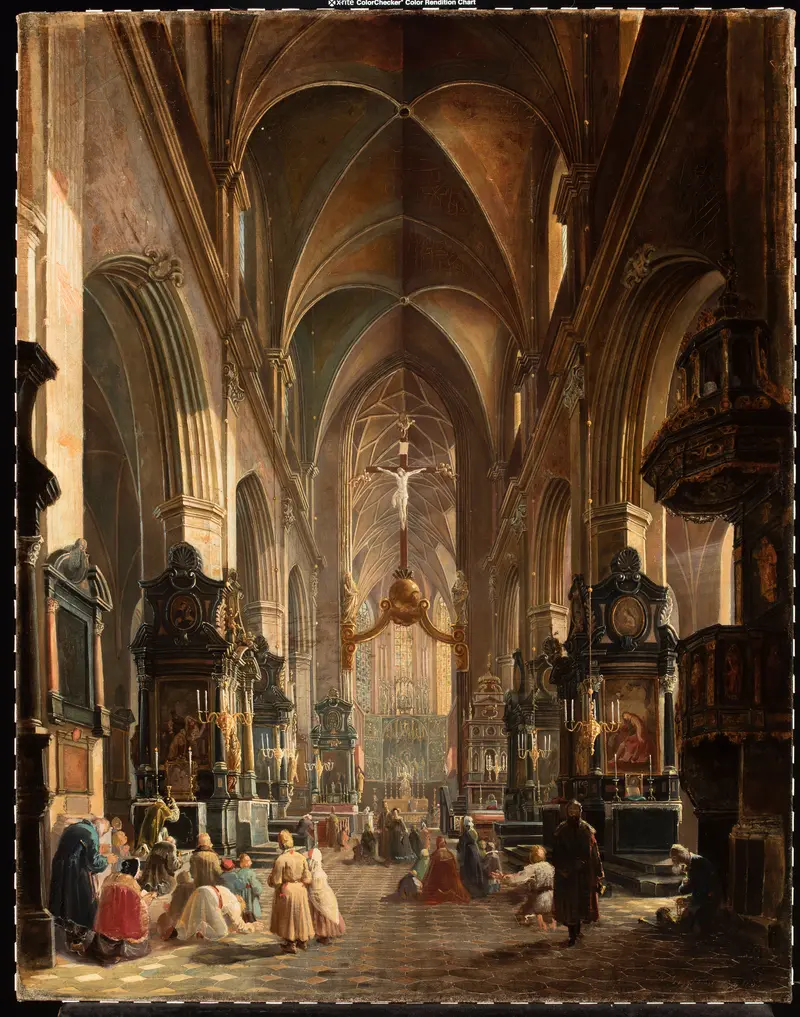
Interior of the Church of Virgin Mary in Kraków
Aleksander Gryglewski
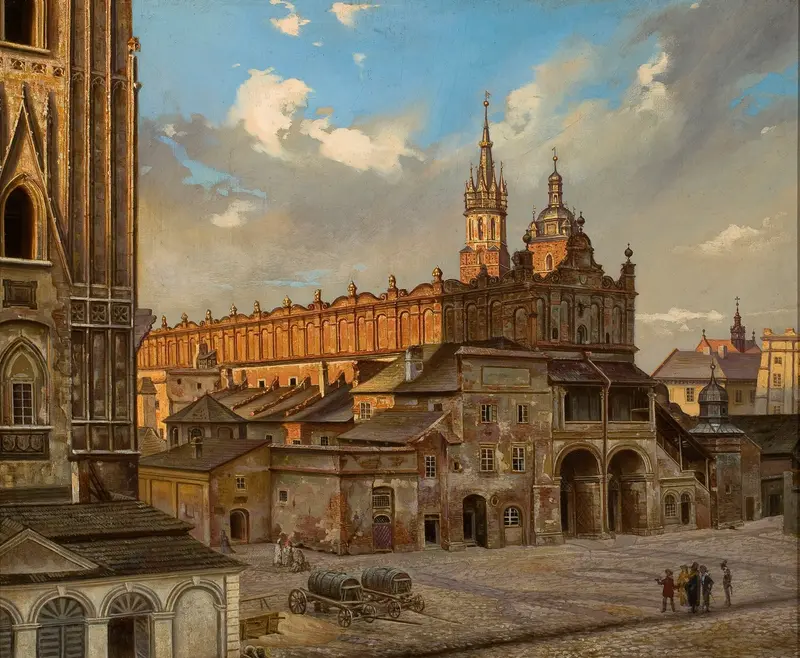
Sukiennice (Cloth Hall) in Kraków
Aleksander Gryglewski
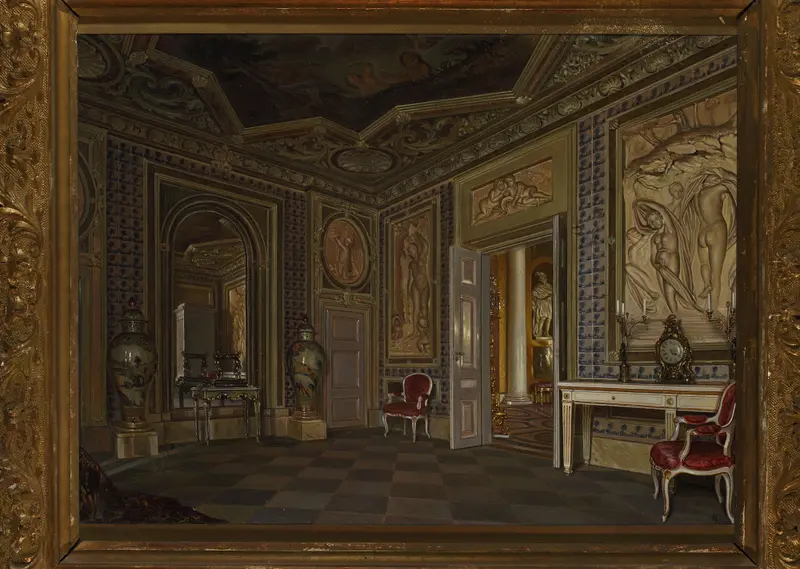
Bathing Room of the Palace on the Water.
Aleksander Gryglewski
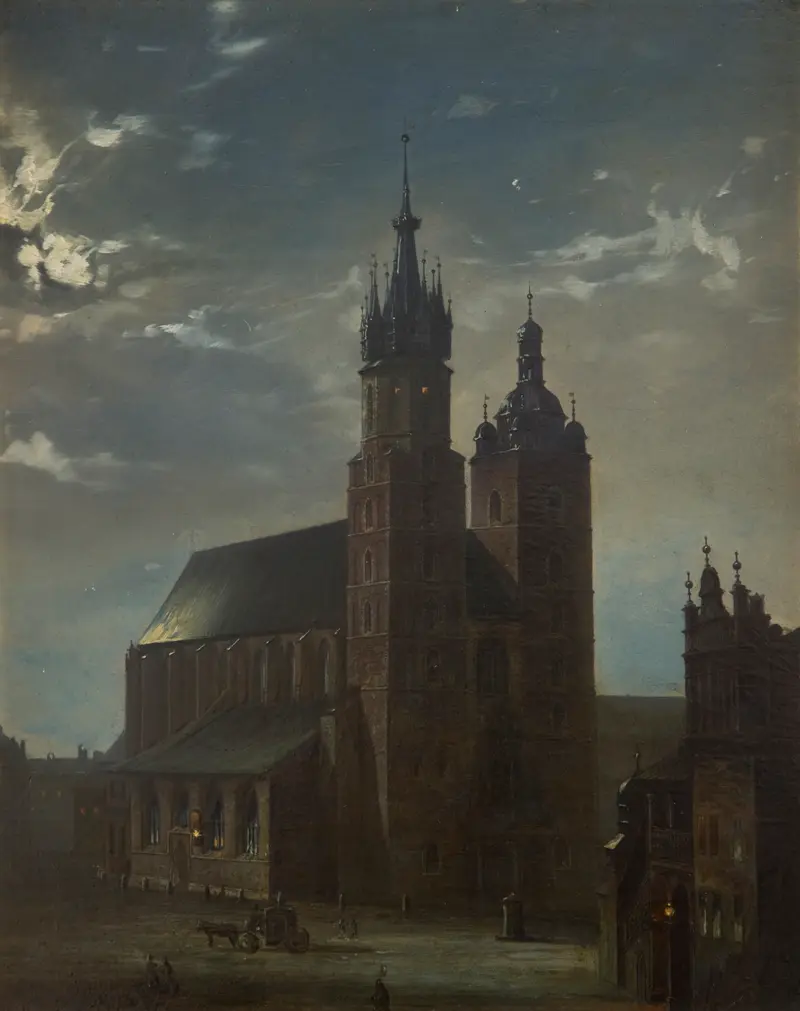
St Mary’s Church in Krakow
Aleksander Gryglewski
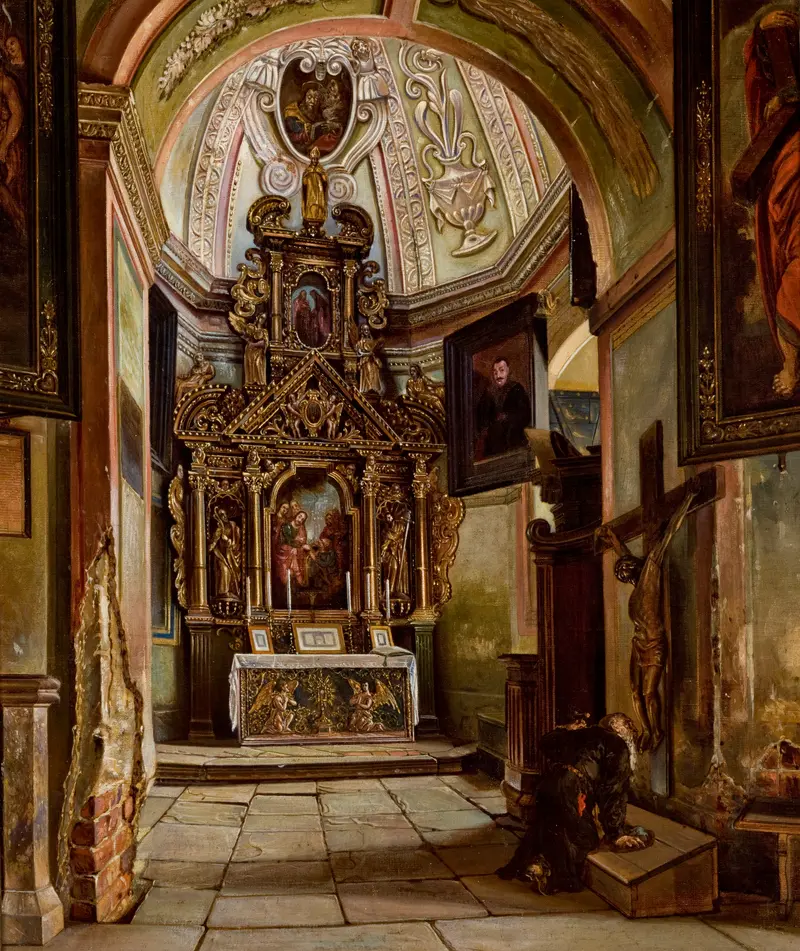
Interior of a Chapel at the Parish Church in Krosno
Aleksander Gryglewski
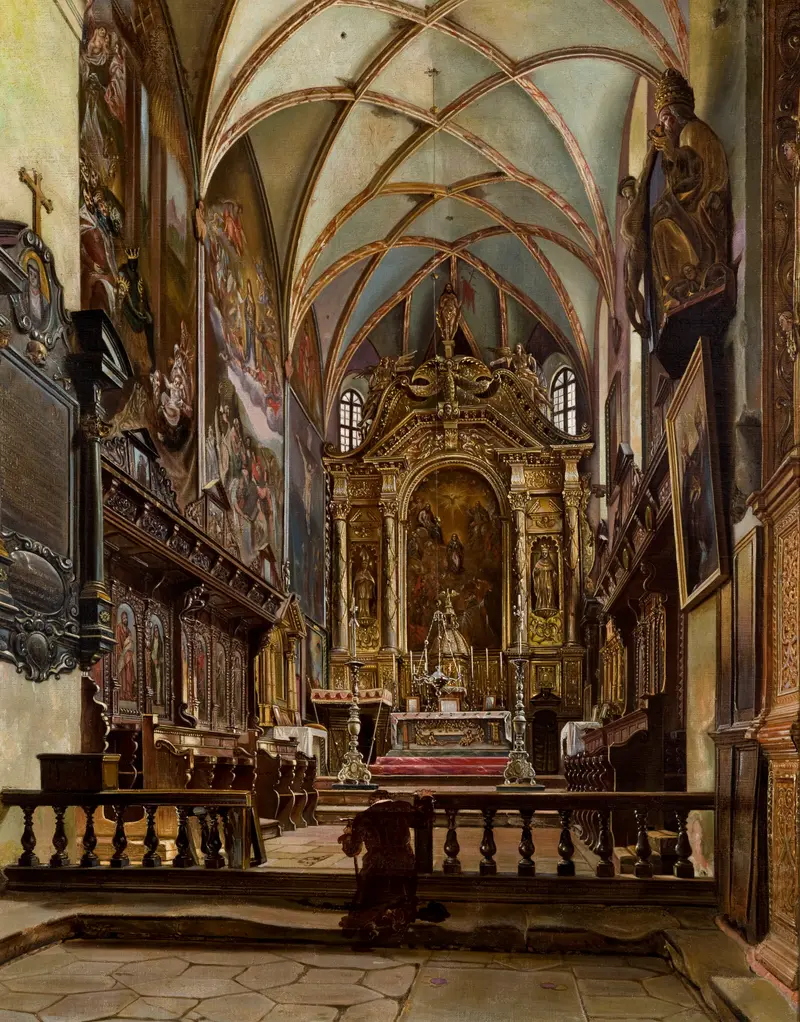
Interior of the Parish Church in Krosno
Aleksander Gryglewski

Interior of Saint Mary’s Basilica in Kraków
Aleksander Gryglewski

Old town hall at the Wolnica square in Kazimierz, Kraków
Aleksander Gryglewski





