
Irish Fairy Tales — History & Facts
A pale-haired child stands barefoot in the filtered green light of a forest, face to face with a gentle, spectral horse. The path curves softly, roots and brambles curling like the lines of a half-remembered dream, while the forest itself seems to lean in, alive with birds and secret watchers. Look closely: in the dappled shadows behind, other creatures—half-seen, half-guessed—linger in the undergrowth, their forms blending into the moss and bark.
The child’s wide stance and open gaze suggest both wonder and caution, as if the next step might lead into a world just beyond the reach of ordinary sight. The palette is all mossy golds and shadowed greens, drawing the eye deeper into the woods, where every leaf and branch seems to whisper of stories untold. This illustration belongs to the world of Irish Fairy Tales, published in 1920, a time when Arthur Rackham’s art was already enchanting readers with its blend of mischief and melancholy. Such works were often commissioned to accompany collections of folklore, their role as much to lure readers into the text as to stand alone as invitations to wonder.
Rackham’s illustrations, with their twisting trees and watchful animals, were shaped by the late Victorian and Edwardian fascination with fairy lore and the supernatural, a moment when the old stories were being gathered and retold for a new, urban audience. History has kept few traces of the specific journeys of this image, but its world is unmistakable: a place where the boundaries between child and fairy, animal and spirit, are as thin as a shadow on a woodland path. Let your eye wander through the leaves and see what else might be hiding there.
More Artworks by Arthur Rackham
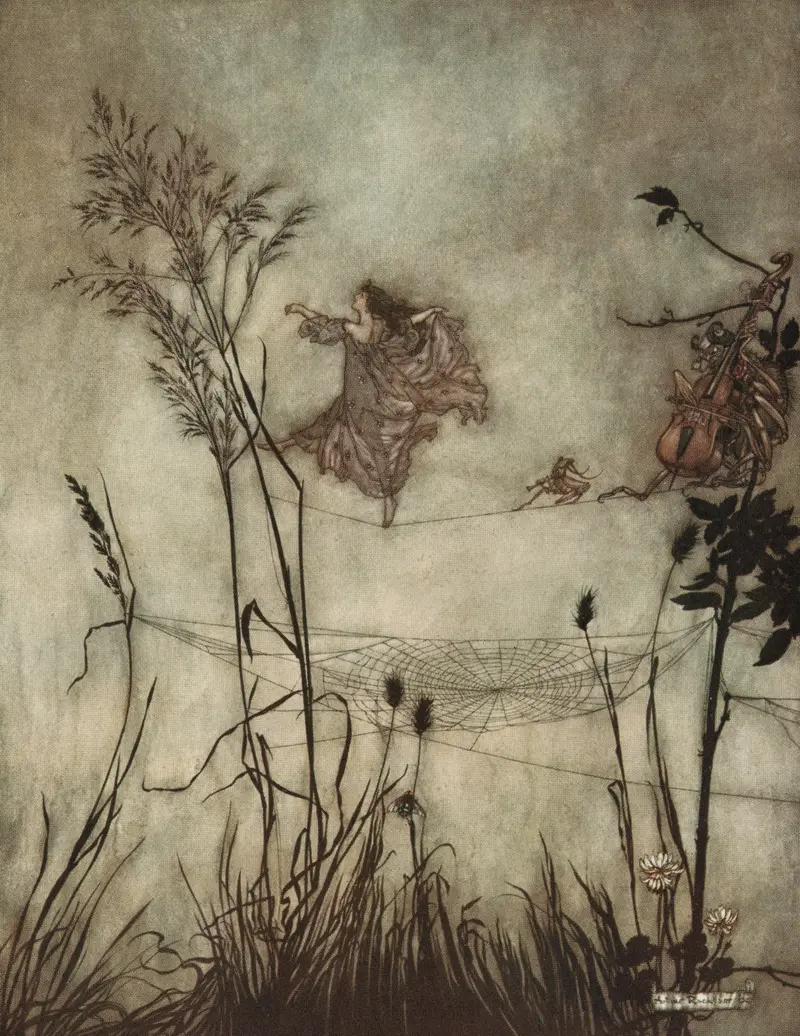
The Fairies Are Exquisite Dancers
Arthur Rackham
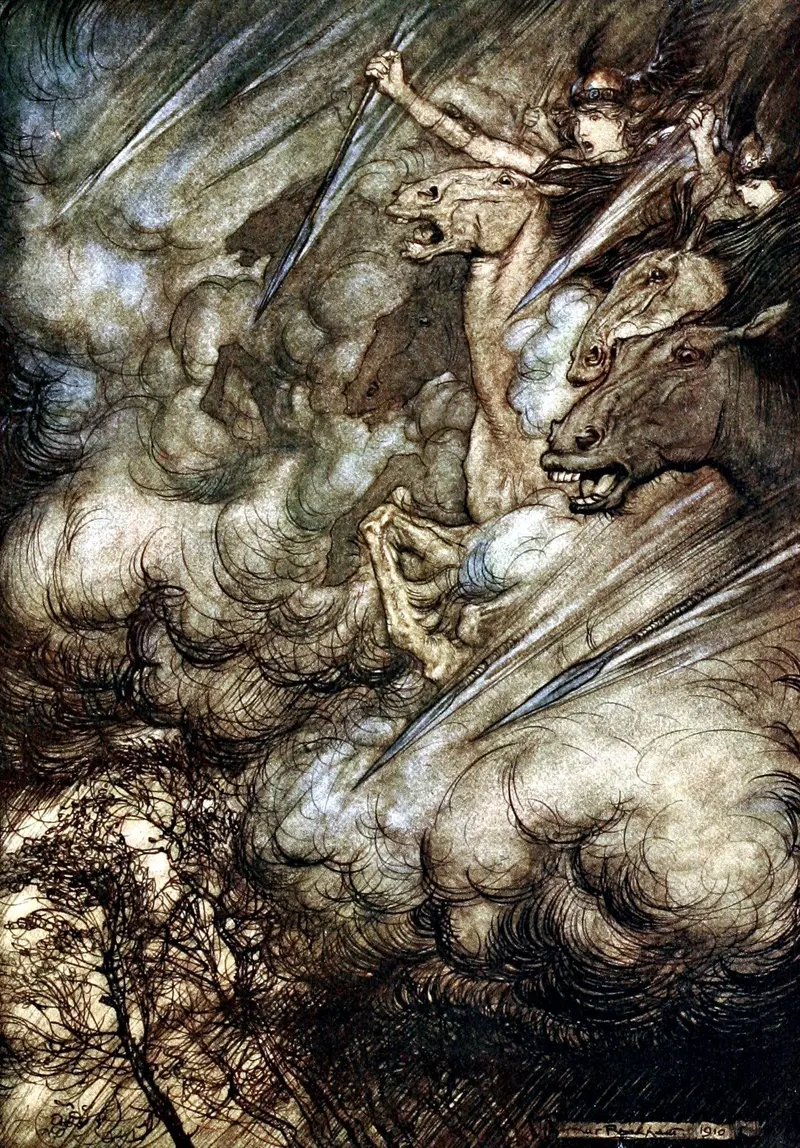
The Ride of the Valkyries
Arthur Rackham

Arthur Rackham ('A Transpontine Cockney')
Arthur Rackham
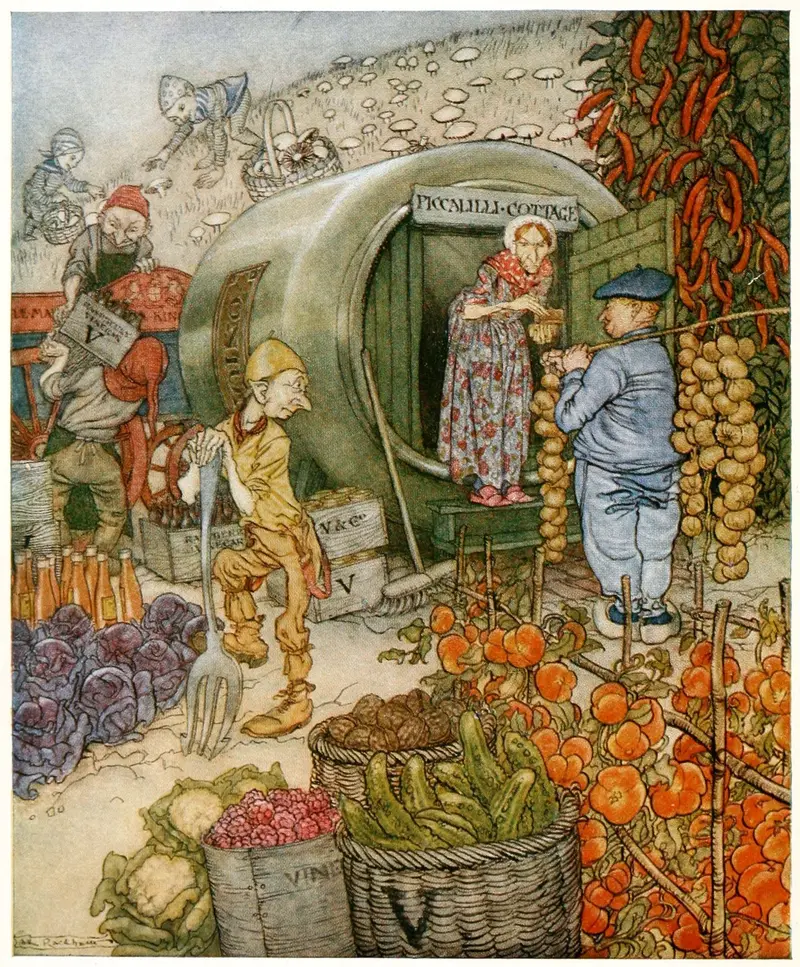
English Fairy Tales (Frontispiece)
Arthur Rackham
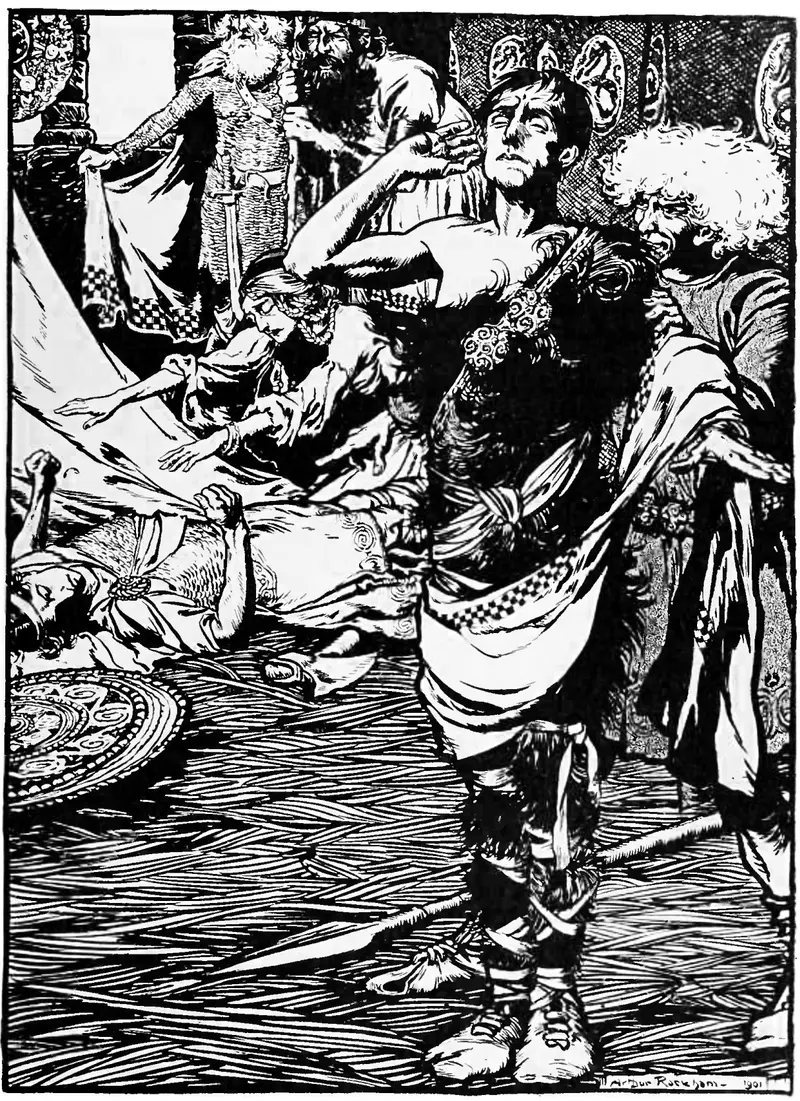
There Broke Forth a Wailing and a Lamentation
Arthur Rackham
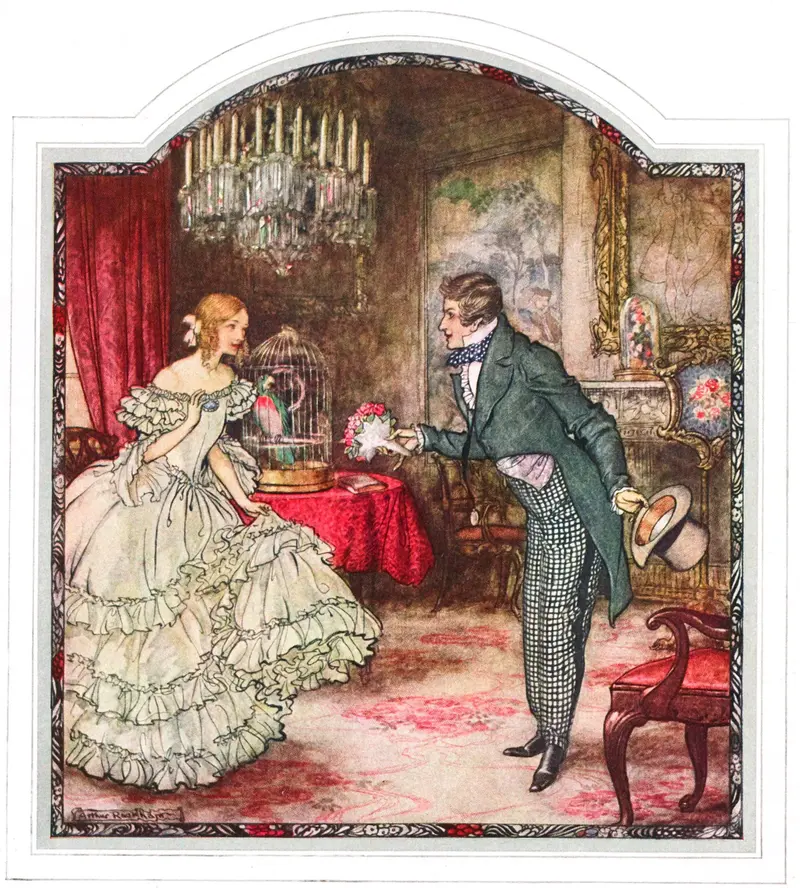
The Bouquet
Arthur Rackham

Mother Goose: The Old Nursery Rhymes
Arthur Rackham
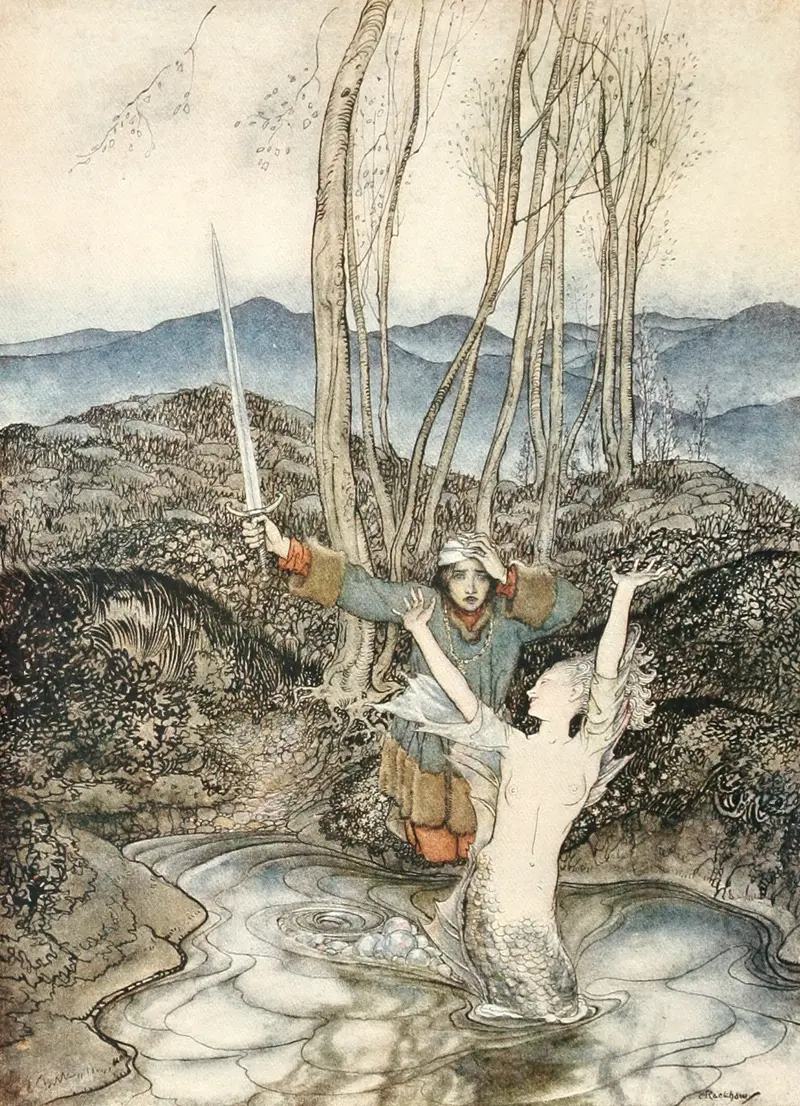
Clerk Colvill and the Mermaid
Arthur Rackham
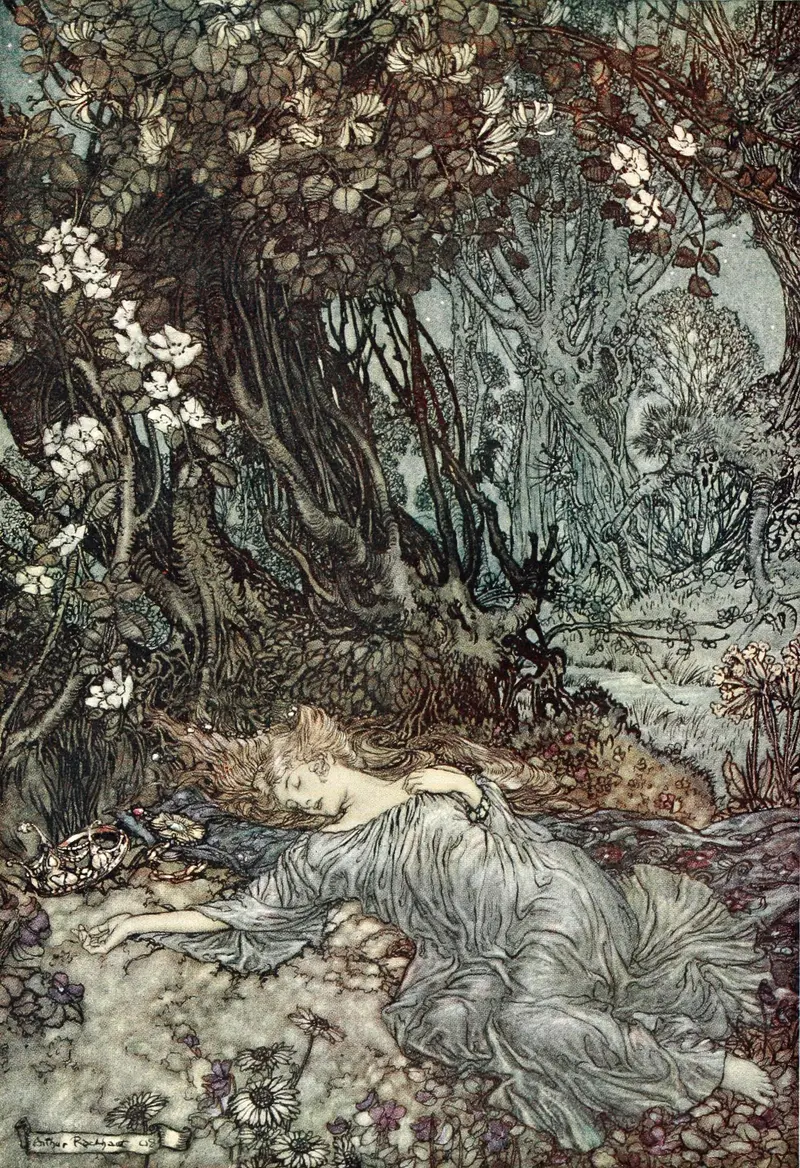
Titania Lying Asleep (A Midsummer Night's Dream)
Arthur Rackham
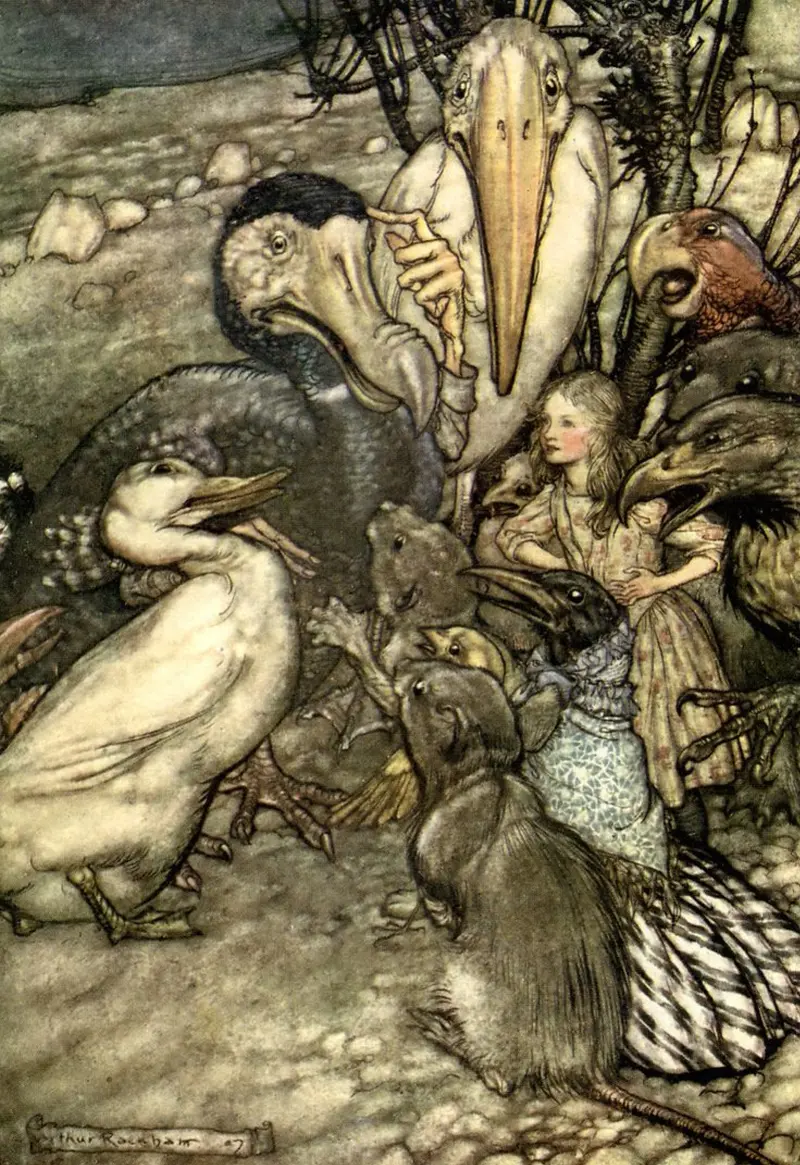
But Who Has Won? (Alice in Wonderland)
Arthur Rackham





