
There Broke Forth a Wailing and a Lamentation — History & Facts
A single figure stands rigid in the foreground, his face turned upward in a gesture that reads as both confusion and agony, while behind him another leans in, his wild hair and hunched posture hinting at malice. The drama unfolds in stark black and white, each line etched with the tension of myth: a body lies sprawled on the woven floor, arms flung wide, while mourners and witnesses crowd the dimly patterned hall. The eye is drawn first to the stiff, almost statuesque pose of the blind Höðr, then to the chaos of emotion rippling outward—anguish, horror, and something colder in the shadows behind.
Arthur Rackham’s hand is unmistakable in the intricate textures and swirling details, which give the Norse tragedy a sense of both immediacy and ancient ritual. Created in 1901 and published in The Land of Enchantment (1907), this work belongs to the golden age of illustrated books, when artists like Rackham brought old legends to new life for a growing audience of readers. Such illustrations were often commissioned to accompany literary retellings, their purpose both decorative and narrative: to capture the imagination and deepen the sense of wonder. The early twentieth century saw a fascination with myth and folklore, as artists mined the past for stories that could speak to the anxieties and dreams of their own time.
Though little is recorded about this specific drawing’s journey, its presence in a collection devoted to enchantment is fitting—inviting us to linger, to puzzle over the faces, and to imagine the sound of that ancient wailing echoing through the hall.
More Artworks by Arthur Rackham
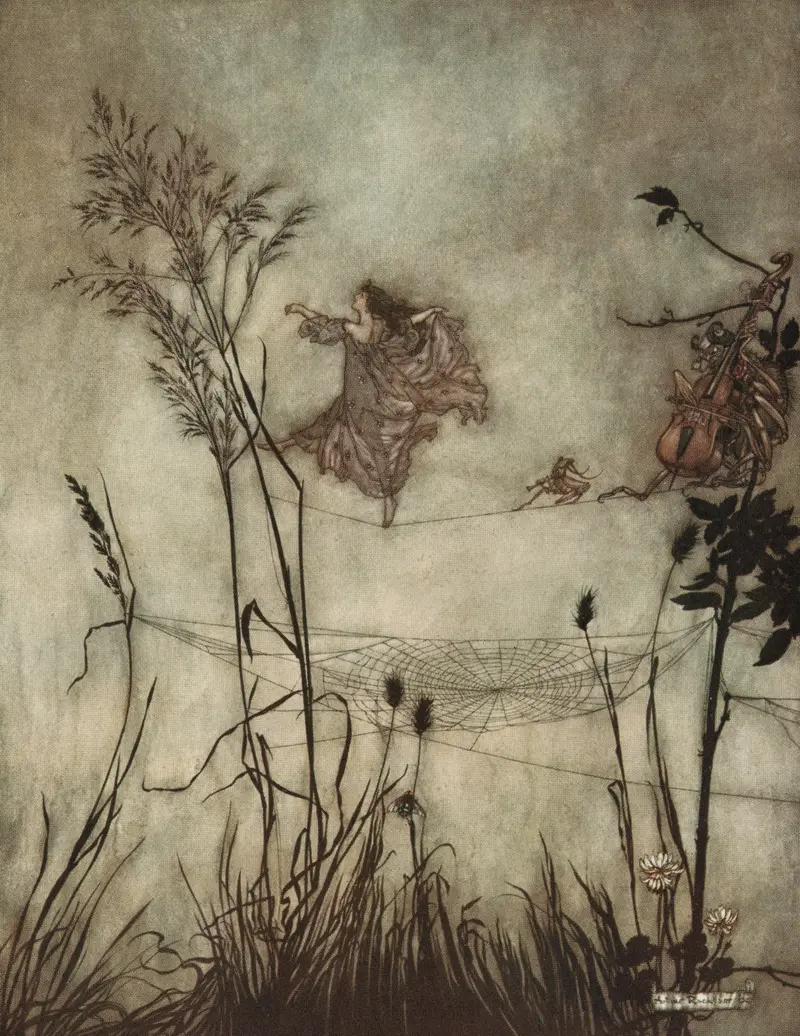
The Fairies Are Exquisite Dancers
Arthur Rackham
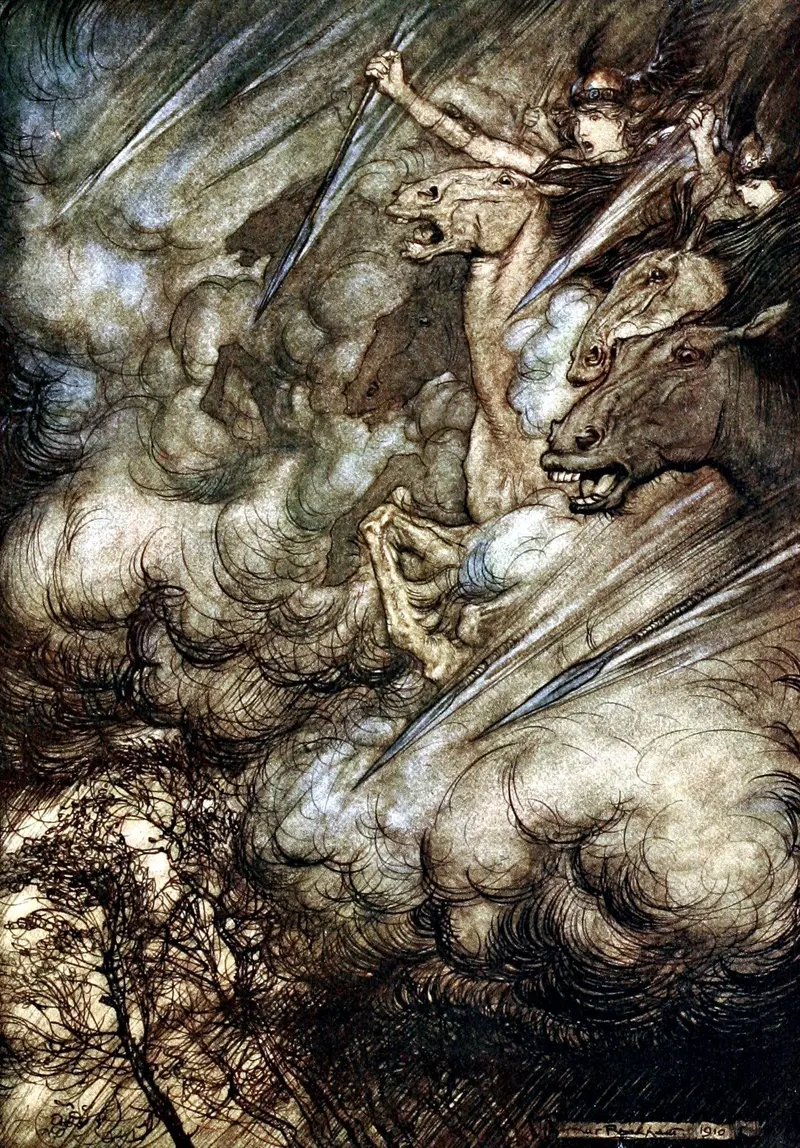
The Ride of the Valkyries
Arthur Rackham

Arthur Rackham ('A Transpontine Cockney')
Arthur Rackham
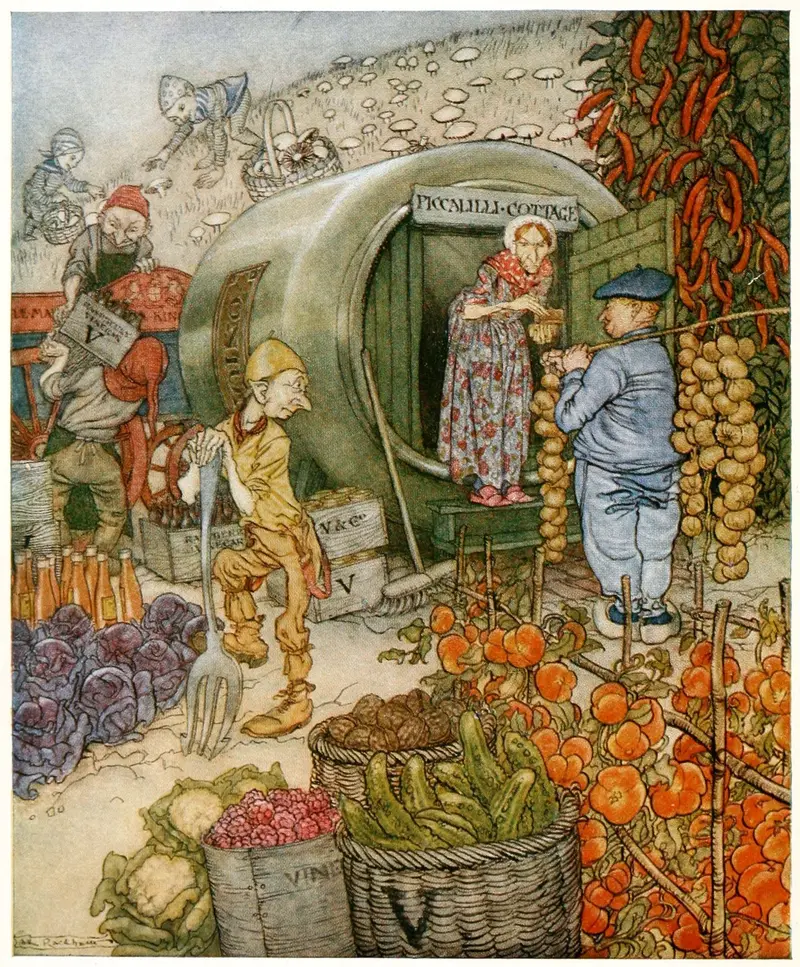
English Fairy Tales (Frontispiece)
Arthur Rackham
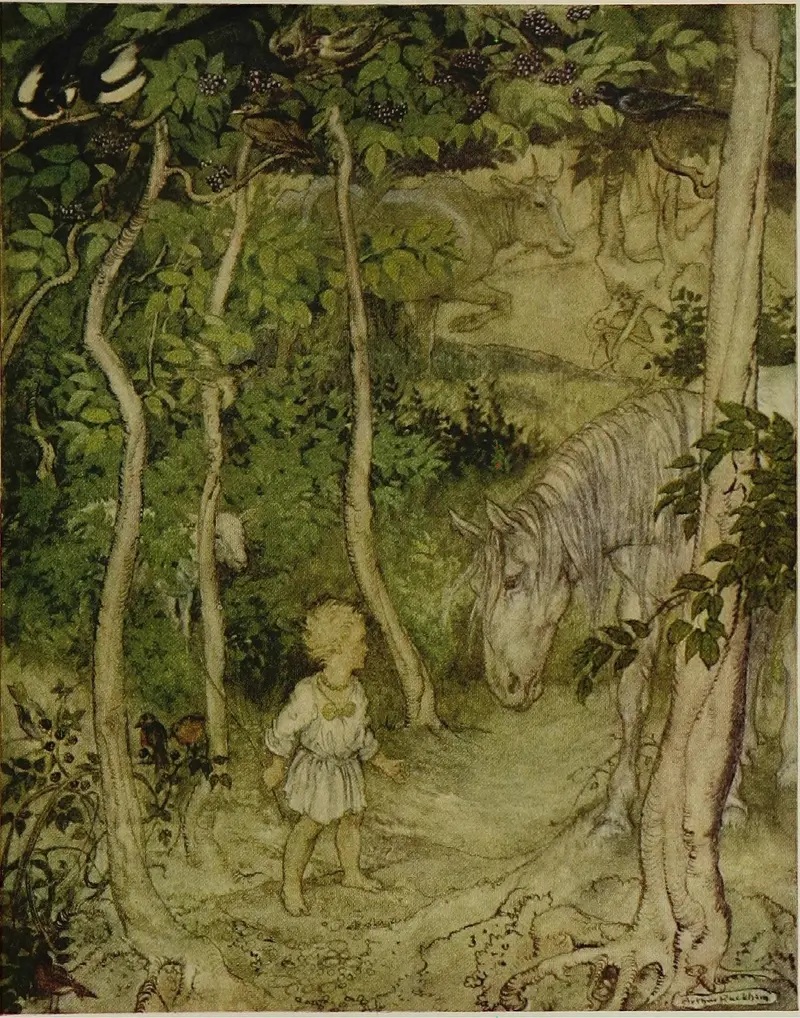
Irish Fairy Tales
Arthur Rackham
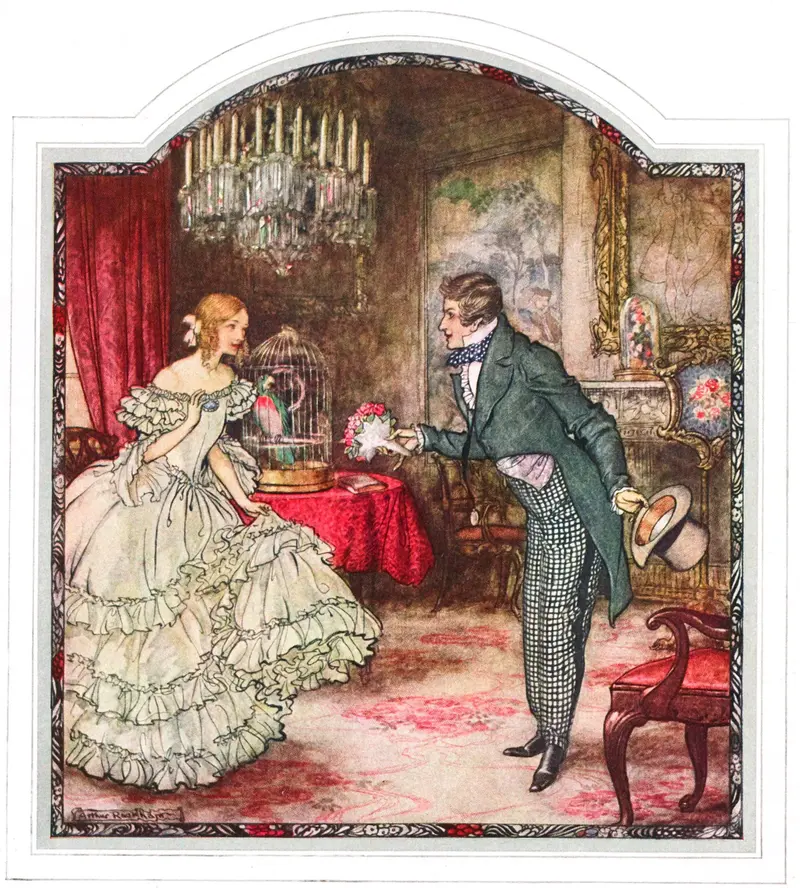
The Bouquet
Arthur Rackham

Mother Goose: The Old Nursery Rhymes
Arthur Rackham
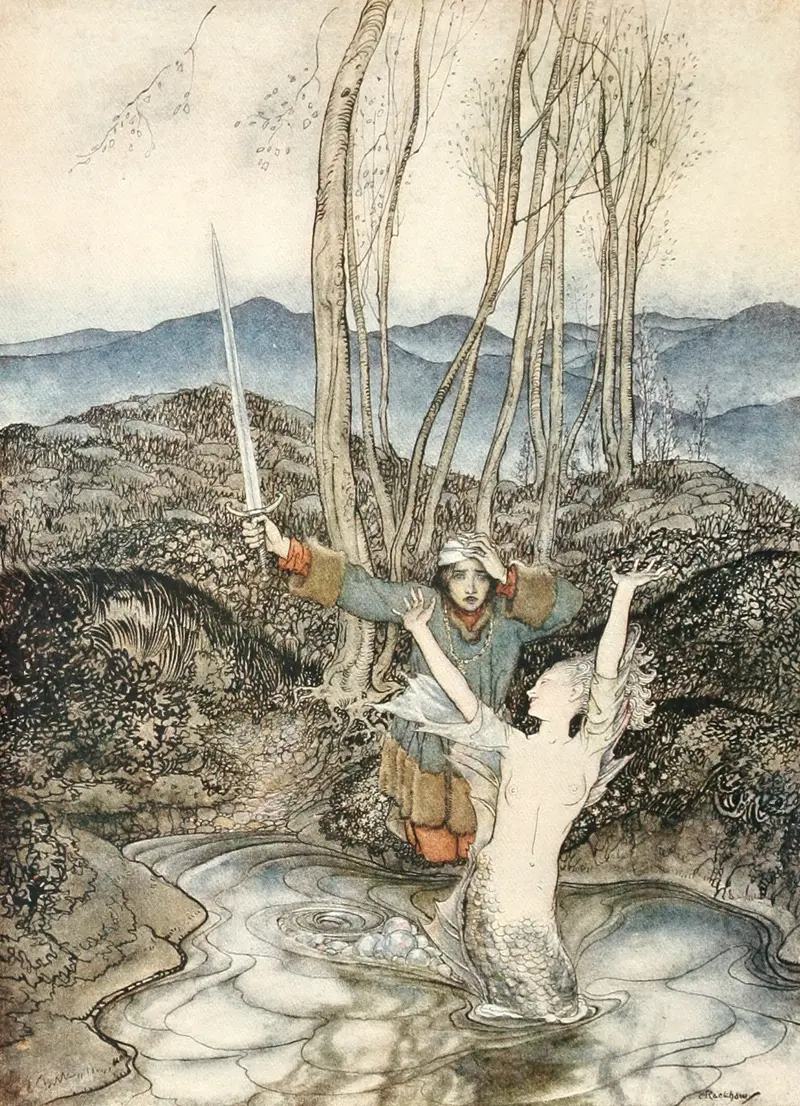
Clerk Colvill and the Mermaid
Arthur Rackham
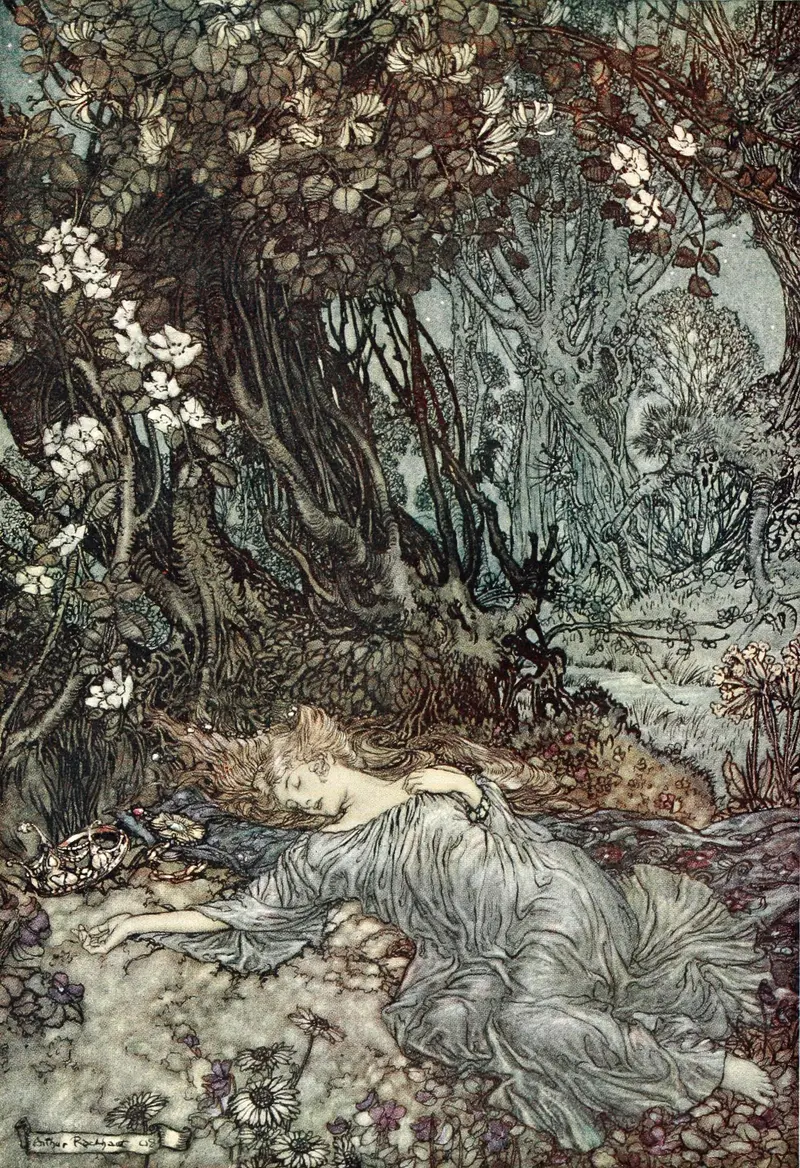
Titania Lying Asleep (A Midsummer Night's Dream)
Arthur Rackham
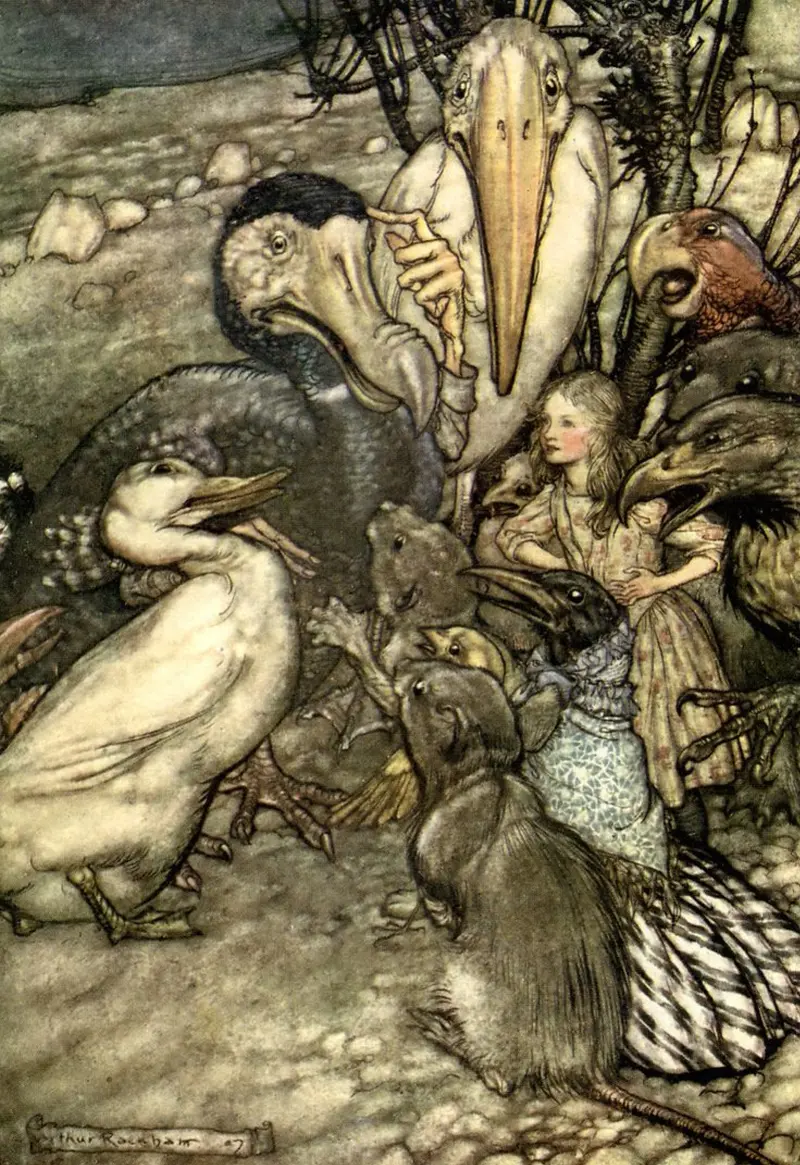
But Who Has Won? (Alice in Wonderland)
Arthur Rackham





