
English Fairy Tales (Frontispiece) — History & Facts
The first thing to catch the eye in English Fairy Tales (Frontispiece) by Arthur Rackham is the riot of vegetables—cabbages, tomatoes, onions—spilling from baskets and crates, each rendered with a care that makes even a humble turnip seem enchanted. The cottage, labeled "Piccalilli Cottage," is no ordinary home but a barrel on its side, its door flung open to reveal a woman in a flowered dress exchanging goods with a stout man festooned in garlic. Around them, figures with pointed hats and exaggerated features bustle about, their movements busy but never hurried, as if the whole scene is caught in the gentle hum of a fairy-tale morning.
Rackham’s palette is warm and earthy, his lines crisp and playful, guiding the viewer from the foreground’s abundance to the mushroom-dotted hillside where more curious folk gather. Every detail, from the baskets to the signboards, is a clue—this is a world where the ordinary is always on the verge of the extraordinary. Created as the frontispiece for a 1927 reprint of English Fairy Tales, this illustration stands firmly in the tradition of early twentieth-century book art, when illustrators like Rackham were as celebrated as the authors themselves. Fairy tale collections were prized by families and collectors alike, their illustrations meant not just to decorate but to beckon readers into the story before the first page was turned.
The bustling market, the comically industrious characters, and the whimsical architecture all reflect a period when British illustrators were inventing new visual languages for old folk stories, blending humor and a hint of the uncanny. Though history has kept few traces of this specific frontispiece beyond its publication in Flora Annie Steel’s volume, its colors and characters still invite us to linger and look for the next bit of magic hiding in plain sight.
More Artworks by Arthur Rackham
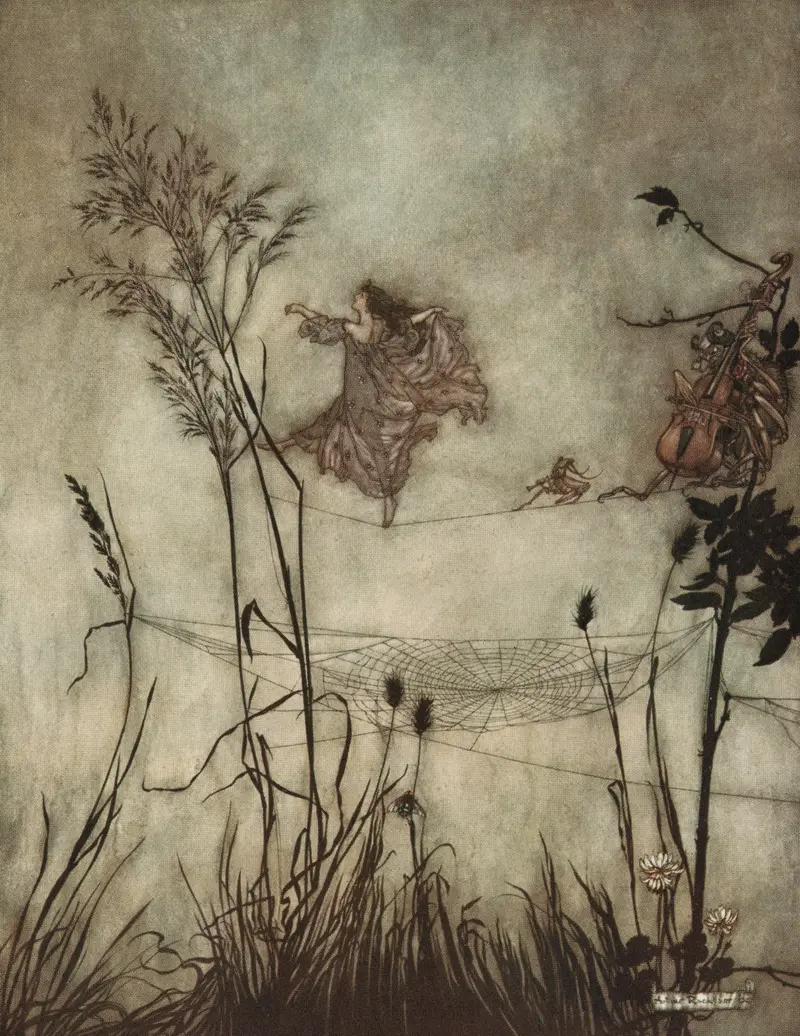
The Fairies Are Exquisite Dancers
Arthur Rackham
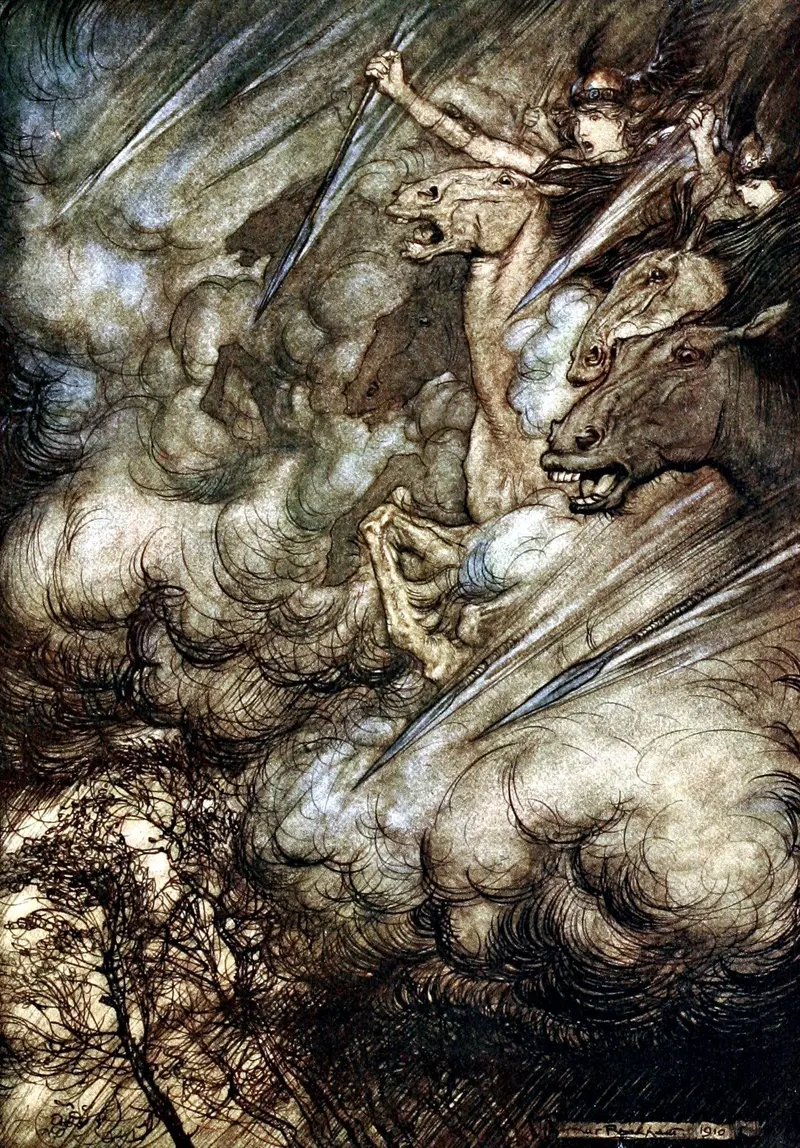
The Ride of the Valkyries
Arthur Rackham

Arthur Rackham ('A Transpontine Cockney')
Arthur Rackham
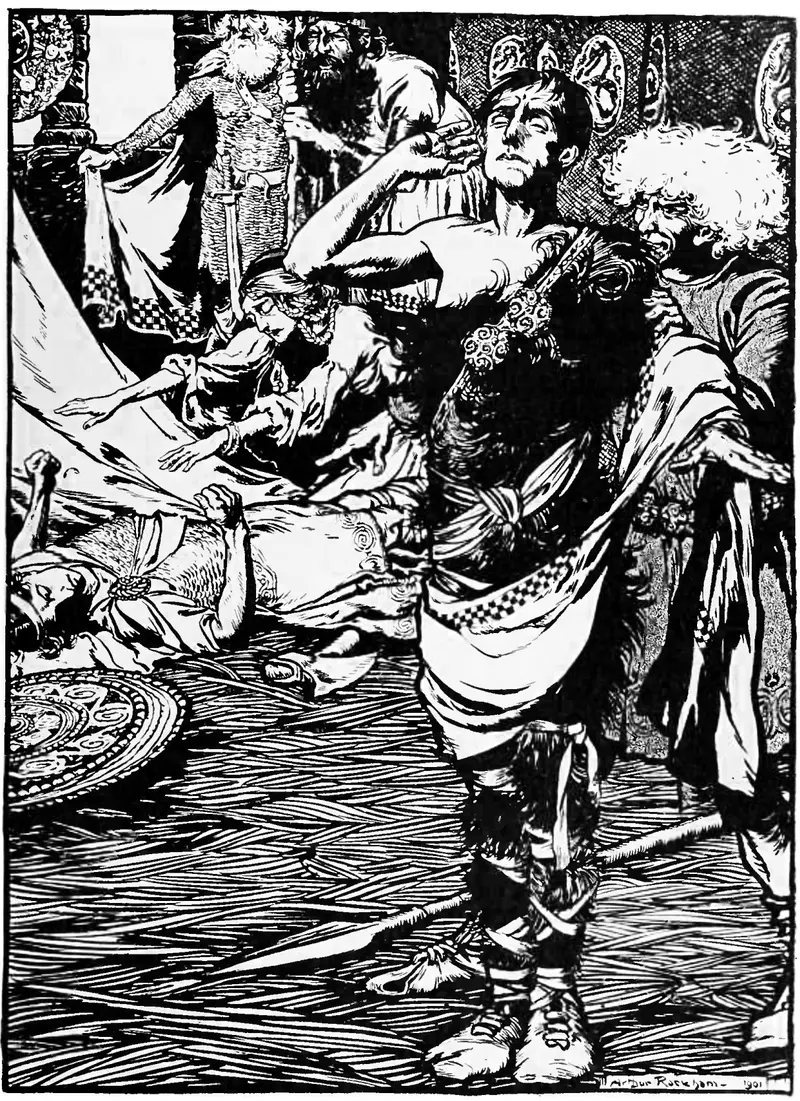
There Broke Forth a Wailing and a Lamentation
Arthur Rackham
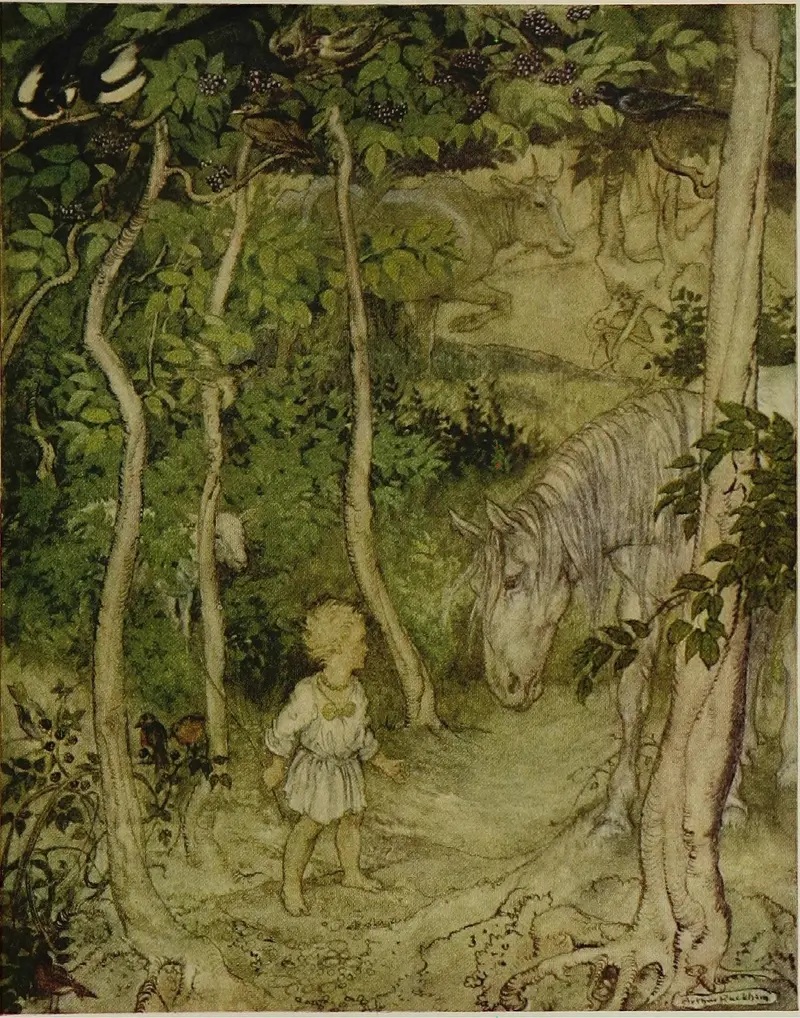
Irish Fairy Tales
Arthur Rackham
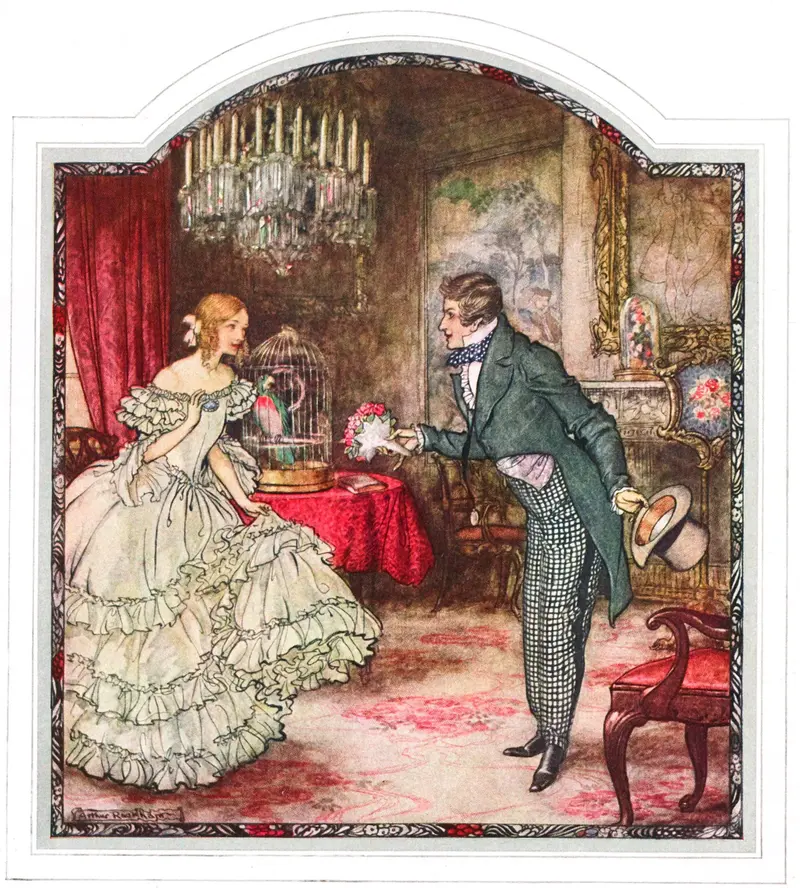
The Bouquet
Arthur Rackham

Mother Goose: The Old Nursery Rhymes
Arthur Rackham
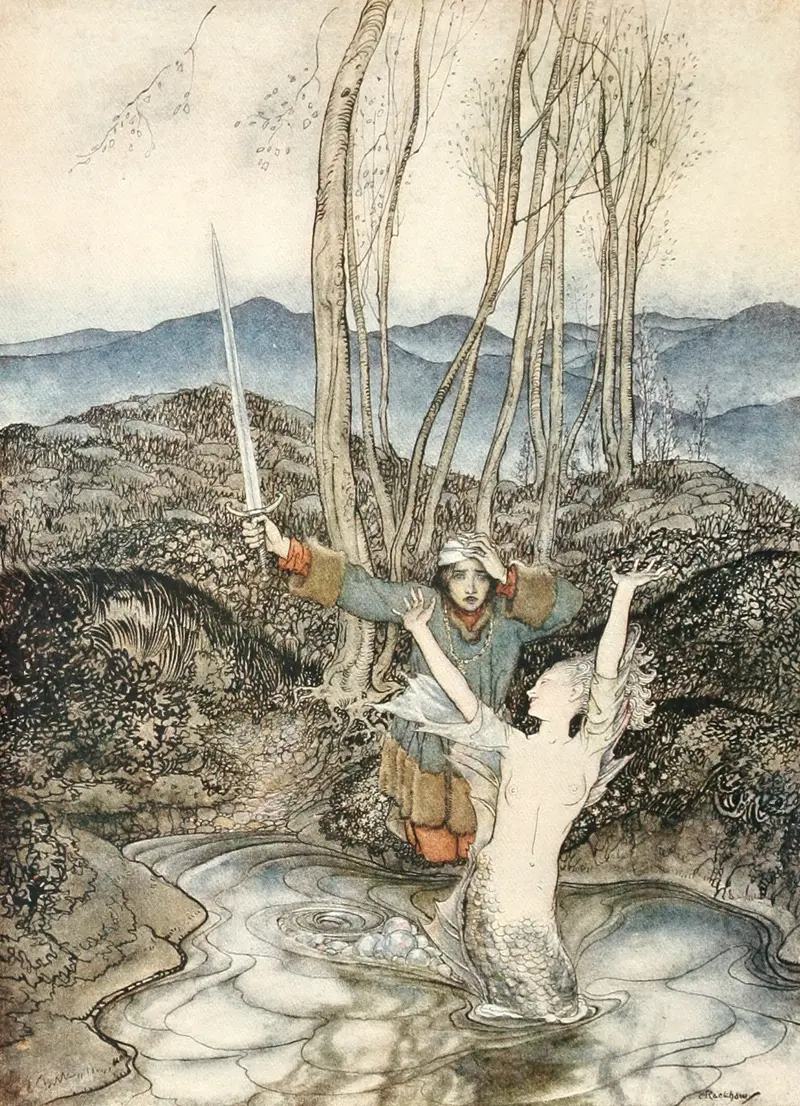
Clerk Colvill and the Mermaid
Arthur Rackham
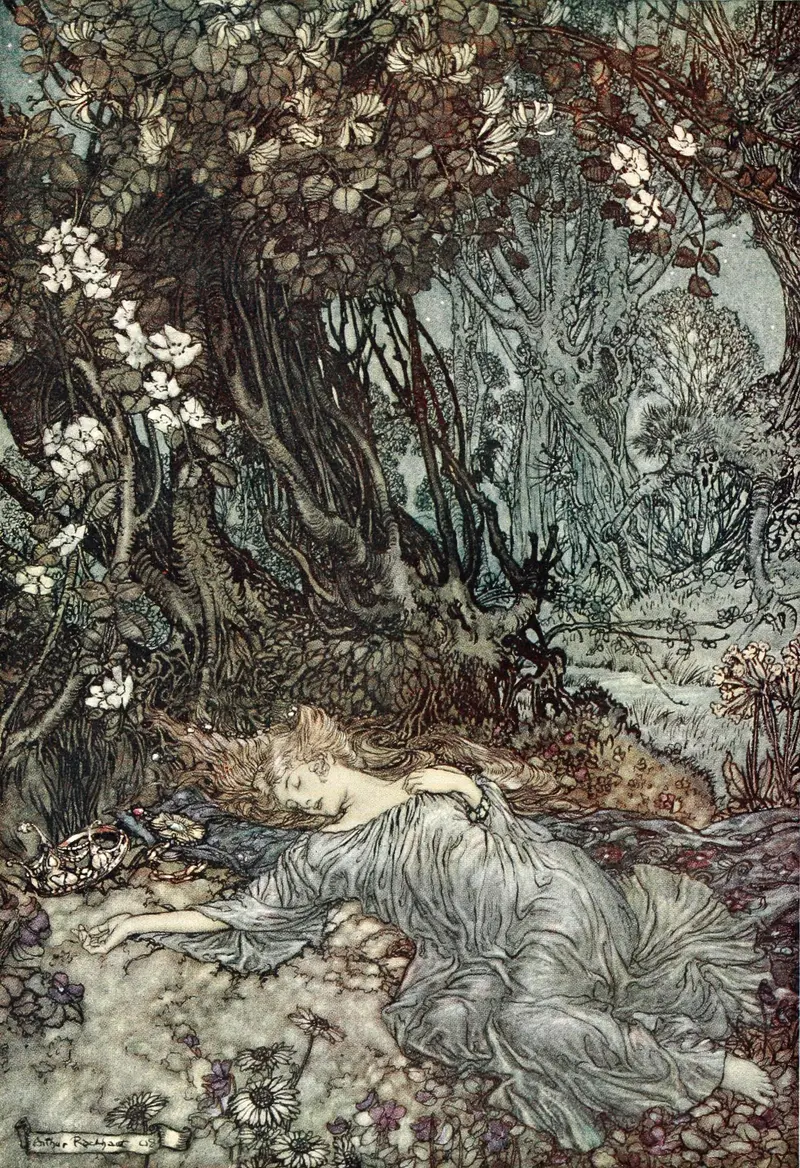
Titania Lying Asleep (A Midsummer Night's Dream)
Arthur Rackham
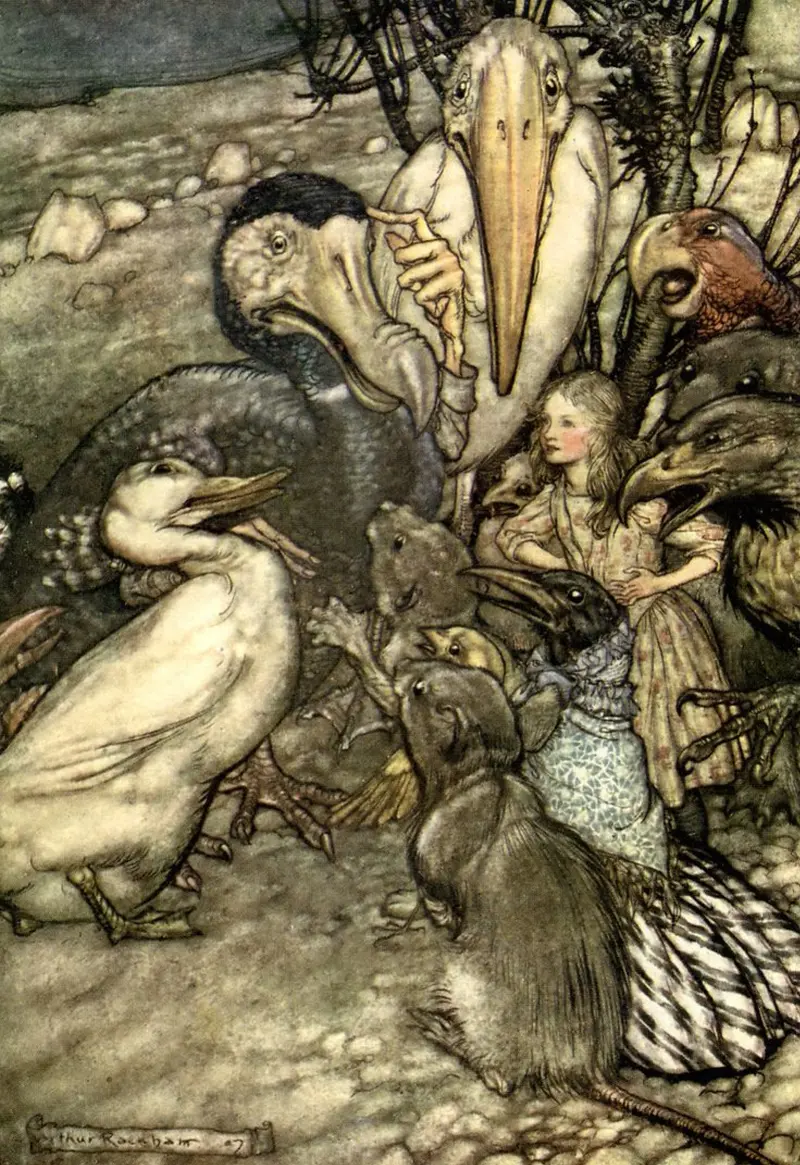
But Who Has Won? (Alice in Wonderland)
Arthur Rackham
More Genre Scene Art

Banquet of the Officers of the St George Civic Guard
Frans Hals

Rembrandt and Saskia in the Scene of the Prodigal Son
Rembrandt van Rijn

Bal du moulin de la Galette
Pierre-Auguste Renoir

Quadrille at the Moulin Rouge
Henri de Toulouse-Lautrec

A Burial at Ornans
Gustave Courbet

When Will You Marry?
Paul Gauguin