
Italienische Landschaft — History & Facts
Did the painter know this moment would outlive them? In Italienische Landschaft, the tranquility of a sun-drenched Italian countryside invites us to seek refuge from the clamor of the world, hinting at a revolution of stillness amidst life’s relentless pace. Look to the left at the towering cypress trees, their dark green silhouettes contrasting sharply against the warm, golden hues of the rolling hills. Notice how the light bathes the landscape in a soft glow, pulling your gaze toward the distant village nestled under a blue sky. The gentle strokes of the brush create an interplay of light and shadow, while the vibrant palette evokes a sense of warmth and harmony, embodying an idealized vision of rural life. Yet, beneath this serene facade lies a deeper complexity.
The winding path leading to the village suggests an expedition, a journey toward something unknown, perhaps a reflection of the transformative changes sweeping through Europe at the time. The meticulous detail in the rustic structures hints at the fleeting nature of such pastoral beauty, while the juxtaposition of the idyllic landscape with the encroaching forces of industrialization speaks to the tension between tradition and modernity. Carl Spitzweg painted this piece in the mid-19th century, during a time of significant socio-political upheaval in Europe. Amidst the backdrop of revolutions and the rise of Romanticism, he sought to capture the essence of a simpler life, showcasing nature's calm amid the chaos.
This painting reflects not only his admiration for the Italian countryside but also his desire to preserve its beauty against the tide of change that threatened art and everyday existence.
More Artworks by Carl Spitzweg
Browse all →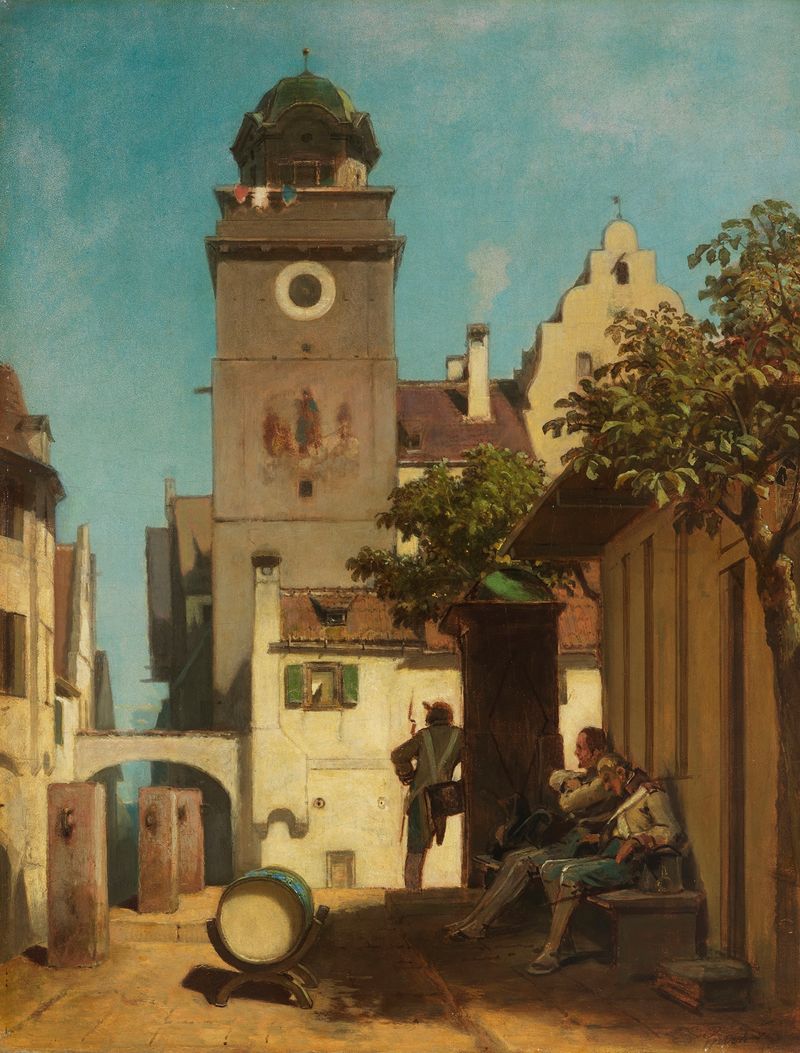
Die Stadtwache
Carl Spitzweg
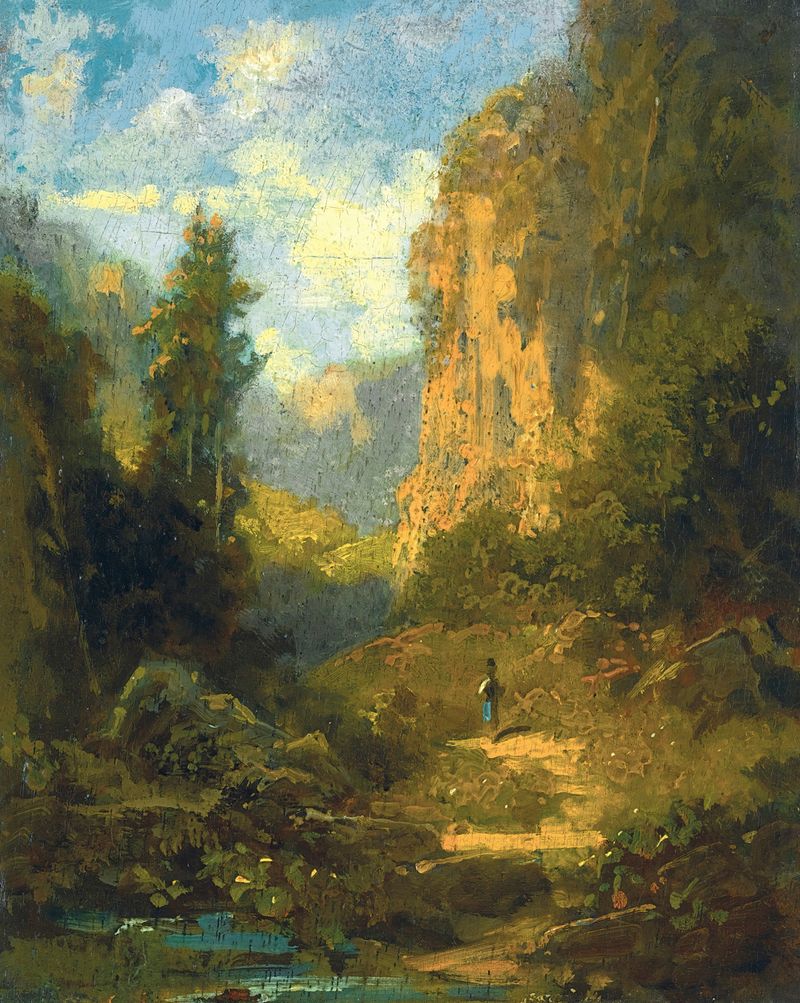
Gebirgslandschaft
Carl Spitzweg

In the Alpine High Valley (Landscape with Mt. Wendelstein)
Carl Spitzweg

Gebirgsmühle
Carl Spitzweg
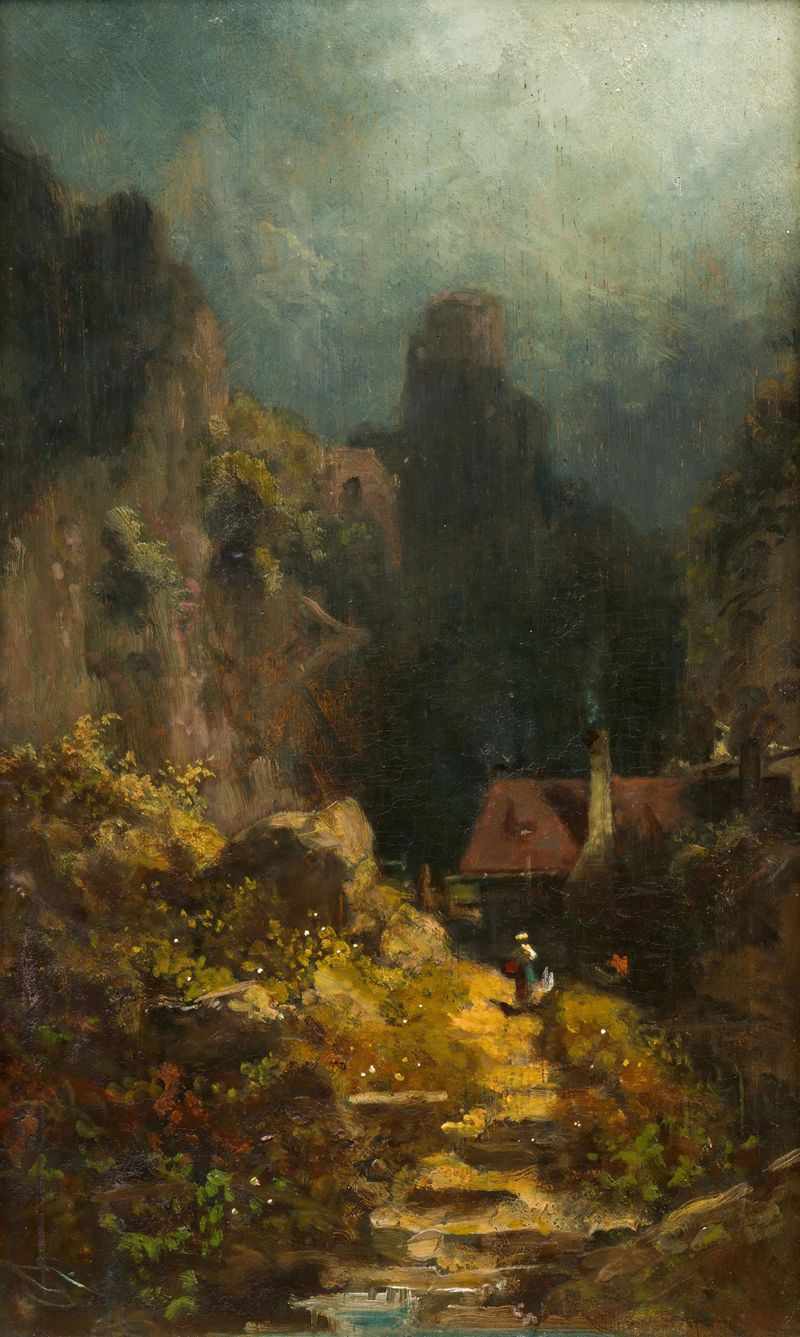
In der Schlucht
Carl Spitzweg
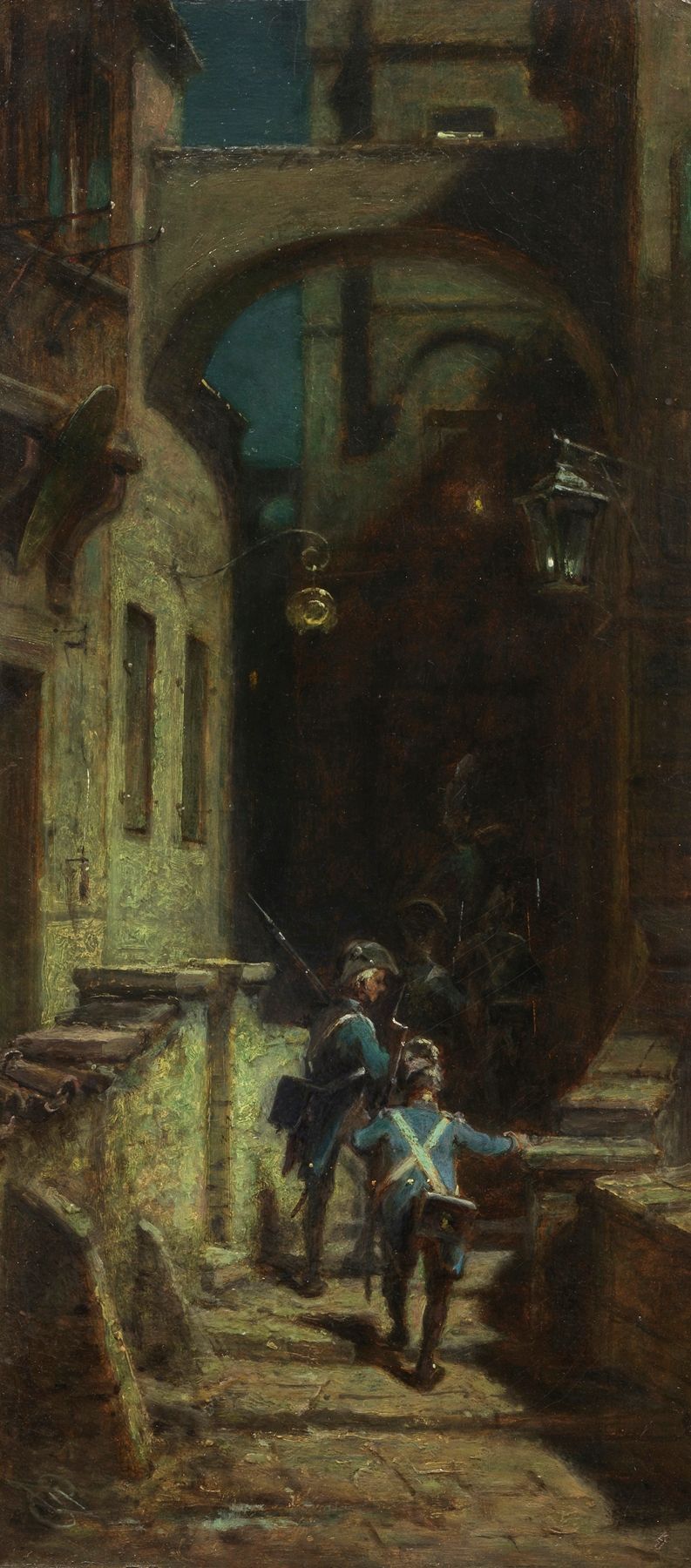
Die Scharwache
Carl Spitzweg

Einsiedler mit Mädchen
Carl Spitzweg

Lagernde Karrner (Rast der Streuner)
Carl Spitzweg
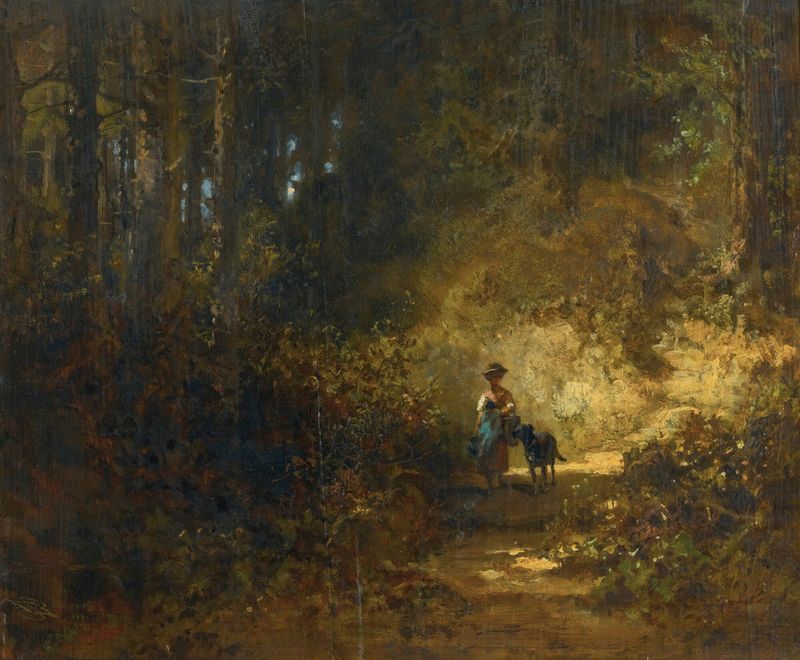
Im Walde
Carl Spitzweg
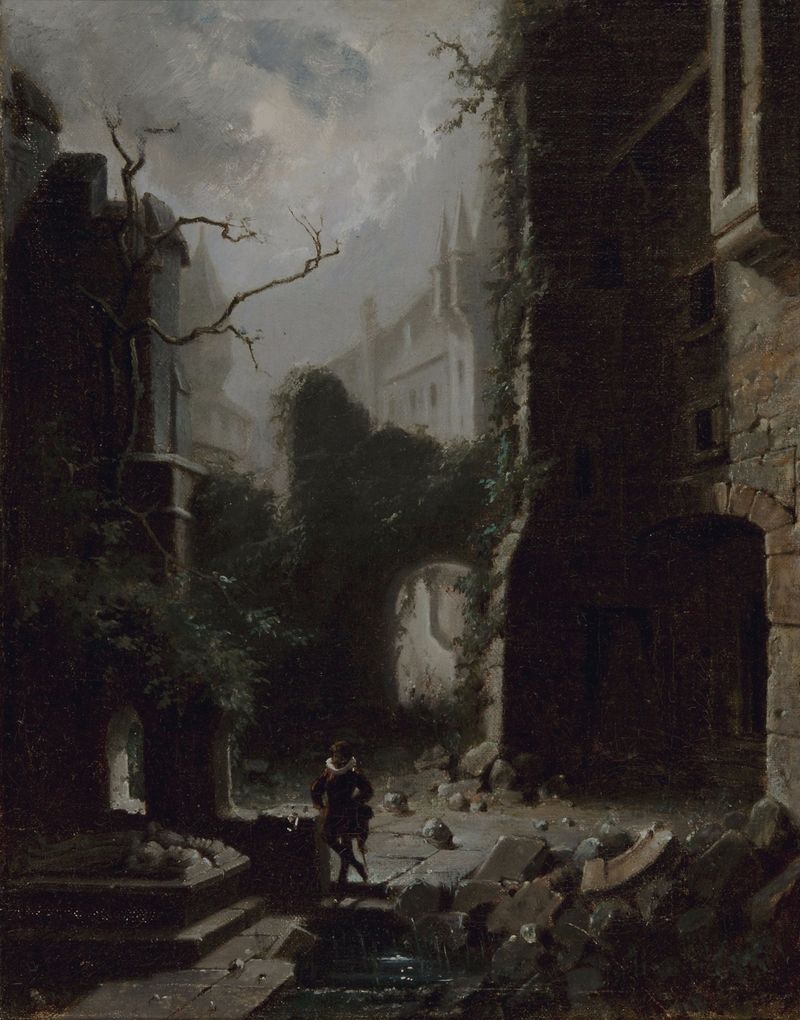
Moonlit Scene with Castle Ruins
Carl Spitzweg





