
Italy. The Festival of Pompei, The circus of gladiators — History & Facts
Where does light end, and longing begin? In this exquisite rendering, the air thrums with unspoken stories, capturing an essence that lingers in the heart of the beholder. Focus first on the vibrant colors that swirl together, reflecting the jubilance of the festival while simultaneously invoking a sense of emptiness. Look to the left where figures are caught in animated conversation, their expressions a blend of joy and nostalgia. The dynamic brushstrokes breathe life into the scene, yet the void between the revelers hints at something deeper—a yearning that transcends the celebration. Notice the juxtaposition of light and shadow throughout the composition.
The brilliance of the sun casts an ethereal glow on the vibrant costumes, while the darker corners of the canvas speak to solitude and introspection. This contrast creates a palpable tension, suggesting that beneath the surface gaiety lies an undercurrent of desolation and longing for connection. The space shared by the figures appears filled yet strangely vacant, as if each participant is adrift in their own world. In 1884, Lepère painted this work amidst a burgeoning interest in Impressionism and a world awakening to modernity.
Living in Paris, he was influenced by the changing art landscape that celebrated vibrant colors and moments captured in time. During this period, Europe was also experiencing a complex interplay of excitement and uncertainty, deeply informing the themes of his work, including the duality of festivity and emptiness that resonates in this piece.
More Artworks by Auguste Louis Lepère
Browse all →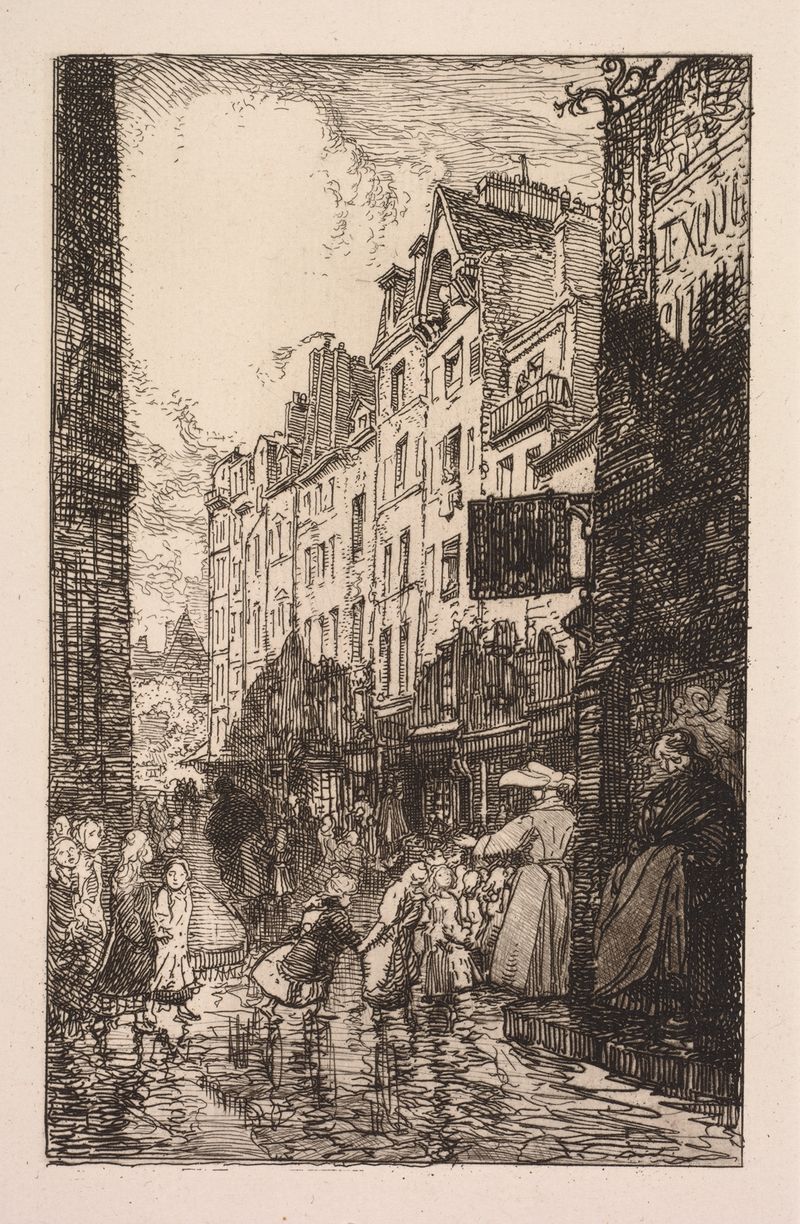
La Rue des Prêtres Saint-Séverin
Auguste Louis Lepère
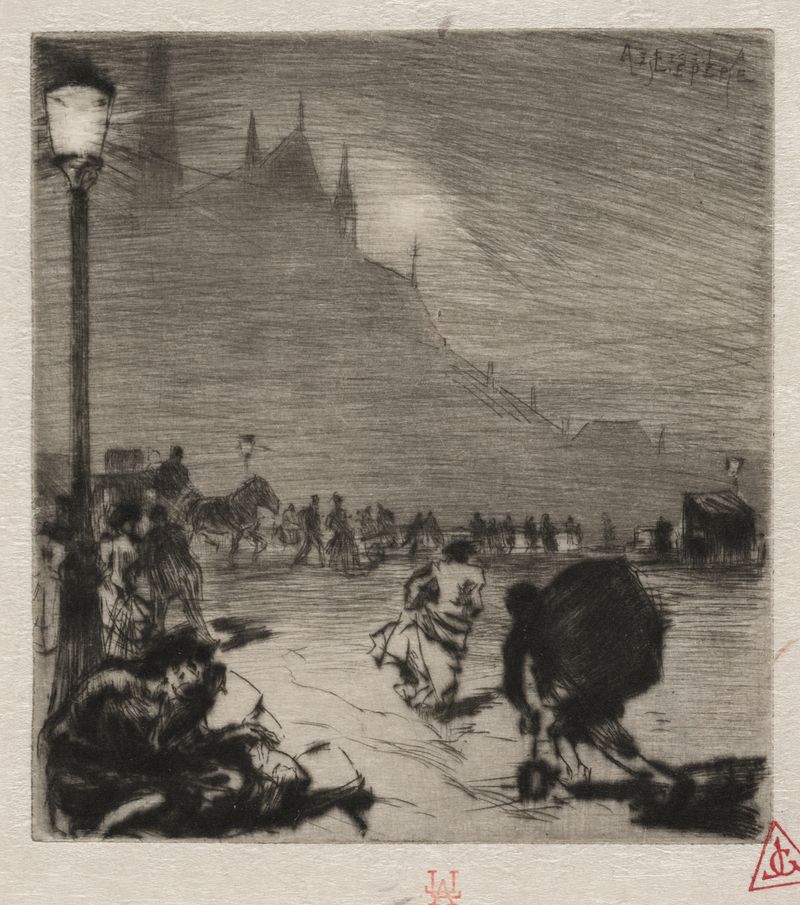
Au Coin du Pont-aux-Doubles
Auguste Louis Lepère
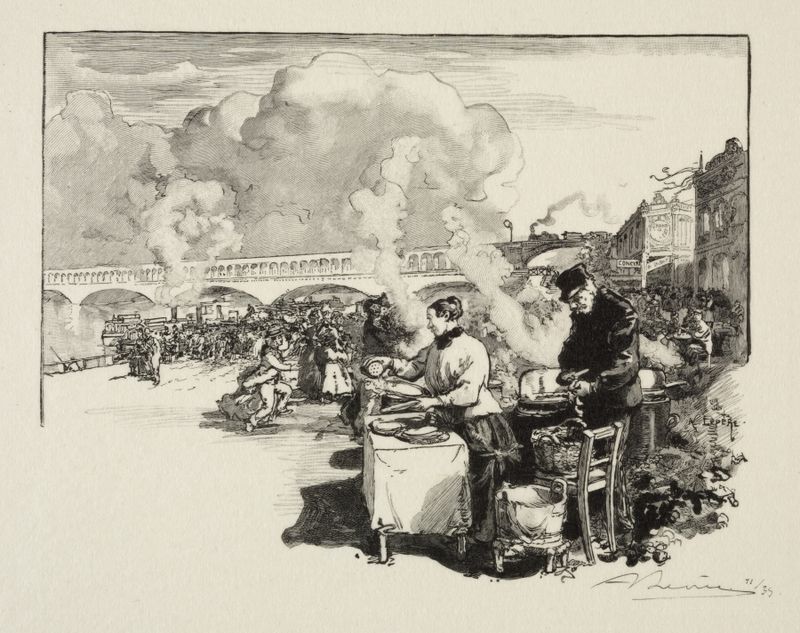
Debarcadère des bateaux-omnibus
Auguste Louis Lepère

La Seine, au quai de la Rapée
Auguste Louis Lepère
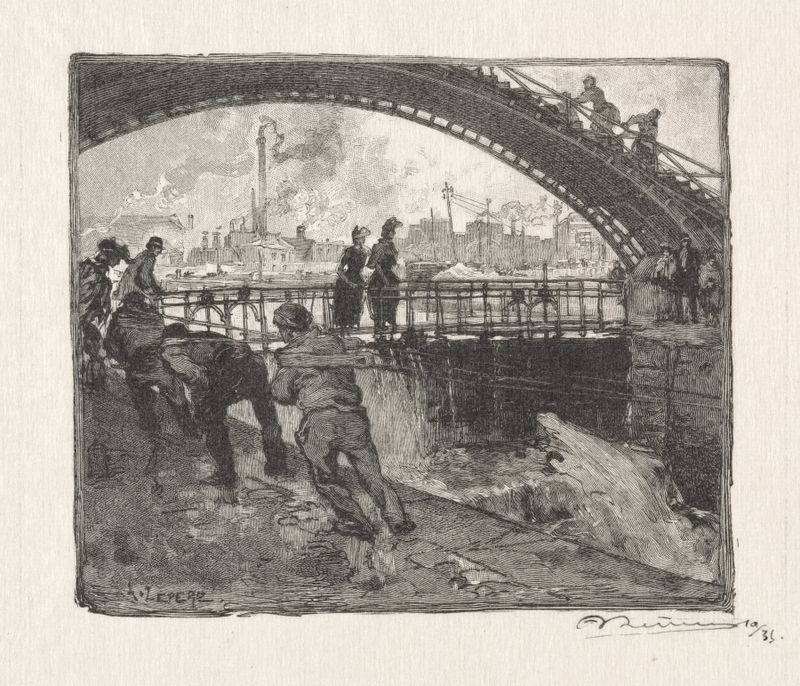
L’Ecluse du Canal St. Martin
Auguste Louis Lepère

Le Boulevard Montmartre, le Soir
Auguste Louis Lepère

Une Chasse au Mont Gérard
Auguste Louis Lepère
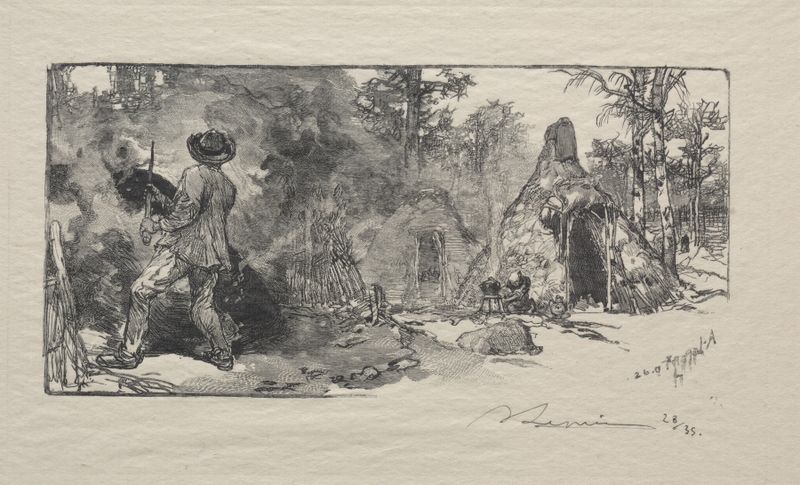
Les Charbonniere
Auguste Louis Lepère
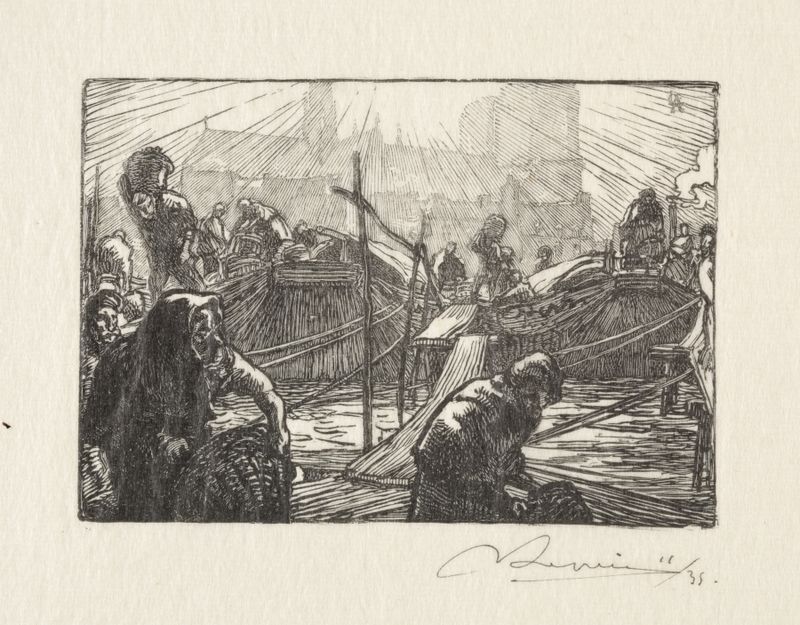
Notre Dame vue du Marché aux pommes
Auguste Louis Lepère

Le Palais des Arts Liberaux, Intèrieur
Auguste Louis Lepère
More Historical Art
Browse all →
The Night Watch Militia Company of District II under the Command of Captain Frans Banninck Cocq
Rembrandt van Rijn

Lincoln Memorial
Henry Bacon

The Third of May 1808
Francisco de Goya

Isaac and Rebecca, Known as ‘The Jewish Bride’
Rembrandt van Rijn

The Charge of the Mamelukes (1814)
Francisco de Goya

De vier ruiters van de apocalyps
Albrecht Dürer