
Izukushima — History & Facts
In the stillness of an artist’s heart, desire manifests itself through ink and paper, capturing the essence of longing in a moment that resonates deeply with the viewer. Look closely at the delicate textures of the waves that lap against the iconic torii gate. Notice how the artist employs a fluidity of line to breathe life into the water, its movement punctuated by soft, muted blues and silvers. The balance between the gate and the waves reveals a dialogue between permanence and transience—an interplay that invites contemplation.
The background merges into gentle hues, evoking a serene atmosphere that envelops the viewer, drawing them into an ethereal landscape. Through this work, a juxtaposition emerges; the steadfastness of the gate stands resolutely against the flowing, restless waves, symbolizing the tension between yearning and stability. Each brushstroke whispers of dreams and hopes, as if the very fabric of the scene yearns for connection with the beyond. The play of light upon the water reflects inner desires, while the distant landscape conveys a longing for what is far yet intimately desired. During a period of artistic evolution in Japan, Takahashi Hiroaki created this piece—likely in the early 20th century, a time when traditional Ukiyo-e styles were blending with Western techniques.
Living in an era of modernization, Hiroaki sought to capture the essence of Japan’s cultural heritage while adapting to the changing world around him. In this context, Izukushima becomes not just a visual representation but a poignant reflection on the enduring nature of desire amidst transformation.
More Artworks by Takahashi Hiroaki
Browse all →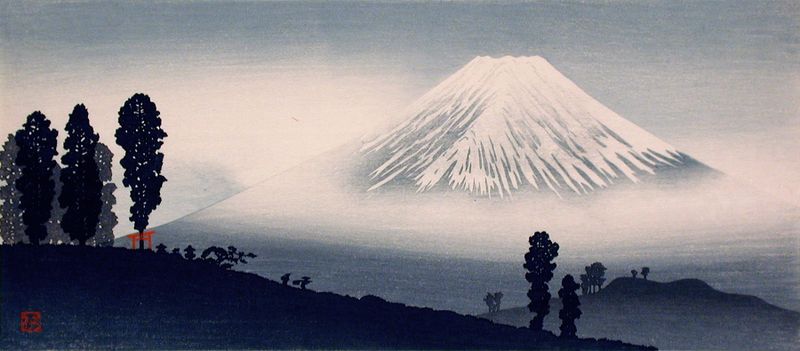
Mount Fuji
Takahashi Hiroaki

Mount Fuji seen near Tamaho, Dawn
Takahashi Hiroaki
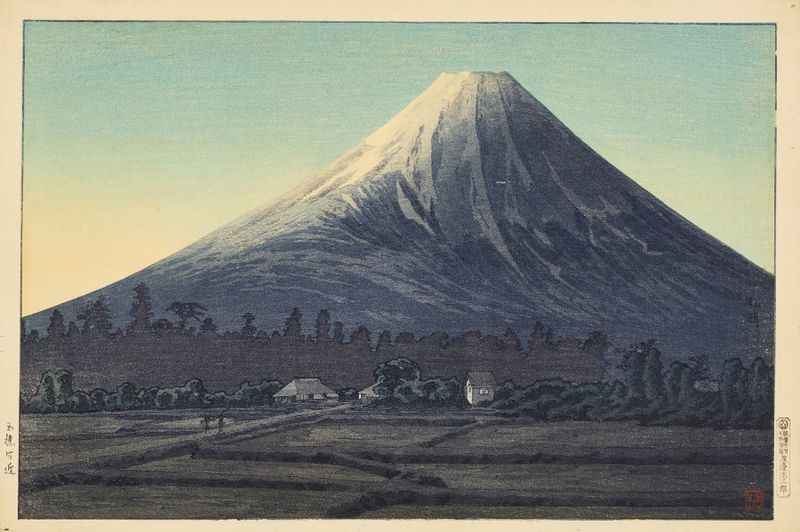
Mount Fuji seen near Tamaho, day
Takahashi Hiroaki
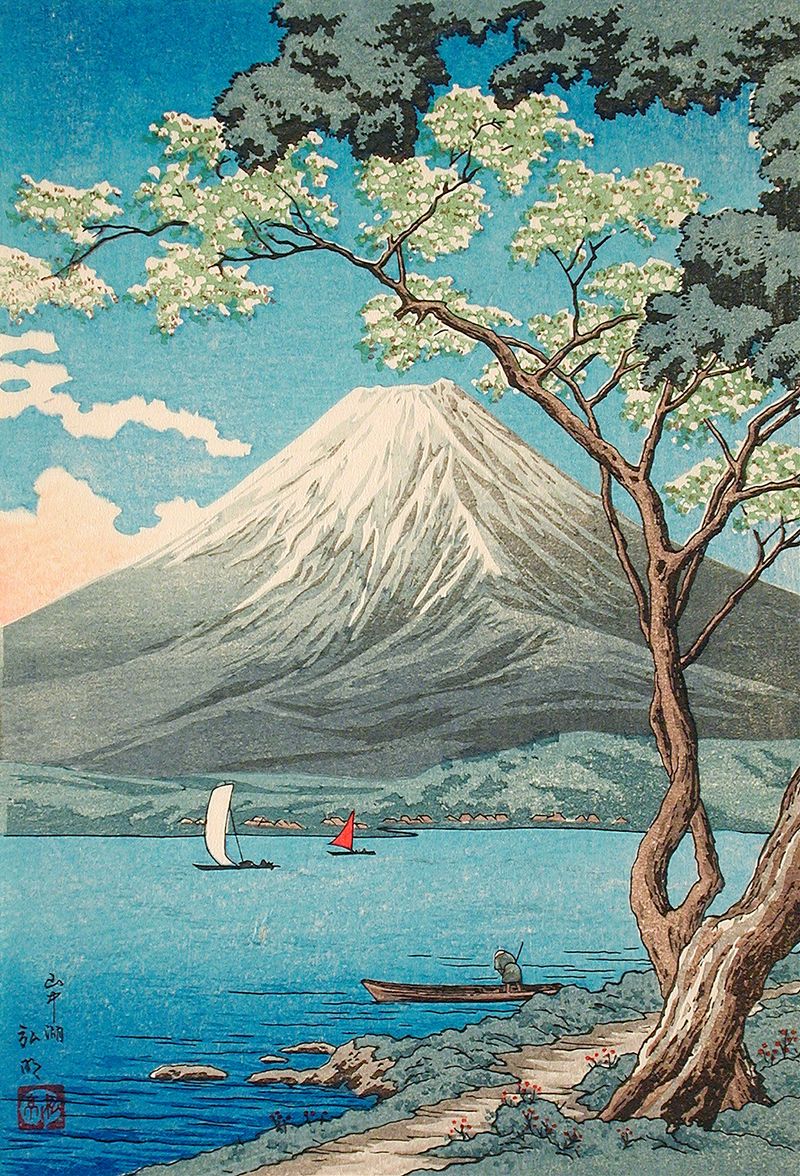
Mount Fuji from Lake Yamanaka
Takahashi Hiroaki

Mt. Fuji from Tagonoura, Snow Scene
Takahashi Hiroaki

Egoda no tsuki
Takahashi Hiroaki
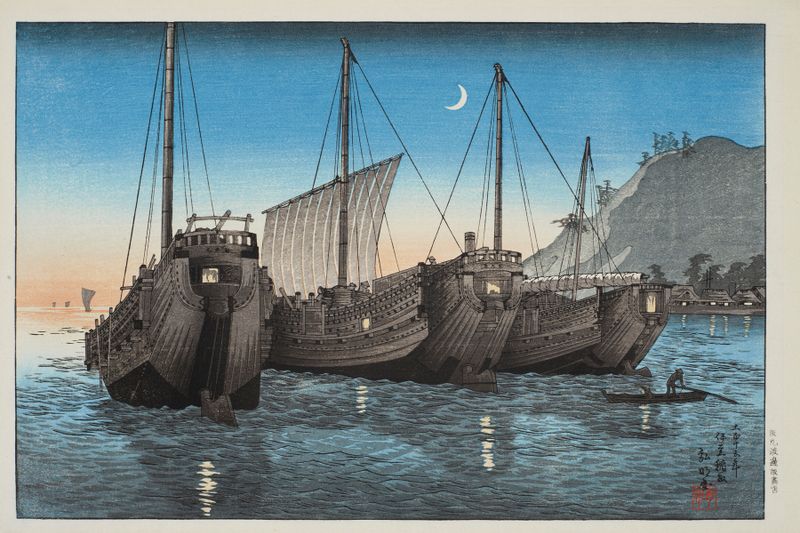
Junks in Inatori Bay, Izu
Takahashi Hiroaki

Izumibashi no ame
Takahashi Hiroaki
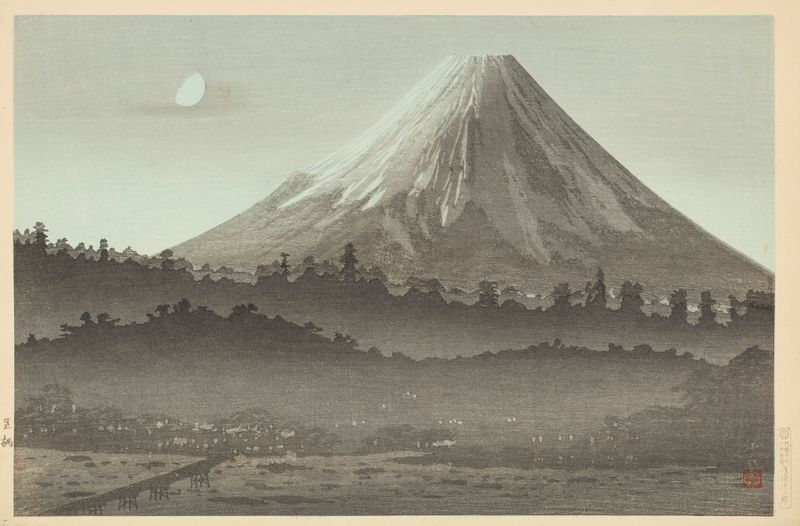
Mount Fuji seen near Tamaho, Night
Takahashi Hiroaki

Fishing nets at Tsukuda
Takahashi Hiroaki





