
Jael slays the sleeping Canaanite commander Sissera — History & Facts
What seizes the viewer first is the sheer force of the woman’s arm, frozen at the apex of its swing, hammer poised above her victim. The drama is immediate and inescapable: a moment of violence, but also of resolve, rendered with a clarity that leaves no room for doubt about the outcome. The light falls with theatrical precision across the woman’s determined face and the man’s startled, half-awake features, guiding the eye from her clenched jaw to his outstretched, desperate hand.
The folds of fabric—her bodice a vivid blue, the golden drapery beneath—are painted with a lushness that heightens the tension, as if the very cloth is caught in the act. Every gesture is purposeful: the hammer raised for the fatal blow, the hand pinning the man, the splayed fingers signaling a last, futile resistance. Painted in 1710, Jael slays the sleeping Canaanite commander Sissera by Antonio Bellucci belongs to a world where biblical heroines were given the scale and gravity of history painting. In early eighteenth-century Europe, scenes like this were not only moral lessons but also opportunities for artists to display their command of anatomy, emotion, and narrative.
Such works were often commissioned by churches or private patrons eager to demonstrate both piety and taste, and they reflect a fascination with moments of decisive action. Little is recorded about the journey of this specific painting, now documented in the Anagoria collection, but its bold palette and dynamic composition are signatures of the late Baroque, a period when artists sought to grip the viewer with stories told in flesh and fabric. The painting invites you to linger, to trace the arc of the hammer, and to wonder at the courage—and cost—of a single, irrevocable act.
More Artworks by Antonio Bellucci

Toilette of Belinda
Antonio Bellucci

Hercules in the Palace of Omphale
Antonio Bellucci
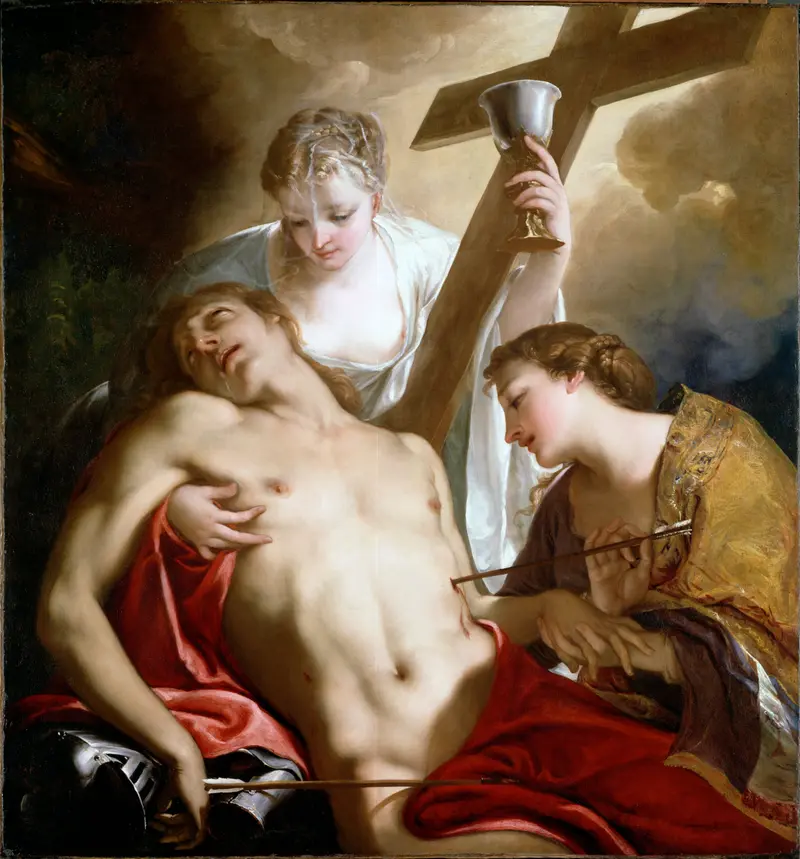
Saint Sebastian
Antonio Bellucci
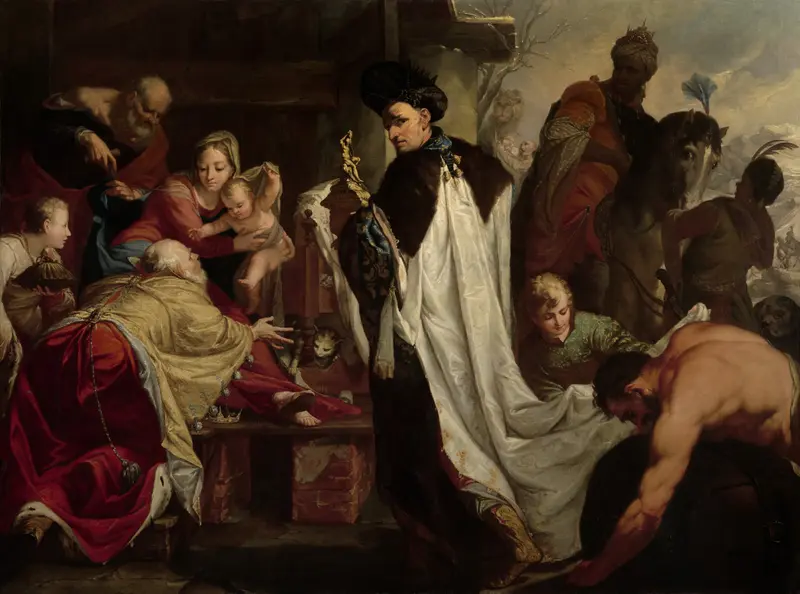
The Adoration of the Magi
Antonio Bellucci

Reverence to Elector Johann Wilhelm von der Pfalz – Design for a Ceiling Painting for Bensberg Castl...
Antonio Bellucci
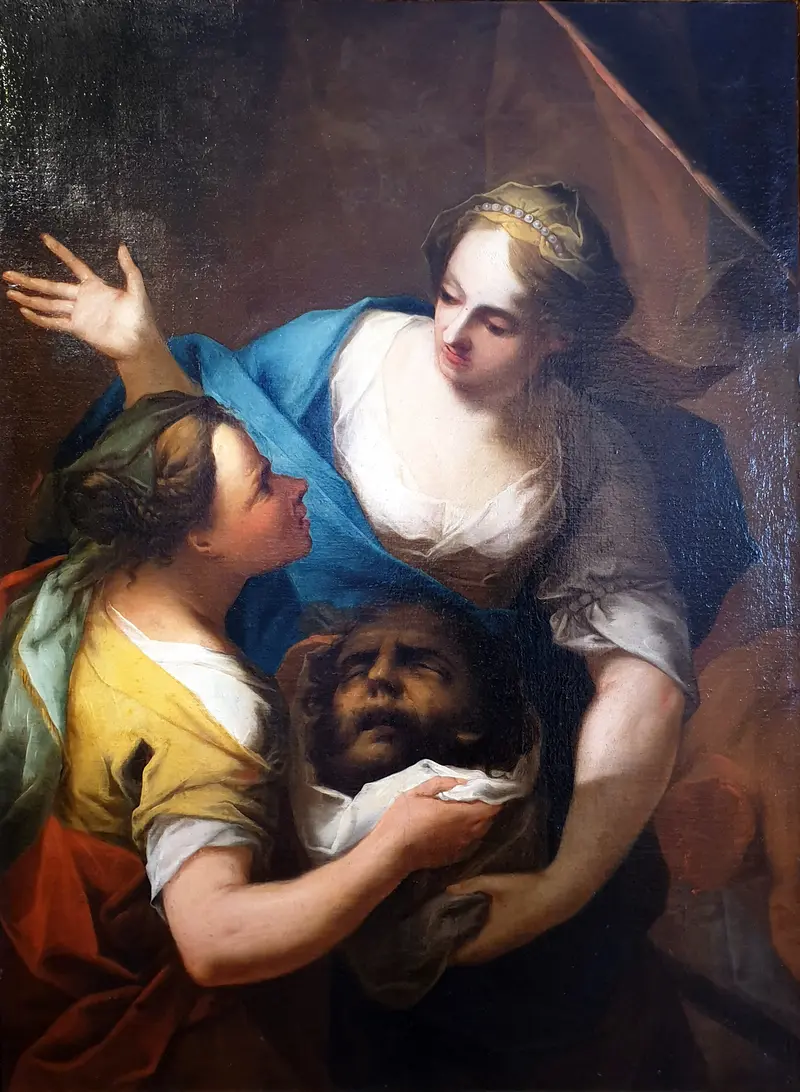
Judith hands her maid the head of Holofernes
Antonio Bellucci
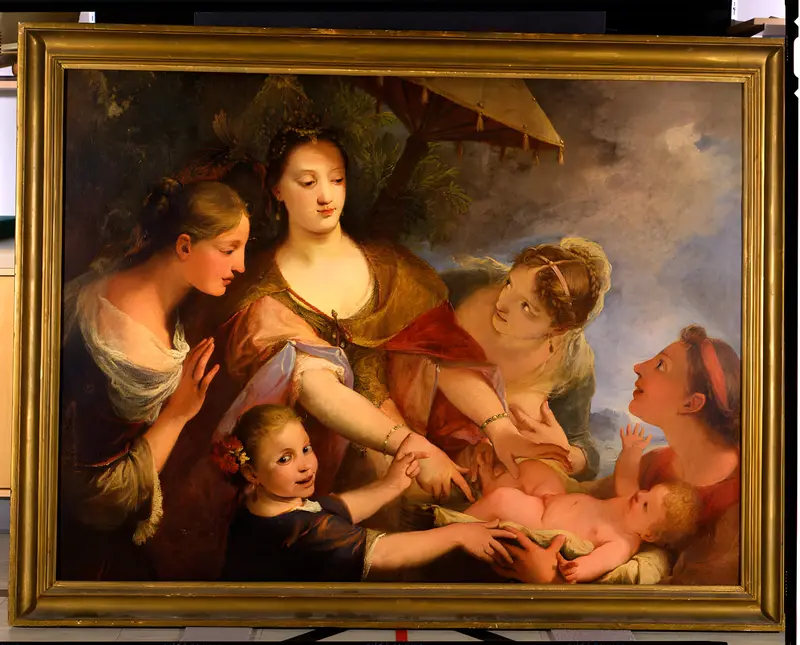
Discovery of the Infant Moses
Antonio Bellucci
Mars and Venus Entrapped by Vulcan
Antonio Bellucci
Judith and Holofernes
Antonio Bellucci





