
Judith and Holofernes — History & Facts
What grips the eye here is not the violence, but the charged silence between two women—one young, one old—caught in the aftermath of a deed that has already shattered the night. The younger figure, her back exposed and muscles taut, dominates the canvas with a presence both vulnerable and resolute. Her right hand clasps a sword, still heavy with purpose, while her left lowers the severed head of Holofernes into the waiting hands of her companion.
The older woman’s gaze is fixed, not on the grisly trophy, but on Judith herself, as if searching for the cost of such courage in the lines of her face. Painted in the 17th century, Judith and Holofernes by Antonio Bellucci belongs to a world where biblical heroines were summoned to embody both virtue and danger. The drama here is heightened by the deep shadows and the stark, almost theatrical lighting that isolates the figures from their surroundings, forcing the viewer to confront the intimacy of their collusion. This was an age when such stories were painted for private devotion or as statements of moral and political power, often commissioned by those eager to align themselves with Judith’s righteous daring.
Today, the painting resides in the Princeton Art Museum, a rare survivor from a time when artists like Bellucci were shaping the Baroque taste for drama and psychological depth. The longer you look, the more the painting asks: what does heroism cost, and who bears its weight?
More Artworks by Antonio Bellucci

Toilette of Belinda
Antonio Bellucci

Hercules in the Palace of Omphale
Antonio Bellucci
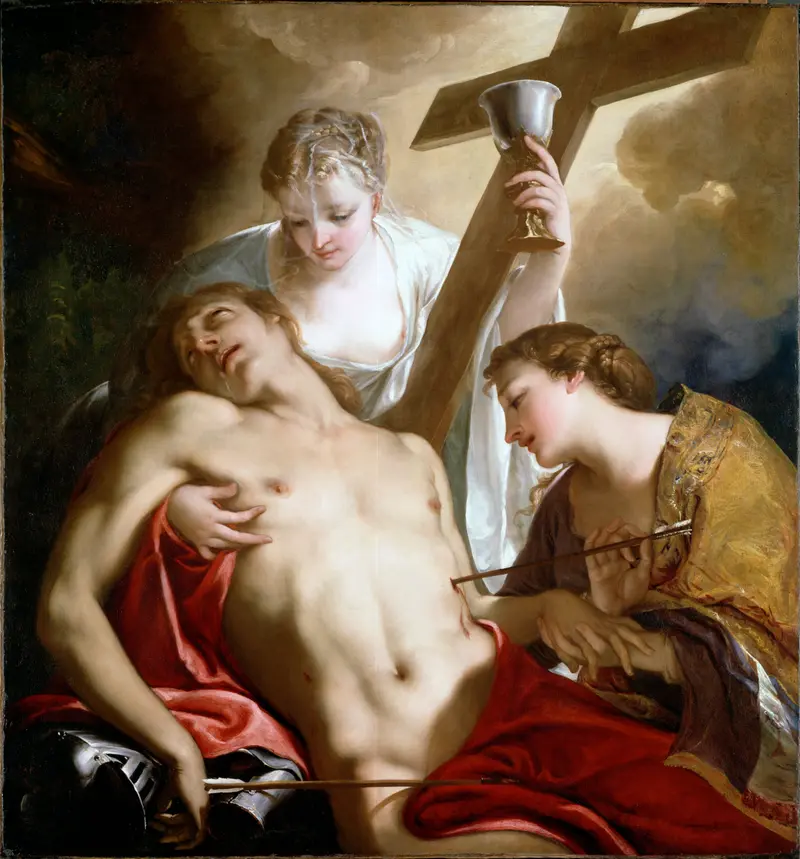
Saint Sebastian
Antonio Bellucci
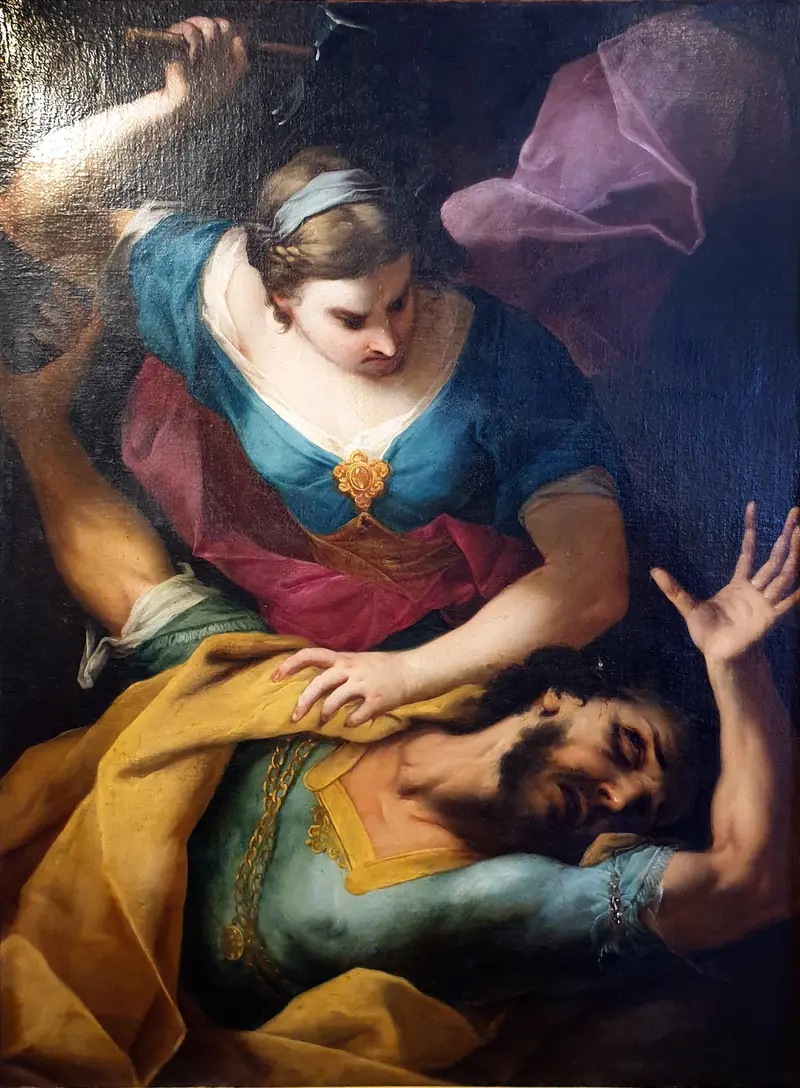
Jael slays the sleeping Canaanite commander Sissera
Antonio Bellucci
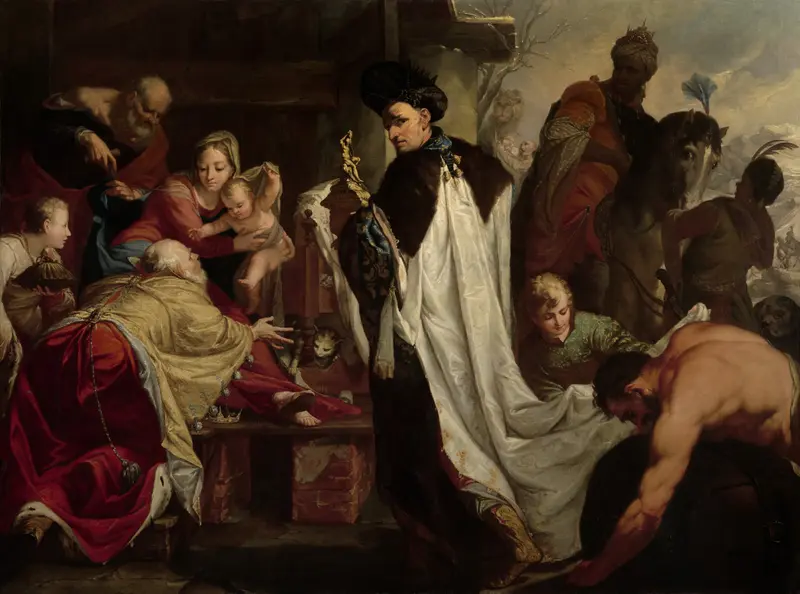
The Adoration of the Magi
Antonio Bellucci

Reverence to Elector Johann Wilhelm von der Pfalz – Design for a Ceiling Painting for Bensberg Castl...
Antonio Bellucci
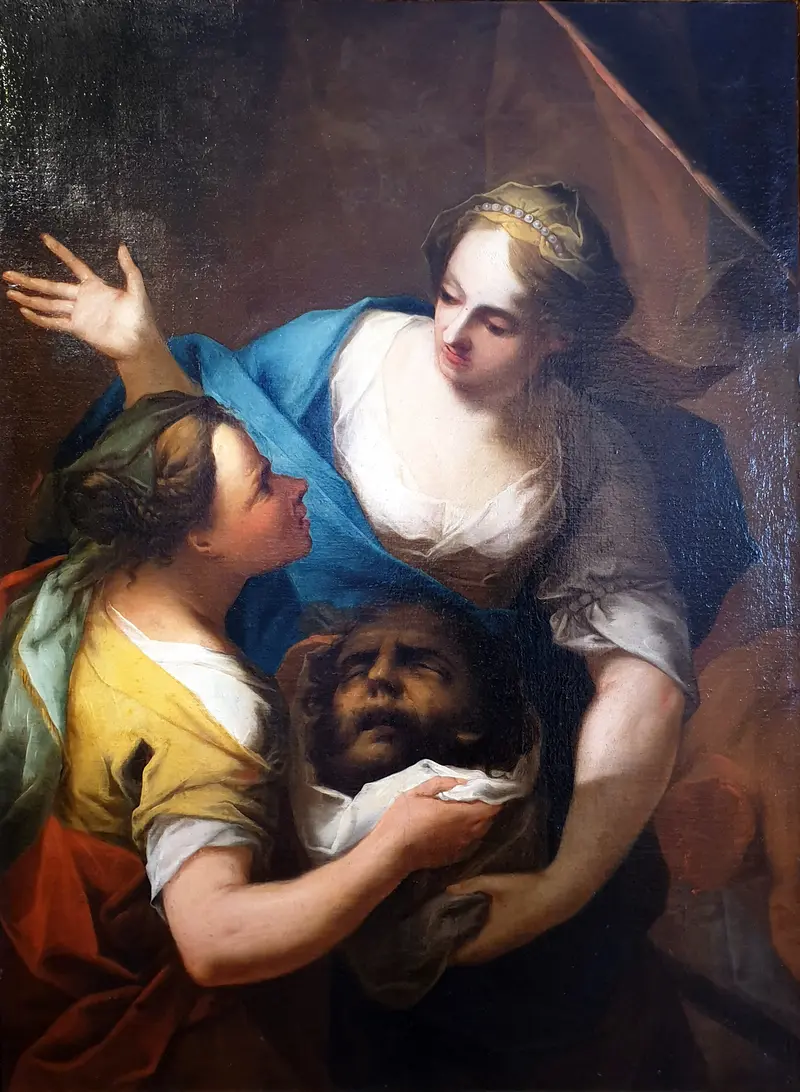
Judith hands her maid the head of Holofernes
Antonio Bellucci
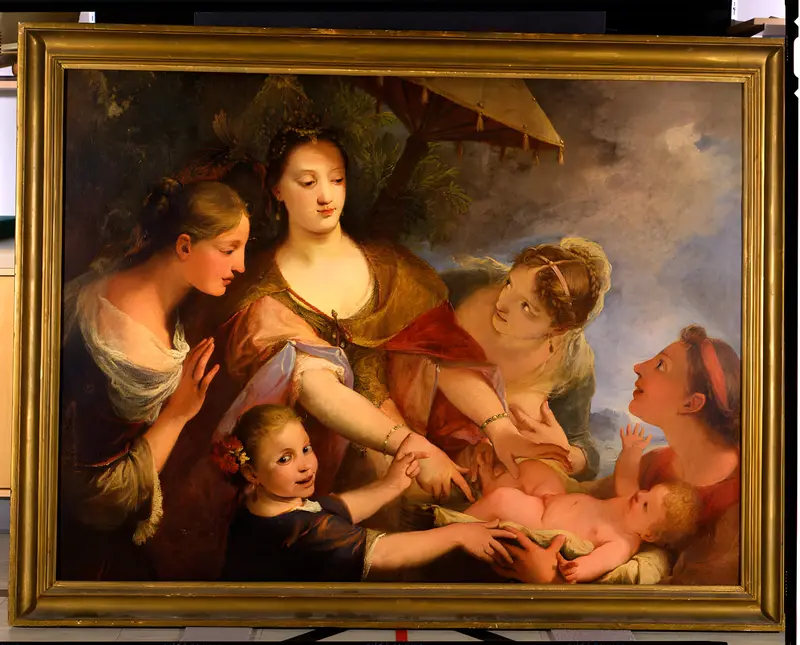
Discovery of the Infant Moses
Antonio Bellucci
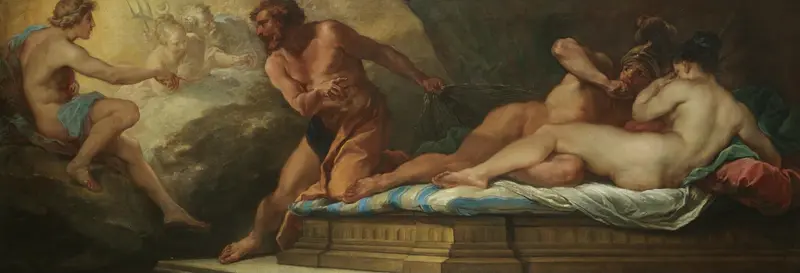
Mars and Venus Entrapped by Vulcan
Antonio Bellucci





