
Hercules in the Palace of Omphale — History & Facts
What immediately commands attention here is the reversal of power and gender roles, staged with theatrical flair beneath the arches of a palace. The eye is drawn first to the muscular, bearded man at the left—crowned with flowers by a woman—and then to the regal, semi-nude figure enthroned at the center, surrounded by a court of women. The man’s staff and lion skin, traditional emblems of Hercules, are present, but here he is not the hero in command; instead, he is the subject of gentle mockery and transformation.
The light falls most generously on the central female figure and the exposed flesh of both Hercules and the women, heightening the sense of spectacle and play. Every gesture, from the child at Hercules’s knee to the sidelong glances of the attendants, is orchestrated to underscore both the intimacy and the tension of this mythic role reversal. This painting belongs to the late Baroque, a period when mythological scenes like this one were favored for their capacity to blend narrative, sensuality, and moral ambiguity. In the world of 17th-century Europe, such works were often commissioned by wealthy patrons eager to display both their learning and their taste for the dramatic.
The myth of Hercules and Omphale, in which the greatest of Greek heroes is humbled and feminized in the service of a foreign queen, offered artists a chance to explore themes of power, desire, and identity with both wit and visual splendor. Painted by Antonio Bellucci in 1698, and documented in a private collection as of 8 May 2024, this work stands as a vivid example of how myth could be reimagined to delight and provoke. Look again at the faces and the hands: every detail invites the viewer to question who truly holds the power in this palace.
More Artworks by Antonio Bellucci

Toilette of Belinda
Antonio Bellucci
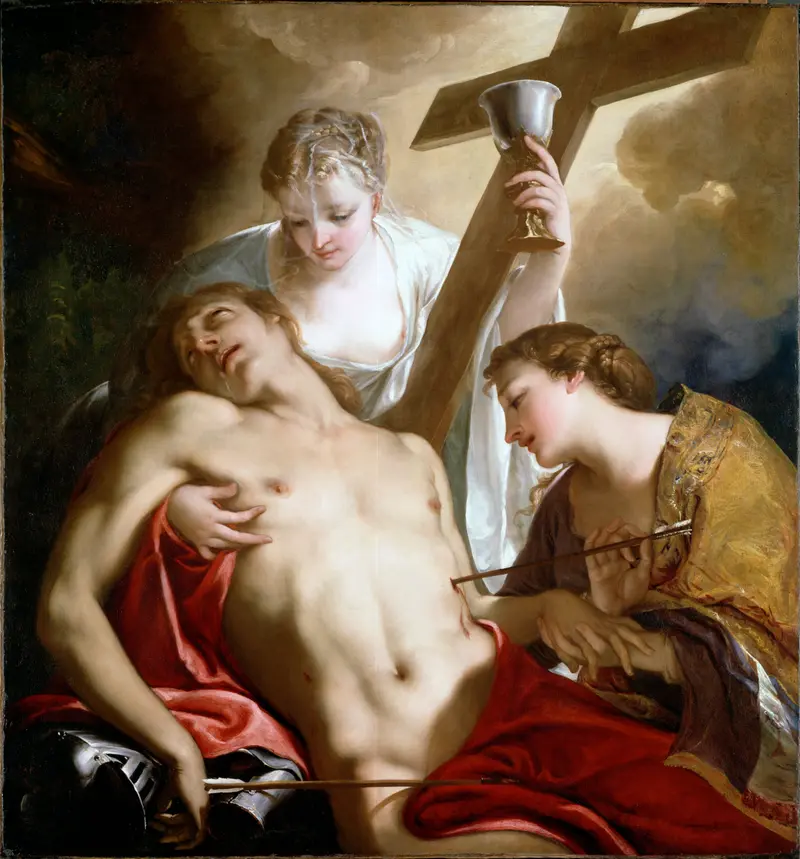
Saint Sebastian
Antonio Bellucci
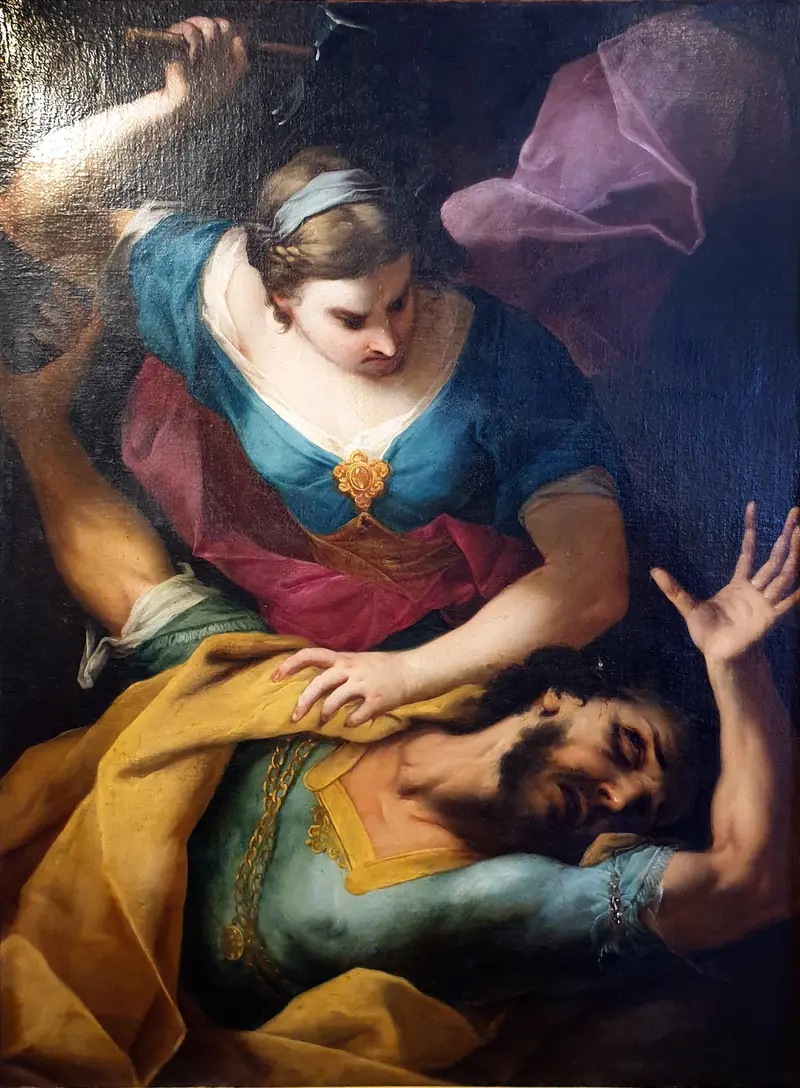
Jael slays the sleeping Canaanite commander Sissera
Antonio Bellucci
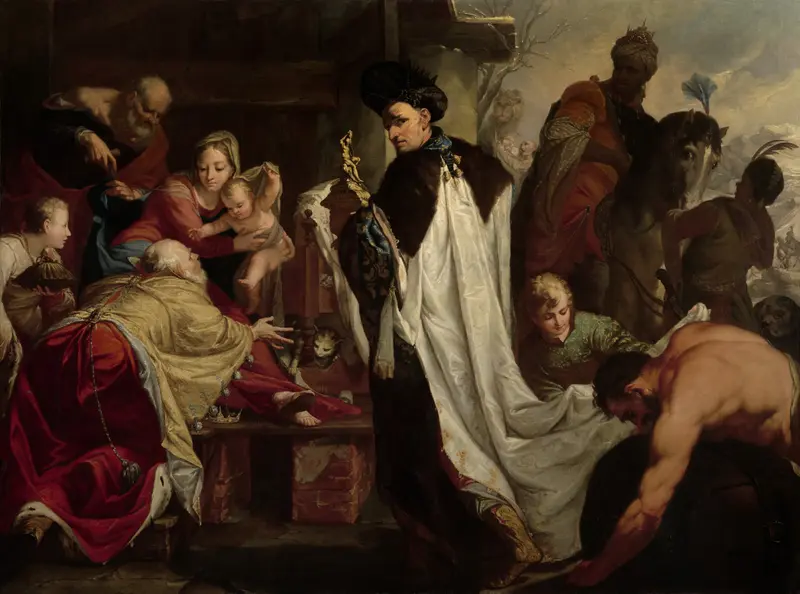
The Adoration of the Magi
Antonio Bellucci

Reverence to Elector Johann Wilhelm von der Pfalz – Design for a Ceiling Painting for Bensberg Castl...
Antonio Bellucci
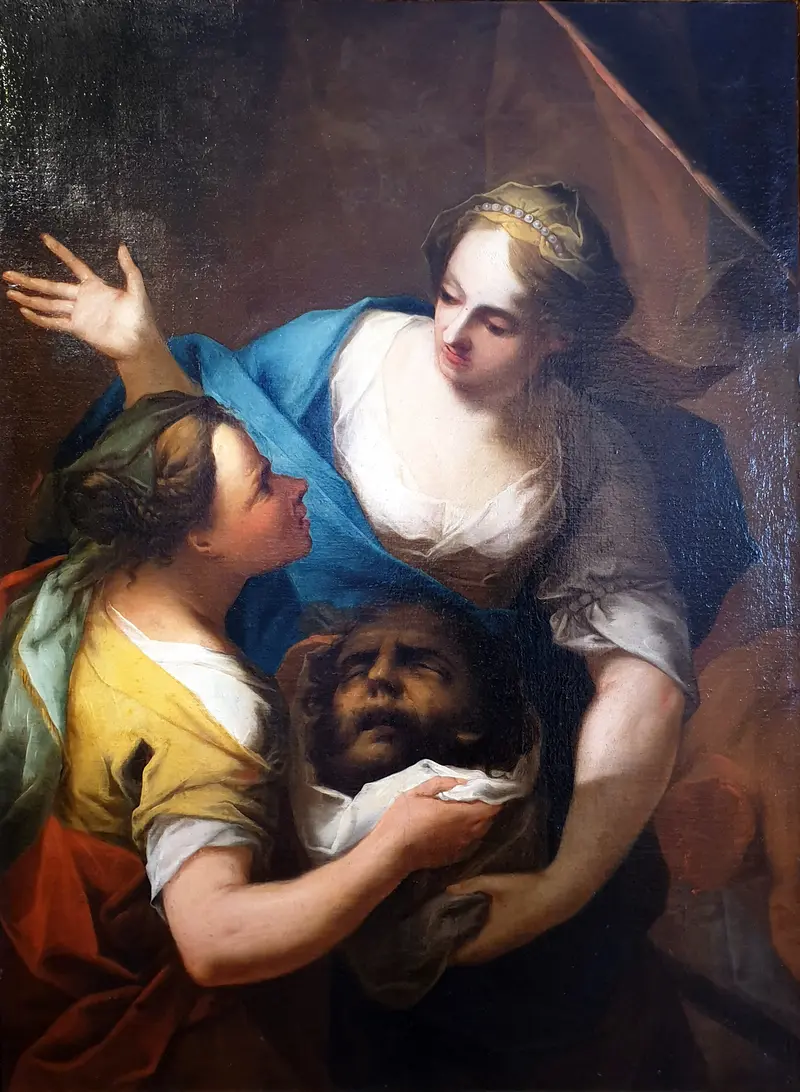
Judith hands her maid the head of Holofernes
Antonio Bellucci
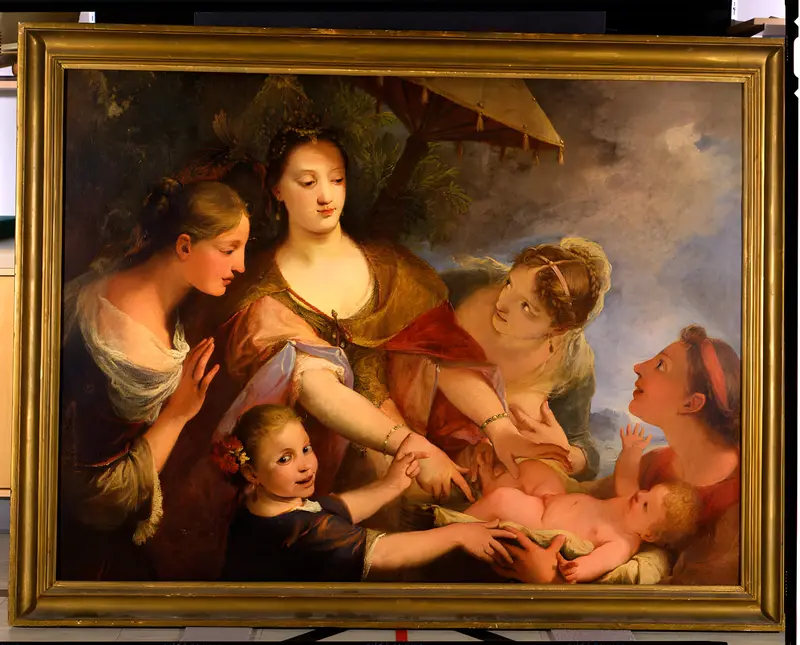
Discovery of the Infant Moses
Antonio Bellucci
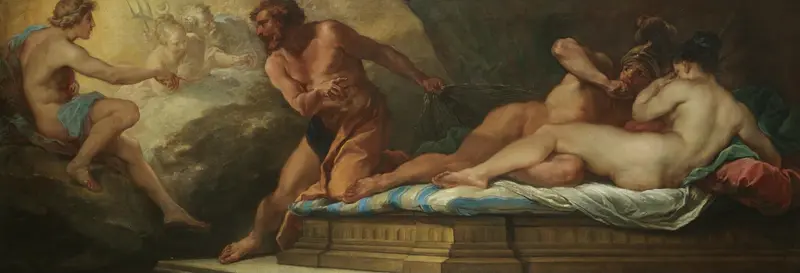
Mars and Venus Entrapped by Vulcan
Antonio Bellucci
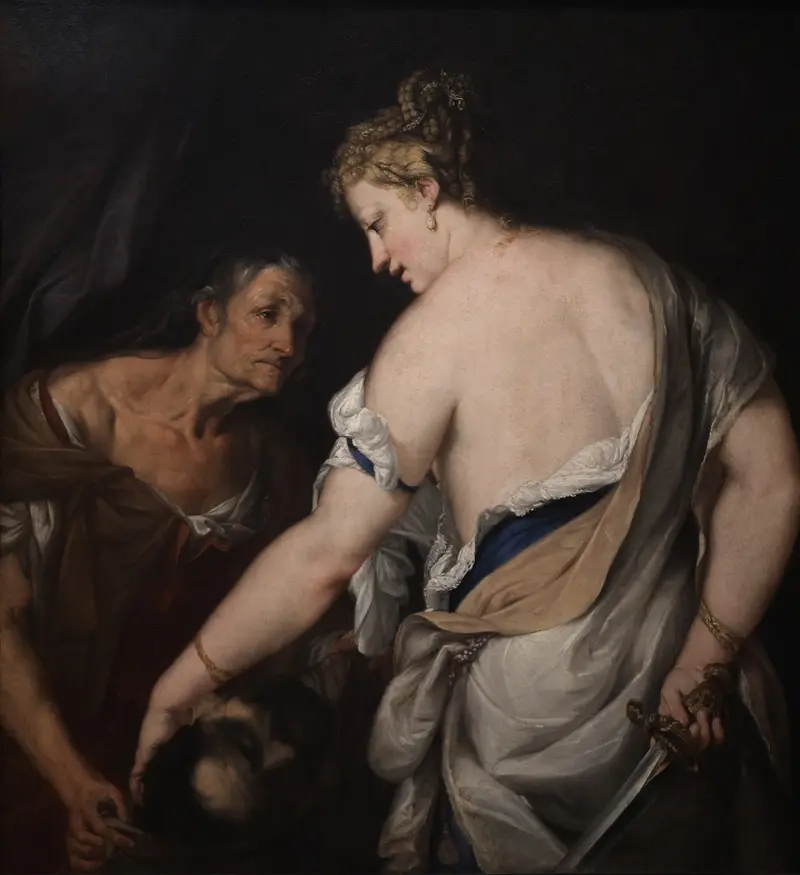
Judith and Holofernes
Antonio Bellucci





