Jansen, A. J.; SS Rawcliffe (Fair Weather) — History & Facts
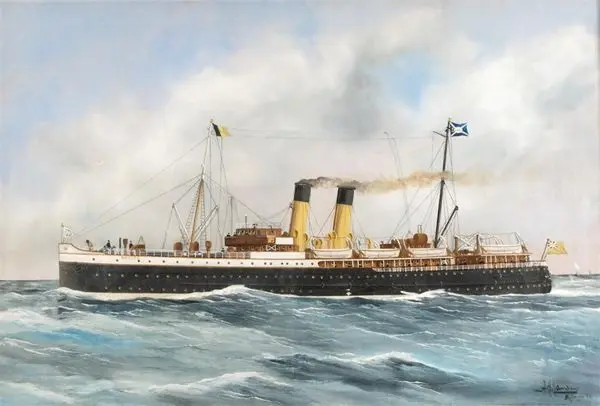
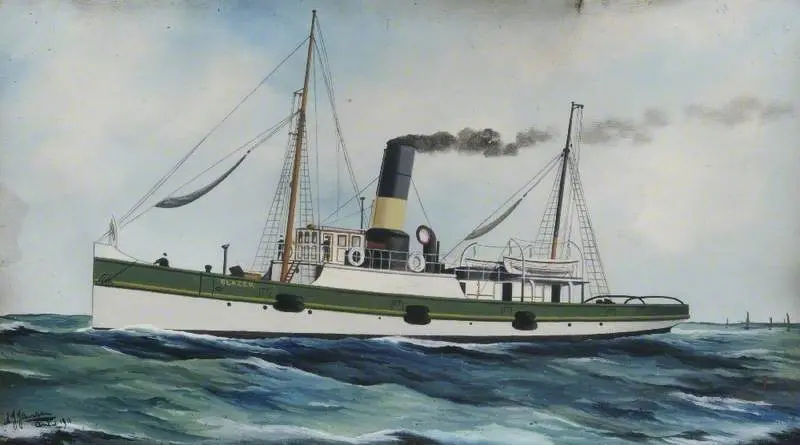
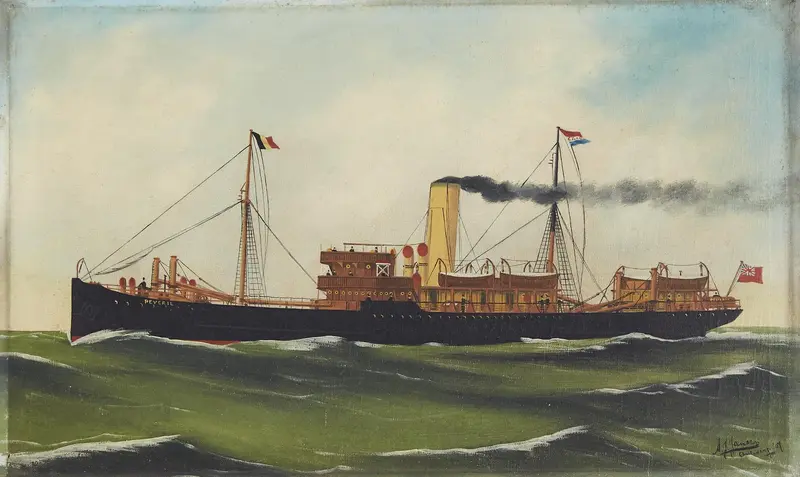
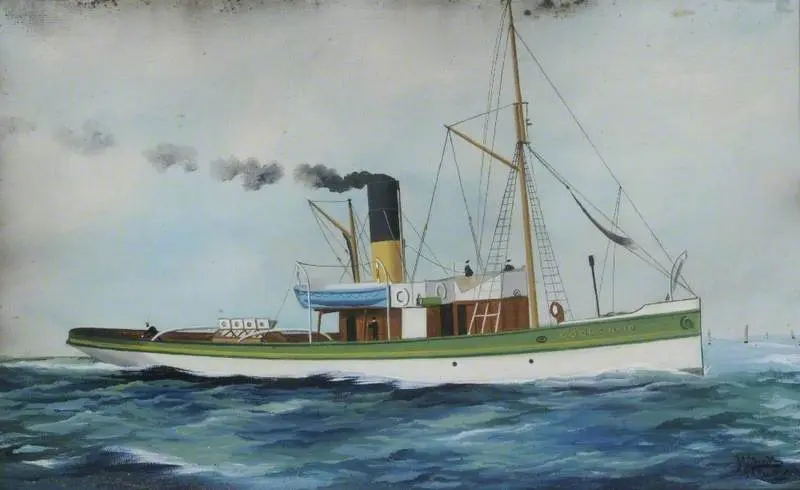
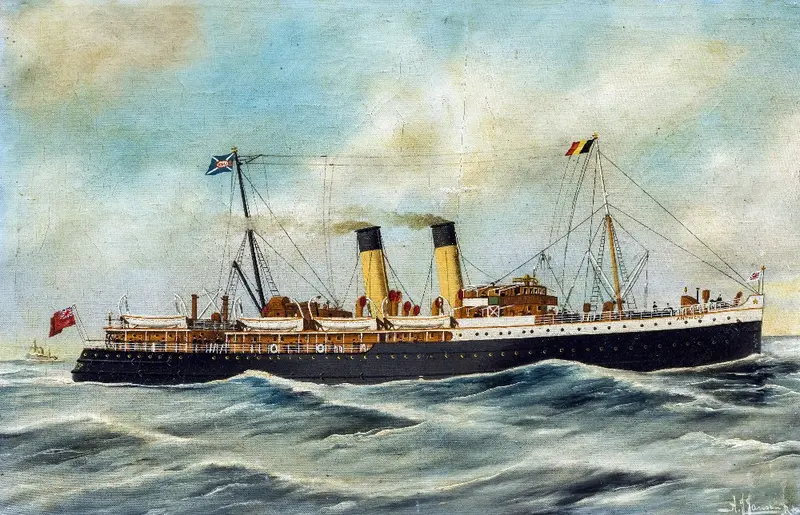
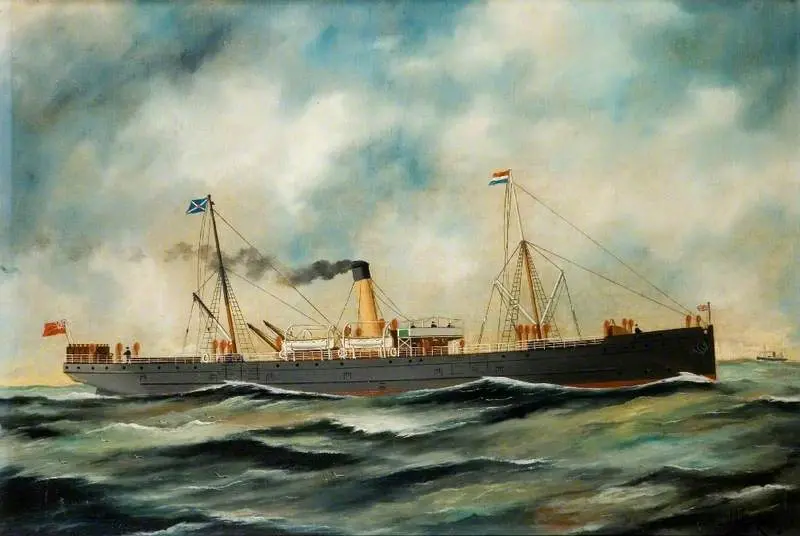
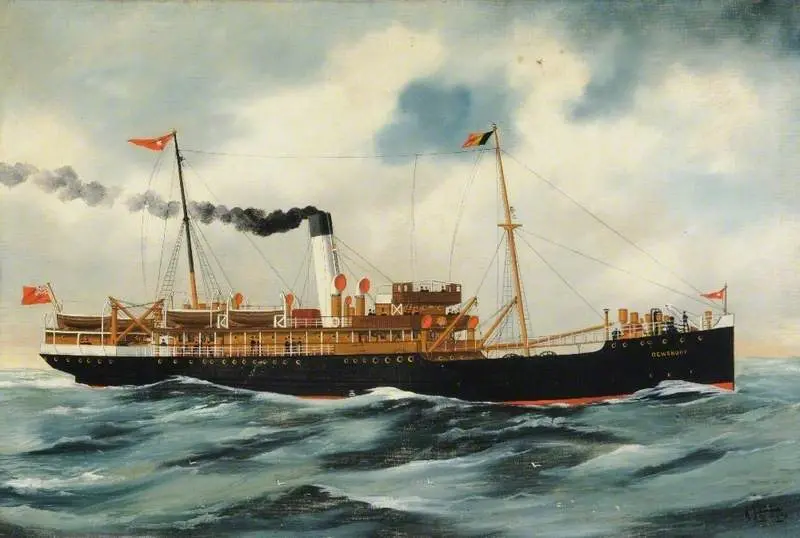
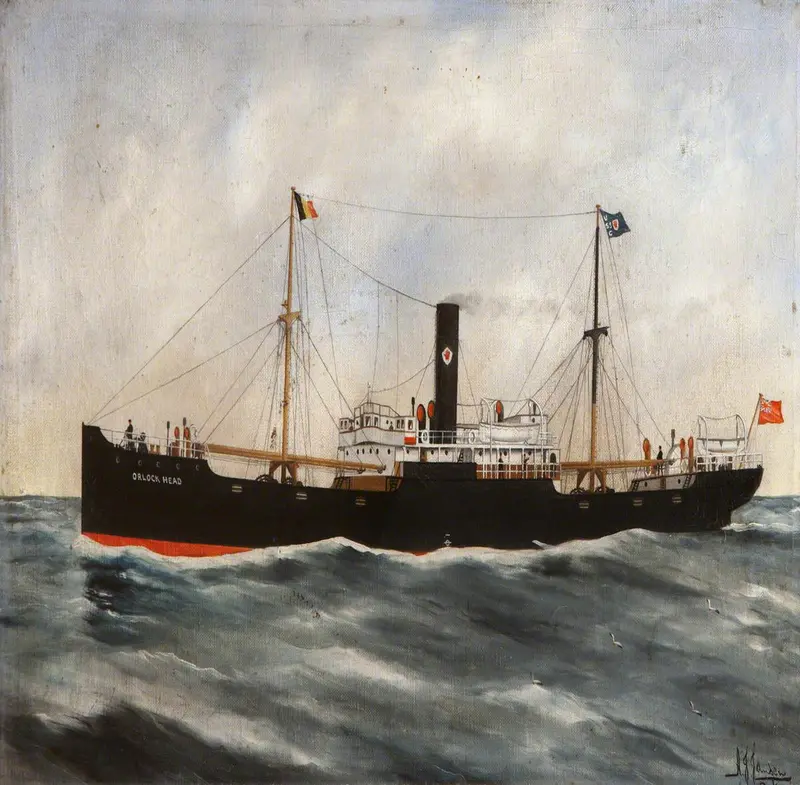
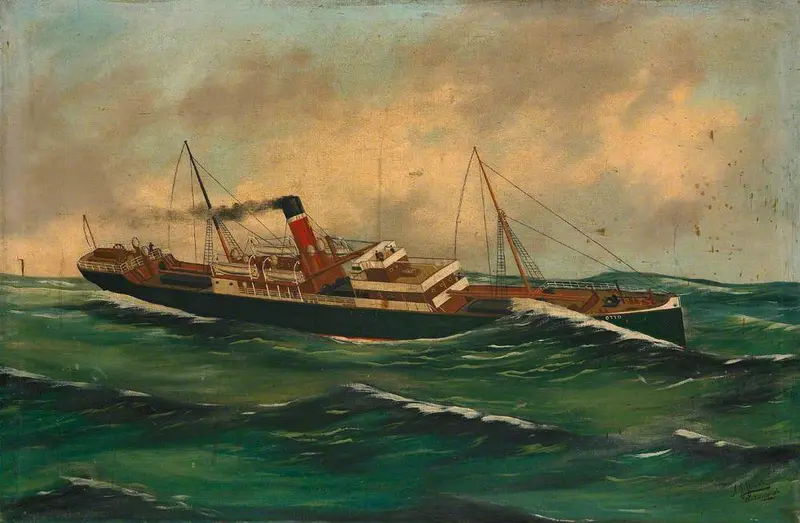
What first catches the eye in SS Rawcliffe (Fair Weather) by A. J. Jansen is the ship’s crisp silhouette, slicing through the green-blue waters with a sense of steady purpose.
The vessel’s black hull is set off by the bright accents of its red funnel and the fluttering flags, each detail rendered with a precision that speaks to the pride and clarity of early twentieth-century marine painting. The low horizon gives the sky a vast, airy dominance, while the gentle movement of the waves suggests both the power of the sea and the confidence of steam-driven progress. The plume of smoke trailing behind the funnel is not just a technical detail; it’s a sign of life, industry, and the ceaseless movement of goods and people that defined the era. Painted in 1907, this work belongs to a tradition of ship portraits that flourished alongside Britain’s industrial and maritime expansion.
Such images were often commissioned by shipping companies or proud captains, eager to commemorate their vessels at the height of their service. The SS Rawcliffe, here identified as a Lancashire & Yorkshire Railway steamer, stands as a testament to the interconnectedness of rail and sea in Edwardian Britain, when railway companies extended their reach across the water. Little is recorded about A.
J. Jansen beyond his active years, but paintings like this one, now preserved in a public collection, invite us to imagine the world of commerce, travel, and ambition that once filled these decks—each flag and rail a clue to a vanished age.