
Japonairie — History & Facts
A woman reclines in a world halfway between dream and stage, her gaze drifting beyond the viewer as she shields her eyes with a delicate fan. The turquoise backdrop, animated by stylized golden birds in flight, transforms the space into a private theater of the imagination. Fabrics—striped, floral, and animal-patterned—pile beneath her, their textures and colors orchestrating a sense of languor and exoticism.
The orange blossom in her hair and the loose robe, slipping from her shoulder, speak of leisure and a cultivated sensuality, while the birds seem to hover between decoration and apparition, blurring the line between reality and fantasy. Painted by Theodoros Ralli sometime between 1873 and 1909, Japonairie belongs to a world fascinated by the allure of the East, a current that swept through European art in the late nineteenth century. The taste for Japonisme—Japanese motifs filtered through Western eyes—was at its height, and artists like Ralli wove these influences into scenes of pleasure and reverie for a clientele eager for novelty and escape. History has kept few traces of this particular work’s journey, but its presence in a modern collection reminds us how such images once promised their viewers a moment’s passage into a different, imagined world.
The woman’s half-smile invites you to linger, to wonder what she sees behind her fan.
More Artworks by Theodoros Ralli

The Sleeping Concubine
Theodoros Ralli
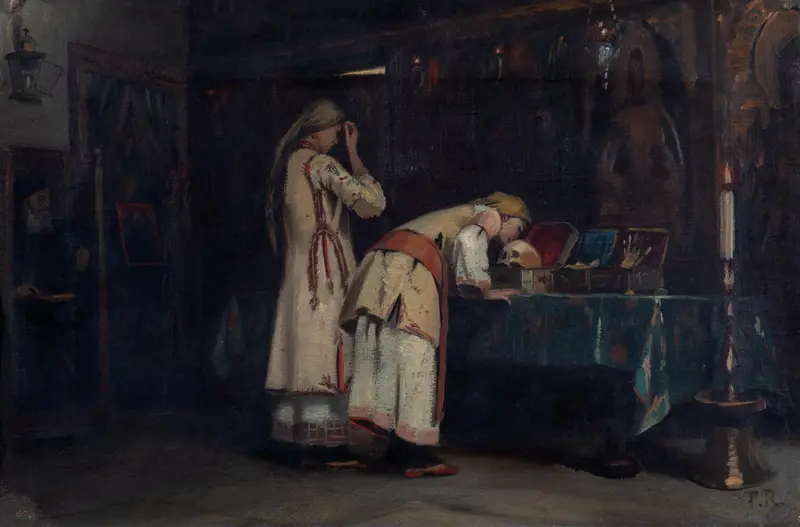
Holy Relics
Theodoros Ralli
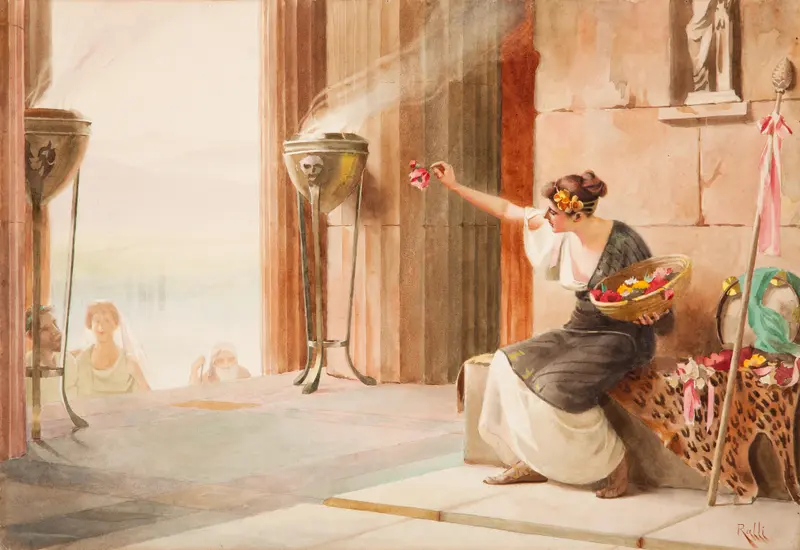
Flower Seller at the Parthenon
Theodoros Ralli
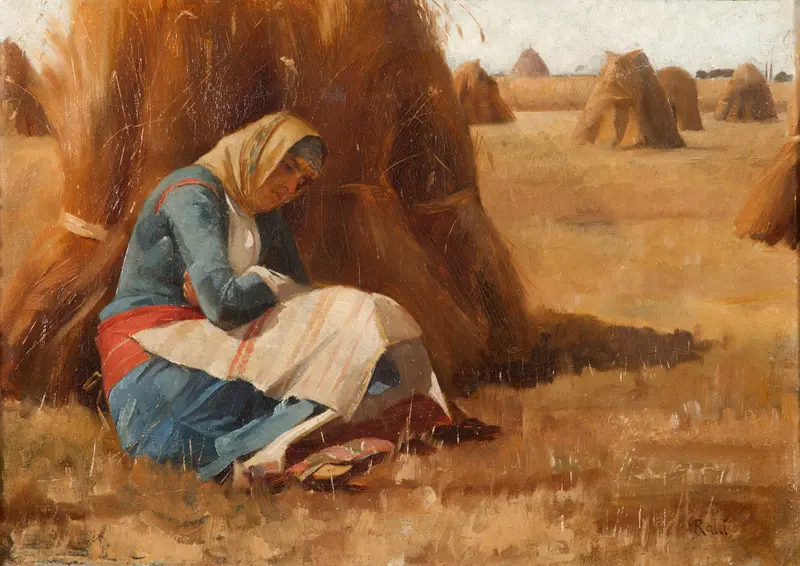
Resting by a Haystack
Theodoros Ralli
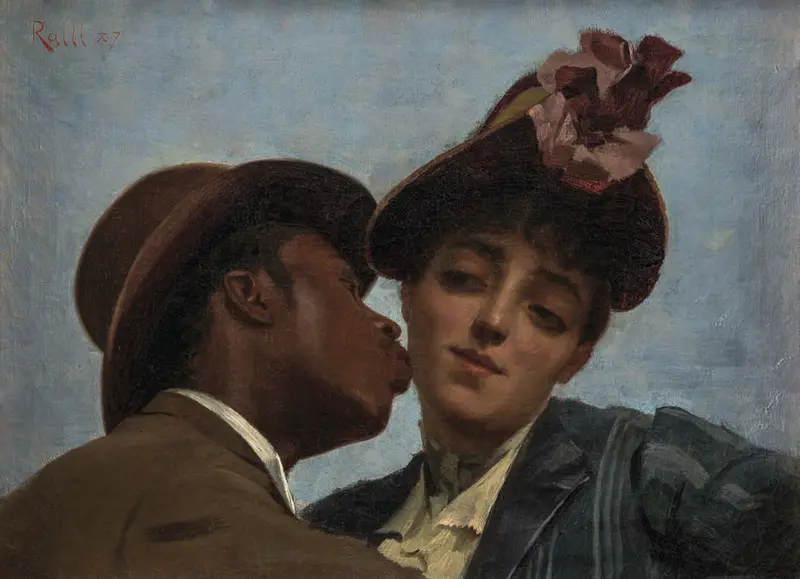
The Kiss (Ralli)
Theodoros Ralli
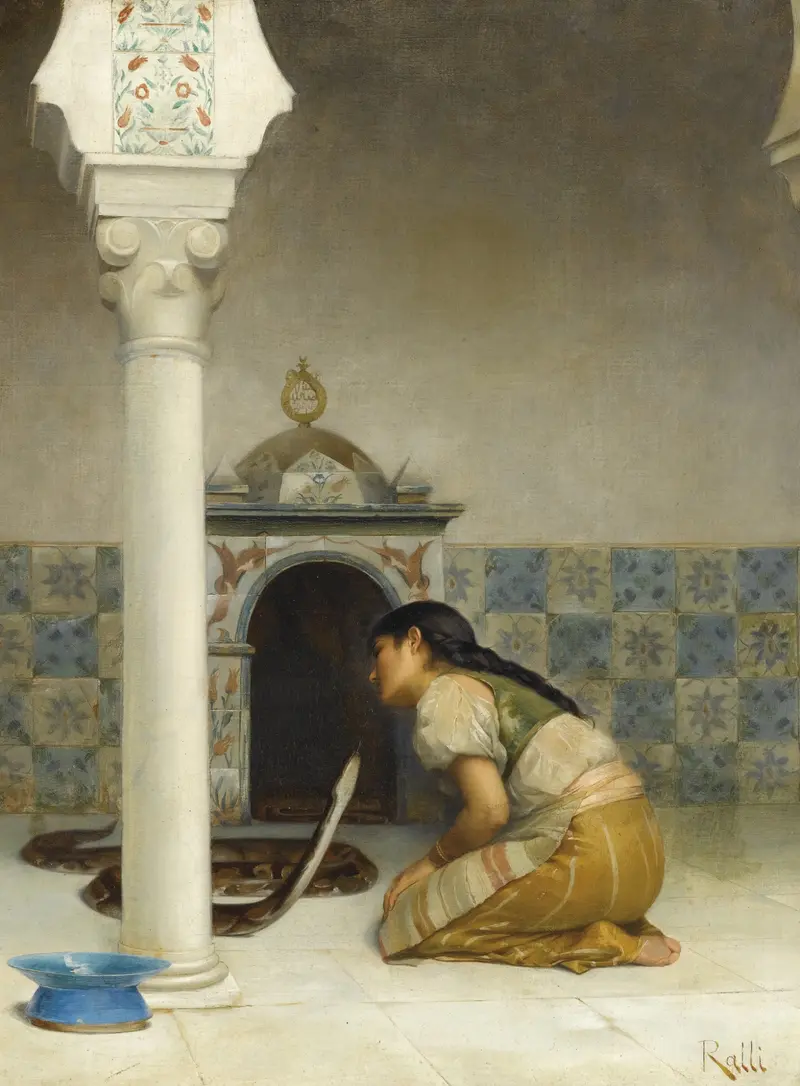
The Sacred Serpent
Theodoros Ralli
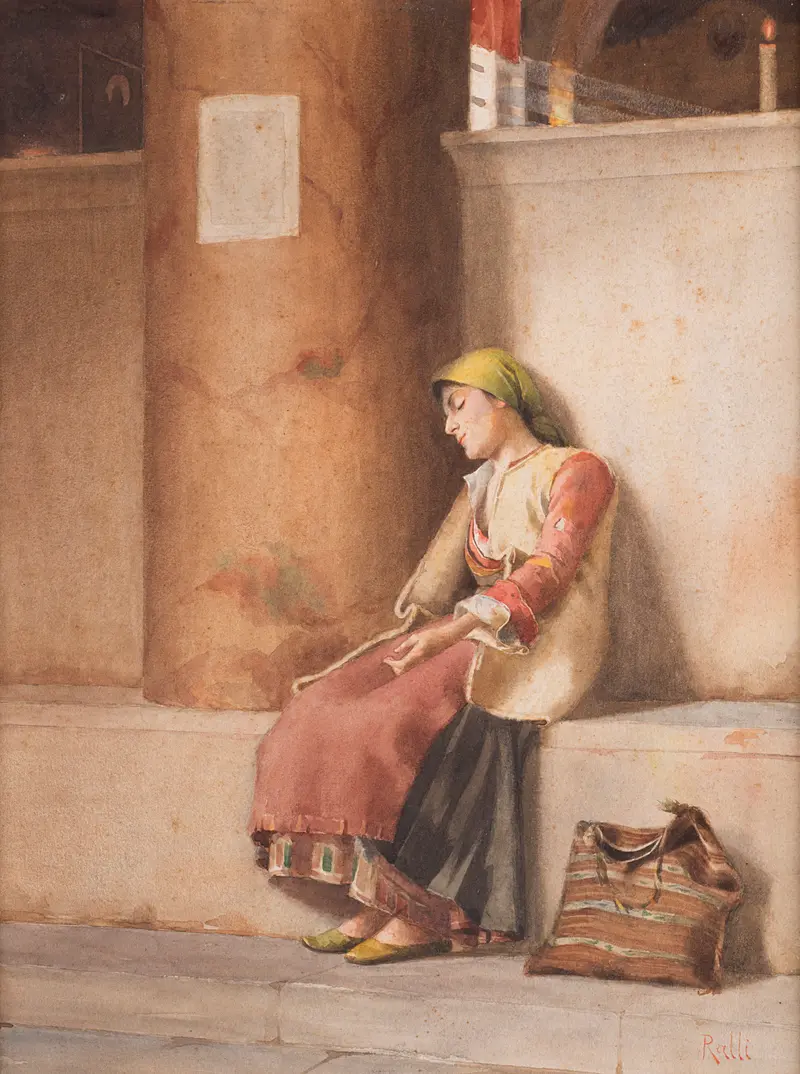
A Moment of Reflection
Theodoros Ralli
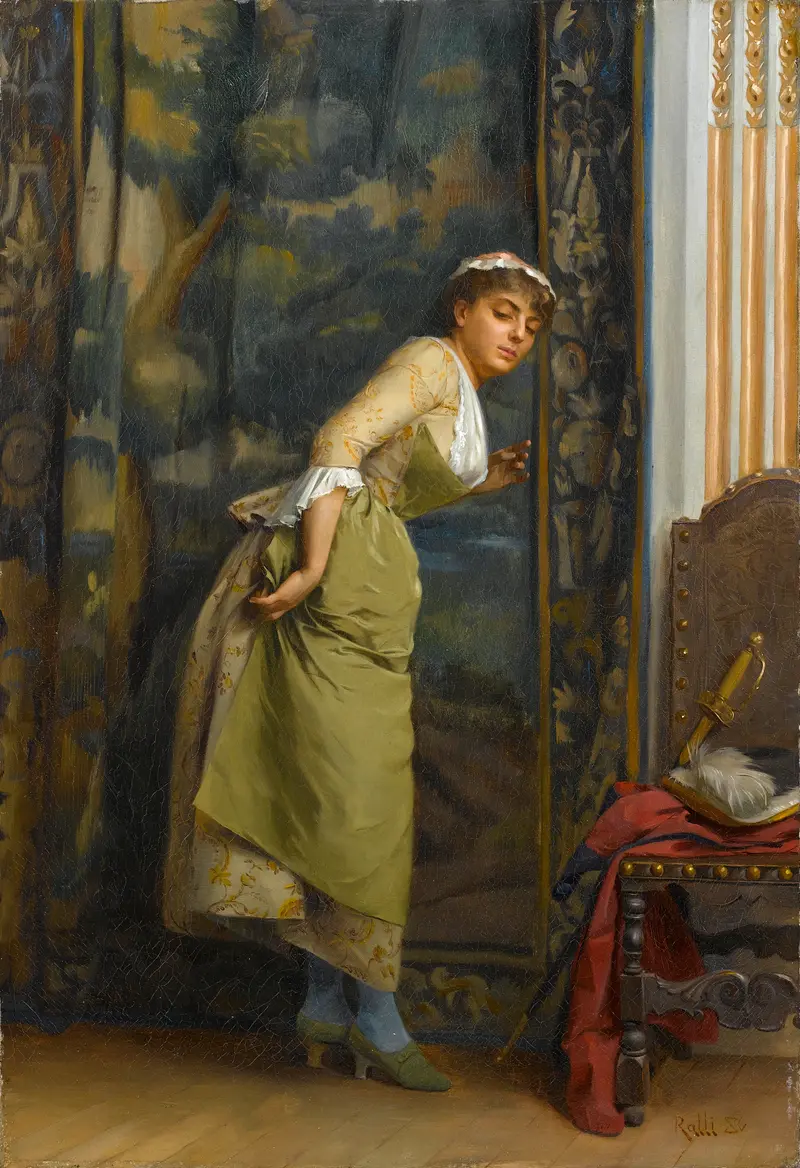
Eavesdropping (Ralli)
Theodoros Ralli
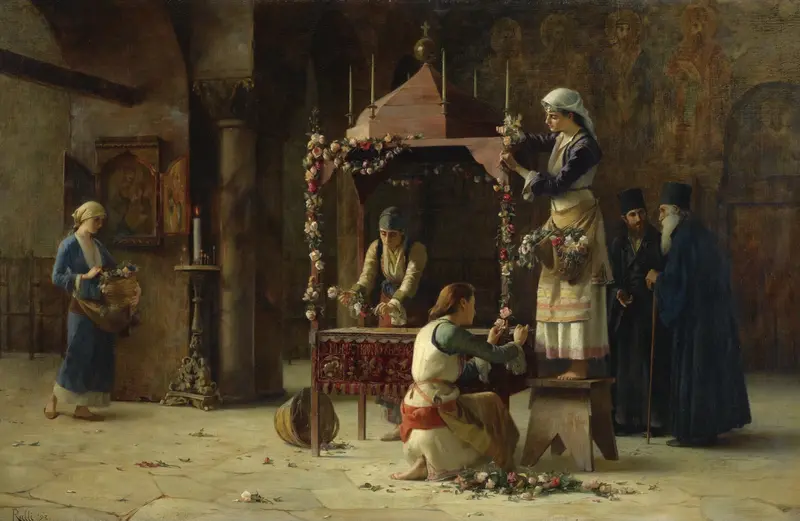
Holy Friday, Greece
Theodoros Ralli
A Moment's Rest
Theodoros Ralli



