
Jeune Femme au Bain — History & Facts
It is the quiet anticipation in Jeune Femme au Bain that first draws the eye: a young woman, poised on the edge of an octagonal pool, bends forward as if to test the water’s temperature with her hand or foot. The light, cool and deliberate, falls across her bare skin and the intricate tiles behind her, setting up a conversation between softness and geometry, flesh and stone. The fountain’s gentle trickle is almost audible, and the careful rendering of the water’s surface—mirroring both the figure and the architecture—invites the viewer to linger.
Every element in the scene is arranged to heighten the sense of privacy and pause, as if we have stumbled upon a moment of contemplation rather than spectacle. Works like this, painted by Theodoros Ralli between 1873 and 1909, belong to a world fascinated by the “Oriental” bathhouse—a subject that allowed European artists to explore themes of leisure, sensuality, and exoticism under the guise of ethnographic curiosity. Such paintings were often commissioned for private salons, where they offered a glimpse into imagined worlds far from the viewer’s own. The cool blues and creamy stonework reflect the late nineteenth-century taste for detailed, immersive settings, while the solitary figure—neither self-conscious nor overtly inviting—suggests a new kind of intimacy.
History has kept few traces of this particular work’s journey, but its quiet, sunlit moment still asks the modern viewer to wonder what stories echo in the tiled silence.
More Artworks by Theodoros Ralli

The Sleeping Concubine
Theodoros Ralli
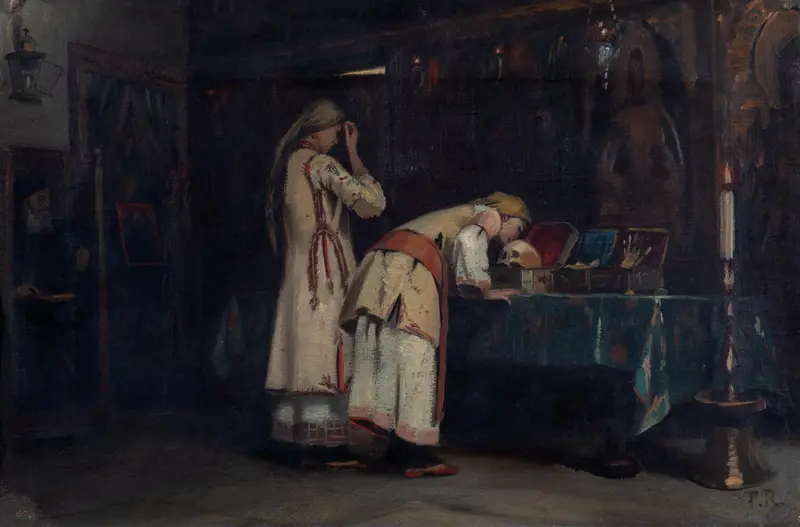
Holy Relics
Theodoros Ralli
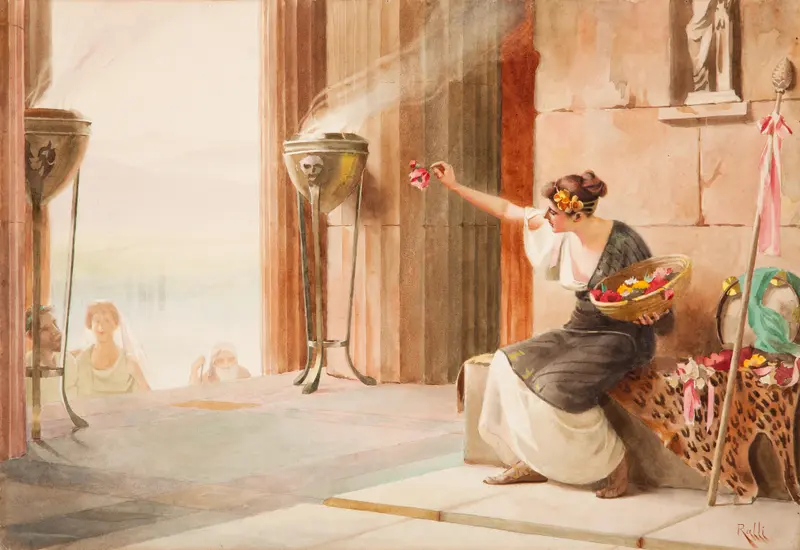
Flower Seller at the Parthenon
Theodoros Ralli
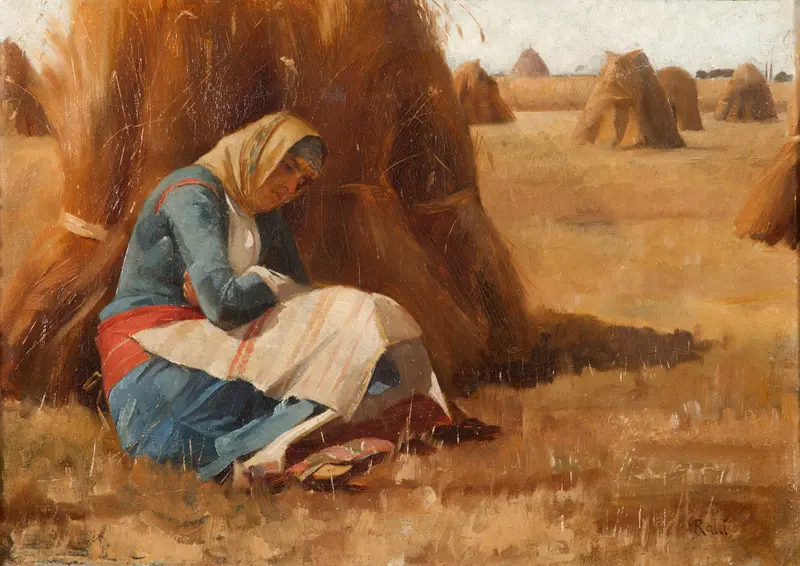
Resting by a Haystack
Theodoros Ralli
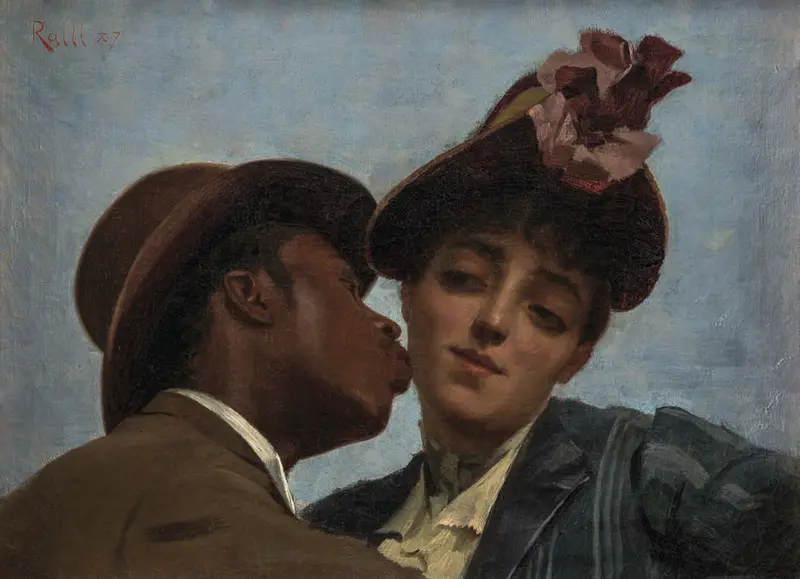
The Kiss (Ralli)
Theodoros Ralli
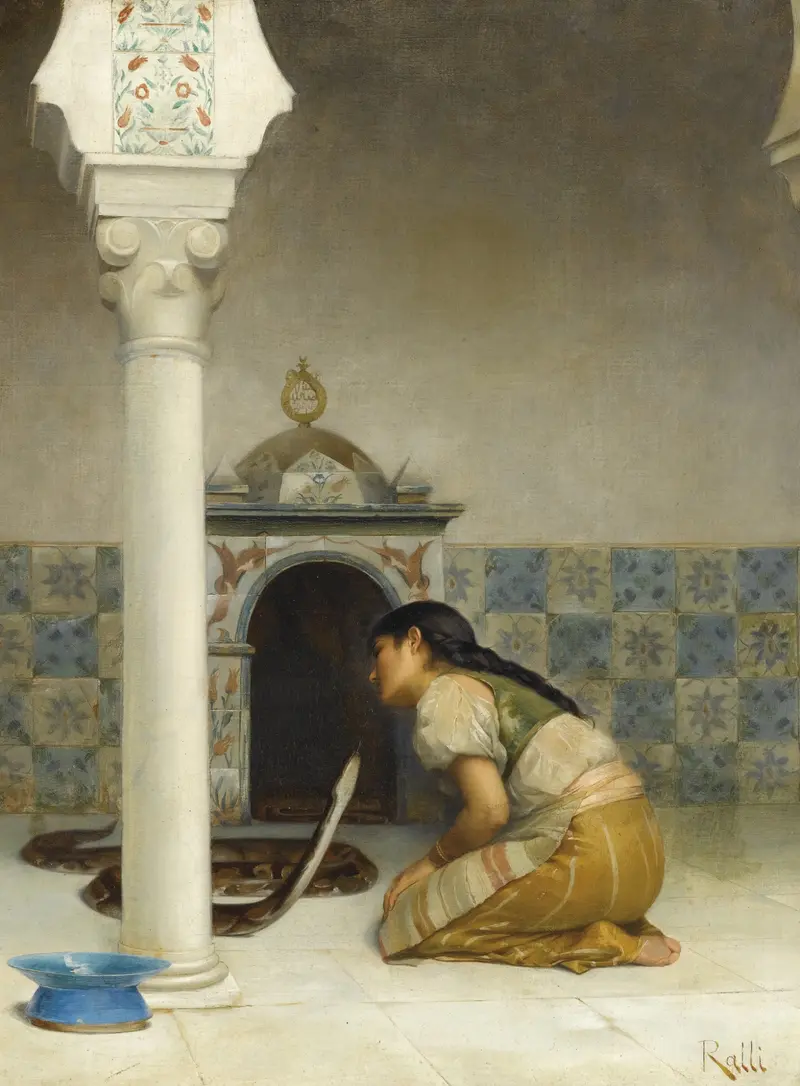
The Sacred Serpent
Theodoros Ralli
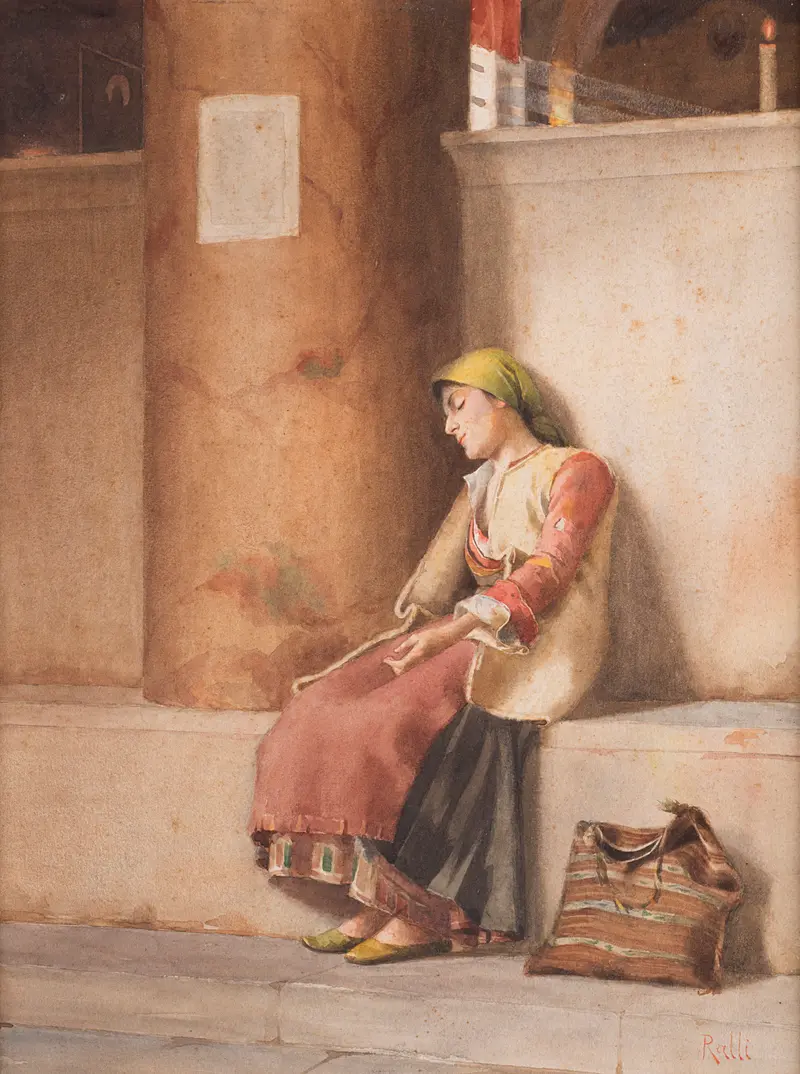
A Moment of Reflection
Theodoros Ralli
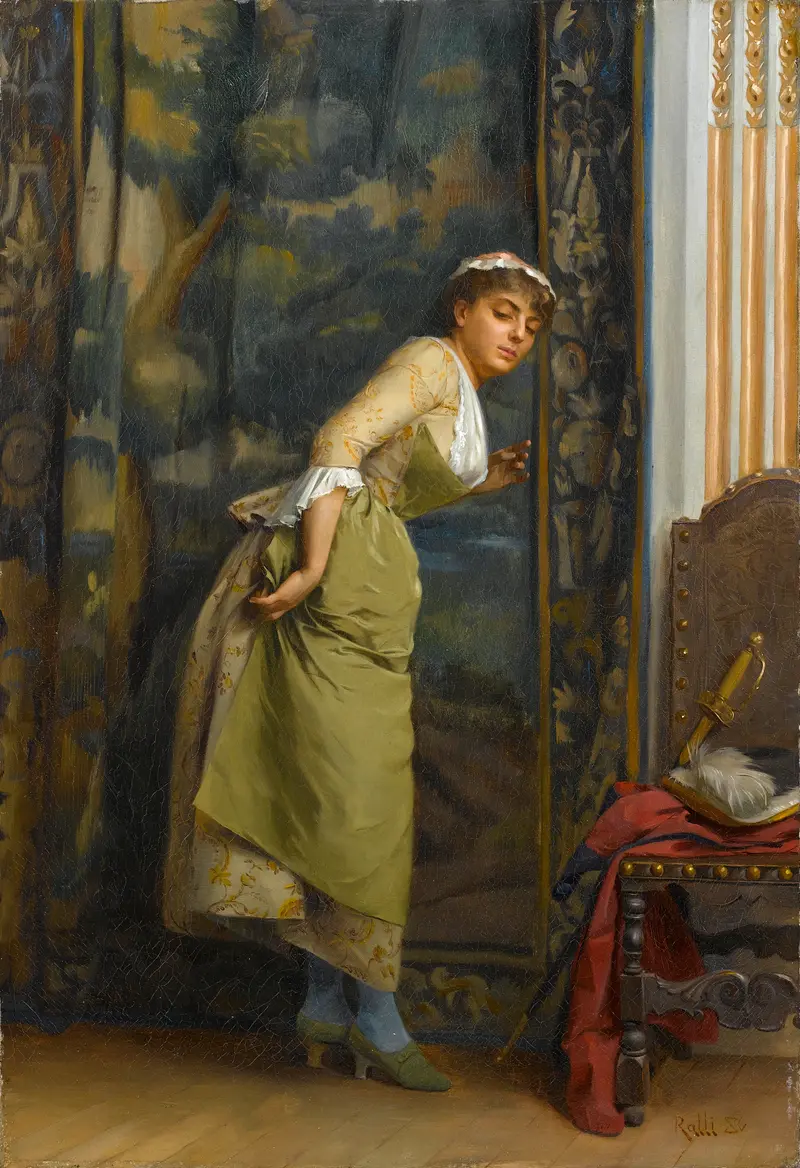
Eavesdropping (Ralli)
Theodoros Ralli
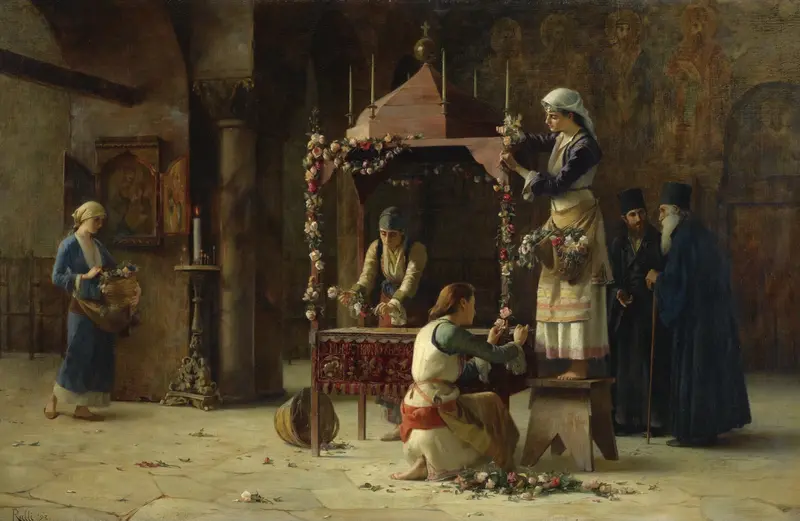
Holy Friday, Greece
Theodoros Ralli
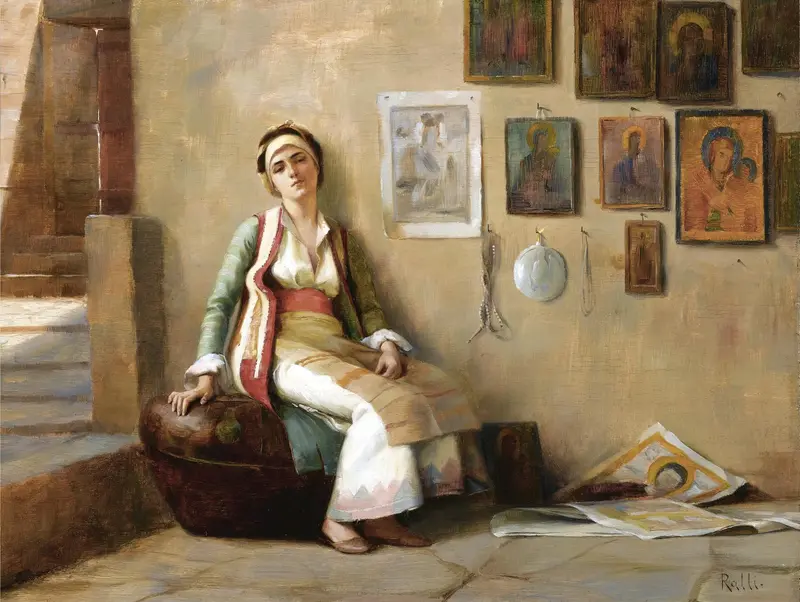
A Moment's Rest
Theodoros Ralli



