
Junction Of Wadis, Eygpt — History & Facts
In the heart of the desert, amidst the undulating dunes, destiny unfolds with a bittersweet grace. The vastness of the landscape invites reflection on the struggles and triumphs that shape our paths. Look to the left where the sun casts golden hues across the rugged terrain, illuminating the winding wadi that snakes through the composition. Notice how Lear employs rich ochres and deep umbers, evoking the warmth of the earth while hinting at the harsh realities of survival.
The horizon stretches infinitely, drawing the eye into a serene yet formidable expanse that seemingly holds both promise and peril. As you explore further, consider the juxtaposition between the vibrant light and the shadow-filled recesses of the rocks — a stark representation of hope amidst hardship. The delicate interplay of color not only showcases nature’s raw beauty but also suggests the inner turmoil faced by those journeying through such desolate yet captivating landscapes. This tension captures the essence of our human experience, where beauty often coexists with struggle and longing. In 1849, Edward Lear painted this piece during a time when his travels through the Middle East deeply influenced his artistic vision.
Exploring the exotic landscapes of Egypt, he sought to capture the sublime qualities of nature while grappling with his own personal challenges. This era was marked by a burgeoning fascination with the Orient, as artists sought to depict the allure and mystery of distant lands, making Lear's work a significant entry in the growing dialogue of Romanticism.
More Artworks by Edward Lear
Browse all →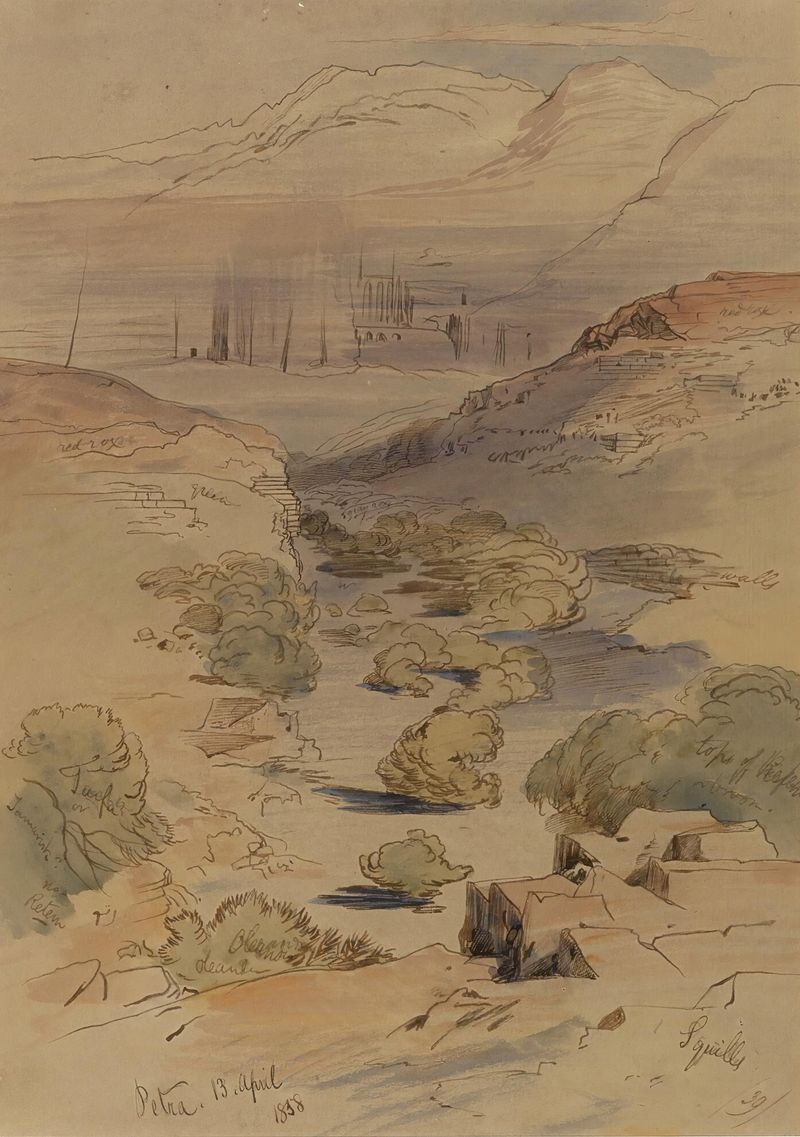
Petra
Edward Lear
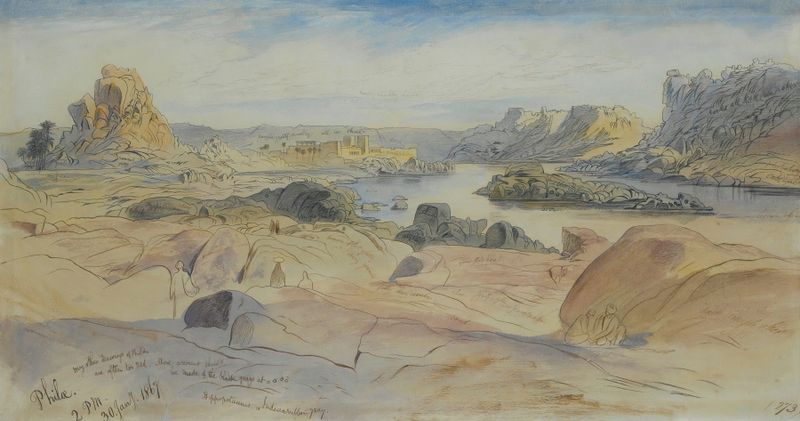
Philae, Egypt
Edward Lear
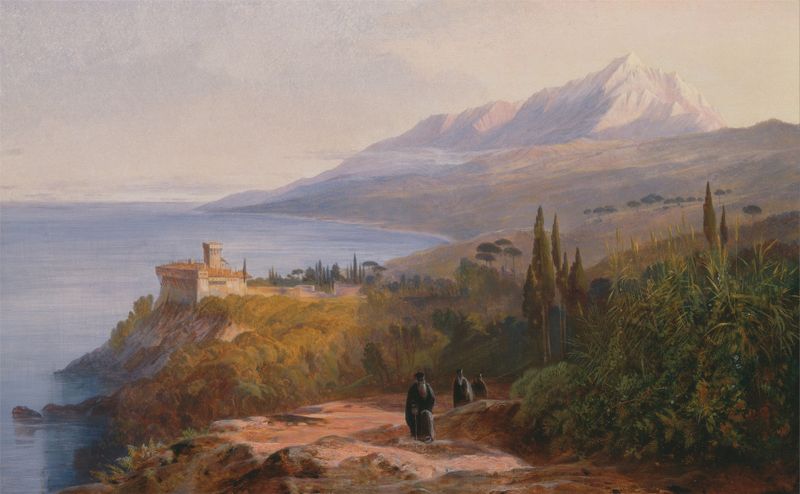
Mount Athos and the Monastery of Stavronikétes
Edward Lear
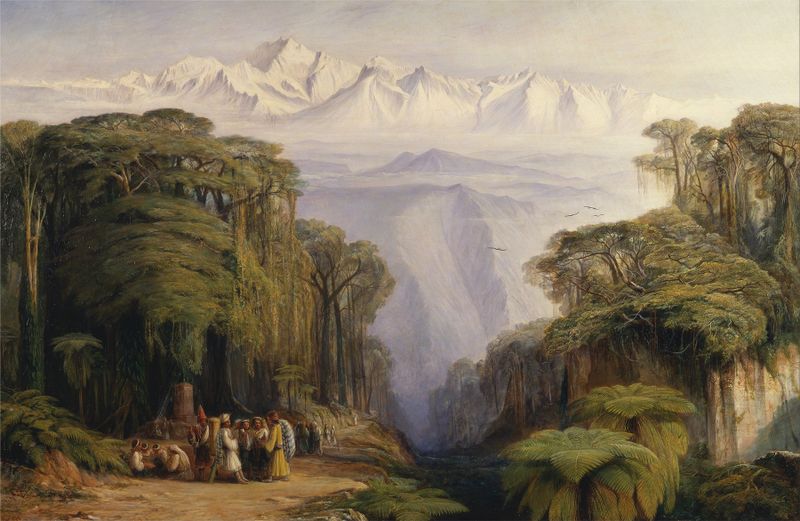
Kangchenjunga from Darjeeling
Edward Lear
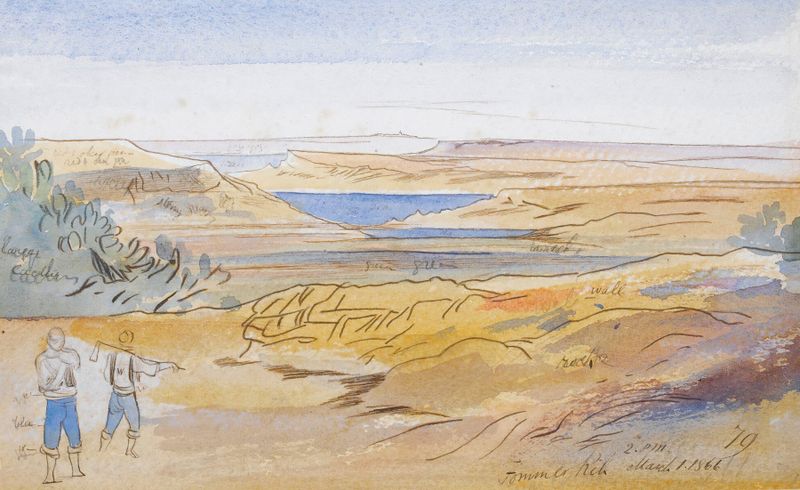
Fomm Ir-Rih, Malta
Edward Lear
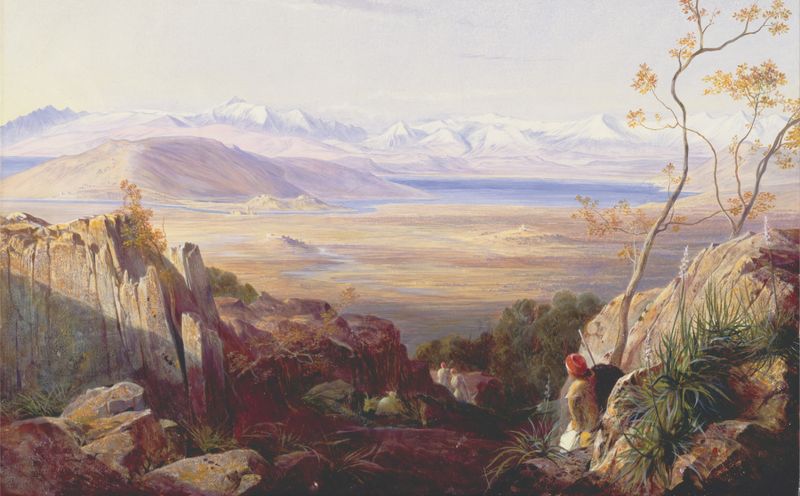
Butrinto, Albania
Edward Lear
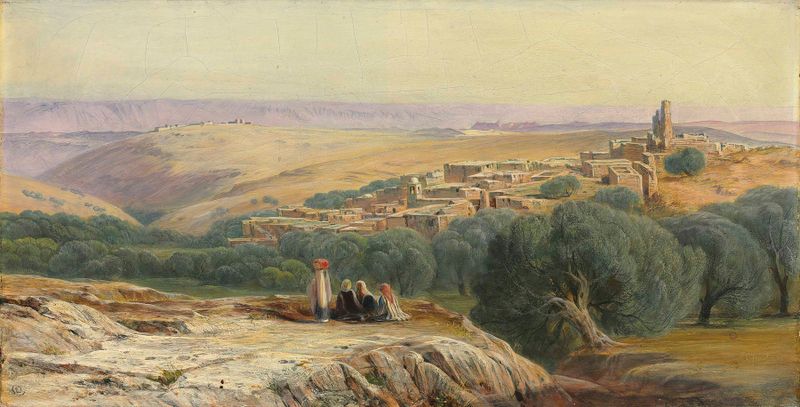
The Plains of Bethany
Edward Lear

Karnak, 9-30 pm, 22 January 1867
Edward Lear
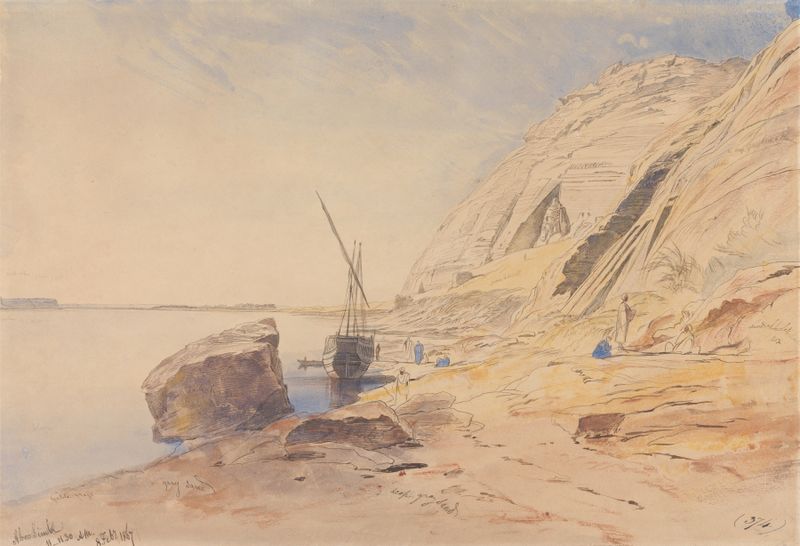
Abu Simbel, 11-11;30 am, 8 February 1867 (374)
Edward Lear

A View Of Mount Athos And The Pantokrator Monastery, Greece
Edward Lear





