
Junks in Inatori Bay, Izu — History & Facts
Where does light end, and longing begin? In the gentle embrace of Junks in Inatori Bay, Izu, serenity is woven into every brushstroke, inviting contemplation of the world’s tranquil corners. Look to the left at the softly undulating hills, their muted greens and blues blending seamlessly with the sky, where a delicate gradient of pastel hues offers a calming backdrop. The junks, with their streamlined forms, float gracefully on the bay, their sails billowing in an unseen breeze. Notice how the sunlight dances upon the water’s surface, creating shimmering reflections that playfully interact with the boats, emphasizing the seamless connection between nature and human endeavor. Delve deeper into the composition, where the juxtaposition of the sturdy boats against the ephemeral light creates an emotional tension; the junks symbolize resilience amidst the transitory beauty of the day.
The serene water serves as a mirror not just for the boats, but for the viewer’s own reflections and longings, bridging the gap between the tangible world and the inner life. Each element in the painting contributes to a sense of stillness that invites introspection and a longing for peace. Takahashi Hiroaki created this work in 1926, during a time when Japan was undergoing significant transformation, blending traditional aesthetics with modern influences. As a prominent printmaker of the shin hanga (new print) movement, he sought to capture the essence of Japan’s coastal beauty while navigating the changing tides of art and society.
His work remains a testament to the beauty of simplicity and the profound depths of quiet moments.
More Artworks by Takahashi Hiroaki
Browse all →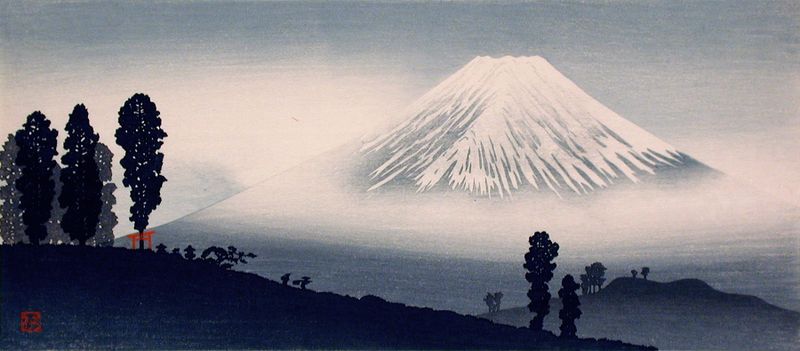
Mount Fuji
Takahashi Hiroaki

Mount Fuji seen near Tamaho, Dawn
Takahashi Hiroaki
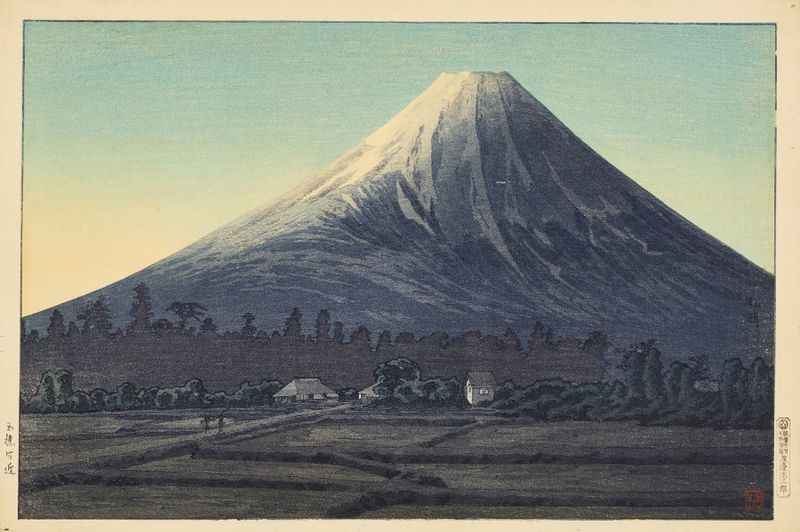
Mount Fuji seen near Tamaho, day
Takahashi Hiroaki
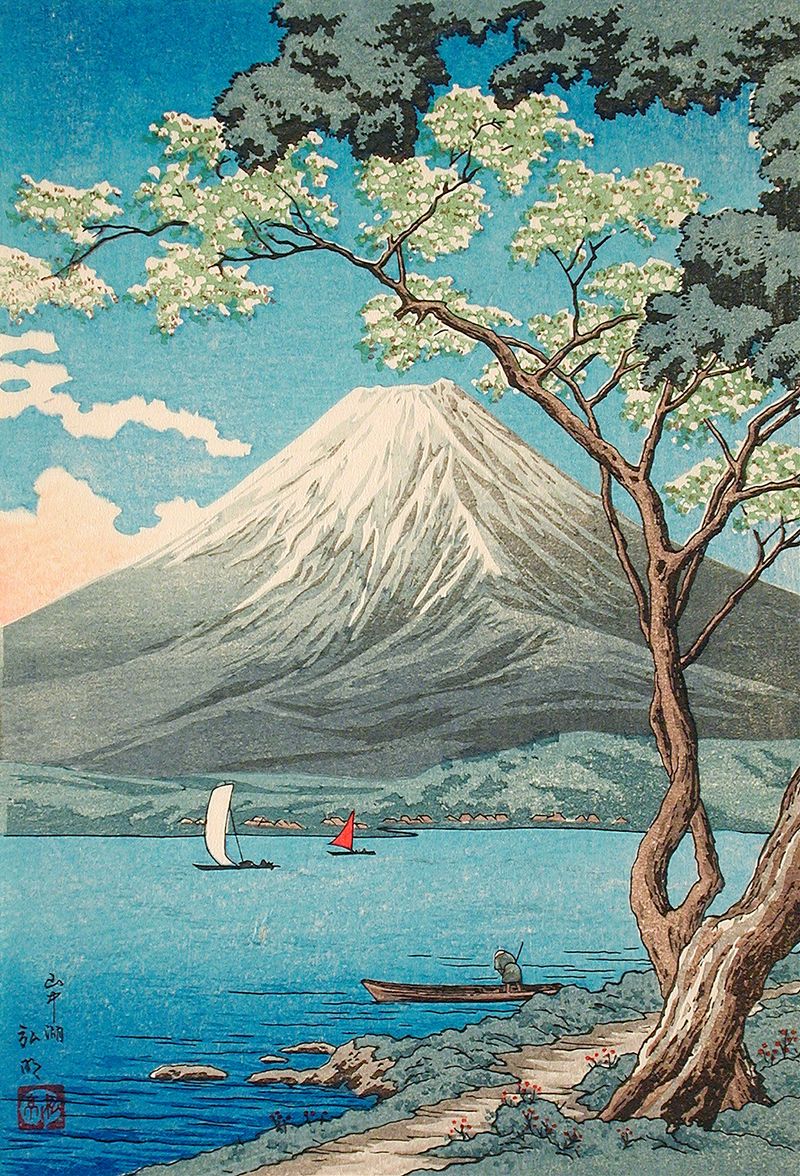
Mount Fuji from Lake Yamanaka
Takahashi Hiroaki

Mt. Fuji from Tagonoura, Snow Scene
Takahashi Hiroaki

Egoda no tsuki
Takahashi Hiroaki
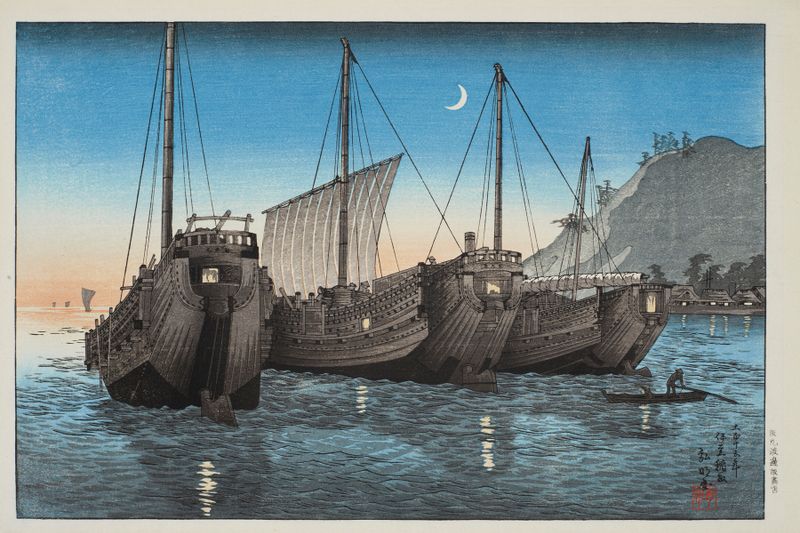
Junks in Inatori Bay, Izu
Takahashi Hiroaki

Izumibashi no ame
Takahashi Hiroaki
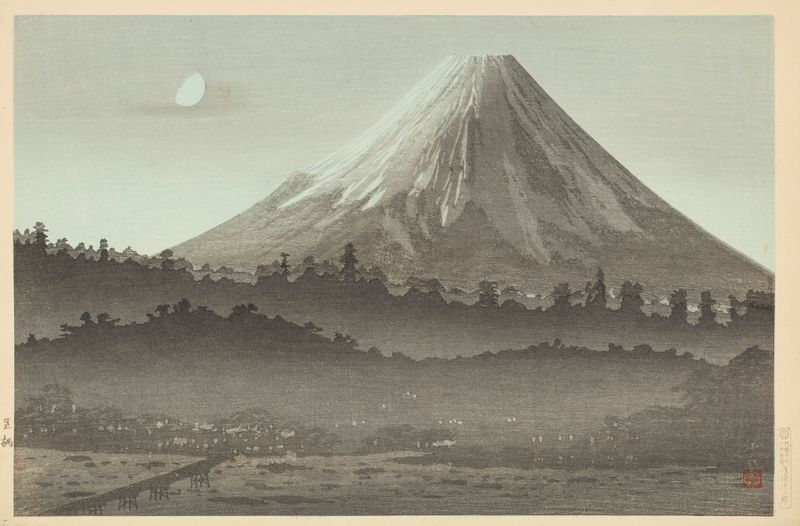
Mount Fuji seen near Tamaho, Night
Takahashi Hiroaki

Fishing nets at Tsukuda
Takahashi Hiroaki





