Kalve ved stranden — History & Facts
In Kalve ved stranden, the harmonious simplicity of the scene belies an underlying chaos that echoes through the brushstrokes and colors. Look to the left at the gentle curves of the sandy shore, where the calves rest peacefully, their soft, warm-colored coats stark against the cool blues and greens of the water and sky. Notice how light dances across the surface of the waves, creating a shimmering texture that contrasts with the weighty shadows lurking beneath the cows. The composition balances the stillness of the animals with the dynamic play of nature, drawing the eye into the heart of the scene. Yet, there is more than just tranquility here.
The juxtaposition of the calm animals and the restless sea hints at an emotional tension — a reminder of nature’s unpredictability. The golden tones of the calves reflect both warmth and vulnerability, while the brooding sky looms as a silent witness to the chaos of life beyond this serene moment. Each brushstroke captures not just a scene, but an emotional landscape, inviting contemplation of what lies beneath the surface. In 1896, Philipsen found himself immersed in the vibrant art community of Denmark, influenced by both Impressionism and the growing interest in the natural world.
During this time, he explored landscapes that captured fleeting moments of beauty, often painting en plein air. This approach not only showcased his technical prowess but also deepened his connection to the world around him, bridging the gap between chaos and serenity in his work.
More Artworks by Theodor Philipsen
Browse all →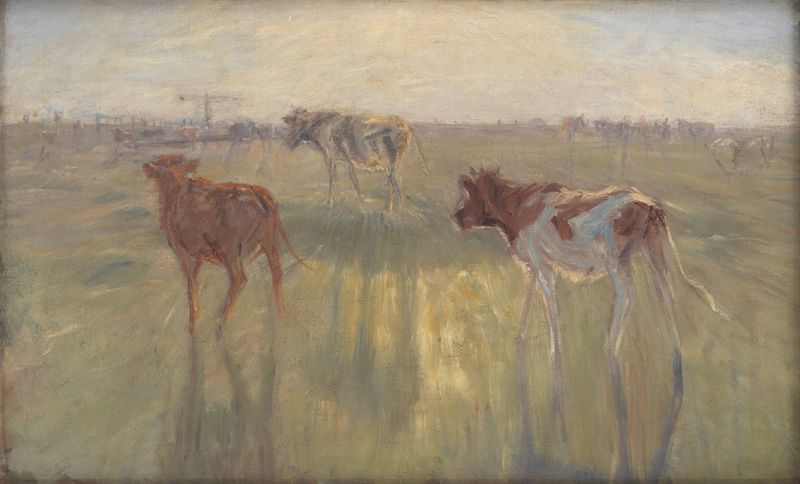
Cattle Seen against the Sun on the Island of Saltholm
Theodor Philipsen

Køer og gæs ved Nyværk på Saltholm (udkast til dekoration af punchebolle)
Theodor Philipsen

Long Shadows. Cattle on the Island of Saltholm
Theodor Philipsen

Camels in a Street in Tunisia
Theodor Philipsen

Cowshed on the Island of Saltholm
Theodor Philipsen

Late Autumn Day in the Jægersborg Deer Park, North of Copenhagen
Theodor Philipsen
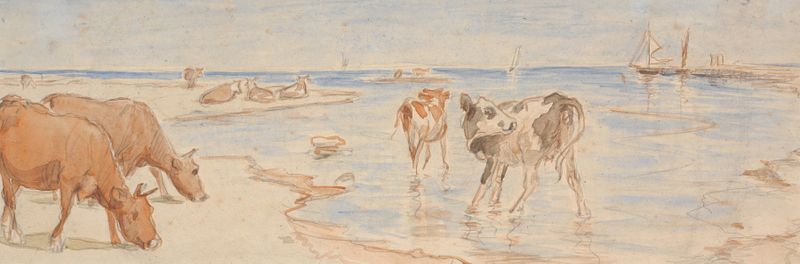
Køer og kalve nær indskibningsstedet på Saltholm (udkast til dekoration af punchebolle)
Theodor Philipsen

Evening Landscape
Theodor Philipsen

Malkepladsen ved Dyrehavegård
Theodor Philipsen

A River near Meilgård Manor, Jutland
Theodor Philipsen