
Kiri no Miyajima (Miyajima in mist) — History & Facts
Did the painter know this moment would outlive them? A place shrouded in mist evokes feelings of melancholy and reflection, where the past intertwines seamlessly with the present. Look to the center where a tranquil island emerges from the haze, its silhouette softened by the ethereal veil of fog. The whispering waves caress the shore, while the delicate strokes of blue and gray create a dreamlike atmosphere. Notice how the light barely penetrates the mist, imbuing the scene with a sense of solitude that invites the viewer to linger, to ponder.
Each verdant tree and weathered torii gate stands as a guardian, watching over their quiet domain, bound by the stillness of the moment. Yet, within this silence lies a deeper narrative. The distant mountains, barely discernible, symbolize the weight of memory—landscapes that hold stories untold. The fleeting presence of the island amidst the enveloping mist reflects an inherent transience, a reminder of the fragility of life and moments that slip away, leaving only echoes behind.
This tension between presence and absence resonates deeply, evoking a longing that transcends time. In 1947, Kawase Hasui painted this piece during a period when Japan was grappling with the aftermath of World War II. As he sought solace in landscapes, his work became a refuge, reflecting the spirit of resilience amidst a backdrop of change. This artwork emerged as a poignant testament to a nation in recovery, embodying both the beauty and the sorrow of a world reshaping itself.
More Artworks by Kawase Hasui
Browse all →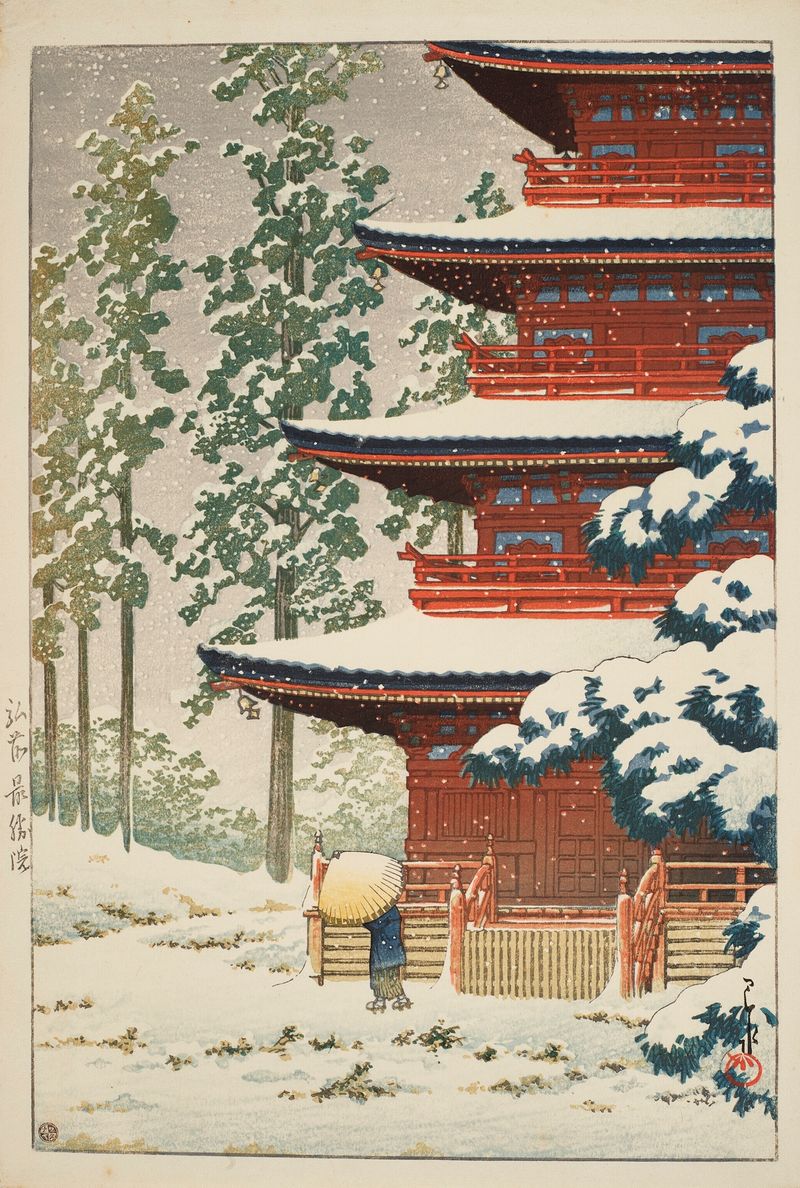
Saisho-in Temple, Hirosaki
Kawase Hasui
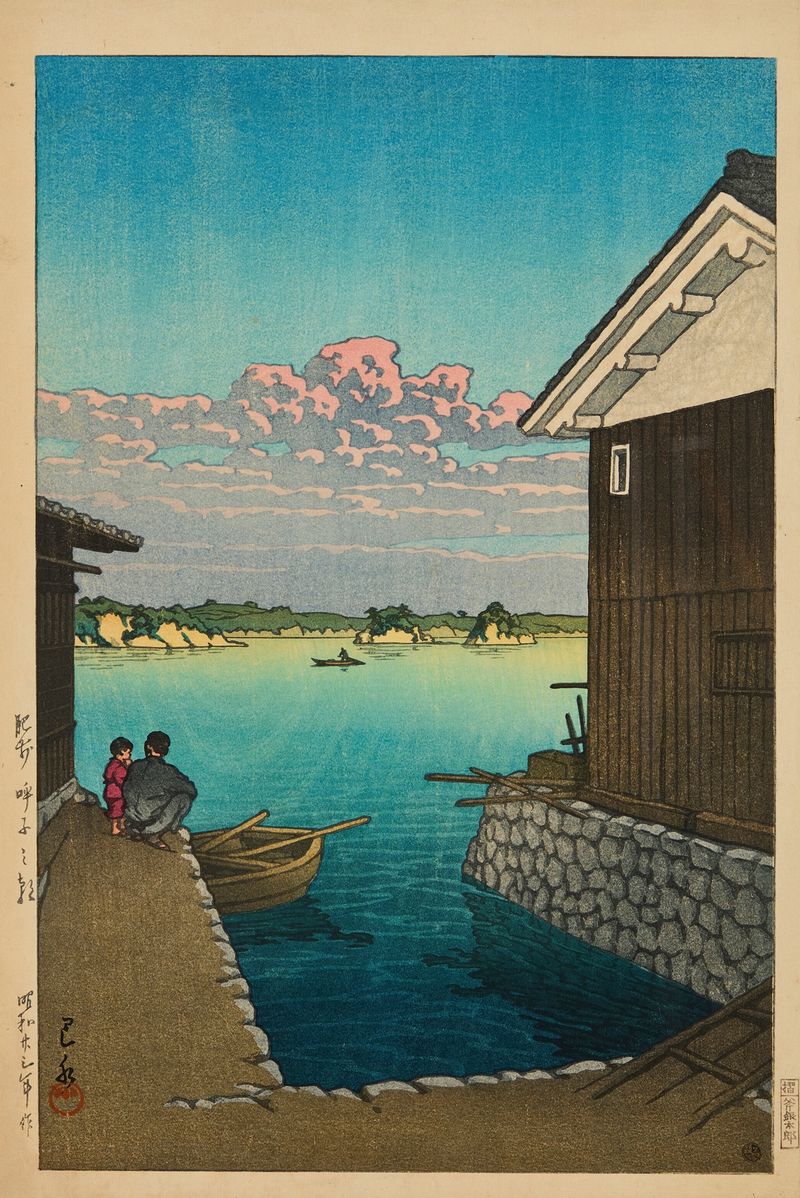
Hizen Yobuko no asa (Morning in Yobuko, Hizen)
Kawase Hasui
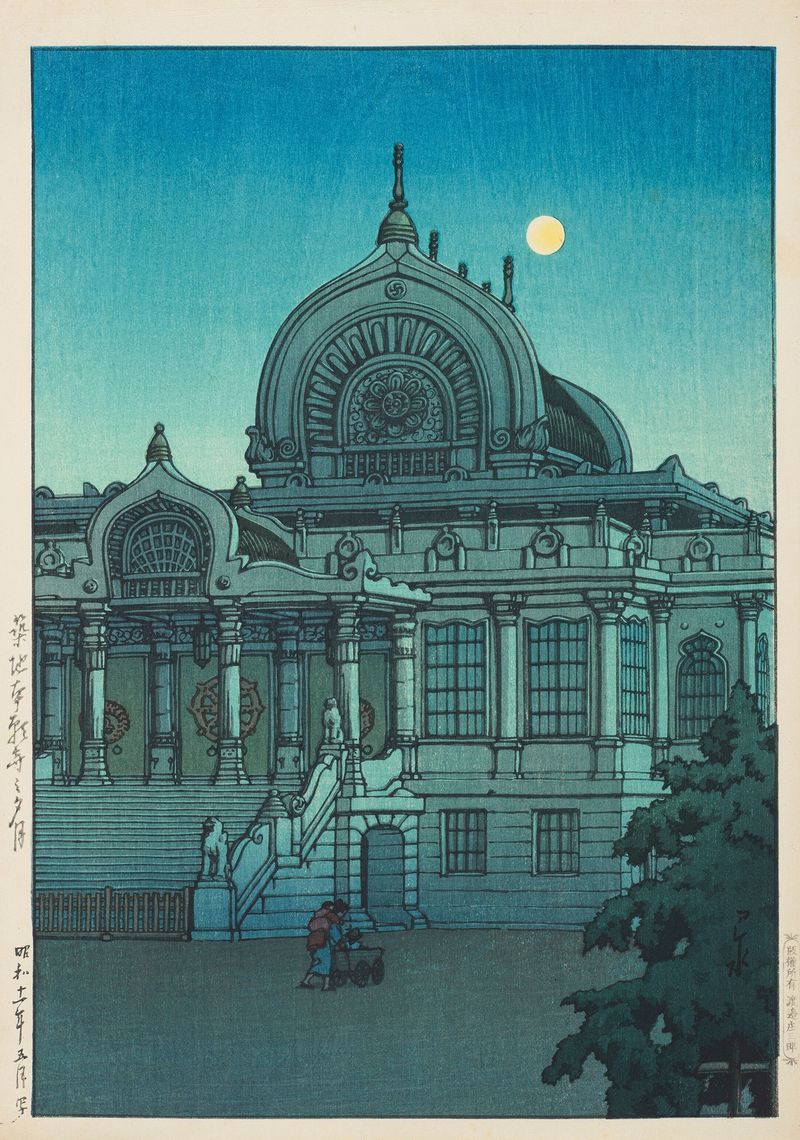
Tsukiji Honganji no yuzuki (Evening moon at Honganji Temple in Tsukiji)
Kawase Hasui
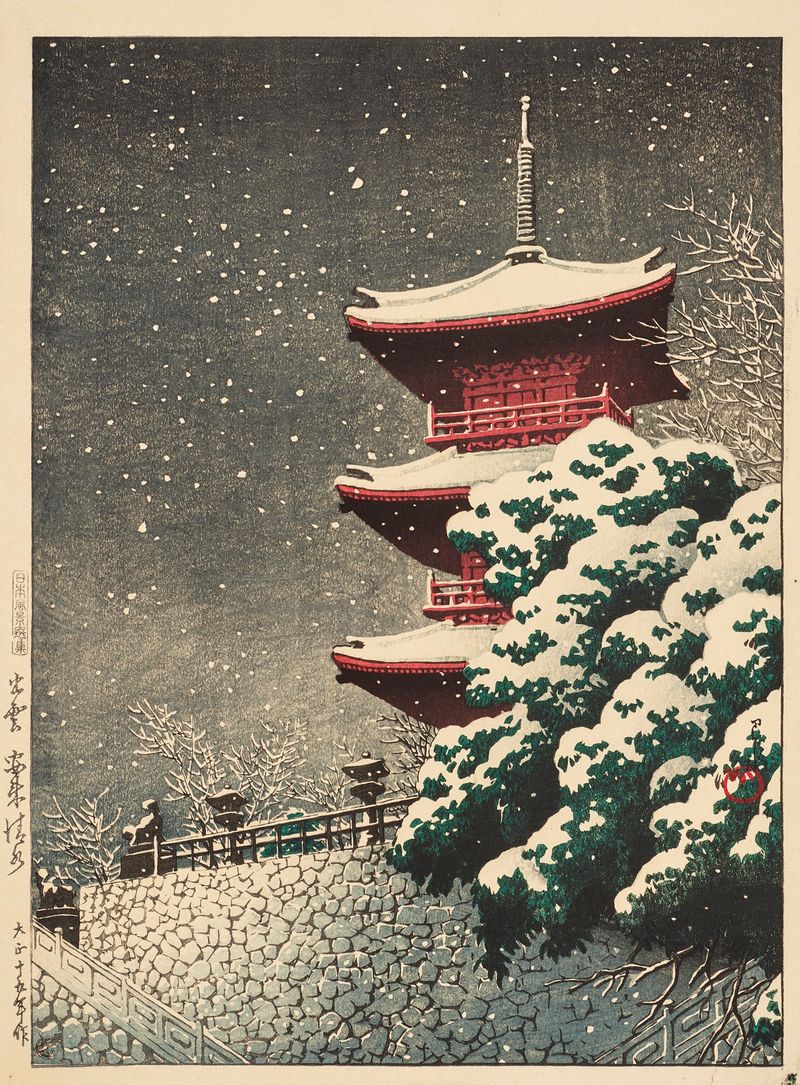
Izumo, Yasugi Kiyomizu (Yasugi Kiyomizu Temple at Izumo)
Kawase Hasui
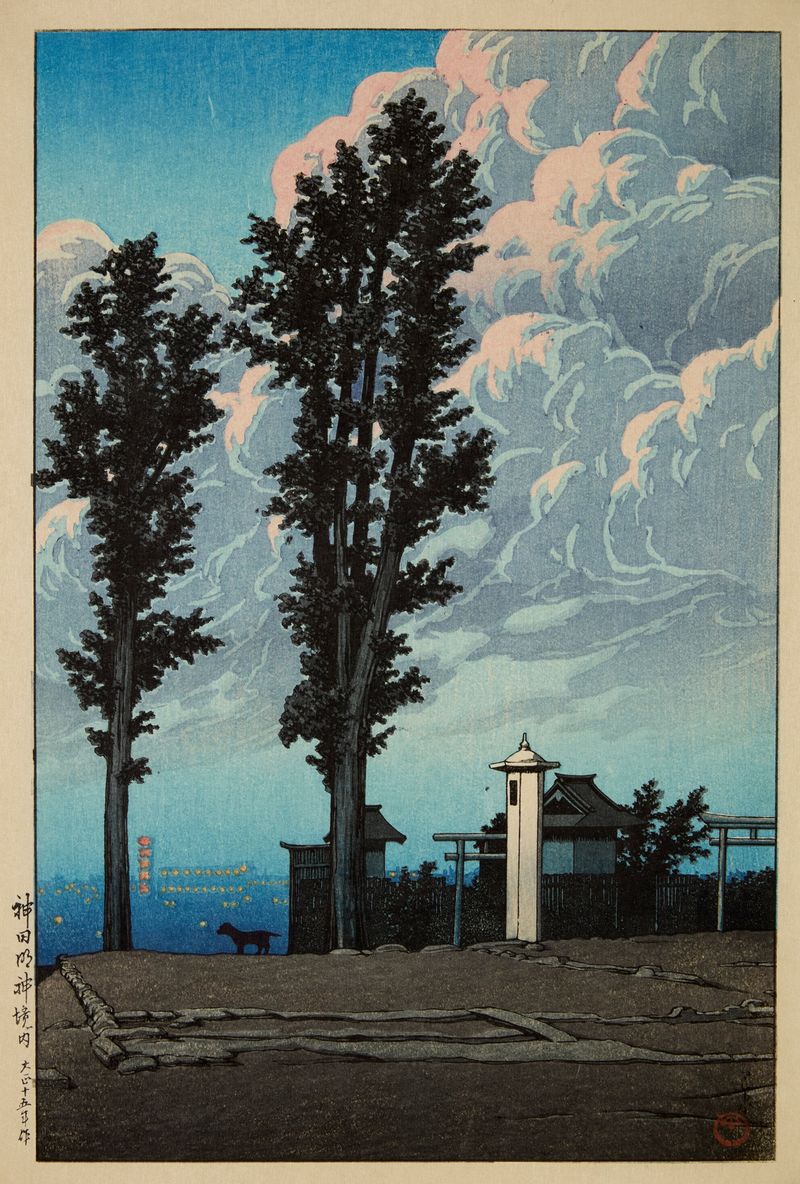
Kanda Myojin keidai (Kanda Myojin Shrine precent)
Kawase Hasui
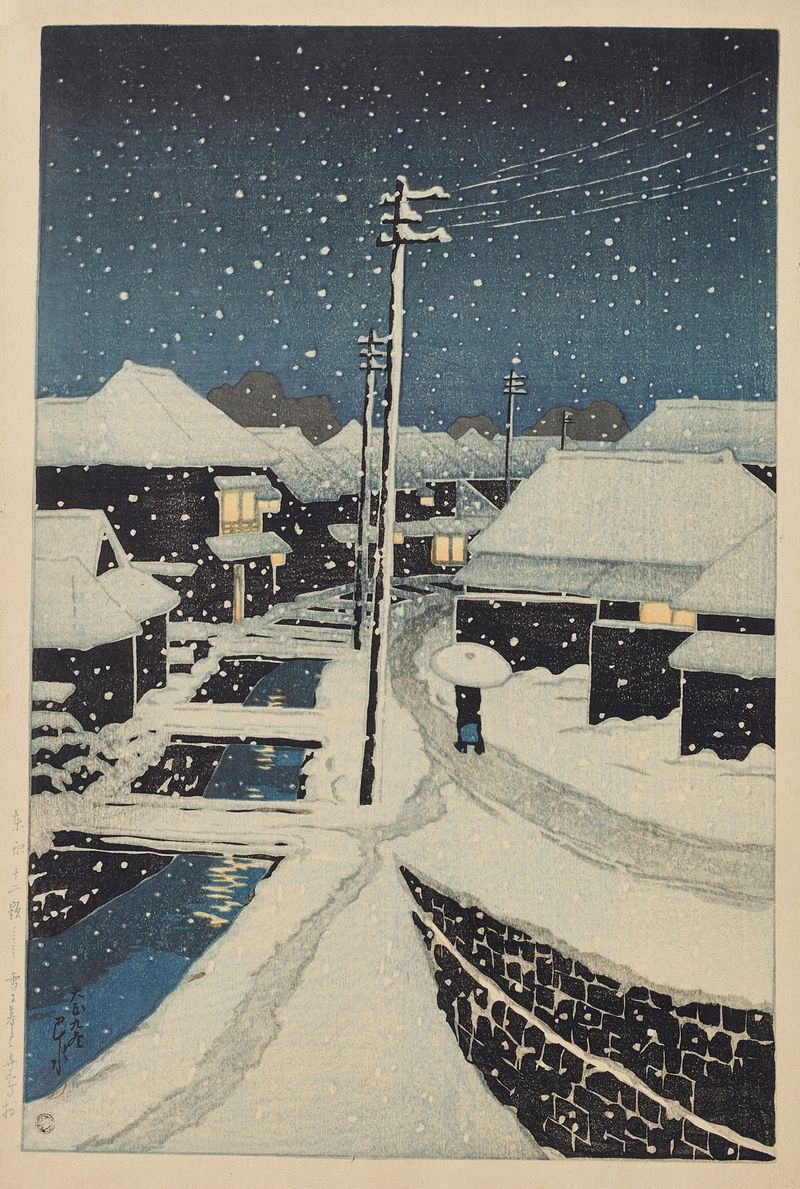
Yuki ni fururu Terajima mura (Evening snow at Terajima Village)
Kawase Hasui
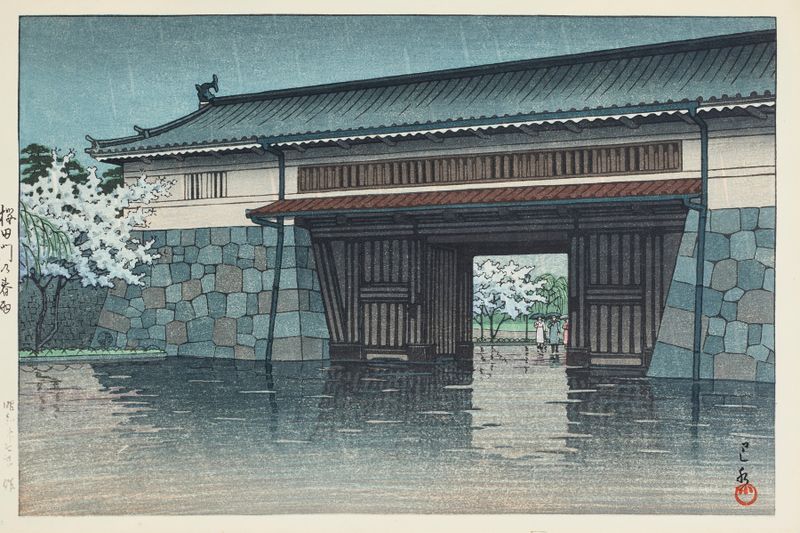
Sakuradamon no harusame (Spring rain at Sakurada Gate)
Kawase Hasui
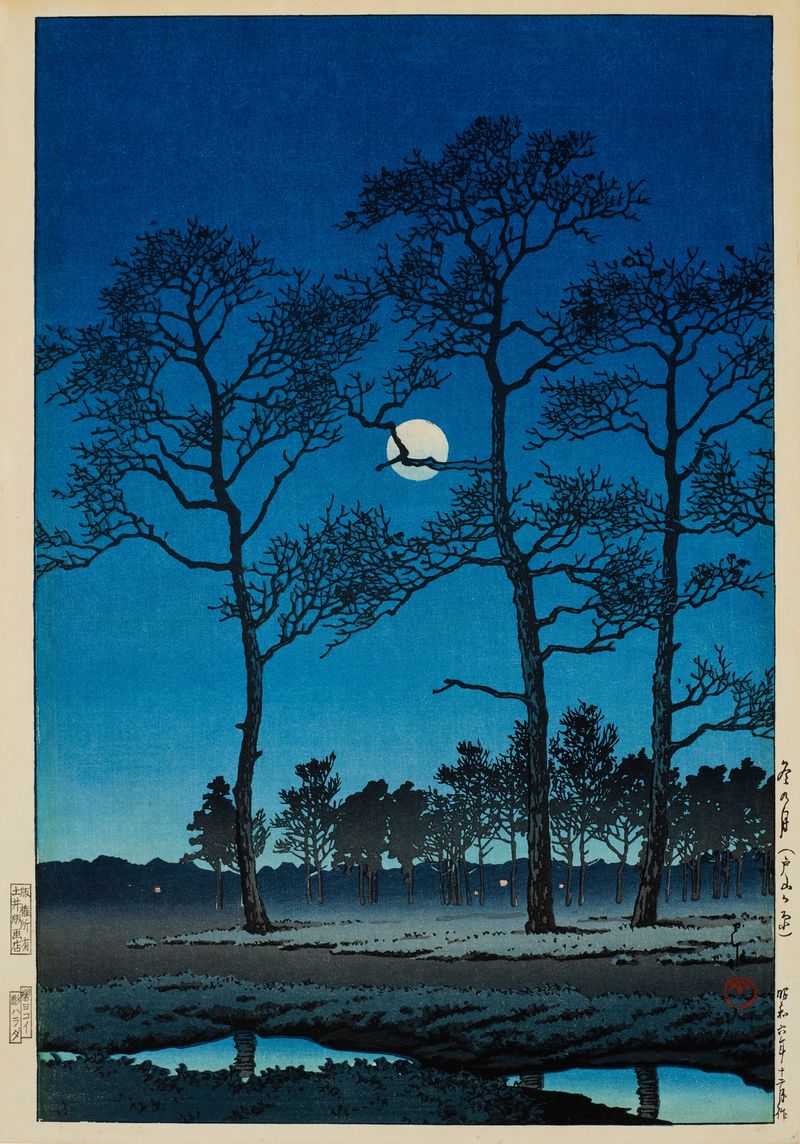
Fuyu no tsuki (Toyamagahara) (Winter moon at Toyamagahara)
Kawase Hasui
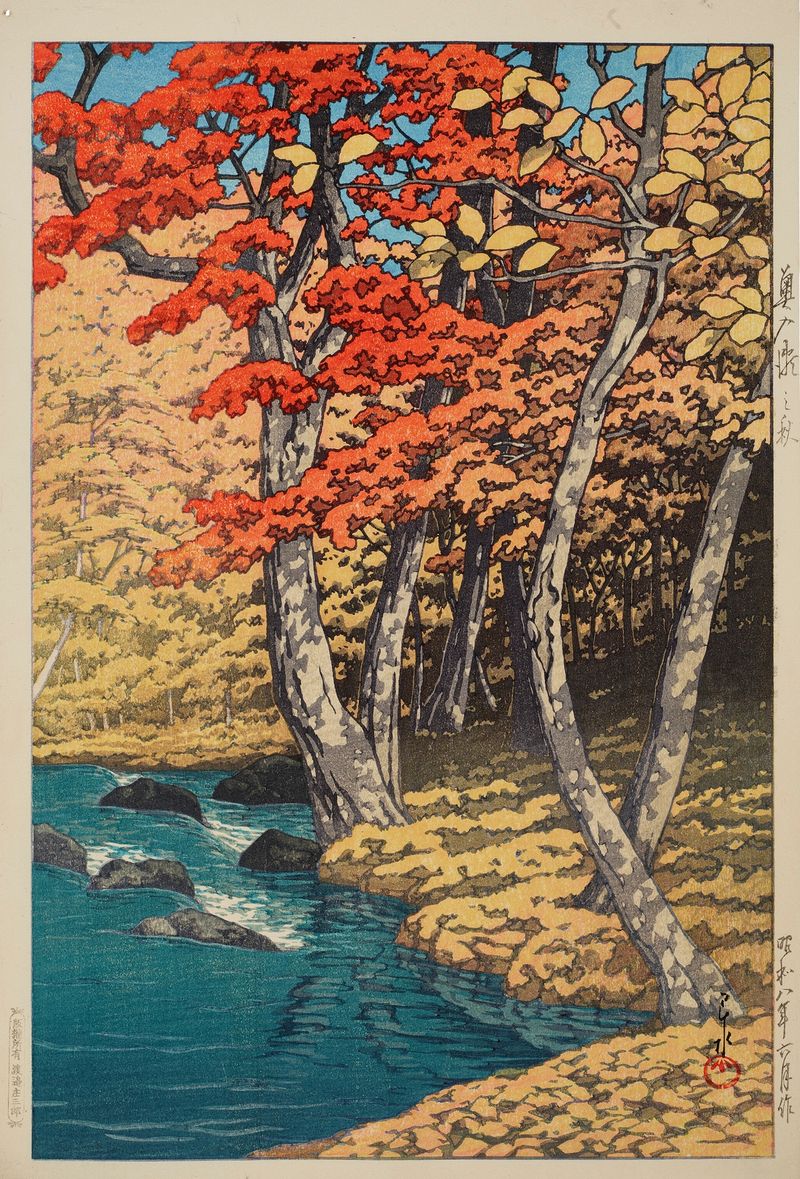
Oirase no aki (Autumn at Oirase)
Kawase Hasui
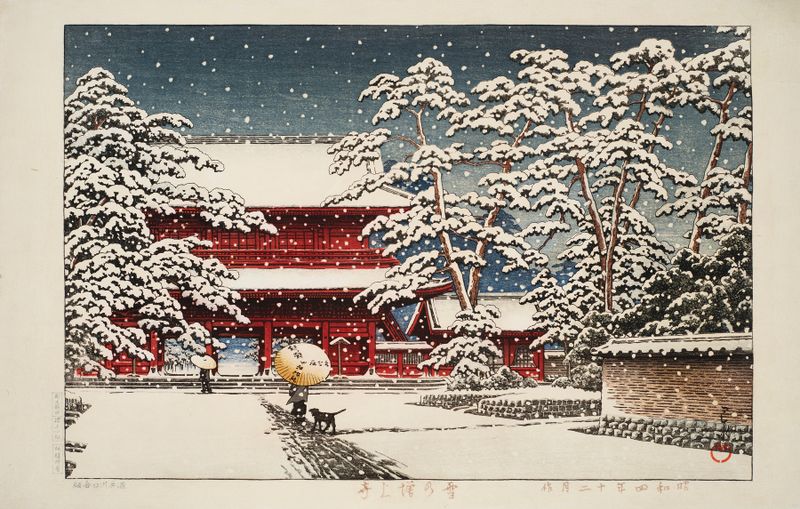
Zojoji Temple in snow
Kawase Hasui





