Knave with sweeties — History & Facts
A wiry figure leans forward, hand outstretched, clutching a fistful of sweets as if they were treasure snatched in a moment of mischief. The sharp angles of the body and the mask-like face seem to vibrate with a nervous energy, the kind that Ernst Ludwig Kirchner often captured in his work during the turbulent years of the early twentieth century. The colors are raw and direct: slashes of acid green, violet, and ochre jostle for attention, lending the scene a sense of unease.
The knave’s gaze is sly, almost challenging, daring the viewer to judge or join in his illicit delight. Every brushstroke seems to pulse with urgency, as if the world behind the figure is just as unstable as his pose. Painted in the summer of 1918, this work stands at the crossroads of personal and historical crisis. The jagged forms and feverish palette are hallmarks of German Expressionism, a movement born in a world upended by war and uncertainty.
Artists like Kirchner turned away from realism, instead using color and line to lay bare the anxieties of modern life. History has kept few traces of many such works—often made quickly, for private patrons or for the artist’s own circle—yet their intensity endures. Now housed in the digital collection of Google Arts & Culture, this painting invites us to look again at the uneasy pleasures and restless spirits of its time.
More Artworks by Ernst Ludwig Kirchner
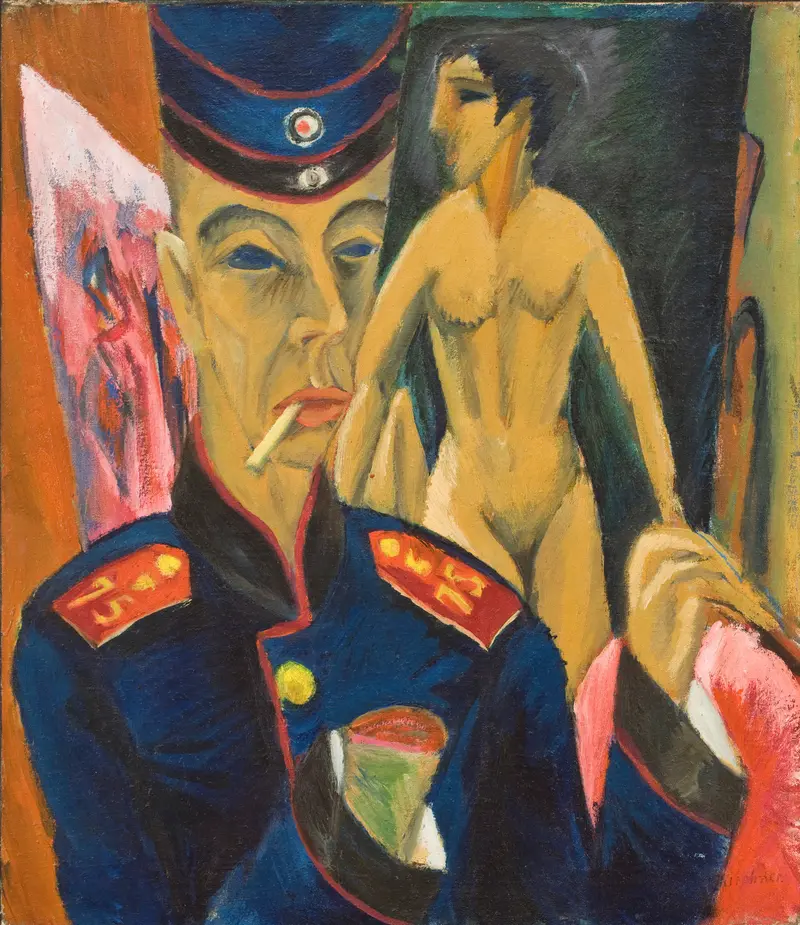
Self-Portrait as a Soldier
Ernst Ludwig Kirchner
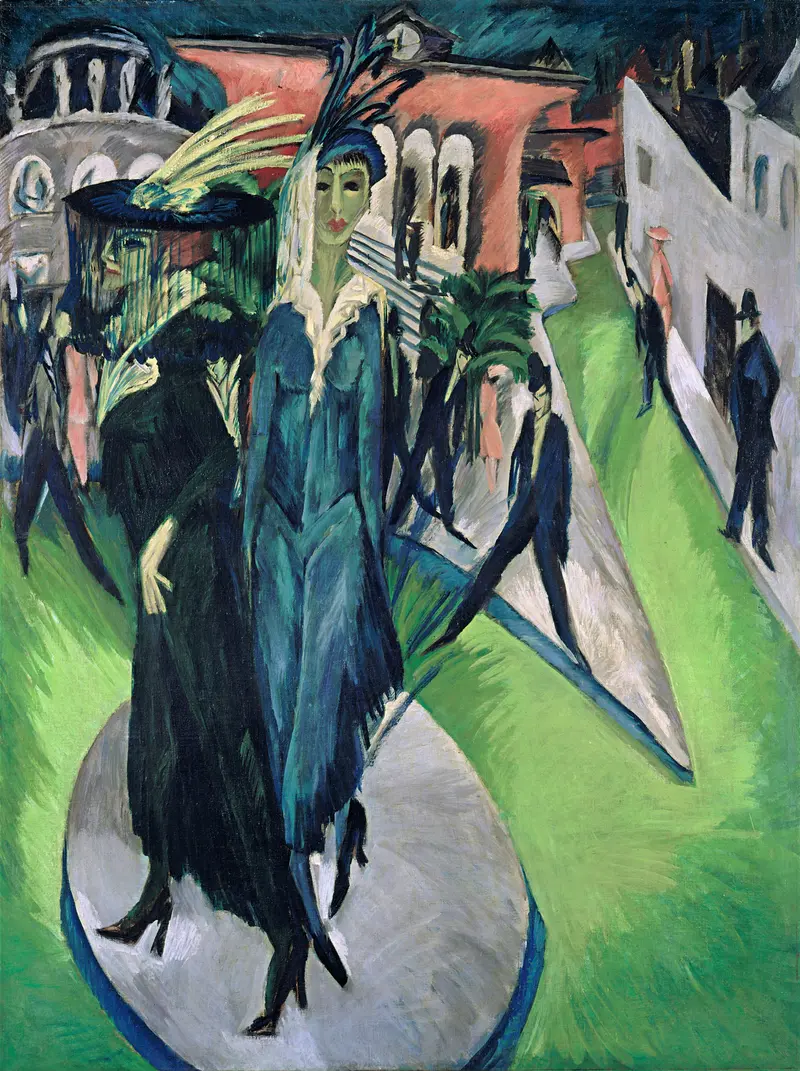
Potsdamer Platz
Ernst Ludwig Kirchner

Alphütten und Tinzenhorn
Ernst Ludwig Kirchner
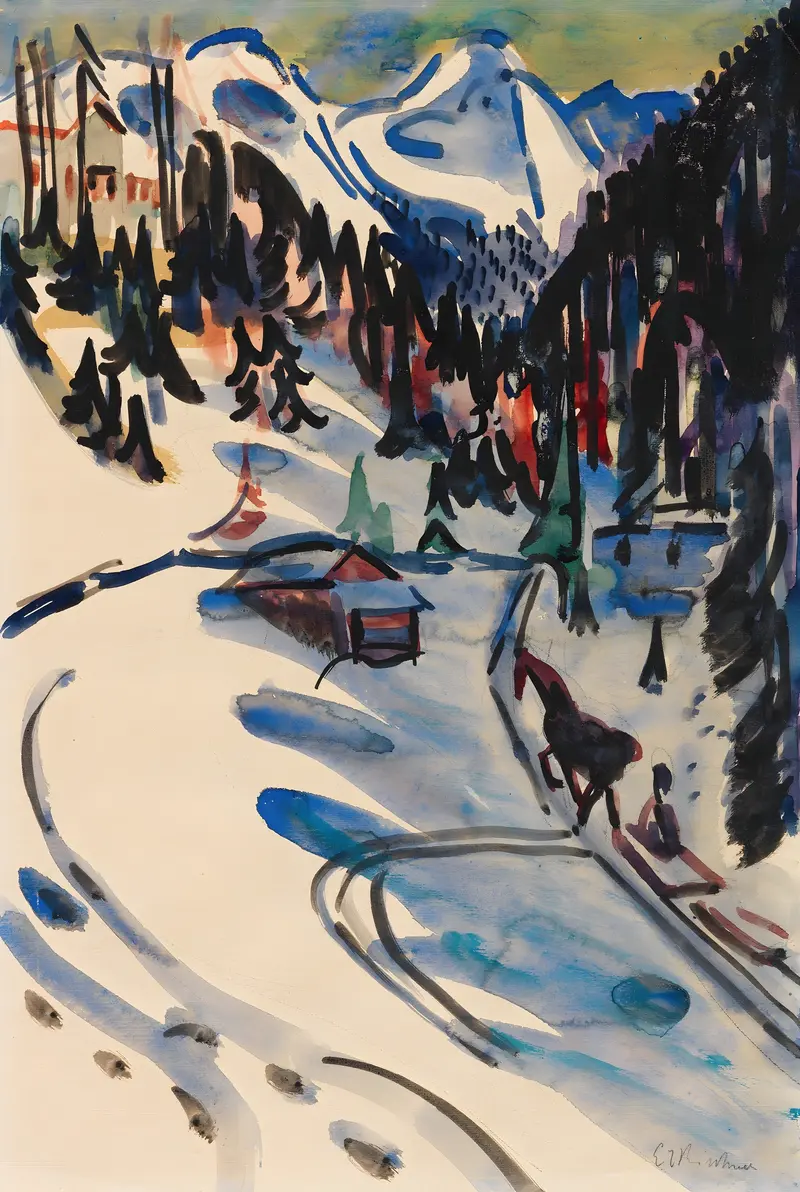
Sertigtal im Winter
Ernst Ludwig Kirchner
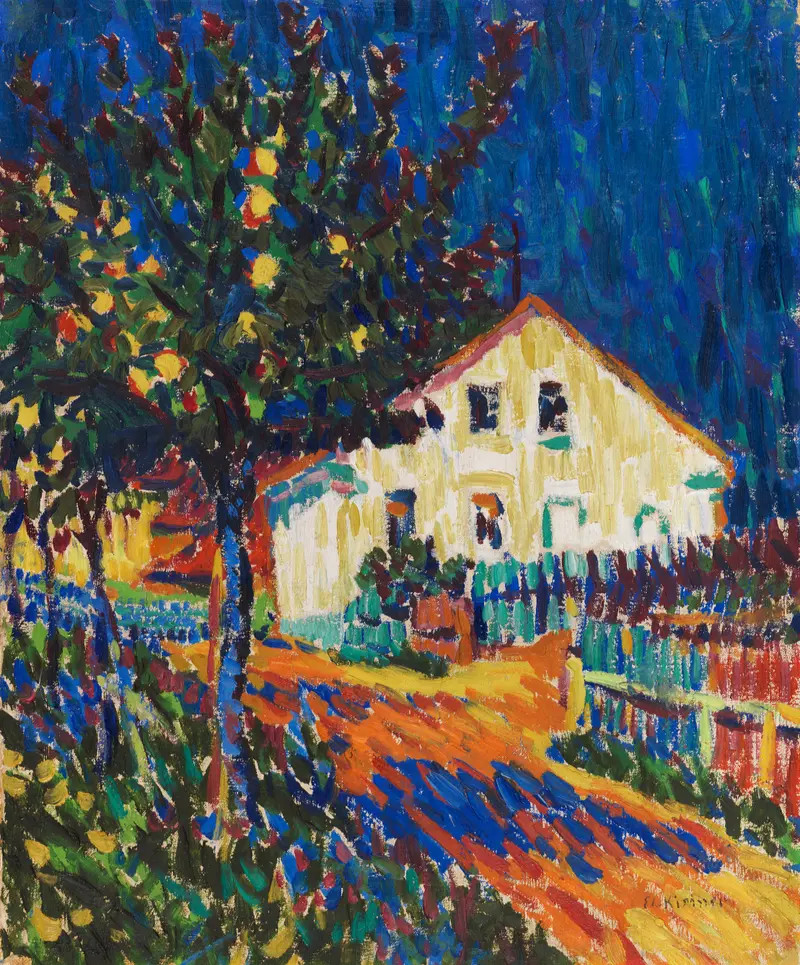
Dorfstraße mit Apfelbäumen
Ernst Ludwig Kirchner
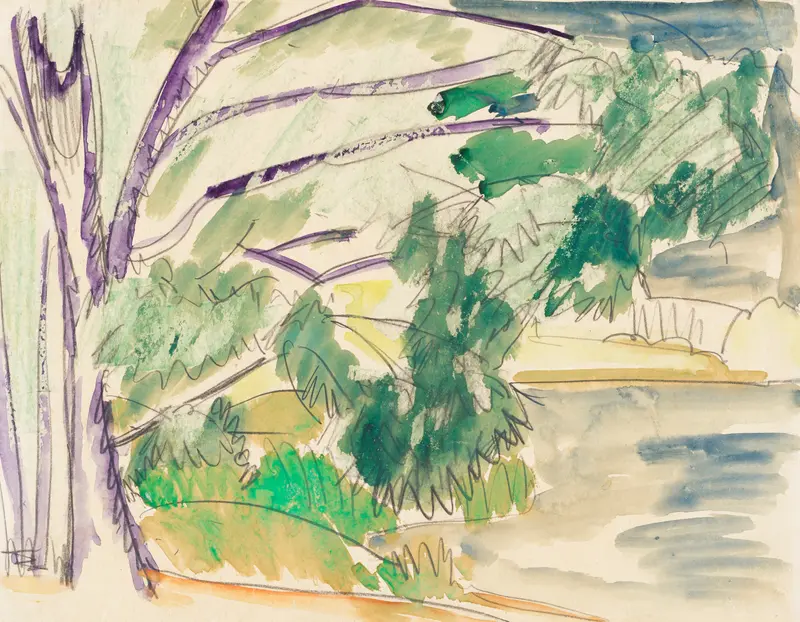
Unter Bäumen am See
Ernst Ludwig Kirchner
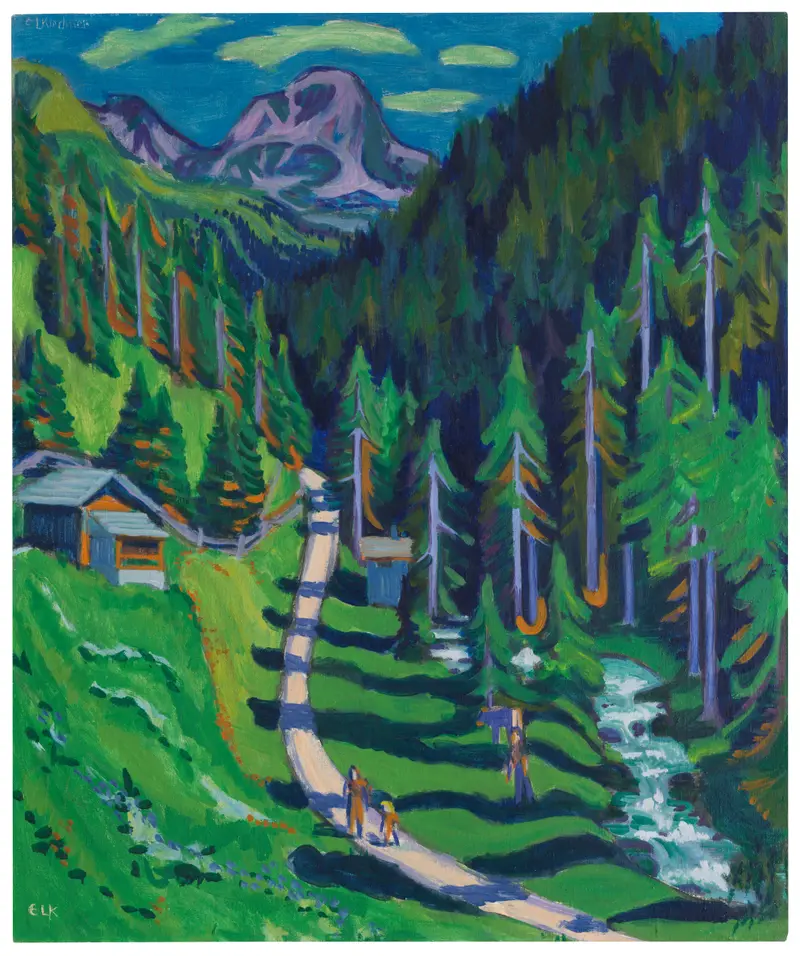
Sertigweg
Ernst Ludwig Kirchner
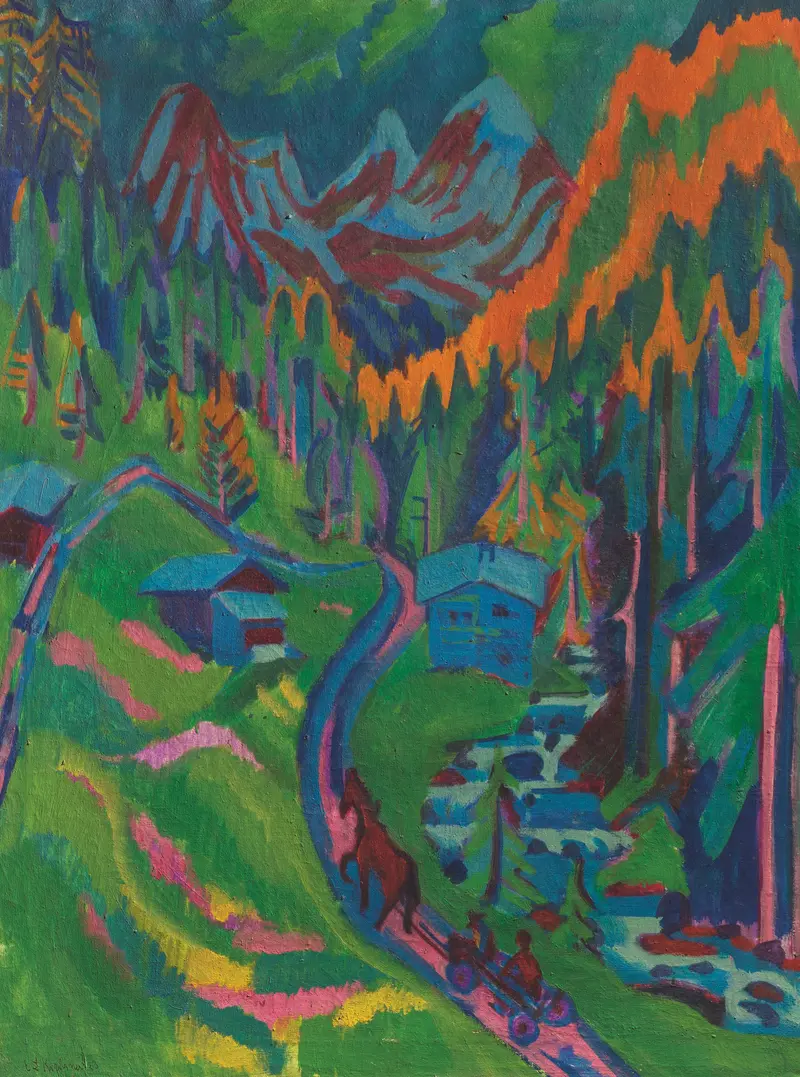
Sertigweg im Sommer
Ernst Ludwig Kirchner
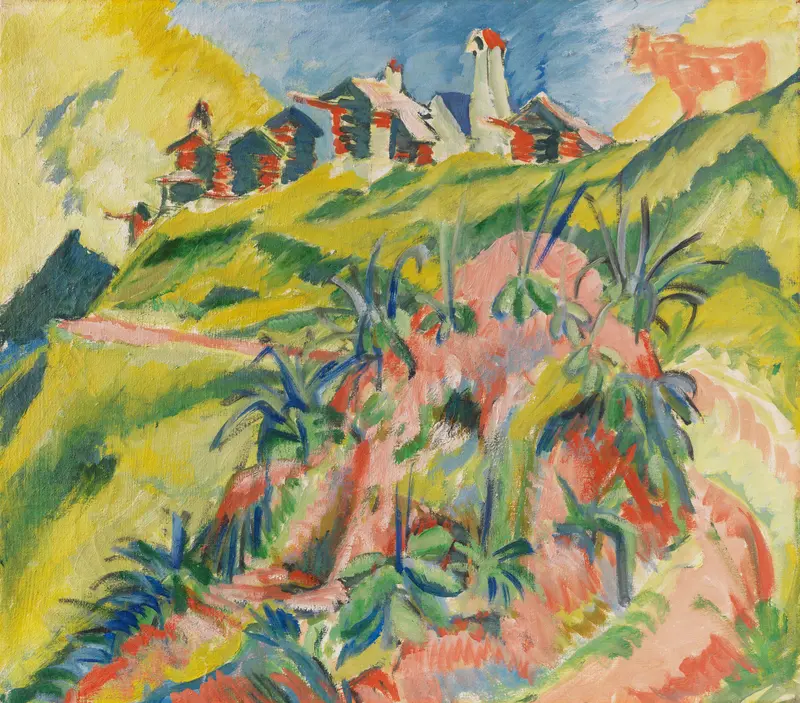
Bergdorf mit rosa Kuh
Ernst Ludwig Kirchner
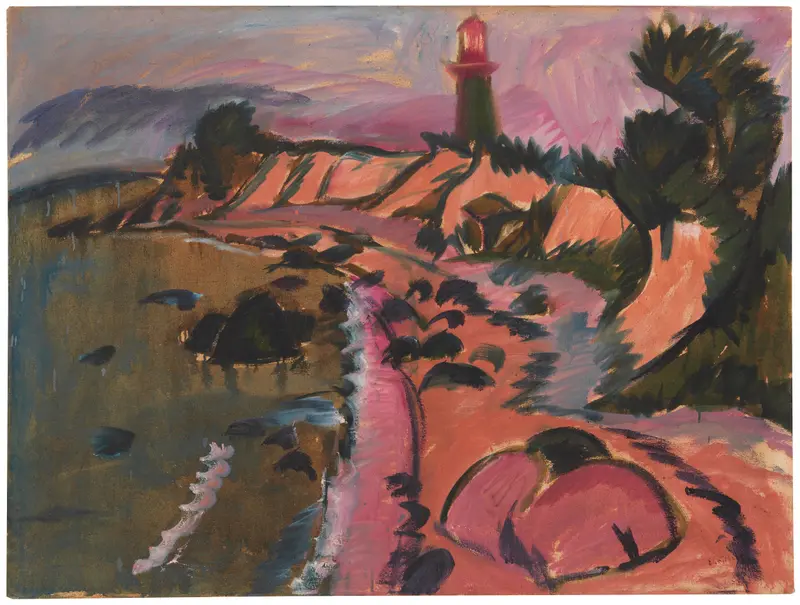
Fehmarnküste mit Leuchtturm
Ernst Ludwig Kirchner