Koe en twee schapen — History & Facts
In the gentle embrace of pastoral beauty, the quietude of the countryside speaks volumes, inviting viewers into a moment of serene ecstasy. The stillness of the landscape allows us to pause and reflect on the simple yet profound joys of nature. Look to the foreground, where a cow stands proudly beside two sheep, their forms contrasting gracefully with the lush greenery that envelops them. Notice how the artist masterfully captures the softness of the animals’ wool and the sheen of the cow’s coat, using warm, earthy tones that evoke a sense of harmony.
The light filters through the leaves, creating dappled patterns that play across the ground, enhancing the sense of tranquility and inviting the viewer to linger in the scene. As your gaze wanders, consider the dynamic relationship between the creatures and their surroundings. The cow, a symbol of abundance and nurturing, stands firm and watchful, while the sheep, with their delicate presence, embody vulnerability and gentleness. This interplay of strength and fragility resonates, reflecting the interconnectedness of life and nature.
The sense of ecstasy arises from this balance, a celebration of pastoral existence that transcends mere representation. In 1644, during a period of flourishing artistic innovation in the Netherlands, the artist created this work amid a backdrop of increasing interest in rural landscapes and daily life. Berchem, influenced by the burgeoning Dutch Golden Age, embraced a style that combined realism with idealized beauty, and Koe en twee schapen exemplifies his desire to convey the charm of the natural world, echoing the era's appreciation for the simple yet profound moments that define human experience.
More Artworks by Nicolaes Pietersz Berchem
Browse all →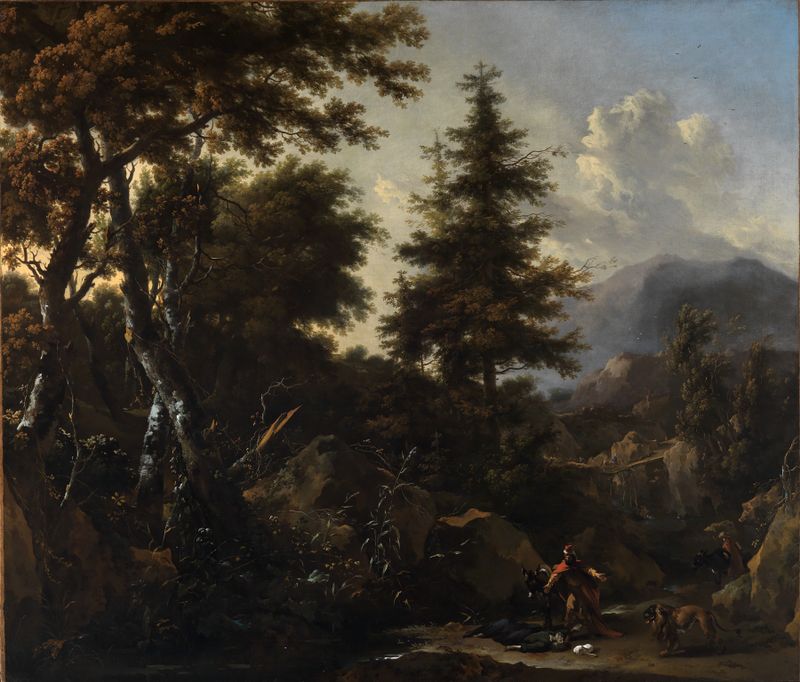
Schlucht im Bergwald mit alttestamentlicher Staffage
Nicolaes Pietersz Berchem
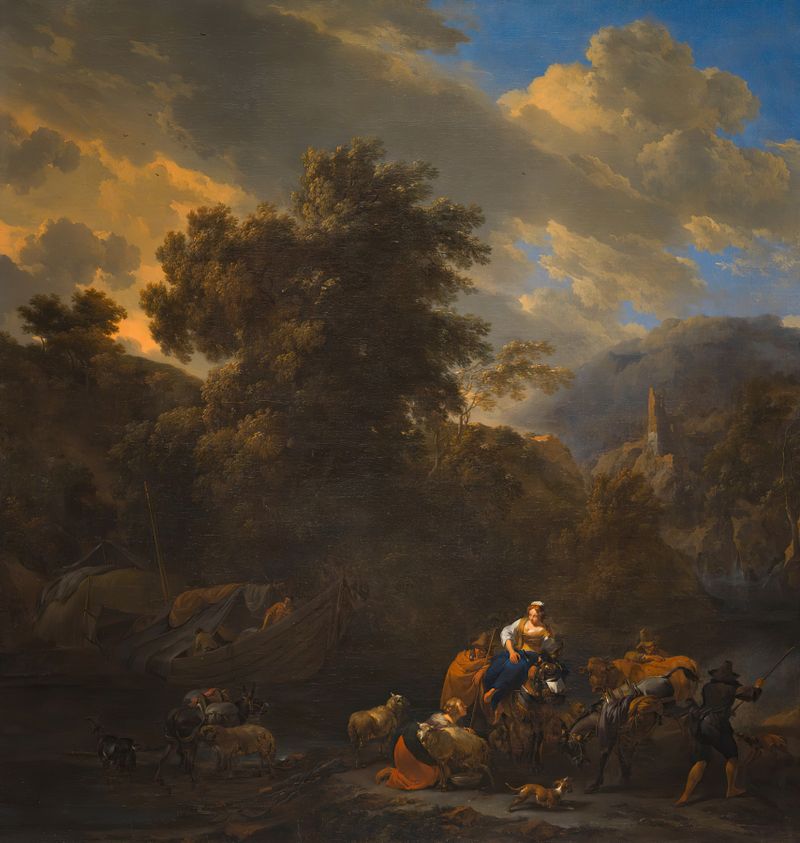
Italianate Landscape with Figures and Pack Animals on the Banks of a River
Nicolaes Pietersz Berchem
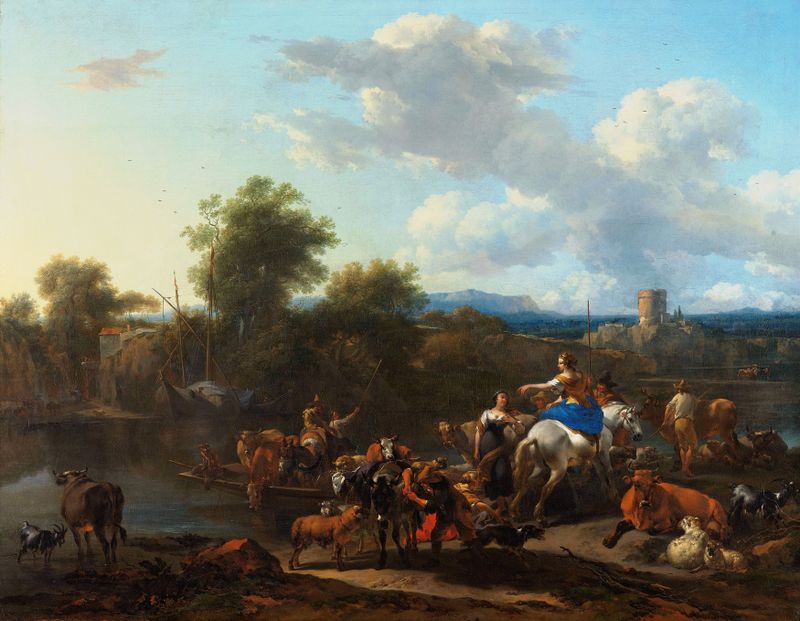
The Cattle Ferry
Nicolaes Pietersz Berchem
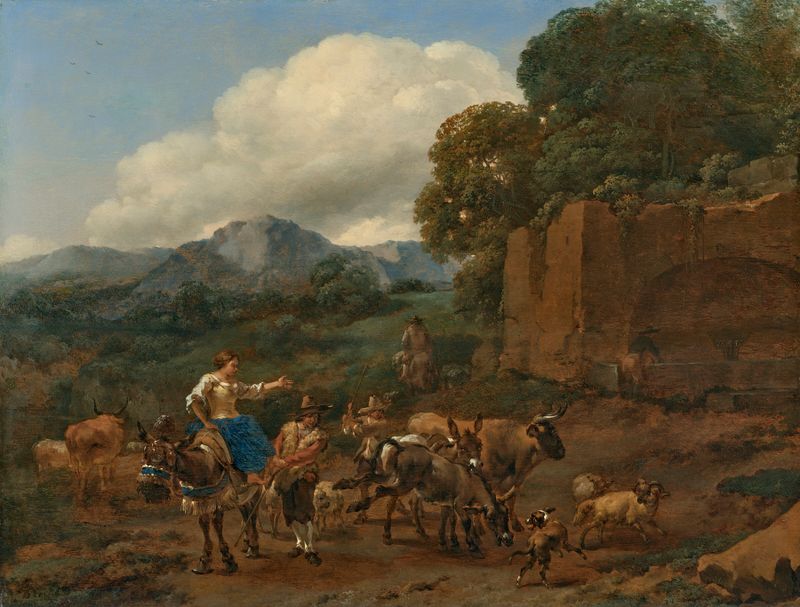
An Italianate landscape with a shepherdess on a mule and a shepherd, herding cattle, sheep, donkeys and dogs on a mountain track next to ruins
Nicolaes Pietersz Berchem
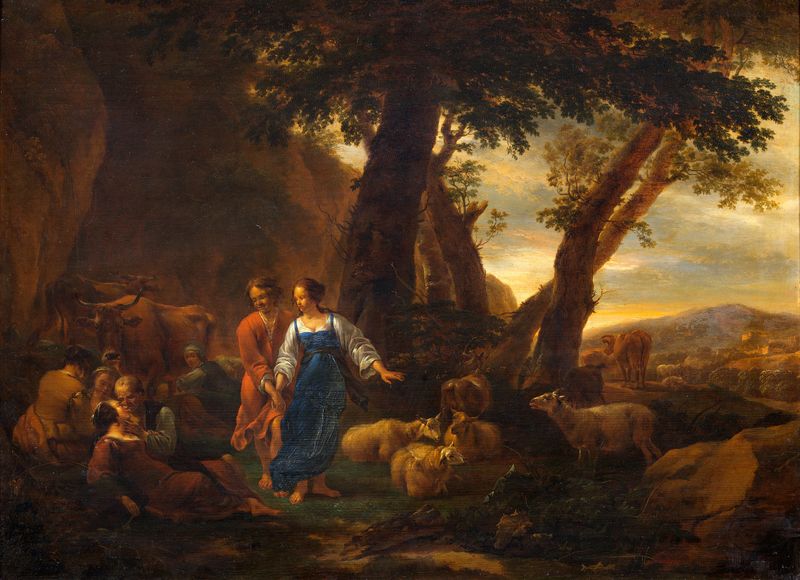
Landscape with Peasants and Cattle
Nicolaes Pietersz Berchem
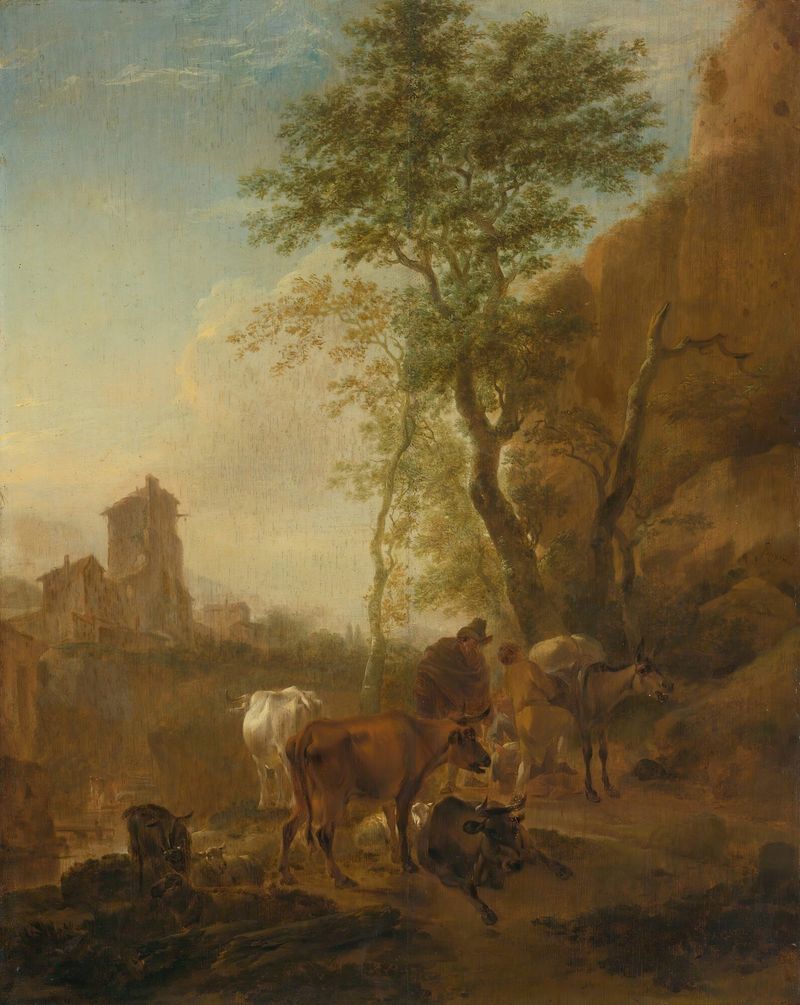
Italianate Landscape With Cows
Nicolaes Pietersz Berchem
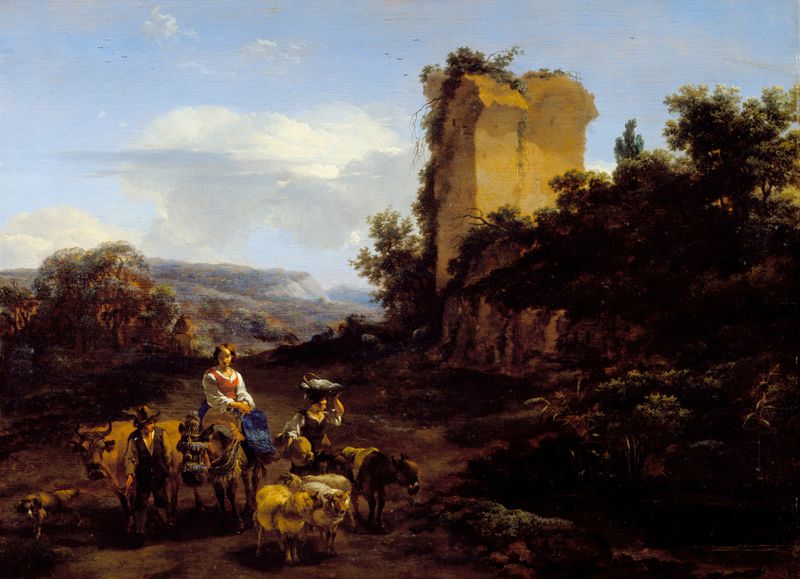
Landscape with Ruins and Travelers
Nicolaes Pietersz Berchem
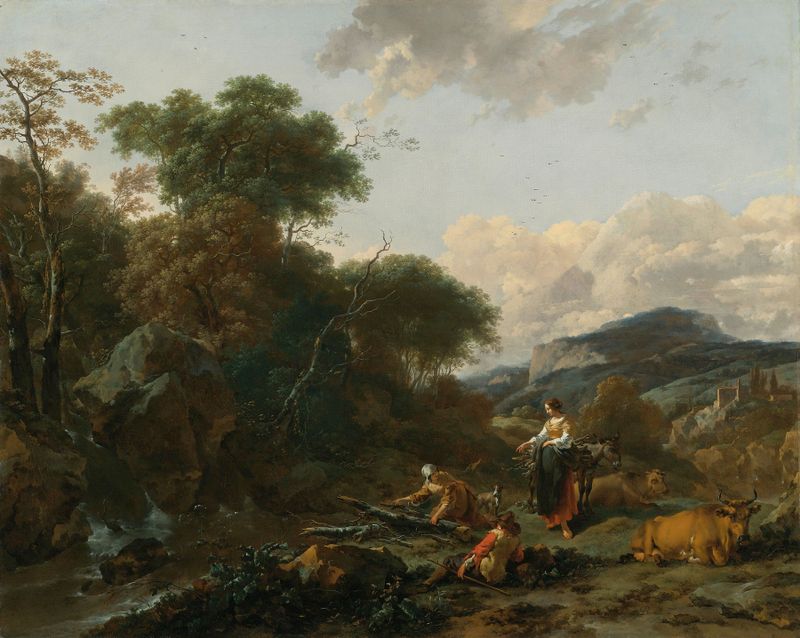
A Landscape With Figures
Nicolaes Pietersz Berchem
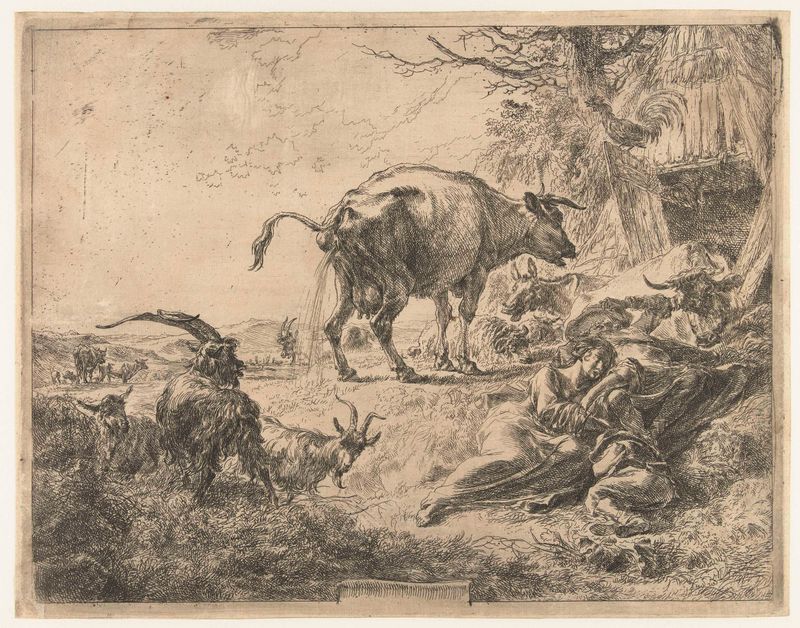
Slapende herdersfamilie en rustend vee
Nicolaes Pietersz Berchem
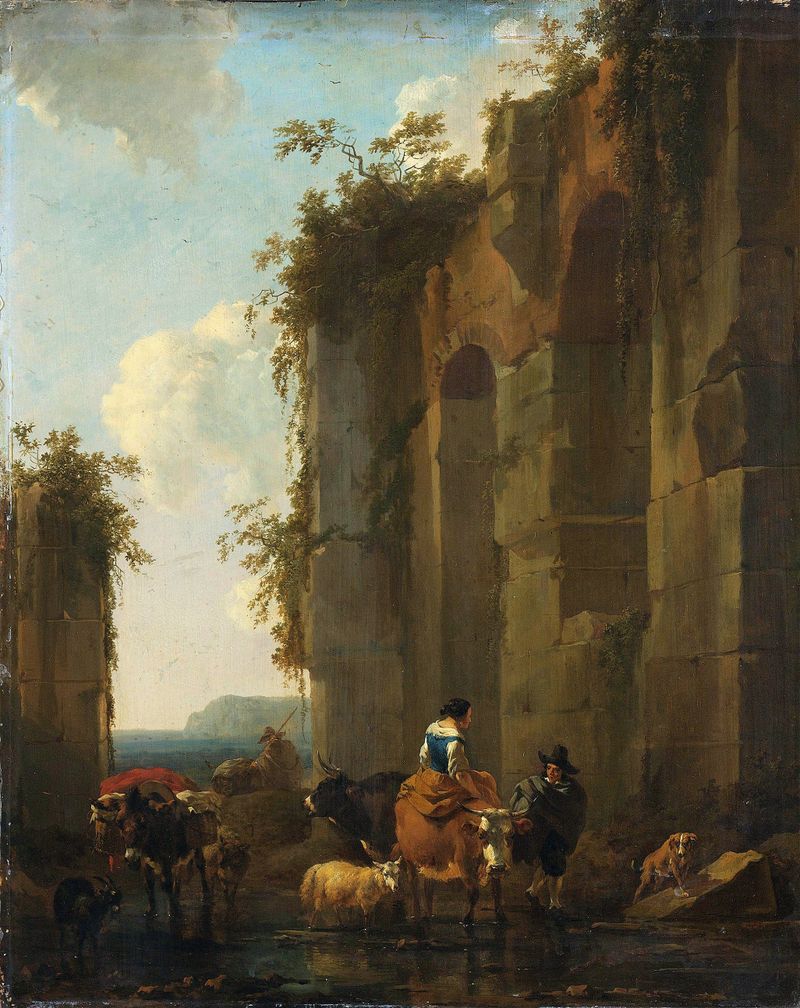
Ruins in Italy
Nicolaes Pietersz Berchem