
Kruisdraging — History & Facts
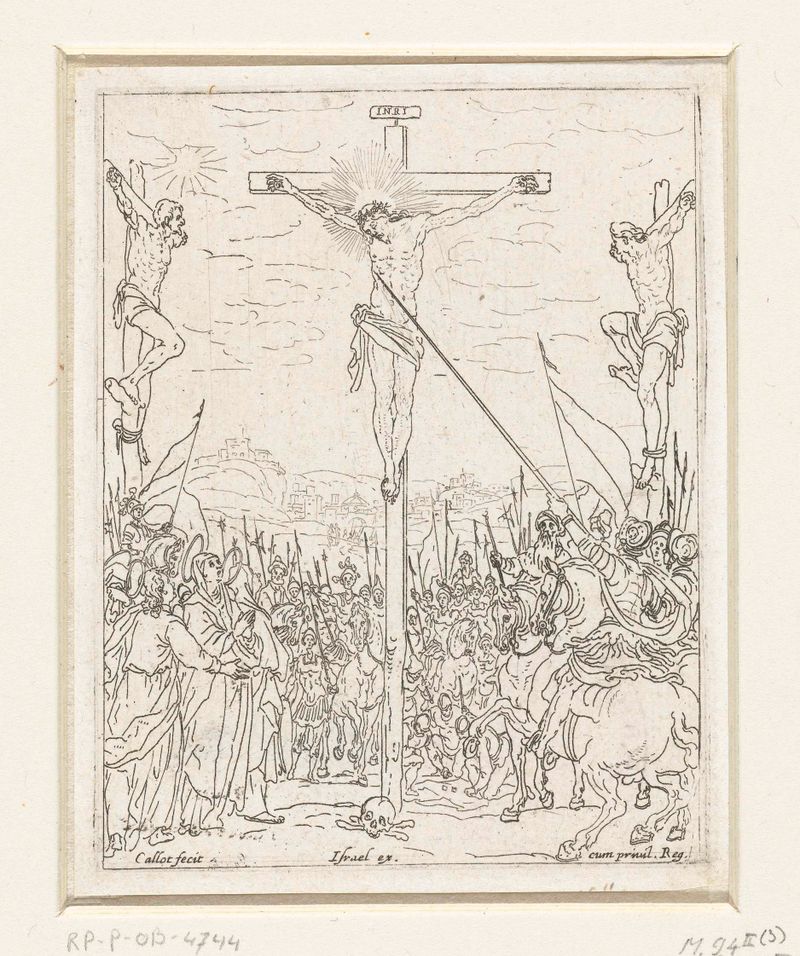
Is this a mirror — or a memory? The delicate interplay between suffering and hope unfolds in Kruisdraging, a poignant exploration of sacrifice and rebirth that invites us to reflect on our own struggles. Look closely at the central figure, a sorrowful Christ, burdened by the weight of the cross. Notice how the muted tones of browns and grays envelop the scene, lending an air of somber dignity. The soft light illuminates his face, emphasizing the depth of his anguish, while the figures surrounding him seem caught in a haunting dance of devotion and despair.
Each hand reaching out, either to assist or to mourn, reveals Callot's mastery of gesture and composition, drawing the viewer's eye into the emotional whirlwind. As you take in the details, observe the stark contrasts between the serene expressions of the mourners and the tortured visage of Christ. This duality echoes the theme of rebirth; the pain of the moment juxtaposed with the promise of resurrection. The figures' varied postures, some bowed, others upright in their grief, hint at the spectrum of human response to suffering—each one a silent testament to the power of faith and resilience in the face of despair. Created between 1624 and 1625, this work emerged during a tumultuous period in European history, marked by religious conflict and social upheaval.
Jacques Callot, working in France, was deeply influenced by the Baroque style, and his ability to convey complex human emotions within a single scene reflected the broader artistic movement of the time. This artwork captures not only a physical struggle but also a spiritual one, echoing the societal yearning for hope amidst hardship.
More Artworks by Jacques Callot
Browse all →
Titelprent voor de prentreeks 'De kleine apostelen' (Het martelaarschap van de apostelen)
Jacques Callot
Kruisiging
Jacques Callot

De doortocht door de Rode Zee
Jacques Callot

De verloren zoon als zwijnenhoeder
Jacques Callot

Annunciatie
Jacques Callot
Village Fight
Jacques Callot

Titelprent voor prentreeks 'Het leven van Maria'
Jacques Callot
Titelprent voor de prentreeks 'De grote apostelen' (Christus, Maria en de apostelen)
Jacques Callot

Christus aan het volk getoond (Ecce homo)
Jacques Callot
Portret van de Heilige Franciscus
Jacques Callot
More Religious Art
Browse all →
The Return of the Prodigal Son
Rembrandt van Rijn

The Garden of Earthly Delights
El Bosco

Count Orgaz’ funeral
El Greco

The Hundred Guilder Print: the central piece with Christ preaching, the plate arched
Rembrandt van Rijn

The Descent from the Cross
Rogier van der Weyden

The return of the prodigal son
Rembrandt van Rijn