
Kruisiging — History & Facts
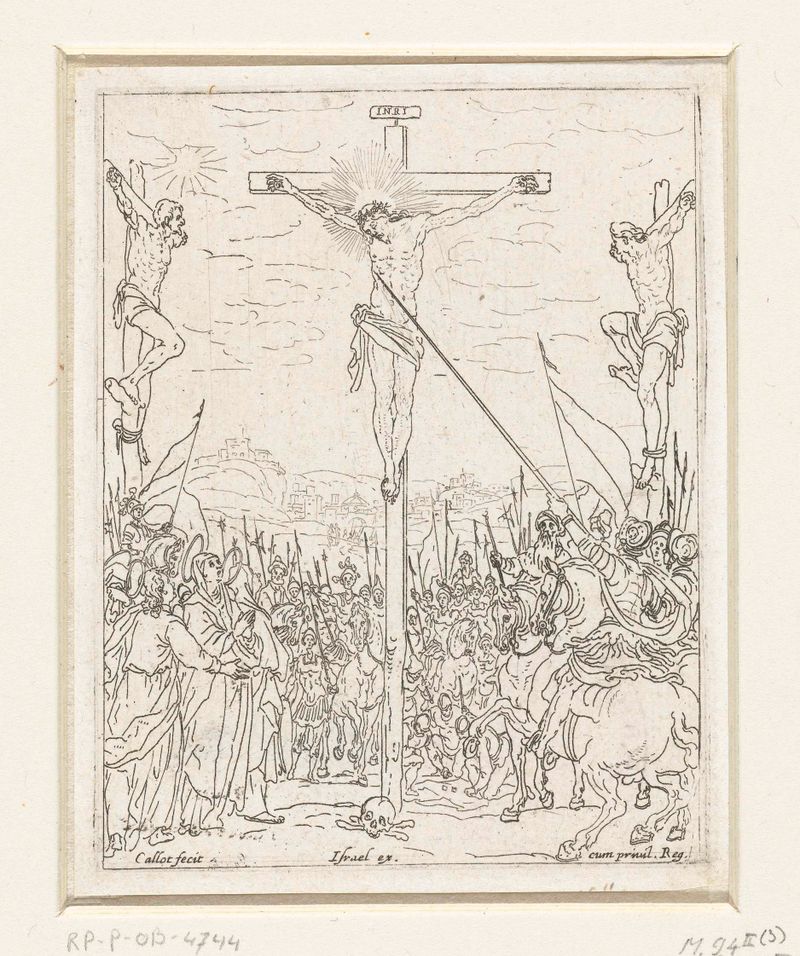
What if silence could speak through light? In a world wrought with chaos, the stillness of transformation offers a poignant reflection on human suffering and redemption. First, look to the center of the composition, where two figures hang suspended—nails piercing flesh, a silent plea caught in the balance between agony and resolution. Notice how the soft, muted palette envelops the scene, with shades of gray and brown intermingling, evoking a sense of weight and solemnity. The stark contrasts of light and shadow dramatize the figures, drawing the eye to their anguish, while the intricate details of the surrounding landscape serve as a haunting backdrop to their fate. As you observe, consider the emotional tensions at play.
The disquieting stillness among the witnesses, etched in their expressions, speaks volumes of despair and disbelief. The distant horizon offers a glimpse of hope, yet it remains overshadowed by the macabre act unfolding at the forefront. This interplay between the figures and the landscape suggests a broader commentary on suffering—a reminder that transformation often comes at a harrowing cost. During the creation of this work between 1608 and 1635, Jacques Callot was deeply influenced by the tumultuous socio-political climate in Europe, marked by wars and religious strife.
Living in Nancy, he explored the themes of human suffering and moral complexity, using his keen observational skills to elevate the drama depicted in his art. This period saw a burgeoning fascination with the Baroque style, where emotional intensity and intricate detail became hallmarks of artistic expression, paving the way for the profound impact of his work.
More Artworks by Jacques Callot
Browse all →
Titelprent voor de prentreeks 'De kleine apostelen' (Het martelaarschap van de apostelen)
Jacques Callot
Kruisiging
Jacques Callot

De doortocht door de Rode Zee
Jacques Callot

De verloren zoon als zwijnenhoeder
Jacques Callot

Annunciatie
Jacques Callot
Village Fight
Jacques Callot

Titelprent voor prentreeks 'Het leven van Maria'
Jacques Callot
Titelprent voor de prentreeks 'De grote apostelen' (Christus, Maria en de apostelen)
Jacques Callot

Christus aan het volk getoond (Ecce homo)
Jacques Callot
Portret van de Heilige Franciscus
Jacques Callot
More Religious Art
Browse all →
The Return of the Prodigal Son
Rembrandt van Rijn

The Garden of Earthly Delights
El Bosco

Count Orgaz’ funeral
El Greco

The Hundred Guilder Print: the central piece with Christ preaching, the plate arched
Rembrandt van Rijn

The Descent from the Cross
Rogier van der Weyden

The return of the prodigal son
Rembrandt van Rijn