
Kruisiging — History & Facts
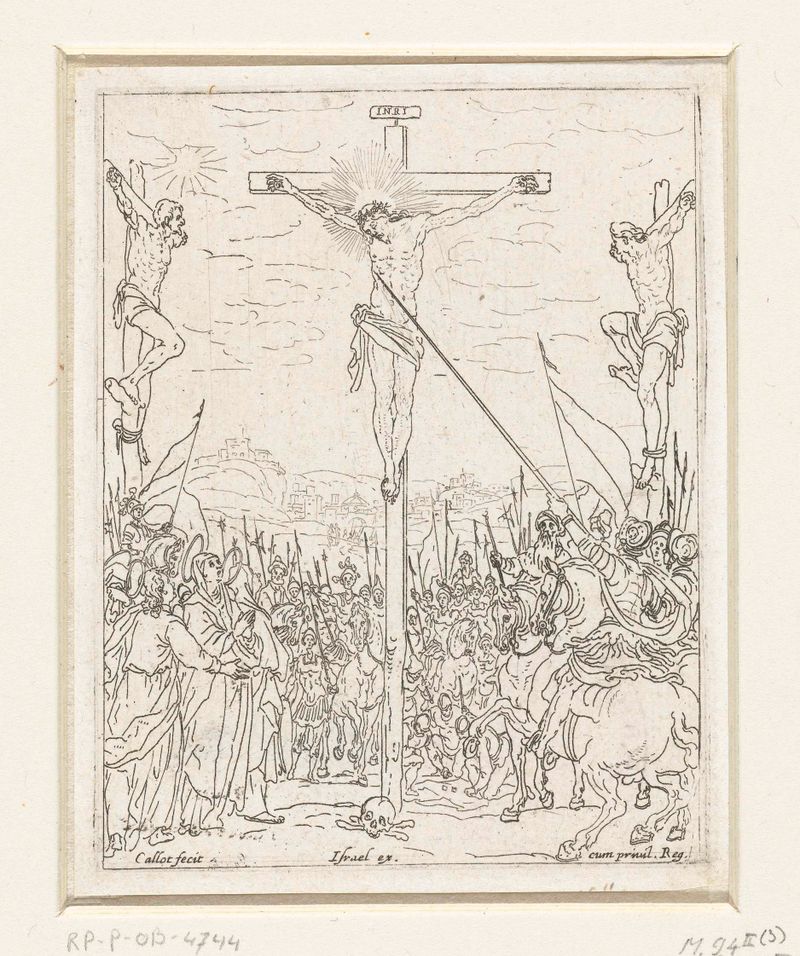
This sentiment echoes through the depths of Callot's work, inviting us to explore the complex interplay of desire and despair that often defines human existence. Look closely at the intricate details of Kruisiging; the central figure, suspended upon the cross, draws your gaze immediately. Notice how the monochromatic palette creates a stark contrast against the muted tones of the surrounding figures, who seem to blend into the background. The sharp lines and delicate etching capture the tension in the crowd's posture—some mourn, while others gawk in morbid curiosity.
Light dances across the scene, illuminating the tortured expression of the crucified, amplifying the palpable sense of longing and loss. Delve deeper into the nuances of emotion that clash within this composition. The figures at the foot of the cross exhibit a spectrum of responses—from anguish to indifference—highlighting humanity's fractured relationship with suffering. The delicate balance between the looming darkness and the faint glimmers of light suggests a yearning for redemption amidst the chaos, reflecting the universal struggle between hope and despair.
Each character, etched with meticulous care, bears the weight of their own unfulfilled desires, weaving a rich tapestry of collective grief and yearning. Painted between 1608 and 1611, this piece emerged during a time of profound religious upheaval in Europe. Callot, a prominent figure in French Baroque art, navigated a shifting landscape influenced by the Counter-Reformation and burgeoning naturalism. This artwork, created while he was living in Nancy, France, serves as a poignant reflection of the societal tensions of the era, encapsulating the complexities of faith and desire within a society grappling with its moral compass.
More Artworks by Jacques Callot
Browse all →
Titelprent voor de prentreeks 'De kleine apostelen' (Het martelaarschap van de apostelen)
Jacques Callot
Kruisiging
Jacques Callot

De doortocht door de Rode Zee
Jacques Callot

De verloren zoon als zwijnenhoeder
Jacques Callot

Annunciatie
Jacques Callot
Village Fight
Jacques Callot

Titelprent voor prentreeks 'Het leven van Maria'
Jacques Callot
Titelprent voor de prentreeks 'De grote apostelen' (Christus, Maria en de apostelen)
Jacques Callot

Christus aan het volk getoond (Ecce homo)
Jacques Callot
Portret van de Heilige Franciscus
Jacques Callot
More Religious Art
Browse all →
The Return of the Prodigal Son
Rembrandt van Rijn

The Garden of Earthly Delights
El Bosco

Count Orgaz’ funeral
El Greco

The Hundred Guilder Print: the central piece with Christ preaching, the plate arched
Rembrandt van Rijn

The Descent from the Cross
Rogier van der Weyden

The return of the prodigal son
Rembrandt van Rijn