
Kruisoprichting — History & Facts
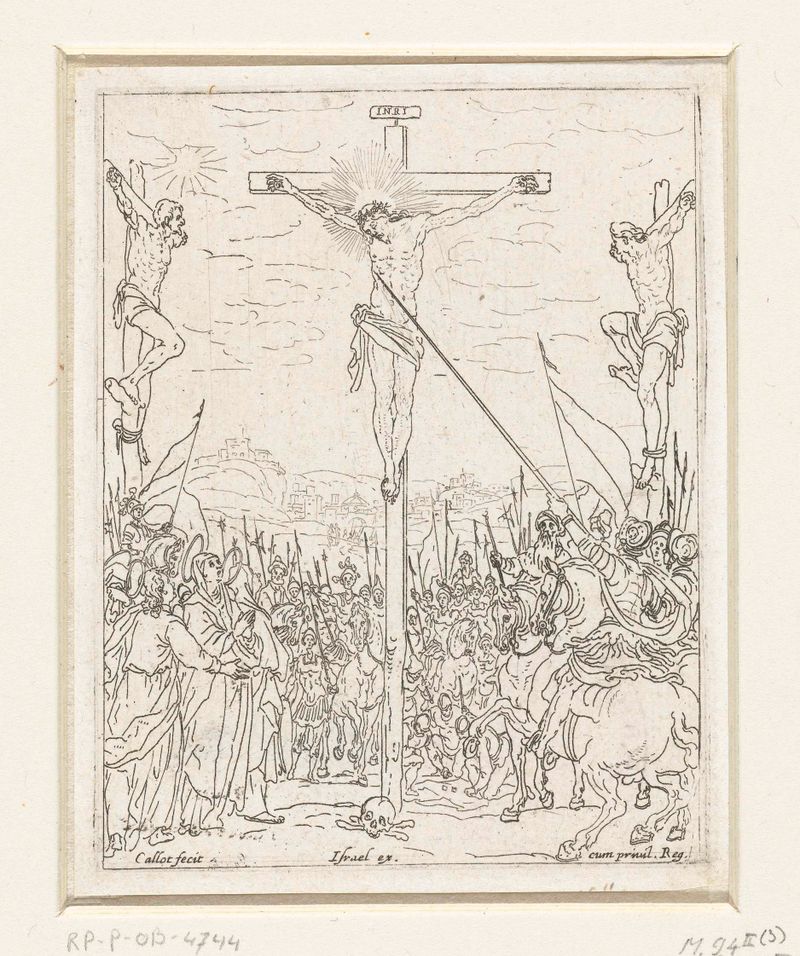
Could a single brushstroke hold eternity? In the depths of melancholy, the weight of loss unfurls, inviting the viewer to reflect on the passage of time. Look closely at the intricate detail of Kruisoprichting, where the scene breathes with life through a masterful interplay of light and shadow. Focus on the central figure, his raised arms embodying both suffering and resilience, as the dark hues of the background amplify the gravity of the moment. Notice how Callot employs a delicate line quality that captures the ethereal nature of human emotion, inviting us to trace the contours of despair and hope within a single frame. Within the rich texture of the artwork lies profound emotional tension.
The juxtaposition of the solemnity of the act with the vibrant energy of the surrounding figures speaks to the complexity of faith and sacrifice. Subtle details, such as the anguished expressions of the onlookers and the delicate halo of light around the central figure, invite contemplation on the nature of suffering and the human experience. Every element, from the gestures to the expressions, resonates with an intimate understanding of the fragility of existence. Created between 1624 and 1625, Kruisoprichting emerged from Callot's studio in Nancy, France, during a time marked by religious tumult and personal challenges.
The artist, known for his etchings and narrative scenes, reflected the turbulent emotions of society in his work. This period in his life was characterized by the influence of Baroque aesthetics, as well as an exploration of the human condition, making this piece a poignant representation of both his artistic journey and the world around him.
More Artworks by Jacques Callot
Browse all →
Titelprent voor de prentreeks 'De kleine apostelen' (Het martelaarschap van de apostelen)
Jacques Callot
Kruisiging
Jacques Callot

De doortocht door de Rode Zee
Jacques Callot

De verloren zoon als zwijnenhoeder
Jacques Callot

Annunciatie
Jacques Callot
Village Fight
Jacques Callot

Titelprent voor prentreeks 'Het leven van Maria'
Jacques Callot
Titelprent voor de prentreeks 'De grote apostelen' (Christus, Maria en de apostelen)
Jacques Callot

Christus aan het volk getoond (Ecce homo)
Jacques Callot
Portret van de Heilige Franciscus
Jacques Callot
More Religious Art
Browse all →
The Return of the Prodigal Son
Rembrandt van Rijn

The Garden of Earthly Delights
El Bosco

Count Orgaz’ funeral
El Greco

The Hundred Guilder Print: the central piece with Christ preaching, the plate arched
Rembrandt van Rijn

The Descent from the Cross
Rogier van der Weyden

The return of the prodigal son
Rembrandt van Rijn