Discover insights about this artwork
Kystlandskap — History & Facts
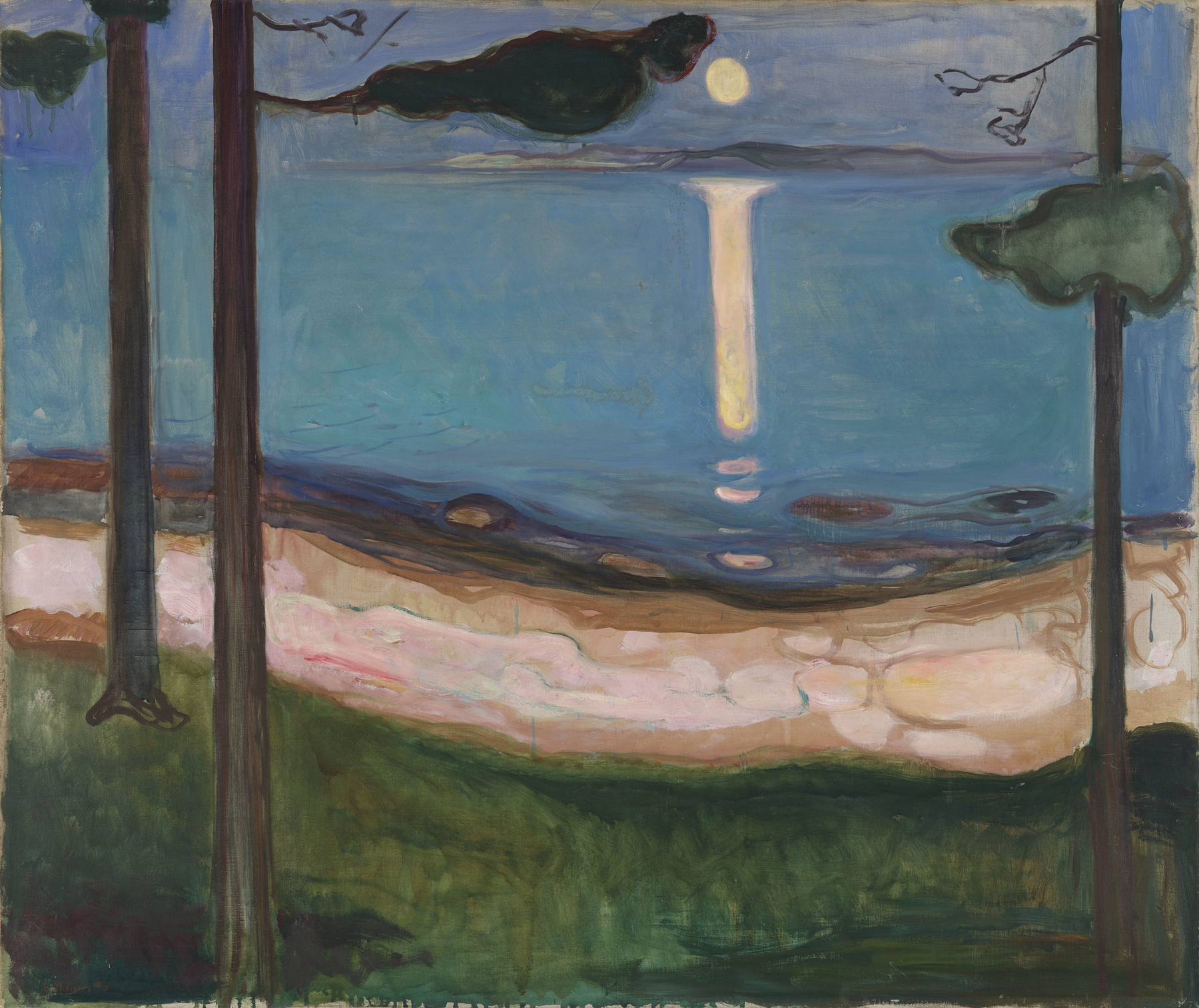
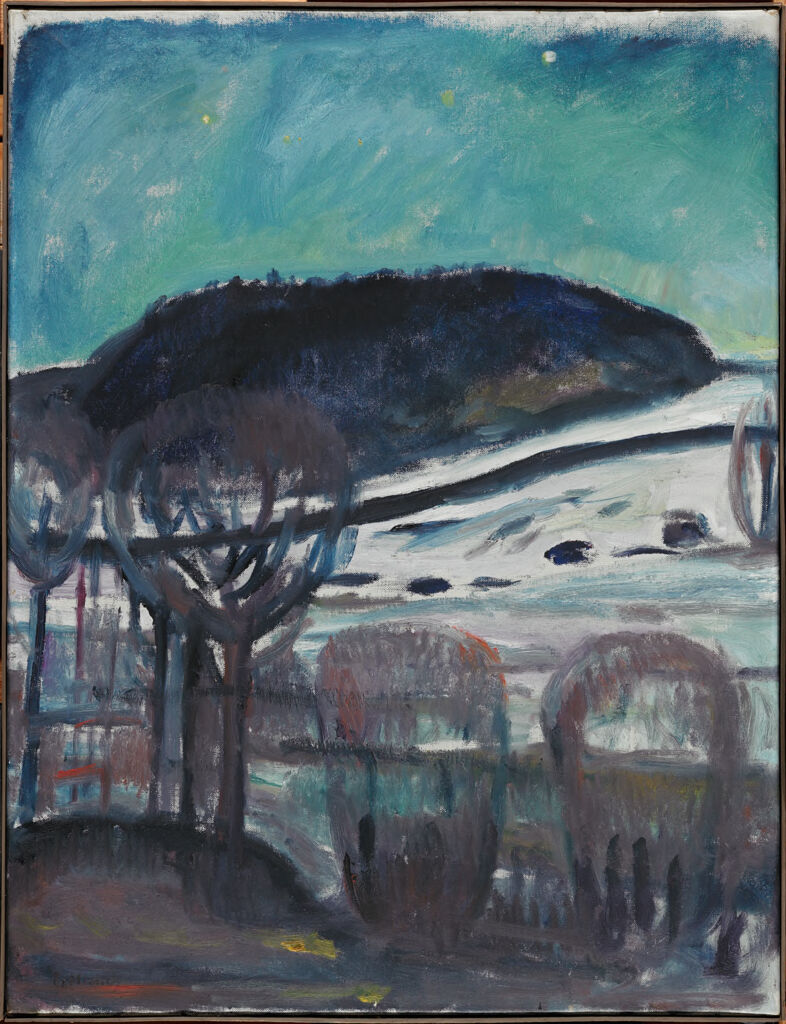
In Kystlandskap, Edvard Munch presents a striking coastal landscape filled with vibrant colors. The sky is painted in bold hues of orange and blue, suggesting a dramatic sunset. The water reflects these colors, creating a sense of movement and life.
Jagged cliffs rise from the sea, adding a rugged texture to the scene. The painting is executed in oil on canvas, showcasing Munch's characteristic brushwork. The use of color is intense and expressive, typical of the Expressionism style. The composition draws the viewer's eye across the canvas, emphasizing the contrast between the turbulent sea and the solid cliffs.
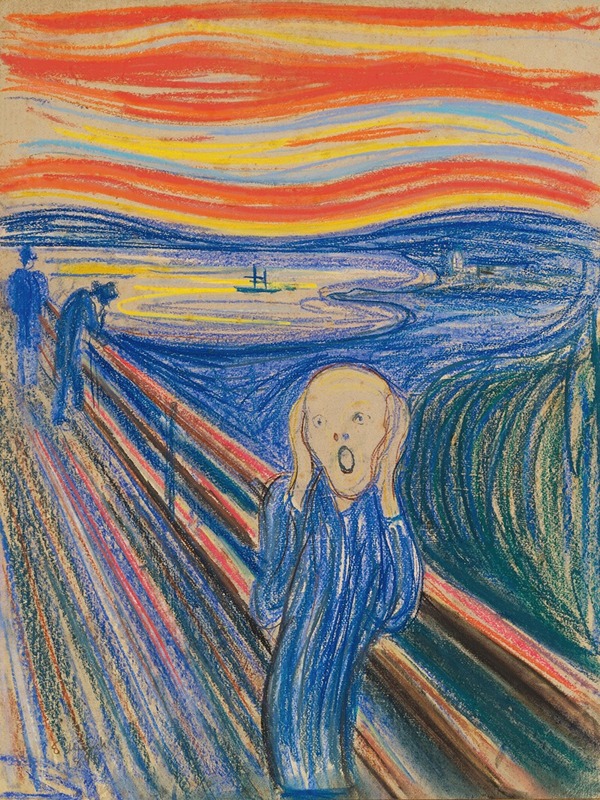
This dynamic interplay of elements creates a captivating visual experience. Edvard Munch is best known for his iconic work The Scream, but Kystlandskap also reflects his deep connection to nature. Created around c. 1900, this piece captures the essence of the Norwegian coastline.
Interestingly, Munch often painted landscapes during periods of personal turmoil, using nature as a form of expression. This painting exemplifies his ability to convey emotion through the natural world.