
L’ Omnibus De La Glacière À La Barrière Rochechouart — History & Facts
Who listens when art speaks of silence? In L’ Omnibus De La Glacière À La Barrière Rochechouart, the textured whispers of a bustling Parisian street invite reflection on the delicate balance between movement and stillness. Look to the center of the canvas, where the carriage, laden with passengers, captures your gaze. The play of light casts delicate shadows across the scene, while soft, muted colors evoke an impression of early evening. Notice how the figures are frozen in time yet seem to sway with the rhythm of the city, their gestures hinting at stories untold.
The faded architecture in the background frames the scene, grounding it in a moment both ordinary and extraordinary. Within this urban tableau lies a poignant contrast: the dynamic energy of the carriage against the tranquil aura of the sky. The subtle interplay between the warm tones of the carriage and the cool hues of the surroundings speaks to life's dualities—the hustle of city life set against the peacefulness of the moment. Each detail, from the expressions on the passengers' faces to the way the street flows into the horizon, harmonizes into a vivid sense of existence, yet whispers of the transient nature of time. In 1874, Jongkind painted this work while living in Paris, a bustling hub of artistic innovation.
He was influenced by the Impressionist movement, which sought to capture everyday life with spontaneity and fresh perspective. This period marked a significant shift in how artists approached light and color, reflecting the rapid changes in society and modernity. Jongkind, often overshadowed by his contemporaries, left a legacy that would resonate in the hearts of many who long to find balance amidst chaos.
More Artworks by Johan Barthold Jongkind
Browse all →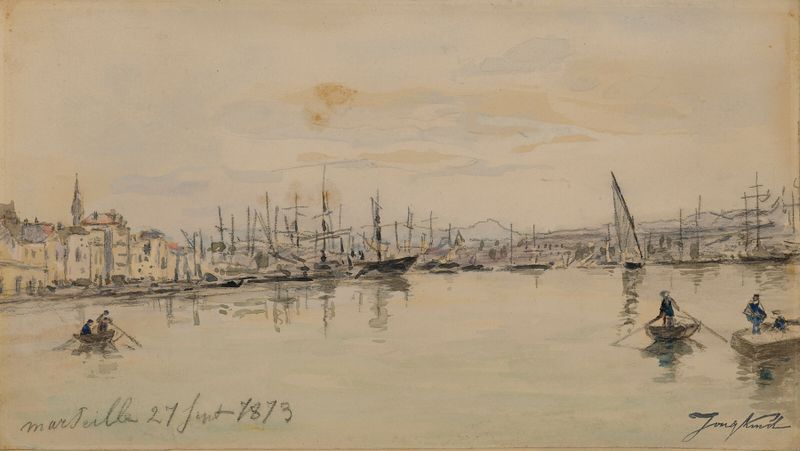
Le Port de Marseille
Johan Barthold Jongkind

Canal Saint-Martin
Johan Barthold Jongkind

Countryside near Brezins, between Grenoble and Vienne
Johan Barthold Jongkind

Notre-Dame vue du quai de la Tournelle
Johan Barthold Jongkind

Environs de Grenoble
Johan Barthold Jongkind

Clair de lune à Overschie (environs de Rotterdam)
Johan Barthold Jongkind

Port de Honfleur
Johan Barthold Jongkind
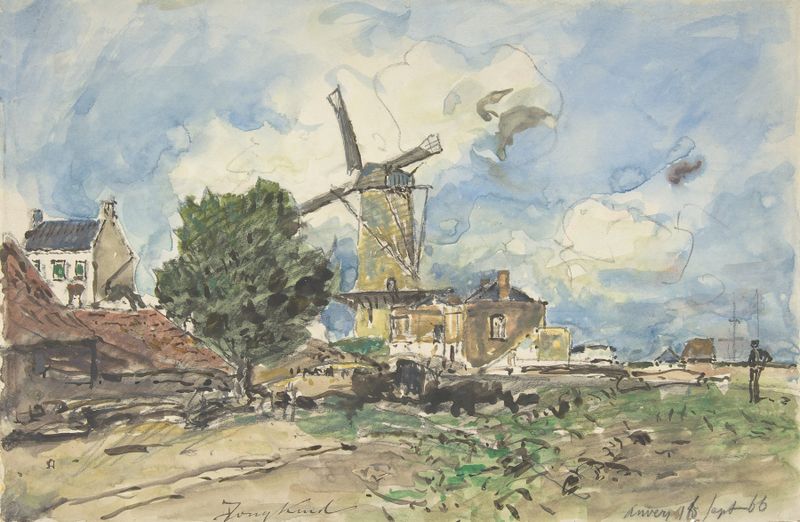
Wind Mill at Antwerp
Johan Barthold Jongkind

Le Havre
Johan Barthold Jongkind

The Church of Overschie
Johan Barthold Jongkind





