
L’Orage — History & Facts
When L’Orage appeared in Paris in 1650, it sparked immediate discussion among collectors for its rare subject: not a biblical or mythological scene, but nature itself in turmoil. The painting’s title, French for “The Storm,” signaled a new direction for Nicolas Poussin, who was then best known for his carefully ordered classical compositions. In a letter from that year, the painter’s friend and biographer André Félibien marveled at Poussin’s “audacity to paint the air itself, and the terror it brings.” This was not the first time a storm had been painted, but never with such gravity and focus on the elements alone. At the heart of L’Orage, a group of travelers huddle beneath a tree, their faces lit by a sudden fork of lightning tearing through a bruised sky.
The wind whips their cloaks and bends the trees nearly double, while a distant city shimmers in the rain. Poussin’s careful arrangement of figures and landscape draws the eye from the frightened humans to the overwhelming power of the storm: the fallen branch in the foreground, the wild movement of clouds, the stark contrast of light and shadow. Unlike Giorgione’s The Tempest, where the storm is almost incidental, Poussin makes the weather itself the protagonist, a force indifferent to human plans. The precise origins of L’Orage remain uncertain, as no commission or early inventory has been found, and the medium (oil or tempera) is still debated among conservators.
The painting’s style and palette place it firmly in Poussin’s late Roman period, when he was increasingly absorbed by landscape and the moods of nature. Over the centuries, L’Orage has been admired as a rare experiment by an artist otherwise devoted to order and reason. Today, it stands as a testament to Nicolas Poussin’s restless curiosity, and hangs in a private collection, seldom seen but often discussed in studies of the Baroque landscape.
More Artworks by Nicolas Poussin

Spring
Nicolas Poussin
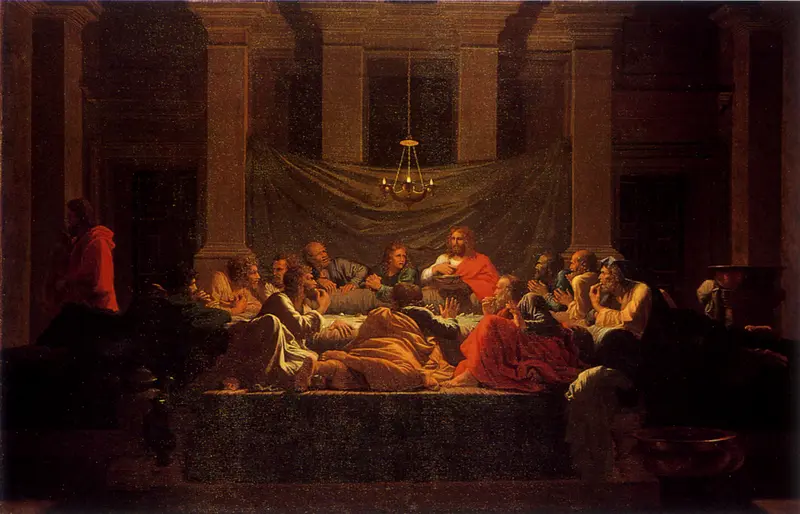
The Sacrament of the Holy Eucharist
Nicolas Poussin
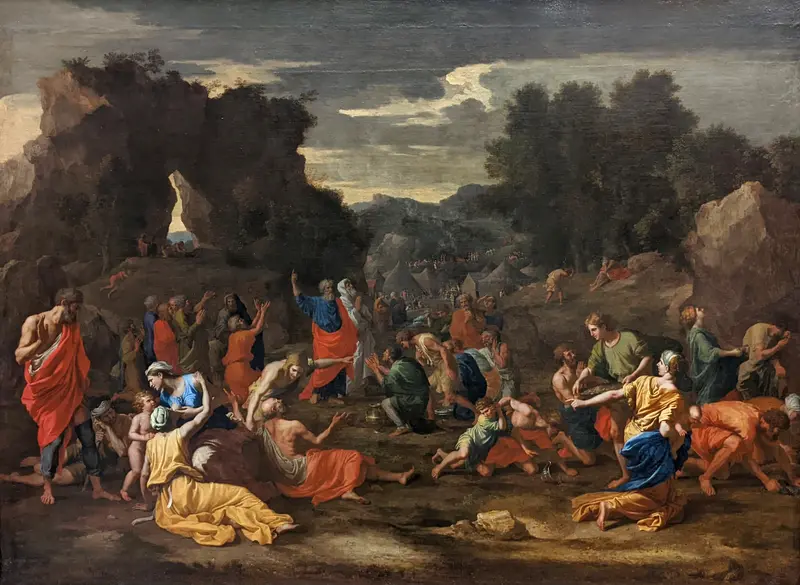
The Israelites gathering Manna in the Desert
Nicolas Poussin
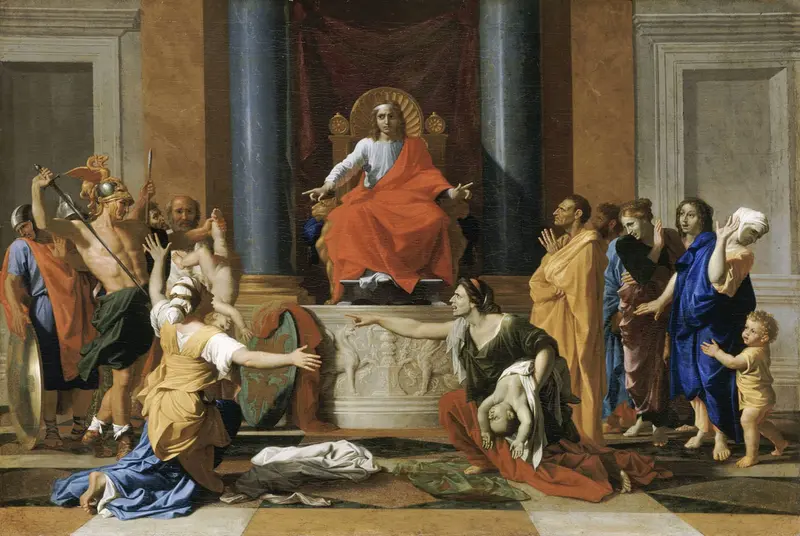
The Judgment of Solomon
Nicolas Poussin
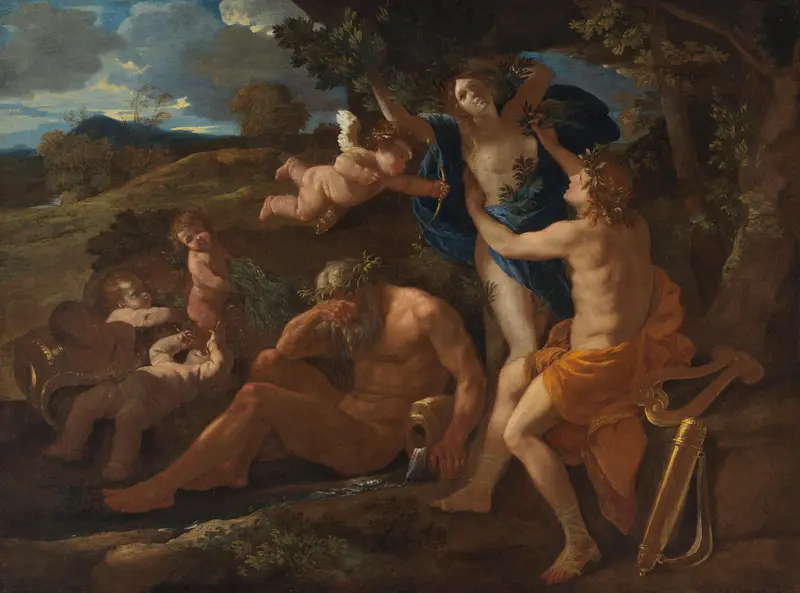
Apollo and Daphne
Nicolas Poussin

The Nurture of Jupiter
Nicolas Poussin

Ordination
Nicolas Poussin
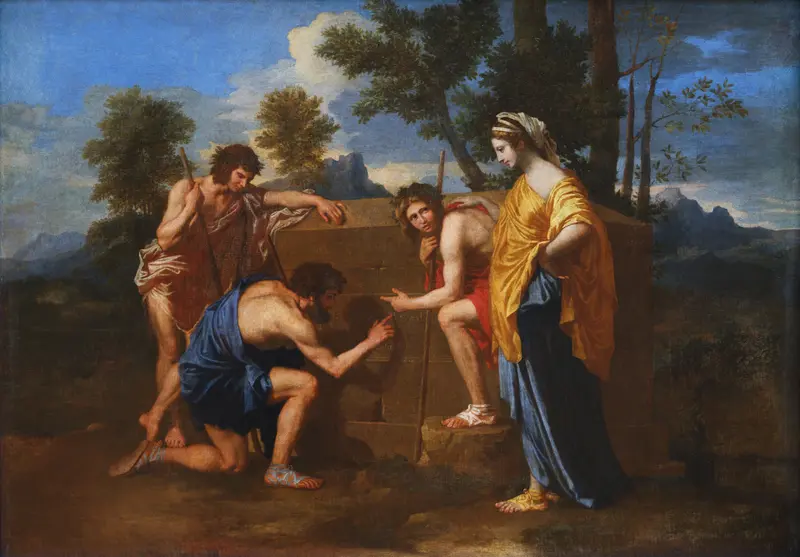
Et in Arcadia ego
Nicolas Poussin
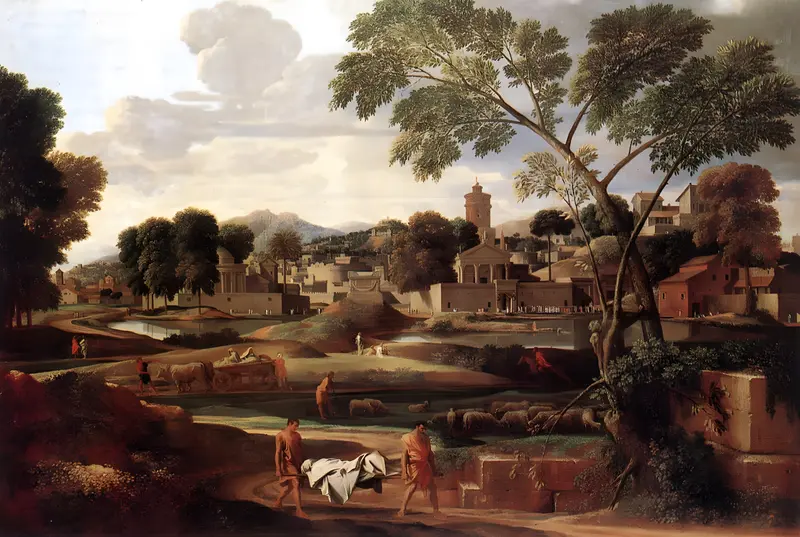
The Funeral of Phocion
Nicolas Poussin
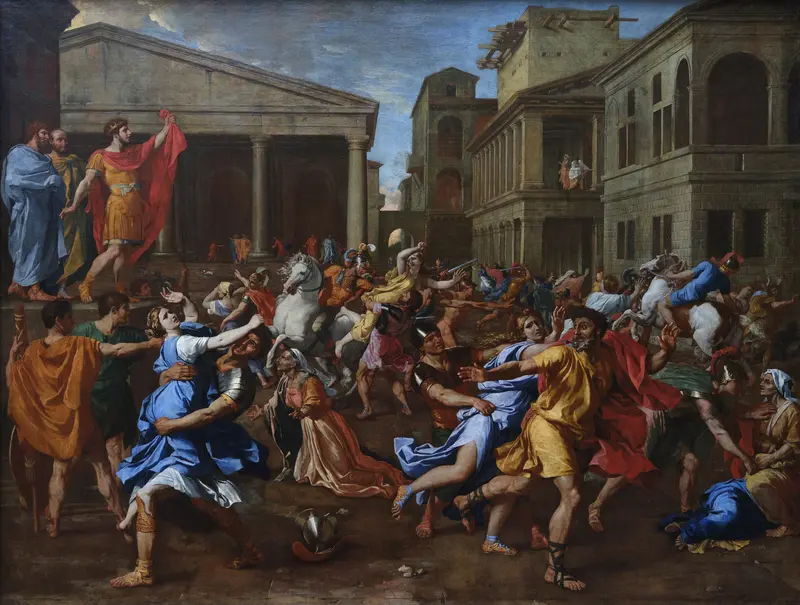
The Rape of the Sabine Women
Nicolas Poussin
More Landscape Art

The Starry Night
Vincent van Gogh

View of Delft
Johannes Vermeer

Water Lilies
Claude Monet

The Grand Canal, Venice, looking north-west from the Ca' Corner to the Ca' Contarini degli Scrigni, with the campanile of Santa Maria della Carità
Canaletto

Windsor Castle
Canaletto

The Grand Canal looking North-East from the Palazzo Dolfin-Manin to the Rialto Bridge
Canaletto